

Master an adaptive training decision tree for endurance athletes. Learn how to sensibly adjust workouts for poor sleep, minor illness, and a busy schedule.





A BJSM review reported an overall acute respiratory-illness incidence of 4.7 per 1,000 athlete-days. That metric represents just one common hurdle that forces dedicated endurance athletes to abruptly alter their schedules. When you combine random head colds with sudden work deadlines and poor sleep, executing a rigid calendar becomes impossible.
When unexpected friction disrupts your training week, use this sequence to safely adapt your routine.
The physiological mechanism behind this protocol centers entirely on managing your total stress load. Your central nervous system does not neatly separate the physical strain of intervals from the mental burden of a stressful work presentation. High stress limits your capacity to absorb positive training adaptations. This is why pushing through severe fatigue often results in empty miles rather than improved fitness.
In 2013, the joint European College of Sport Science and American College of Sports Medicine consensus established clear guidance on this topic. The ECSS/ACSM consensus recommends integrating physiological measures with longer-term subjective and performance monitoring rather than relying on one test. We cannot confidently diagnose overtraining syndrome using a single metric like resting heart rate alone. We must evaluate the athlete across multiple domains of physical and mental health.
Sleep plays a massive role in this total physiological equation. A 2025 systematic review and meta-analysis reported impairments in aerobic endurance, power, speed and skill control after sleep deprivation, alongside higher perceived exertion. The review reported a standardized effect of -0.66 for aerobic endurance and +0.39 for perceived exertion. This means a poor night makes the exact same physical output feel significantly harder to achieve.
Adapting your plan preserves your overall recovery capacity for days when your body is actually prepared to perform. Endurance sports require immense mental focus. When a major family obligation or a late office meeting drains your mental energy, your physical output naturally suffers. You can confidently adjust your training calendar when you understand that resting is sometimes the most productive physiological choice available.
The first critical step involves screening for absolute medical stop signs. Sports-medicine guidance advises resting rather than training normally when fever, systemic symptoms, chest symptoms, or active vomiting and diarrhea are present. You should never attempt to sweat out a true systemic illness. Seek medical evaluation if chest pain, palpitations, fainting, or unusual breathlessness occurs during or after illness.
If you are completely healthy but suddenly short on time, you should shorten the session while preserving its primary physiological purpose. A planned ninety minute easy aerobic ride can easily become a brisk thirty minute spin. If you face a severe deadline and the workout is duplicated elsewhere in your week, you should postpone the session entirely. Maintaining a consistent endurance training routine is more important than completing one specific calendar block.
If you are sleep-disrupted, you should immediately downgrade the intensity of your session. The available review summary says the evidence is less settled for a single acute night of sleep loss than for chronic sleep restriction. One poor night does not automatically mandate complete bed rest. However, multiple consecutive poor nights require switching to very easy movement or taking a full day completely off.
For minor illnesses, practitioner guidance suggests the well known neck-check approach as a conservative screening heuristic. If your symptoms are mild and confined strictly to the nose or throat, a shorter and lower-intensity session may be considered. You must stop immediately if your symptoms worsen during the warmup. This cautious approach keeps you moving safely while honoring your current physiological limits.
There is immense value in simply showing up to complete a heavily modified session. A twenty minute easy jog still promotes blood flow and maintains your physical habit without digging a deeper fatigue hole. This approach aligns perfectly with our healthy aging resources focus on consistency over intensity. The objective is to stimulate the body rather than annihilate it.
For athletes in the 35-to-65 age range, the evidence supports an individualized rather than age-stereotyped approach. The available sources do not justify claiming that every older athlete needs a fixed number of additional recovery days, and they do not establish one age-specific training prescription. Instead, older bodies simply benefit from a symptom-led and gradual return after any illness.
You must test the waters with short aerobic efforts before resuming any heavy threshold work. Recovery behaviors outside of the primary exercise schedule also become vital for maintaining long term performance. A 2026 meta-analysis in team-sport athletes found that daytime napping was associated with better endurance-performance outcomes. While not studied specifically in masters endurance athletes, prioritizing quiet rest periods clearly helps offset the heavy fatigue of a busy adult schedule.
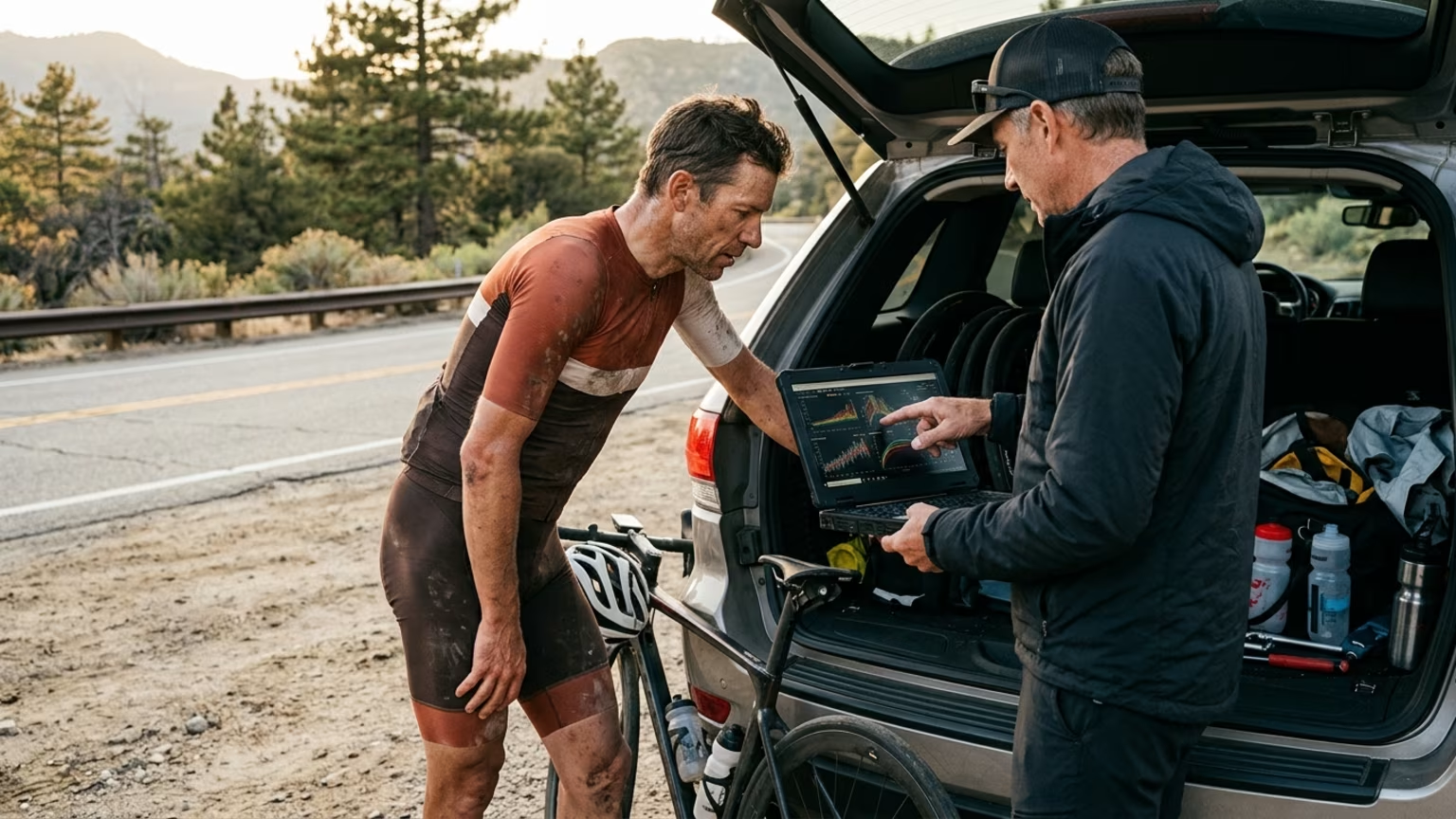
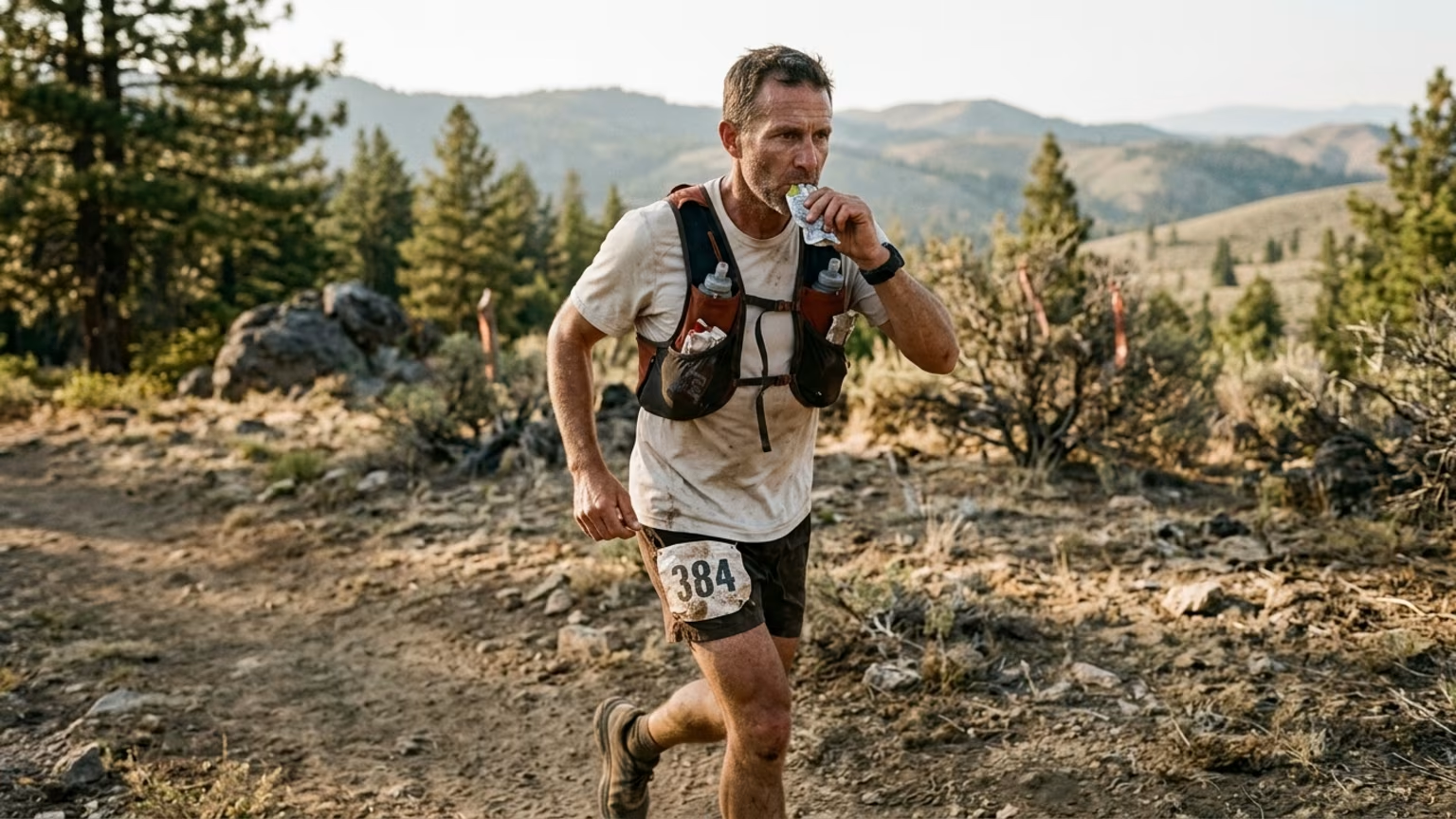
True long term adaptation is about learning how your unique body responds to various stressors. Our team at Reendure continually emphasizes the value of testing assumptions to optimize proper recovery protocols. "For years, I capped my mid ride fueling at around sixty grams of carbs per hour, convinced that taking in more would wreck my stomach. Then I read a series of recent studies on gut training and higher oxidation limits for endurance athletes."
"I spent a three month base phase gradually increasing my intake up to ninety grams using a mix of glucose and fructose. The difference during my next Gran Fondo was staggering. I had a late race surge that I had never experienced before, completely avoiding the usual energy crash." That same willingness to test boundaries safely applies directly to how we navigate missed workouts. You must look at the overall pattern rather than stubbornly forcing a rigid routine.
The most common error busy athletes make is attempting to catch up on missed volume by stacking difficult workouts. The evidence-based consensus heavily emphasizes matching training stress to actual recovery capacity. Cramming missed work into the next few days typically results in excessive fatigue and diminished returns. Skipping a single hard session does not mean you instantly lose months of hard earned fitness.
Another frequent mistake is blindly trusting a wearable readiness score to dictate your daily decisions. A reassuring heart rate variability score should never override severe fatigue, an active fever, or a clearly abnormal effort response during warmups. Subjective symptoms are incredibly powerful indicators of your true readiness to train.
When you inevitably face that 4.7 per 1,000 athlete-days risk of respiratory illness, you will now have a clear operational path forward. You understand exactly how to assess your symptoms, adjust your workout intensity, and protect your long term physical progress. How will you apply this adaptive decision matrix the next time a late work meeting threatens your weekly training block?

Follow ReEndure for practical insights on endurance training, recovery, nutrition and healthy aging. Stay connected for new articles, research led guidance and ideas to help you perform better for longer.




Read practical ideas on endurance training, recovery, nutrition and healthy aging to keep progressing for years to come.
Read the Blog