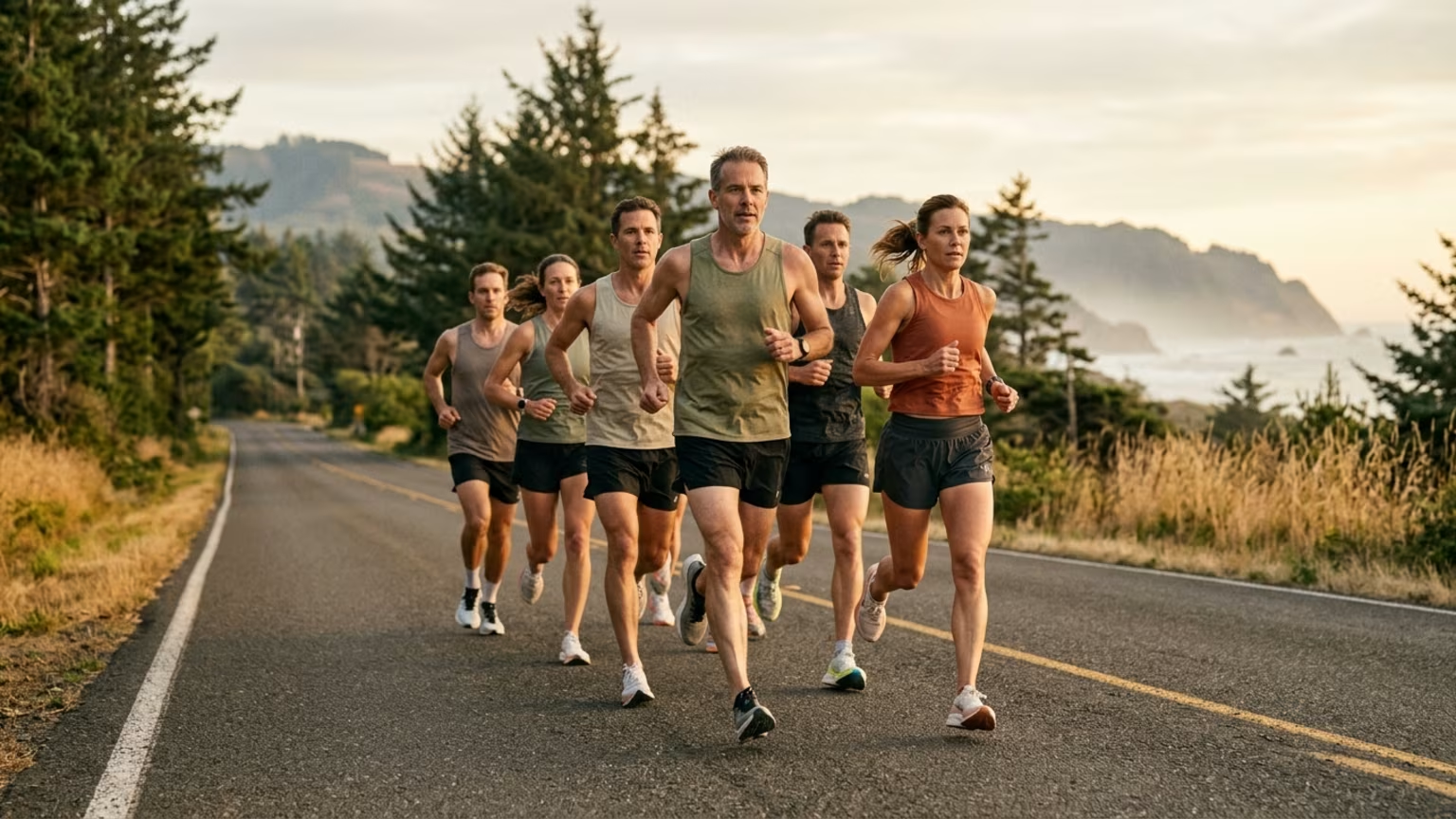

A new Heriot-Watt University study simulated marathon pack running, finding aerodynamic drag reductions. Learn how veteran athletes can apply these estimates.





On September 26, 2026, a 220 Triathlon report detailed a new aerodynamics study from the Heriot-Watt University School of Engineering and Physical Sciences. The researchers examined how runner positioning impacts aerodynamic drag during a race using extensive computer simulations. The team then validated these digital models through physical wind tunnel testing. This report provides a detailed look at how drafting might logically conserve energy over a marathon distance.
The primary takeaway from the Heriot-Watt study is that aerodynamic drag is highly dependent on a runner's position within a group. According to 220 Triathlon, well organised formations were estimated to reduce drag by up to 90 percent compared with running completely alone. This massive reduction in air resistance means an athlete theoretically expends less physical effort to maintain a given pace. When athletes group together properly, the collective body creates a more efficient shape for slicing through the air.
The idea that the leading runner benefits from the pack often surprises amateur athletes. In aerodynamics, a blunt object creates a large area of low pressure in its wake. This low pressure zone physically pulls backward on the runner leading the formation. When other athletes follow closely in that space, they fill the low pressure pocket and reduce the backward drag on the leader. This fluid dynamic principle explains why large racing packs move faster as a unified whole.
Interestingly, the benefits do not only apply to the runners hiding in the back of the pack. The report notes that runners at the very front of a group could also experience reduced drag. The athletes trailing closely behind them actually change the way the air flows ahead of the pack. Professor Bert Blocken, a professor of aerospace engineering cited in the article, stated that the simulations indicate running formations can reduce air resistance. He noted this conserves energy under suitable conditions.
Translating this drag reduction into actual race times requires careful interpretation of the data. The article estimates a marathon time savings of roughly 20 to 30 seconds for drafting behind one other runner. This exact benefit depends heavily on your specific position relative to the wind and the runner ahead. A separate estimate suggests a potential savings of up to 30 to 40 seconds. This larger figure assumes you combine drafting with other aerodynamic optimisations in realistic race conditions.
The projected time savings of 30 to 40 seconds might seem minor over a three hour event. However, endurance racing relies entirely on energy conservation rather than sheer top speed. Saving a few seconds per kilometer allows an athlete to preserve vital glycogen stores for the final stretches. The true value of this aerodynamic efficiency is not just a faster early split. The real benefit is arriving at the final 10 kilometers with fresher legs and a lower heart rate.
The Heriot-Watt researchers did not measure these time savings by timing real athletes on a marathon course. Instead, they built extensive computer models to simulate the physical forces at play. 220 Triathlon reports that the simulations modelled groups of up to 45 runners. Modeling such a large number of bodies allowed the researchers to understand the complex wake created by a dense marathon pack.
The research team analysed more than 24 different formations to find the most efficient structures. They varied the spacing and alignment of the athletes across these different digital configurations. These digital models also included mixed male and female groups to create a more realistic race scenario. By including different heights and body shapes, the simulations moved closer to actual marathon field conditions.
By moving from a computer simulation to a wind tunnel, the Heriot-Watt researchers grounded their digital math in observable physics. However, stationary models in a controlled tunnel cannot fully replicate the unpredictable mechanics of human running. Real runners swing their arms, bounce vertically, and constantly shift their lateral position. This constant micro-movement disrupts the smooth airflow shown in controlled laboratory environments.
After running the initial computer simulations, the team validated their airflow findings through physical wind tunnel testing. It is important to remember that these published results are ultimately model based estimates. The article does not present any finishing time results measured in an actual marathon trial. Therefore, older runners should view these time savings as theoretical maximums rather than guaranteed physical outcomes.
For the ambitious endurance athlete over 35, energy conservation is a critical part of a successful race execution strategy. Drafting has long been a foundational staple of competitive cycling. However, applying these precise aerodynamic principles to running requires a slightly different tactical approach. The 220 Triathlon report suggests seeking out single file running rather than running side by side.
To make this practical on an open course, you must find a group running at a similar or target pace. Tucking into a group can provide a small but measurable physical advantage against strong headwinds. It also offers a mental break from fighting the elements alone. Finding a steady pack allows you to settle into a relaxed rhythm without forcing the early pace. This approach aligns smoothly with how to pace the first 10 kilometres of an ironman marathon safely.
The psychological benefit of tucking into a pack is often just as valuable as the physical aerodynamic advantage. Running directly behind someone forces you to match their cadence and surrender control of the pacing decisions. This temporary surrender gives your brain a valuable rest during the difficult middle miles of a long event. When you do not have to constantly check your watch or gauge the wind, your perceived exertion drops.
While saving 30 to 40 seconds through aerodynamic efficiency is appealing, we must keep these marginal gains in perspective. We cannot rely on drafting tactics to salvage poor training or flawed race day fueling. An optimal drafting position will not prevent muscle cramps if your core hydration strategy fails. You must still execute your personalized race day fluid needs to maintain performance late in the race. Executing a solid race plan requires focusing on major physiological variables first.
Hitting my forties brought a harsh reality check. The track workouts were not getting slower, but the days after them felt significantly heavier. Instead of forcing my old Tuesday and Thursday intensity schedule, I looked at the data on Masters athletes and muscle protein synthesis.
I pushed my second hard session to Friday, allowing an extra forty eight hours of low intensity recovery. My total weekly volume stayed the same, but the quality of my intervals skyrocketed. Mastering this type of baseline recovery will always yield larger dividends than saving 30 seconds through a tactical drafting position. The best older athletes focus on their internal physiological metrics first and use external tactics like drafting second.
Intelligent effort management remains the true foundation of a successful marathon day for veteran athletes. We see this principle clearly validated when analysing record breaking times on challenging marathon courses. While drafting helps conserve energy, maintaining an even, sensible power output determines who actually finishes strong. You should build your race plan around your tested fitness level before worrying about the aerodynamics of the runners around you.
If you want to use the Heriot-Watt findings on your next starting line, you must remain highly adaptable. A well organised, evenly paced group is not always available when you need one. You might easily find a pack running slightly too fast or too slow for your specific target time. Never abandon your personal pacing strategy just to stay tucked behind another runner.
Veterans of long distance racing know that weather conditions change constantly over 42 kilometers. A headwind in the first half of a marathon can quickly become a tailwind after a course turnaround. When you face a direct headwind, organizing into a single file line provides the maximum aerodynamic benefit. If the wind shifts to your back, the drafting advantage disappears completely. You must stay aware of the environment and adjust your tactical positioning as the physical forces change.
Surging to stay with a group will burn significantly more energy than the aerodynamic draft saves over time. Instead, view pack running as a tactical tool to use when race conditions naturally align. If the wind is high and a group forms at your exact goal pace, tuck in single file. Let the runners around you break the wind while you conserve your mental focus.
Stay relaxed, drop your shoulders, and focus entirely on your breathing while in the pack. If the group accelerates beyond your planned effort level, you must be willing to let them go immediately. Running your own race is always more efficient than running someone else's race in a draft.
While running in a tight formation offers a scientifically validated reduction in drag, veteran athletes must prioritize sensible pacing and robust training over chasing marginal aerodynamic seconds on race day.

Follow ReEndure for practical insights on endurance training, recovery, nutrition and healthy aging. Stay connected for new articles, research led guidance and ideas to help you perform better for longer.






Read practical ideas on endurance training, recovery, nutrition and healthy aging to keep progressing for years to come.
Read the Blog