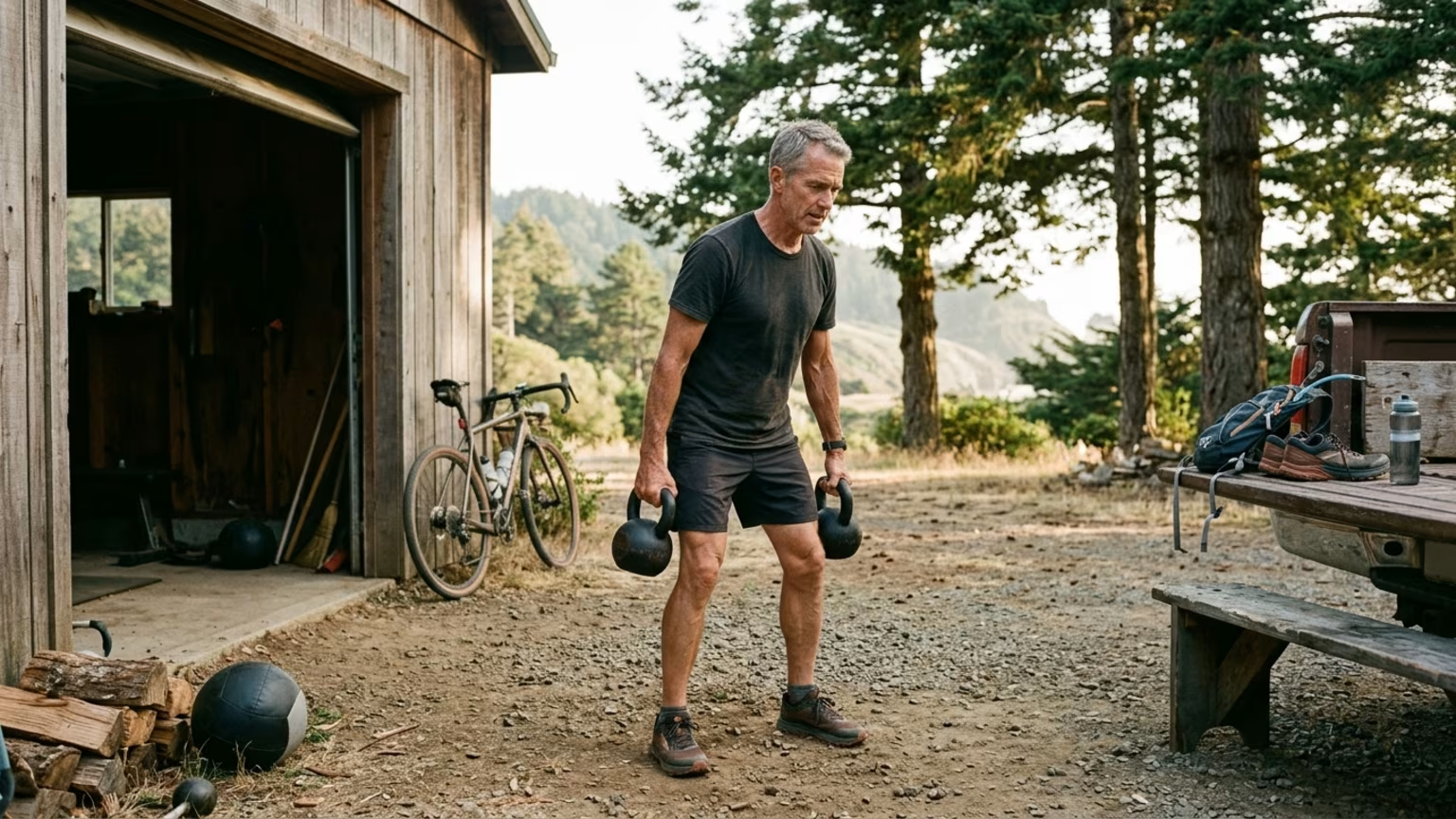

A 54-year-old athlete's detailed training account reveals how she combined heavy strength work and high-volume running to prepare for the UTMB World Series.





On October 6, 2026, Women's Health UK published a detailed first-person account of a 54-year-old endurance athlete preparing for the Ultra-Trail du Mont-Blanc (UTMB) World Series. The article was subsequently updated on October 7, 2026. It documented her specific routine for combining heavy strength training with massive running volume. The piece provides a transparent look at the daily realities of preparing for extreme competition later in life.
The athlete had attempted this specific UTMB event three times prior to her recent effort, but she unfortunately did not finish this latest attempt either. A mechanical issue with her prosthetic forced her to stop after 39 hours and 91 miles on the course. Her immediate response was to identify controllable factors and adjust her preparation. She has now set her sights on a 2027 attempt.
Preparing for an ultramarathon of this scale requires strict structural planning and professional guidance. The writer trained under coach Evan Amendola at OG Training Academy, a facility located in Lindenhurst, New York. Together they built a high-volume schedule specifically designed for mountain racing. This program aggressively combined focused strength conditioning and aerobic endurance.
The weekend schedule was deliberately structured to simulate the severe fatigue of mountain racing. Saturdays demanded an enormous output of energy and physical resilience. The day began with dedicated strength and conditioning work in the gym. This was immediately followed by five hours of continuous hill repeats that accumulated approximately 5,000 feet of elevation gain.
The inclusion of five-hour hill repeat sessions is a highly specific adaptation tool. Running up steep inclines builds explosive lower body power while significantly challenging the aerobic system. The downhill portions of these repeats provide essential eccentric loading for the quadriceps. This eccentric stress prepares the legs to withstand the brutal descents found in European trail races.
Sundays offered absolutely no relief from the accumulated fatigue of the Saturday sessions. The athlete completed targeted core and conditioning routines before heading outside for a scheduled 8 to 12-mile run. Running on severely fatigued legs is a necessary stimulus for long-distance trail racing. This back-to-back structure creates the physical durability needed for mountainous terrain.
The midweek schedule maintained a relentless focus on physical strength and injury prevention. Resistance training was programmed into almost every single weekday, with Mondays and Thursdays strictly dedicated to lower-body development. Building leg strength is essential for handling steep descents and continuous climbing over long distances. This frequency of lifting requires excellent systemic recovery.
Upper body work was certainly not neglected in this comprehensive endurance plan. Tuesdays were reserved specifically for push-focused strength movements, followed immediately by an easy 5K run. Fridays rounded out the resistance training load with chest and upper-body strength work. A strong upper body is critical for efficient pole planting during steep races.
Splitting the upper body work into specific push and chest sessions allows for targeted muscular fatigue. This separation prevents the upper body from becoming entirely exhausted on any single day of the week. It leaves the athlete fresh enough to handle the immense lower body demands of the following days. Structuring the week this way ensures that the athlete is never too sore to complete the priority running workouts.
Wednesdays shifted the focus entirely away from the weight room and toward cardiovascular power. The athlete completed two separate high-intensity endurance-running sessions on this single day. Double-session days are incredibly taxing on the central nervous system. They force the older athlete to adapt to high heart rates under significant physical fatigue.
Sustaining this immense volume requires a highly deliberate approach to bodily maintenance. The writer reports stretching daily to manage her muscle tension while completing at least one myofascial-release session weekly. These specific practices were clearly necessary to keep her muscular system functioning. Managing tissue health is critical when operating under such a heavy training load.
Her commitment to a weekly myofascial-release session aligns with sensible recovery practices for aging muscles. Dedicated tissue management helps maintain a full range of motion during heavy strength training. It also mitigates the cumulative stiffness generated by five hours of continuous hill climbing. Pairing this weekly session with daily stretching creates a reliable baseline for muscular health.
For the ambitious older athlete, this account serves as a fascinating reference point rather than a universal template. The available sources do not establish that this volume is safe for the general public. Applying this exact schedule without years of gradual adaptation will likely result in chronic overuse injuries. The schedule represents personal tolerance rather than an expert consensus.
The most striking element of her preparation is the heavy reliance on resistance work. Reendure consistently advocates for lifting weights to preserve muscle mass as we age, and this athlete prioritized it five days a week. This approach aggressively fights the natural decline in muscle power that older runners face. Proper programming is the only way to safely balance these two competing physiological demands.
Hill repeats, double-threshold days, and long runs create significant physical stress. Monitoring your fatigue is crucial when deciding if you should push through a scheduled workout. Using daily metrics for recovery decisions can help you adjust your intensity appropriately. You must scale your weekly volume to match your individual recovery timeline.
Fitting five strength sessions and massive running volume into a traditional seven-day week requires exceptional durability. Some older athletes find more success by extending their training cycle to allow for greater adaptation. A ten-day cycle allows for the exact same total workload with more rest between intense efforts. Flexibility in scheduling is a major component of long-term athletic success.
The psychological resilience demonstrated in this account is highly relevant for veterans of the sport. Being forced to stop after 39 hours and 91 miles is a devastating competitive outcome. Many athletes would struggle to find motivation after such a profound disappointment. Yet her immediate reaction was to evaluate the failure objectively and focus on the mechanical issue with her prosthetic.
Endurance sports demand a high degree of pragmatism as we get older. We must be realistic and positive about the aging process while maintaining our competitive ambition. The key is to avoid indiscriminate rest and maintain your momentum after a disappointment. Identifying controllable factors allows you to adjust your preparation intelligently for the next event.
Athletic longevity requires setting long-term goals that survive short-term failures. Her deliberate decision to target a 2027 attempt shows a healthy perspective on competition. It proves that a single failed race does not define an athlete's career. True endurance is ultimately about continually refining our methods and staying in the sport for the long haul.
Attempting an event as severe as the UTMB requires more than just personal motivation. Working with a dedicated coach like Evan Amendola provides necessary structure for older athletes. An outside perspective helps manage the delicate balance between pushing limits and avoiding injury. This professional oversight is crucial when juggling massive running volume with heavy strength training.
The specific reason for the premature end to her race highlights the unpredictability of ultramarathons. An equipment issue with a prosthetic is a mechanical failure rather than a physiological one. Recognizing this difference helps athletes maintain confidence in their physical preparation. A race can end abruptly even when the cardiovascular system and muscular endurance are fully prepared.
The narrative of this 54-year-old athlete forces a reevaluation of what constitutes failure in endurance sports. Covering 91 miles over 39 hours is an astonishing physical achievement by any standard. Older athletes benefit from viewing these massive efforts as valuable data collection for future attempts. Each demanding hour on the course hardens the body and mind for the next challenge.
Ambitious older athletes should view this high-volume account as a testament to persistence, carefully adapting its lessons on strength and resilience to fit their own recovery limits.

Follow ReEndure for practical insights on endurance training, recovery, nutrition and healthy aging. Stay connected for new articles, research led guidance and ideas to help you perform better for longer.


Read practical ideas on endurance training, recovery, nutrition and healthy aging to keep progressing for years to come.
Read the Blog