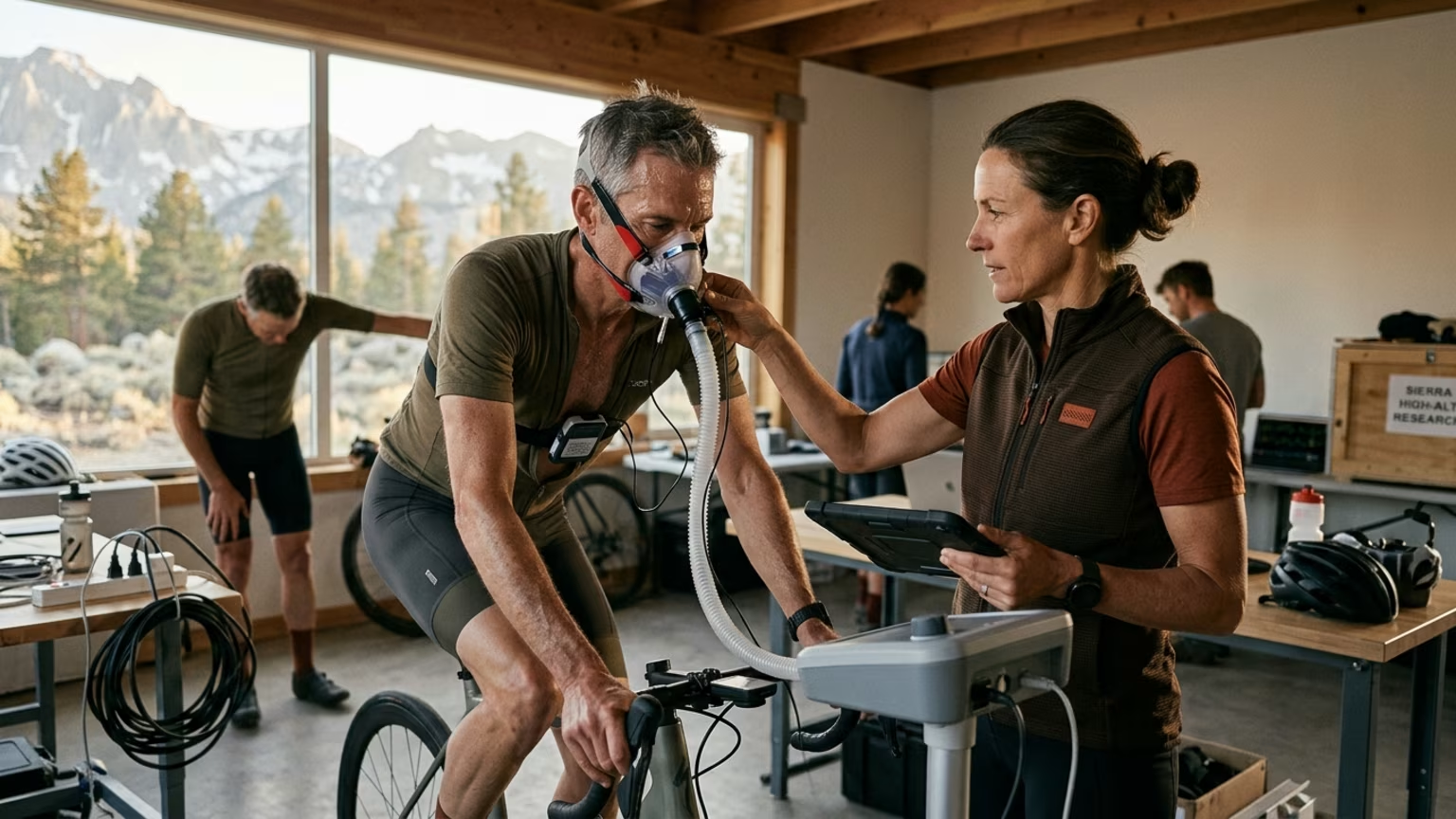

BikeRadar reports on emerging science in cycling performance, highlighting individual responses to high-altitude camps, breathing-based zones, and fueling.





On September 23, 2026, BikeRadar published James Witts's analysis of the 2026 Science and Cycling conference in Barcelona. The report outlined emerging practices expected to influence professional cycling by 2027. These developments include a renewed push for higher altitude training camps and a shift toward breathing based training zones. For the veteran endurance athlete, the core takeaway is a steady move toward highly individualized performance tracking.
The primary conclusion from the recent conference is that elite cycling is moving away from generalized assumptions. Professor Carsten Lundby reported that individuals monitored for four weeks at 3,454 metres experienced an average haemoglobin mass increase of 40 grams. Haemoglobin mass defines the oxygen transport capacity of your red blood cells. Lundby noted that this average compares very favorably with an increase of 20 grams seen at more traditional altitude levels.
However, the research heavily emphasises that these biological responses are highly individual. Lundby stated he would not be afraid to send athletes to substantially higher altitudes, but he stressed that diligent monitoring is strictly required. A higher camp does not automatically produce a better result for everyone. The exact same hypoxic stress that builds red blood cells can easily ruin your ability to complete high quality intervals.
This theme of individualization also extends directly into training intensity and race fueling. Teams are experimenting with systems that measure breathing rather than relying solely on power or heart rate. Visma performance coach Espen Aareskjold confirmed his team was fully embedded with a breathing monitor called Tymewear during 2026. Aareskjold described growing rider interest in how ventilation directly affects endurance performance.
The conference also highlighted rapidly shifting standards in race nutrition for the elite ranks. BikeRadar reports that some professional riders are now consuming more than 160 grams of carbohydrate per hour in some settings. This significantly exceeds earlier commonly accepted ceilings of approximately 90 grams per hour. The article attributes this massive fueling change to improved carbohydrate formulations and rigorous gut training over time.
The impressive 40 gram average haemoglobin increase came from a very specific and demanding protocol. The subjects spent 28 days at the Jungfraujoch research station in Switzerland. During those four weeks, their daily activity included hiking, resistance training and ergometer cycling. This means the blood adaptation cannot be automatically attributed to the 3,454 metre elevation alone.
The traditional altitude training approach usually targets elevations around 2,000 metres. BikeRadar lists established venues like Sierra Nevada at 2,300 metres, Tenerife at 2,200 metres and Font-Romeu at 1,850 metres. These specific locations are chosen to secure haematological benefits without excessively compromising daily training quality. BikeRadar frames the traditional 2,000 metre ceiling as an attempt to balance blood related gains with necessary training adaptation.
Lundby also referenced a separate one year observation in Antarctica at 3,800 metres. That extreme Antarctica exposure yielded a massive average haemoglobin mass increase of 100 grams. Some individuals in that prolonged observation reportedly increased their haemoglobin mass by a staggering 50 percent. Lundby also addressed a common coaching concern that high altitude might impair muscle protein synthesis. He acknowledged that coaches feared such an effect, but he stated he had seen no scientific evidence of impairment even at 5,000 metres.
In the realm of intensity monitoring, the Tymewear system estimates breathing rate, tidal volume and minute ventilation using a simple chest strap. The system helps define individualized zones for fat oxidation, endurance development and power work using ventilatory thresholds. Interestingly, BikeRadar reports that Visma initially kept the breathing data hidden from riders' Garmin devices. The coaching staff did not want to create confusion, but the subject later became a major topic of interest.
The article cites a 2023 study involving exercise physiologist Dan Plews to illustrate why breathing matters during long efforts. During a two hour ride at ventilatory threshold 1, ventilation stayed remarkably consistent. Meanwhile, heart rate rose by 10 percent and power output fell by 10 percent. This example is presented as a reason ventilation may provide a more stable indicator of internal intensity than heart rate or power.
Research into female cyclists also reinforces the profound need for individual testing. Professor Rob Lamberts studied power responses across different menstrual cycle phases to challenge group assumptions. He found that approximately 55 percent of trained female cyclists produced similar power in the early follicular and mid luteal phases. Meanwhile, 27 percent produced more power in the mid luteal phase and 18 percent produced more power in the early follicular phase.
In a separate fatigued performance comparison, the results were equally scattered across the studied athletes. Around 46 percent produced higher power in the early follicular phase. Roughly 36 percent produced higher power in the mid luteal phase and 18 percent showed similar power in both phases. Lamberts argued forcefully that research and training decisions should examine individual responses rather than relying only on group averages.
To measure individual carbohydrate absorption, Tim Podlogar uses a service called fuelsync. The fuelsync protocol involves a two and a half hour laboratory ride with glucose consumed every 15 minutes. It uses carbon-13 breath analysis to estimate exactly how much externally supplied carbohydrate a rider can absorb. Testing was available through Birmingham and Exeter universities, as well as partner laboratories in Germany and Slovenia.
The news out of Barcelona validates careful, supervised experimentation for the ambitious older athlete. When elite teams begin questioning basic metrics like power and heart rate, everyday athletes should pay close attention. You do not need to abandon your power meter, but you should treat your training zones as flexible estimates. Athletes who want to test new pacing strategies might consider using shorter tune up events as controlled experiments to dial in their numbers safely.
This emphasis on the individual is exactly what older athletes must adopt to keep improving year after year. Hitting my forties brought a harsh reality check for our team regarding recovery and workload. The track workouts were not getting slower, but the days after them felt significantly heavier. Instead of forcing my old Tuesday and Thursday intensity schedule, I looked at the data on Masters athletes and muscle protein synthesis.
I pushed my second hard session to Friday, which provided an extra forty eight hours of low intensity recovery. My total weekly volume stayed exactly the same, but the quality of my intervals skyrocketed. We must approach these new altitude and fueling developments with that identical respect for individual recovery. This philosophy aligns perfectly with periodizing your training timeline for long term performance.
You should never copy a professional team's high altitude schedule without considering your age, medical history and recovery capacity. Before booking a trip to thin air, you must define your specific training objective clearly. Decide if you are acclimatizing for an event, seeking blood volume or simply changing your training environment. A clear objective is essential, much like the process of setting strategic goals for long term endurance.
Use simple response measures such as sleep quality, resting heart rate and perceived exertion alongside any formal laboratory testing. If your heart rate drifts upward during a long ride, pay attention to your breathing rate to judge true intensity. A temporary drop in power at altitude is a normal physiological response to lower oxygen availability, not an immediate loss of fitness. Start slowly, monitor your body and build your strategy based on personal evidence rather than internet trends.
Even basic physical symptoms like breathlessness require a personalized medical look rather than assumptions about fitness. Professor James Hull told BikeRadar that misdiagnosis of breathing issues is common among endurance athletes. In a study of professional footballers diagnosed with exercise induced asthma, more than half did not actually have asthma when properly tested. The overarching lesson for healthy aging is to track how your specific body responds to every new stimulus.
Reendure concludes that while higher altitude and ventilation metrics offer exciting new tools for endurance athletes, proper progress demands individualized tracking rather than blind adherence to group averages.

Follow ReEndure for practical insights on endurance training, recovery, nutrition and healthy aging. Stay connected for new articles, research led guidance and ideas to help you perform better for longer.




Read practical ideas on endurance training, recovery, nutrition and healthy aging to keep progressing for years to come.
Read the Blog