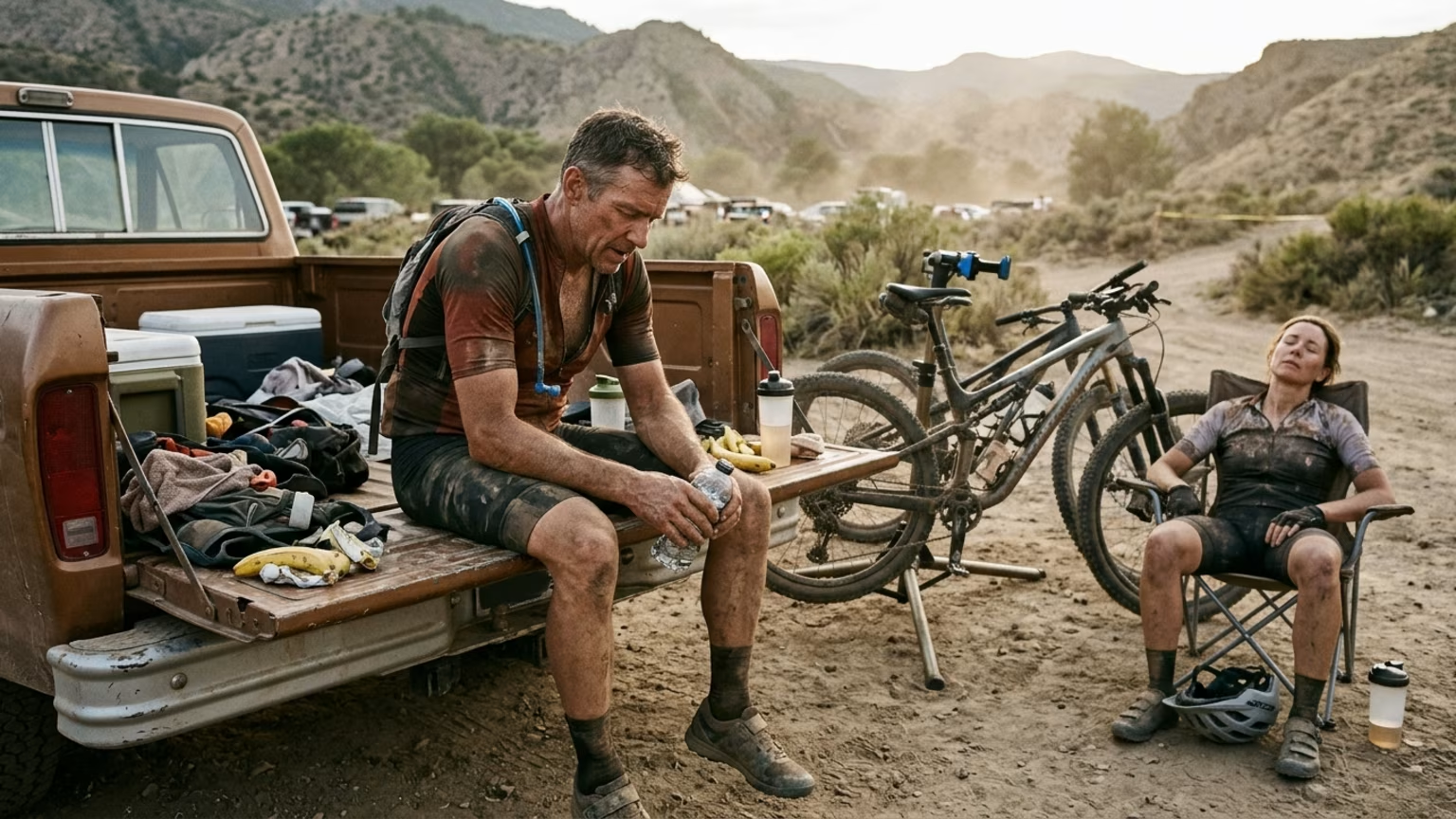

A Cape Epic study raised blood ketones without improving measured recovery. Here is what the findings mean for endurance athletes over 35.





An eight-day study at the Cape Epic mountain-bike race found that a ketone precursor raised riders’ blood ketones without improving the recovery-related outcomes researchers measured. The paper in the European Journal of Sport Science tested BDO against placebo during the demands of a real stage race.
The supplement produced no measured advantage in cardiovascular responses, cognitive performance, perceived recovery or sleep. It also did not change nutritional intake compared with placebo. For endurance athletes considering another addition to their recovery routine, the distinction is important: a biochemical response did not translate into a demonstrated practical benefit.
The researchers studied BDO, a ketone precursor that must be converted by the liver into ketones. That differs from ketone esters, which deliver ketone bodies more directly. The distinction matters because this was a test of a particular formulation and schedule rather than a generic test of everything sold as a ketone supplement.
According to the paper, BDO raised post-stage beta-hydroxybutyrate, the blood ketone measured in the trial. Yet the researchers found no advantage over placebo across the following areas:
This is the central finding, not simply a failure to raise ketones. The supplement changed the blood measurement in the intended direction. What was missing was a corresponding improvement in the outcomes being used to judge its usefulness during the race.
The authors concluded that the modest ketosis achieved with this formulation and schedule was insufficient to deliver measurable recovery benefits in that setting. They identified formulation, timing, achieved ketone concentrations and race conditions as possible reasons the findings differed from some earlier ketone-ester research.
For a rider, that separates two questions that supplement discussions can blur together. Did the product alter a biological marker? In this trial, yes. Did that alteration deliver the measured recovery advantages? The study found no such advantage over placebo.
The analysis included 18 riders who completed the race: 10 in the placebo group and 8 in the BDO group. Riders assigned to BDO took the study supplement after each stage and again before sleep. This describes the research protocol, not a recommendation for personal use.
The race setting gave researchers an opportunity to examine repeated supplementation during consecutive days of competition. It also placed the experiment within the practical constraints of a field event rather than a tightly controlled laboratory visit.
Riders managed their own food and drinks. Researchers recorded intake through 24-hour recalls supported by meal photographs and wrappers. Sleep was measured using a wrist-worn device.
The authors identified several limits to interpretation. The sample was small, only three participants were women, and there were no separate results for athletes aged 35 to 65. Some secondary outcomes may also have been underpowered, meaning the study may not have been able to reliably detect differences in those measures.
Researchers had limited control over the timing of meals after supplementation. Wrist-worn sleep monitoring was not laboratory polysomnography, so subtle changes in sleep architecture may have gone undetected. These constraints matter when judging the precision and generalizability of the findings.
The experiment tested one precursor and one schedule in a particular race context. A lack of measured benefit is not proof of equivalence across every ketone product or protocol. As reporting on the study also notes, the experiment did not assess every possible biological mechanism involved in muscle repair.
Interpretation of changes across the race needs similar care. Researchers observed lower heart rates, slower reaction time late in the race, reduced REM sleep at later stages and increased soreness. The authors did not attribute all of these changes to one cause; they noted that high temperatures on some stages may have contributed to the cardiovascular responses.
These boundaries leave a specific result worth taking seriously. Under the conditions tested, the BDO group did not gain a measurable advantage over the placebo group on the reported outcomes. Further research is a reason to keep the question open, not a reason to assume a benefit that this trial did not demonstrate.
For ambitious athletes in midlife, the useful response is to make the supplement claim more precise. “Supports recovery” is a broad promise. Better sleep, less soreness, sharper thinking and readiness for another demanding effort are different outcomes, and evidence for one should not automatically stand in for another.
At Reendure, the goal is to connect sports science with both current performance and the ability to keep racing for years. Here, that means judging the supplement by the practical benefits demonstrated rather than by the appeal of its proposed mechanism.
A clear outcome makes evidence easier to interpret. Someone interested in sleep should look for evidence of improved sleep. Someone interested in perceived recovery should look for a meaningful improvement in that measure. A rise in blood ketones answers a different question.
The Cape Epic trial is useful because it examined several outcomes rather than stopping at the blood measurement. Its results give no demonstrated reason to expect this BDO protocol to improve those aspects of recovery between stages.
Our guide to weighing recovery supplement options provides a broader place to consider supplement choices. The same decision principle applies here: identify the job a product is supposed to do before deciding whether the evidence supports using it.
That approach does not require dismissing the underlying science. It simply keeps a plausible mechanism separate from a demonstrated benefit. An interesting biological response can be worth studying without yet being a compelling reason to change a race routine.
The Cape Epic paper documented increases in daily energy, carbohydrate and fluid intake as the race progressed. BDO did not change those intake measures. Those observations describe what riders consumed; they do not establish an optimal fueling or hydration target.
A defensible practical response is to keep the basic logistics visible: food intake, fluid intake, recovery time and sleep. Supplement experimentation should not distract from those parts of a race plan that an athlete can directly organize and track.
This is a priority-setting judgment, not a claim that the trial proved a particular nutrition strategy. Before assigning a supplement an important role, it is reasonable to ask what evidence supports that role and what outcome would make its use worthwhile.
It also helps to keep supplement decisions separate from decisions about returning to demanding exercise. Our discussion of recovery after a marathon addresses that broader readiness question. The Cape Epic supplement result is not itself a timetable for resuming hard training.
The study does not establish a reason to add this BDO protocol for between-stage recovery. For athletes already considering it, the evidence gives a clear reason to question expectations of better sleep, cognition or perceived recovery from the tested approach.
Personal supplement and race-nutrition decisions can be discussed with a qualified sports dietitian or clinician. The useful conversation is specific: which product is being considered, what benefit is expected and what evidence supports that expectation?
There is no need to turn uncertainty into either enthusiasm or alarm. Keeping a high standard for evidence is compatible with ambitious training and racing. It means giving a supplement credit for the outcomes it has demonstrated rather than the outcomes its mechanism makes appealing.
The Cape Epic study found that BDO raised blood ketones without improving the measured recovery-related outcomes compared with placebo. On the strength of this trial, the tested protocol is not a demonstrated between-stage recovery tool.
The practical takeaway is modest: keep food and fluid planning, recovery time and sleep central to the conversation. Do not let a higher ketone reading substitute for evidence that a supplement helps with the outcome you actually care about. This result supports clearer expectations, not a new recovery prescription.

Follow ReEndure for practical insights on endurance training, recovery, nutrition and healthy aging. Stay connected for new articles, research led guidance and ideas to help you perform better for longer.



Read practical ideas on endurance training, recovery, nutrition and healthy aging to keep progressing for years to come.
Read the Blog