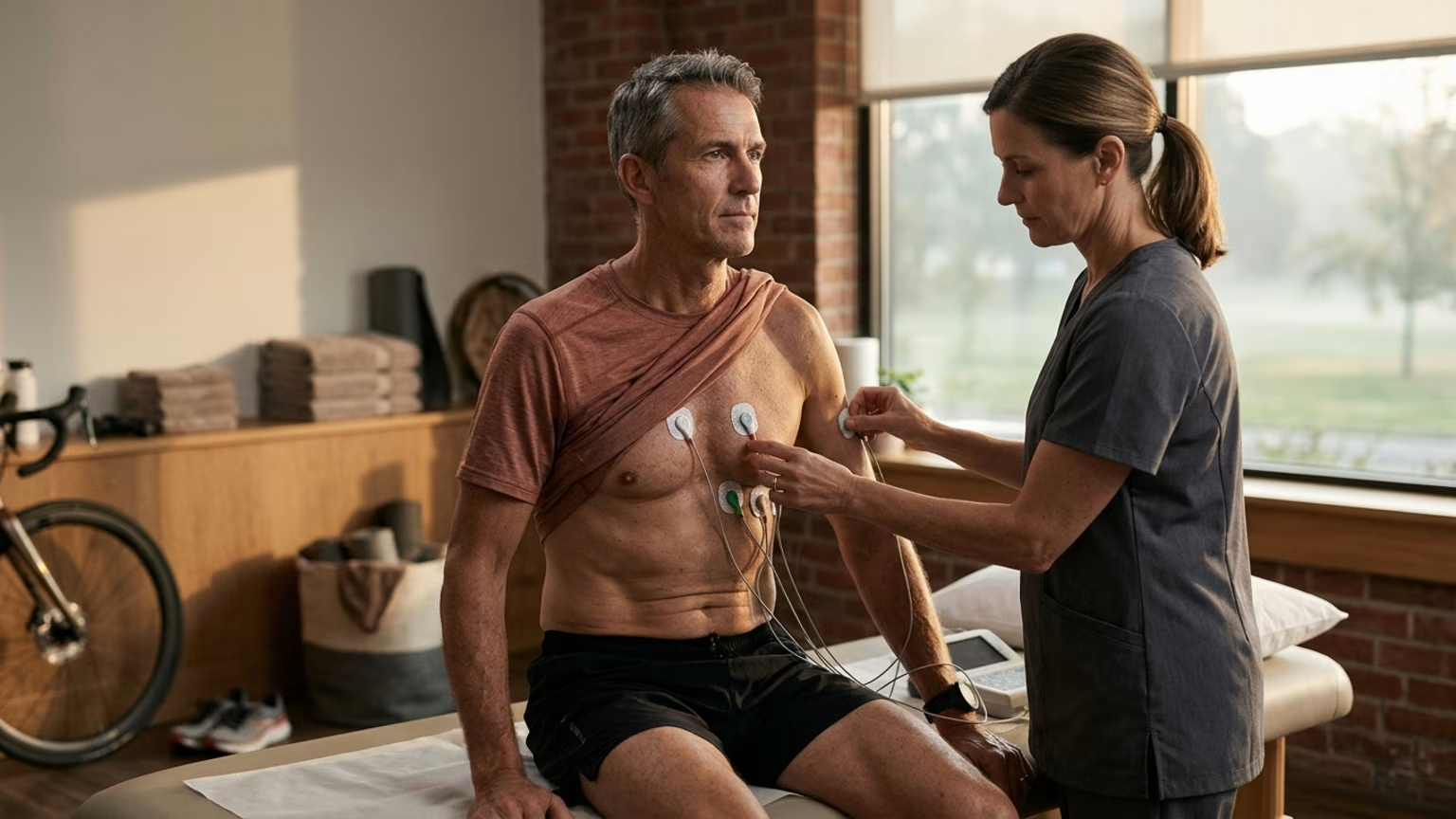

Discover why endurance fitness does not guarantee a healthy heart. Learn how older athletes can approach cardiovascular screening to ensure safe, lifelong racing.





Many endurance athletes operate under the dangerous assumption that crossing a finish line guarantees a healthy heart. A high degree of aerobic fitness does not grant immunity from underlying cardiovascular disease. This misconception continues to put thousands of passionate competitors at risk every year. True athletic longevity requires confronting our vulnerabilities rather than hiding behind our race results.
Historically, sports medicine doctors assumed that marathon runners possessed flawless cardiovascular health. The medical community viewed intense physical activity as the ultimate shield against chronic illness for decades. Early exercise science focused almost entirely on maximal oxygen uptake and low resting heart rates. Clinicians frequently dismissed chest tightness in highly fit individuals as simple fatigue or muscular strain.
This established a hazardous cultural norm within the global endurance community. Athletes learned to ignore physical warning signs and push through severe discomfort. Coaches celebrated immense suffering without recognizing the potential medical consequences hiding beneath the surface. The prevailing narrative wrongly suggested that aging could be outpaced with sufficient miles and sheer discipline.
Over time, the modern athlete internalized this belief system as an unquestionable truth. We built our training identities around our ability to endure pain and resist weakness. Routine medical checkups were often viewed as unnecessary for individuals who could swim or cycle for hours. This blind spot prevented many older participants from seeking preventive care when it mattered most.
A recent open-water event highlights the complex realities facing older competitors today. During a triathlon at Tai Mei Tuk in Hong Kong, a male participant disappeared during the swimming segment. The athlete, reported as being 59 or 60 years old, was found dead after an extensive seven-hour search. This heartbreaking outcome has prompted a serious reevaluation of safety in recreational sports.
The event organizer reported that 316 people took part in the race. These competitors were divided into 10 groups based on their specific race distance. The safety plan included 22 staff members providing water-rescue support using patrol speedboats and kayaks. Despite this coverage, emergency procedures were activated at approximately 7:15 a.m. when the participant failed to check in.
Weather conditions also played a complicated role during the event. The organizer stated that conditions appeared suitable about 20 minutes before the race began. There was high visibility at the venue, and no severe warnings were active at that exact time. However, an Amber Rainstorm Warning was issued shortly after the start of the competition.
While the confirmed medical cause of death remains unknown, the tragedy sparked a vital conversation. Olympic rower and Ironman athlete Michael Tse subsequently called for broader cardiac screening among amateur athletes. He argued that medical assessment should receive significantly greater attention from participants. Tse warned against demonizing the sport while advocating for improved safety awareness.
Tse previously directed the Centre for Sports and Exercise at the University of Hong Kong. In that role, he helped introduce voluntary heart screening for university student athletes. He noted that about 10 percent of athletes who volunteered for testing were recalled for follow-up investigations. These secondary tests included ultrasound, exercise ECG, or cardiac magnetic resonance imaging.
While that specific figure applies to younger university volunteers, older competitors face different physiological challenges. The European Society of Cardiology released a comprehensive athlete-imaging consensus statement in 2026. This document clearly distinguishes the screening needs of young participants from those of masters athletes. The consensus says that more than 80 percent of fatalities in athletes older than 35 are linked to atherosclerotic coronary artery disease.
Many active adults mistakenly believe a normal resting ECG provides complete medical reassurance. The European Society of Cardiology notes that an ECG can identify various electrical diseases. It can also raise suspicion of cardiomyopathy in otherwise healthy-looking people. However, the consensus clearly states that an ECG is inadequate for detecting coronary artery disease.
This critical distinction is absolutely essential for older competitors to understand completely. You cannot treat a standard baseline electrical screening as a definitive medical clearance for structural issues. True cardiac safety requires a more comprehensive approach to evaluating your internal health. Routine assessments must align with your age and your specific medical history.
The medical community does not recommend routine advanced imaging for every single low-risk competitor. The 2026 consensus outlines a highly individualized strategy for modern sports cardiology. For asymptomatic athletes with a high cardiovascular risk profile, initial evaluation includes clinical examination and exercise testing. Further testing is typically unnecessary after a completely negative initial assessment.
In certain cases, specific imaging provides critical insight for targeted treatment. The consensus suggests a coronary-artery-calcium score may be appropriate for some middle-aged or older athletes. This non-contrast CT scan is useful when the result could influence preventive treatment like statin therapy. It helps guide critical decisions for active adults who wish to train safely.
Cardiac MRI serves as another specialized tool reserved for distinct clinical concerns. The consensus reviewed a cohort of 503 athletes referred for this specific type of imaging. The results showed positive findings in 34 percent of those referred for abnormal T-wave patterns. Positive findings also appeared in 37 percent of athletes with certain ventricular arrhythmias and 58 percent of those with borderline echocardiographic results.
These figures represent referral-group yields rather than disease prevalence in the general endurance population. They demonstrate the value of advanced imaging when an initial screening raises red flags. Finding the right balance between necessary testing and excessive medical intervention is vital. A knowledgeable sports cardiologist can help you navigate these complex decisions effectively.
Medical preparedness is only one layer of protection for ambitious endurance participants. Open-water events introduce environmental variables that demand strict operational management and constant vigilance. The Hong Kong incident led to serious discussions about athlete tracking and weather monitoring. Swimmers experiencing sudden medical distress can vanish rapidly in challenging water conditions.
Race organizers carry an immense burden when balancing event schedules against deteriorating weather. A robust safety plan must feature explicit protocols for halting races in hazardous environments. Competitors should carefully review the emergency procedures of any event before finalizing their registration. Assessing water rescue coverage is just as crucial as executing your physical training block.
Reendure emphasizes that checking these operational details is a vital part of your race preparation. We regularly discuss strategies for evaluating risk in our Endurance Training Blog resources. A proactive athlete takes responsibility for understanding the venue and the support systems available. Relying solely on your fitness to overcome environmental hazards is a dangerous gamble.
Older athletes returning to intense training must complete a thorough cardiovascular risk review. This crucial assessment should evaluate personal medical history, family background, and conventional disease risk factors. Ignoring new symptoms like unusual breathlessness or exertional chest pressure is a catastrophic mistake. These urgent warning signs require immediate medical evaluation before you resume strenuous workouts.
Taking a prolonged break from your sport fundamentally alters your physical risk profile. Resuming your previous peak volume immediately after a long layoff is a flawed and dangerous strategy. A gradual return to training is essential for protecting your heart and your joints. You can find structured guidance for this process in our training and performance articles.
This sensible approach aligns perfectly with the core principles of lasting athletic health. Remaining active for decades requires immense humility and a willingness to adapt your habits over time. Reendure encourages every athlete to view medical screening as a powerful tool for longevity. You can review more strategies in our dedicated healthy aging resources.
Athletes must stop viewing medical screening as an irritating obstacle to their racing goals. A proactive approach to cardiovascular health provides the absolute foundation for a long athletic career. Acknowledging our human vulnerability does not make us weaker competitors in the long run. It simply ensures we have the privilege of standing at the starting line for years to come.

Follow ReEndure for practical insights on endurance training, recovery, nutrition and healthy aging. Stay connected for new articles, research led guidance and ideas to help you perform better for longer.






Read practical ideas on endurance training, recovery, nutrition and healthy aging to keep progressing for years to come.
Read the Blog