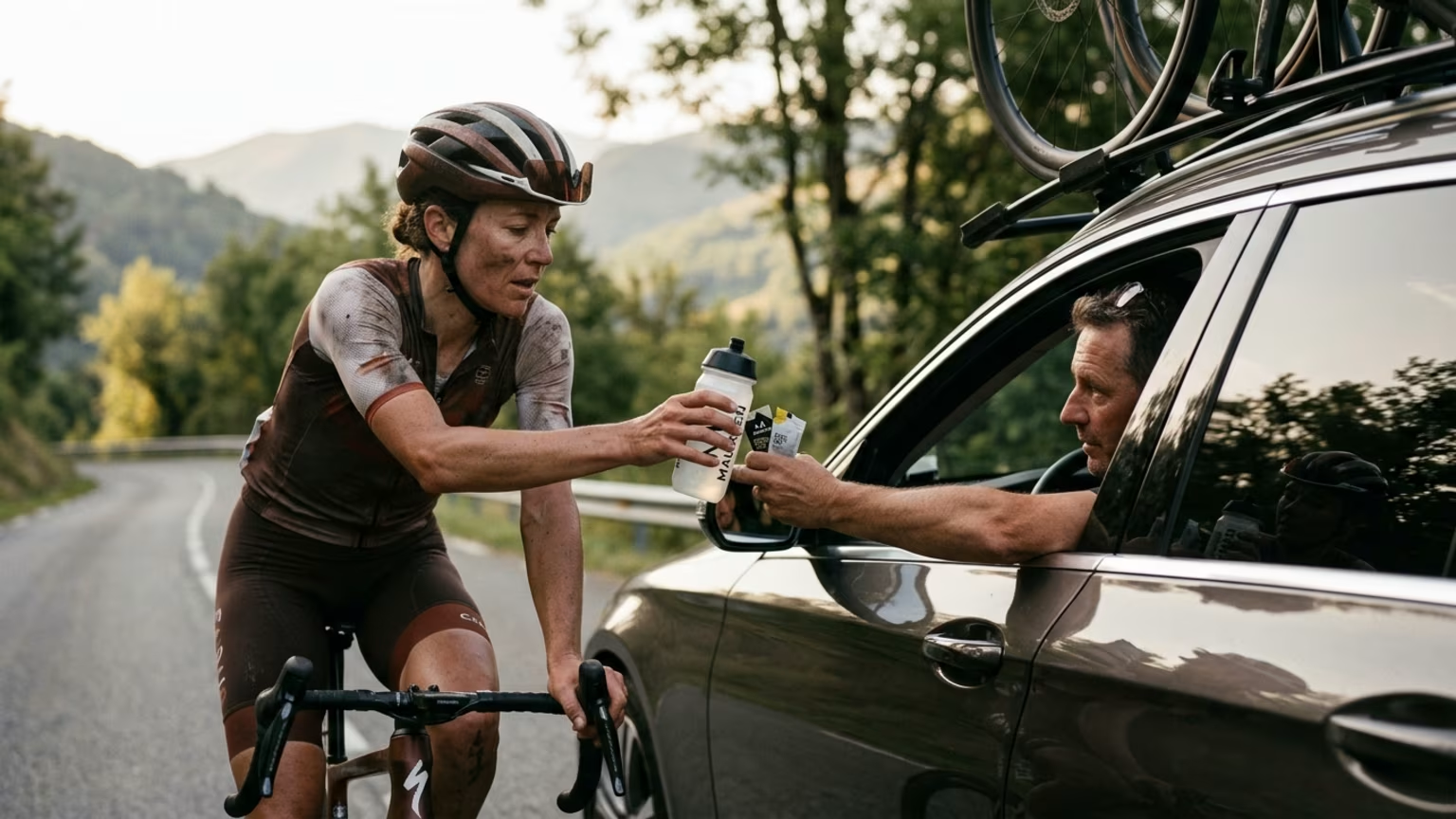

Analyze how Demi Vollering's 110 g/h fueling strategy at the 2026 Tour de France Femmes challenges standard carbohydrate limits for endurance athletes.





The notion that the human stomach can only process 90 grams of carbohydrate per hour is officially outdated. For years, athletes accepted this physiological ceiling as strict law. Recent professional race data proves the body can handle significantly more with the right preparation.
On August 19, 2026, NutraIngredients published a detailed breakdown of the fueling strategy that powered Demi Vollering to her 2026 Tour de France Femmes victory. She won the nine-day race by 1 minute and 18 seconds over Katarzyna Niewiadoma-Phinney after claiming the ninth and final stage in Nice. The report detailed a highly structured nutritional plan that pushed well past conventional carbohydrate limits.
Vollering consumed an average of 110 grams of carbohydrate per hour across 1,174.5 kilometres of racing. On the particularly demanding fifth stage, her intake reached an exceptional 130 grams per hour. FDJ-Suez team nutritionist Elsa Hugot structured this aggressive intake to reduce cumulative energy deficits over the entire event. The primary goal was preserving daily performance and supporting vital overnight recovery between demanding stages.
The team utilized 9,050 grams of carbohydrate total during the event. Maurten products supplied 3,450 grams of that reported total. Drinks provided a steady baseline of essential hydration and fuel. Gels served as targeted nutritional additions before climbs or when drinking opportunities were limited during intense racing.
The precise Maurten product usage included 47 bottles of Drink Mix 160 and nine bottles of Drink Mix 320. Vollering also consumed 20 Gel 100 sachets, 10 Gel 160 sachets, and six Gel 100 Caf 100 sachets. This careful combination of drink mixes and gels allowed the team to manage high hourly targets. They avoided relying on a single delivery method that might cause sudden gastrointestinal distress.
According to Hugot, there were no easy stages during the 2026 Tour de France Femmes where the team could afford nutrition mistakes. This framing positions fueling as an ongoing, multi-day performance strategy. It is not merely a reactive measure to avoid running out of energy late in an individual stage. The overarching strategy relies on consistent consumption from the very beginning of a ride.
Maurten conducted a five-hour assessment with Vollering to test her physiological limits before the race. The protocol involved four hours of outdoor riding followed by one hour of indoor testing. During this specific session, she consumed 120 grams of carbohydrate per hour. The company reported that she oxidized more than 77% of the ingested carbohydrate during the test.
The University of Birmingham tracks similar individualized data through their fuelsync service. Their methodology uses a supervised 2.5-hour cycling or running test along with repeated glucose drinks. Researchers utilize specialized breath analysis to estimate how much exogenous carbohydrate an athlete actually uses. This process analyzes the carbon-13-to-carbon-12 ratio in exhaled carbon dioxide to confirm the exact utilization rate.
According to the University of Birmingham, current academic guidelines recommend 30 to 60 grams of carbohydrate per hour for exercise lasting between one and 2.5 hours. For efforts exceeding 2.5 hours, the recommendation suggests up to 90 grams per hour from a glucose and fructose mixture. However, a proof-of-concept study showed athletes given 90 grams per hour actually used anywhere between 49 and 81 grams of it.
This massive variation means an individual’s optimum intake might be up to 25% higher or lower than current guidelines. The university described carbon-13 breath analysis as a precise method for tracking how much consumed carbohydrate is actively burned as fuel. In that specific method, carbon-13-enriched glucose is consumed during the exercise session before researchers analyze the exhaled breath.
This paradigm shift requires a calculated approach for the ambitious endurance athlete over 35. Aging athletes naturally experience slower recovery times and are more susceptible to the compounded fatigue of long training blocks. Implementing a strategy focused on higher carbohydrate intake can limit glycogen depletion and maximize carbohydrate availability for the following day. Proper nutrition and fueling resources emphasize that adequate intake helps preserve lean muscle during heavy endurance work.
"When my Achilles flared up right before a major marathon build, the standard advice was total rest. But diving into the clinical research on tendon loading changed my approach entirely. I swapped complete rest for heavy slow resistance training, specifically utilizing heavy calf raises on a deficit. It felt counterintuitive to load an injured tendon, but the science was clear. Within six weeks, the morning stiffness faded, and I was back to building mileage without the chronic ache."
Just as loading an injured tendon feels initially wrong, consuming 110 grams of carbohydrate per hour can seem excessive to a veteran runner or cyclist. However, science shows that structured adaptation changes our baseline physiological limits. Carbohydrate targets above 100 grams per hour must be introduced progressively during training to improve gastrointestinal tolerance safely. Hugot noted that gut adaptation is highly individual, with some athletes adapting within weeks and others needing several months.
The wider sports nutrition trend emphasizes structured intake schedules over reactionary fueling. Practitioners advise against the outdated habit of taking sporadic gels only after deep fatigue appears. For a long ride or race, this means establishing a schedule based on regular, steady consumption from the very first hour. Older athletes often struggle to recover from back-to-back weekend long runs, but pushing carbohydrate intake higher preserves muscle glycogen and speeds recovery between sessions.
Ambitious older athletes should treat Vollering's 110 grams per hour as an advanced benchmark rather than a starting prescription. Attempting to consume this much carbohydrate without prior gut training can lead to severe gastrointestinal distress. Professor Gareth Wallis of the University of Birmingham noted that excessive intake can cause cramping or bloating, while insufficient intake demonstrably reduces performance. Integrating smart fueling with structured recovery and mobility practices ensures a balanced approach to athletic longevity.
Athletes repeatedly experiencing stomach issues at conventional intake levels should consider supervised testing instead of simply forcing more calories. Individual testing removes the guesswork from long course race preparation. Knowing your exact oxidation rate allows you to build a fueling protocol tailored to your unique biology. This precision supports robust healthy aging strategies by ensuring the body is never chronically under-fueled during intense metabolic stress.
A high hourly target is much easier to execute when distributed across multiple carbohydrate sources. Combining glucose and fructose drinks with portable gels creates a steady stream of digestible energy. Recreational athletes can apply this professional strategy by practicing their exact drink concentrations and gel timings well before race day. Practicing the exact routine builds confidence and trains the stomach simultaneously.
For multi-day endurance events, carbohydrate intake during exercise is only one piece of the performance equation. Hugot emphasized minimizing overall energy deficits to restore capacity for the following day. Athletes must also prioritize post-exercise carbohydrate intake, adequate sleep, and sufficient protein alongside their on-bike targets. Proper hydration further supports the absorption of these high carbohydrate loads.
The veteran endurance athlete must view these massive fueling benchmarks not as a mandatory prescription, but as quiet proof that our physiological limits are remarkably adaptable through patient repetition.

Follow ReEndure for practical insights on endurance training, recovery, nutrition and healthy aging. Stay connected for new articles, research led guidance and ideas to help you perform better for longer.





Read practical ideas on endurance training, recovery, nutrition and healthy aging to keep progressing for years to come.
Read the Blog