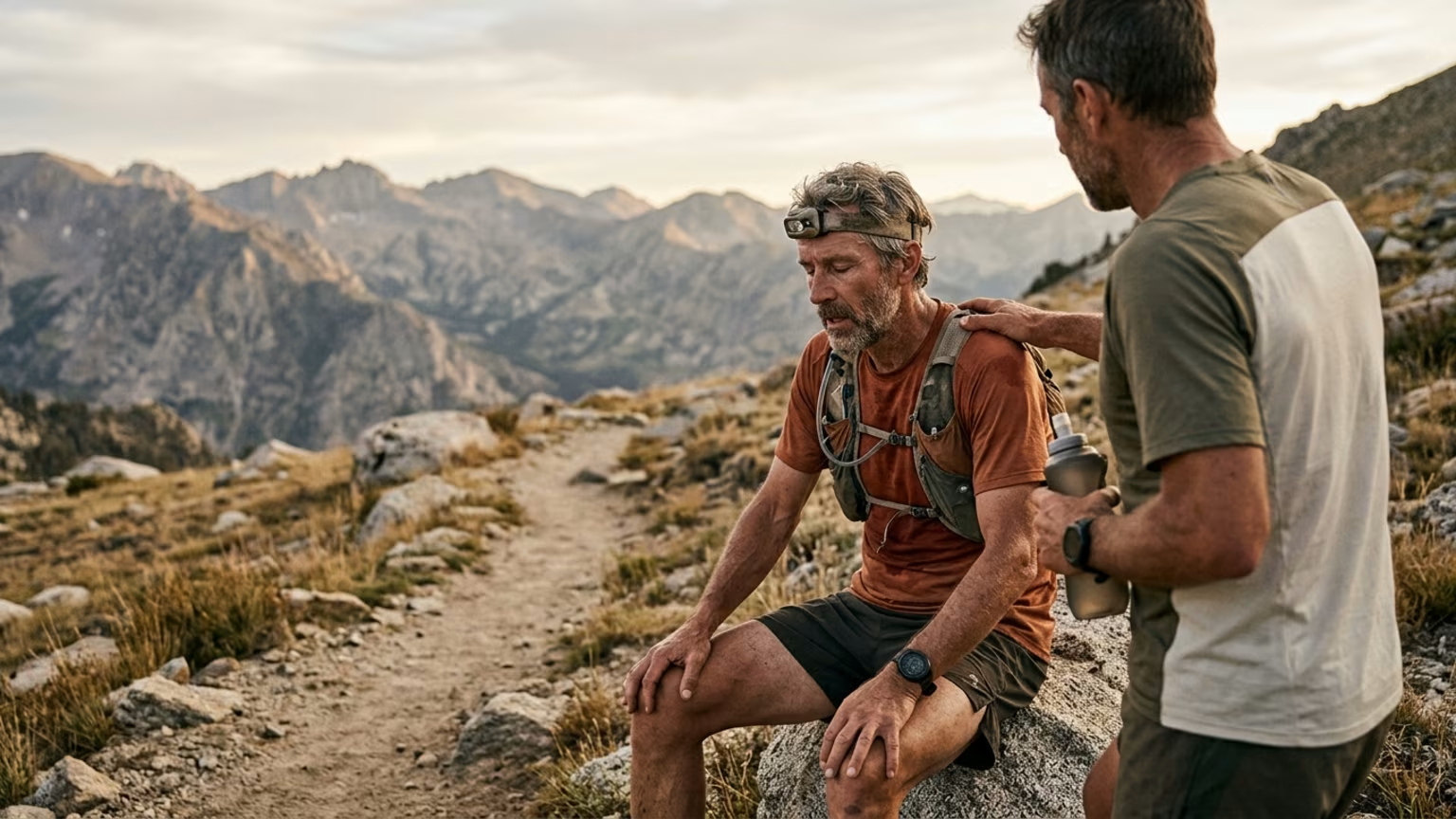

Learn how veteran endurance athletes can apply pacing, aid-station discipline, and fatigue management lessons from the historic 2026 Tor des Géants victory.





On September 17, 2026, UA.News reported that Zhao Jiaju won the Tor des Géants 330-kilometre category in Italy. He finished the grueling race in 65 hours, 55 minutes, and 22 seconds. His winning time was reported as 13 minutes faster than the previous course record. This achievement makes him the first Asian winner reported by the event coverage.
The race data provides a detailed look at extreme pacing, sleep restriction, and strategic decision-making. Long-distance endurance racing forces competitors to manage physical deterioration over multiple days. This historic win offers a concrete lesson in fatigue management for endurance athletes. By examining how this race unfolded, we can better understand the mental demands of mountain running.
The primary finding from this event revolves around managing sleep as a strictly constrained resource. The reported rules gave runners a 150-hour cutoff and did not require mandatory rest periods. This format leaves athletes entirely responsible for deciding when and how long to stop. Zhao treated his rest as a tactical variable rather than a biological necessity.
Reports say Zhao delayed his first substantial stop until 35 hours and 42 minutes into the race. At that specific aid station, he reportedly spent about 50 minutes total. He used that time to change clothes, eat, and sleep for approximately 20 minutes. His aid-station behavior combined several vital decisions into a single block of time.
He did not treat rest as an isolated variable independent of fueling and gear management. For the remainder of the race, according to event coverage, he used fragmented naps of roughly 10 minutes at various aid stations. This strategy resulted in an accumulation of about one hour of sleep across the entire event. The available reporting presents his sleep approach as a race-specific tactic.
It does not provide evidence that very little sleep is generally advisable for ultramarathoners. This extreme approach highlights the profound difference between elapsed race time and moving time. The recorded 65 hours, 55 minutes, and 22 seconds represents his total completion time. Managing the clock during stops is critical, as shorter stops preserve forward momentum.
However, the available sources do not quantify how this severe sleep restriction affected his nutrition, injury risk, or overall judgment. His race was not an unbroken string of perfect splits or constant leading. China Daily reported that Zhao was passed near the 203.8-kilometre mark by Swiss runner Jonathan Schindler. Despite this setback, Zhao remained patient and eventually retook the lead during the second night.
The second night is typically when sleepiness and navigational mistakes become especially consequential. He ultimately extended his advantage to more than 50 minutes. This late surge demonstrates the value of continued execution over uninterrupted front-running.
The structural demands of this mountain ultramarathon are incredibly harsh. The 2026 course covered 336.1 kilometres and demanded more than 24,000 metres of cumulative elevation gain. Athletes had to cross more than 25 high-altitude passes. Several of these mountain passes reached elevations above 3,000 metres.
The event is staged entirely in Italy's Aosta Valley and finishes in the town of Courmayeur. These environmental and structural hurdles contribute to a notoriously low completion rate. China Daily described the event as often having a finish rate below 60 percent since its establishment in 2010. The demanding terrain forces athletes to manage aching muscles and painful soles constantly.
Zhao himself described the experience as miserable and stated that he completed the route through sheer willpower. This quote is a retrospective description of his personal experience. It is not an independent scientific explanation of his victory or a physiological mechanism. We cannot conclude that willpower is the sole determinant of success in the mountains.
The sources do not establish whether fragmented naps improved his performance relative to a longer planned sleep block. They also do not determine if he would have performed even better with more sleep. The event ecosystem now features an even more demanding format than the standard 330-kilometre category. The 2026 event week also included the TOR450 race.
A KAILAS FUGA announcement reported that Franco Collé won that event in 122 hours, 1 minute, and 57 seconds. That course reportedly covered 450 kilometres and featured 32,000 metres of elevation gain. This confirms that extreme distance racing continues to push the recognized boundaries of human endurance. Athletes attempting these distances must prepare for unparalleled physical and mental stress.
Ambitious athletes in the 35 to 65 age range should view this victory as a lesson in decision-making under severe fatigue. You should definitely not view his one hour of total sleep as a recommended target for your own races. The available sources document one specific elite performance, not a controlled experiment. Extreme sleep deprivation is not a strategy that promotes healthy aging or sustainable long-term athletic development.
The most defensible takeaway is to protect your ability to make rational choices late in your event. You need to build a race plan that defines your aid-station priorities well before the starting gun fires. Essential nutrition and fluids must always be addressed first. Clothing or equipment changes should follow naturally.
Sleep decisions must remain adaptable based on your current physical symptoms and course conditions. Consistently practicing a reliable fueling and hydration strategy ensures you do not forget these steps when exhausted. Your checkpoint plans should function as flexible rules rather than rigid promises. Zhao's temporary loss of the lead demonstrates that a runner can lose momentum, adjust, and still recover later.
Remaining calm when things go wrong is a crucial skill for older athletes. You should practice the logistics of night running, fueling, and short stops during your training blocks. Familiarity with these specific tasks ensures that late-race fatigue does not force you to improvise critical decisions. Older athletes must implement conservative rules for confusion, unsafe navigation, or severe drowsiness.
You need predetermined boundaries for when to stop if pain worsens or if you become unable to eat. By setting these standards in advance, you protect your aging body from unnecessary long-term damage. Following a carefully structured race calendar allows you to recover properly from massive physical efforts. Your primary goal is to copy the meticulous planning discipline of elite runners without adopting their physical deficits.
Preparation protects your health when willpower inevitably runs low. Managing sleep and fatigue carefully is central to finishing long events safely. You should review the principles behind longevity and performance recovery to build a sustainable training approach. We know that as endurance athletes age, recovery times inevitably slow down.
You cannot afford to make careless navigational or physiological errors in the mountains. Prioritize disciplined, structured systems to manage the unavoidable stress of competition. Learning to manage your downtime efficiently allows you to perform at your best today. It also ensures you can keep racing for decades to come.
Veteran endurance athletes should copy the meticulous aid-station planning of elite ultramarathoners while firmly rejecting extreme sleep deprivation to protect their long-term health and performance.

Follow ReEndure for practical insights on endurance training, recovery, nutrition and healthy aging. Stay connected for new articles, research led guidance and ideas to help you perform better for longer.



Read practical ideas on endurance training, recovery, nutrition and healthy aging to keep progressing for years to come.
Read the Blog