

Discover why the new L. plantarum GKK1 probiotic study isn't a magic cure for muscle soreness, and learn the evidence-based recovery habits you actually need.





The alarm goes off at 4:30 in the morning. You swing your legs out of bed and instantly feel the deep ache of yesterday's hill repeats. You limp toward the kitchen hoping a new pill will ease the soreness. You want a quick shortcut to feeling fresh again.
Every endurance athlete eventually looks for a faster way to bounce back from heavy training. The fitness industry is more than happy to sell you the idea that the right capsule will erase your fatigue. Probiotics are the current focus of this aggressive marketing push. Companies claim that optimizing your gut bacteria will dramatically reduce muscle soreness and speed up tissue repair.
The unpopular truth is that most of these products overpromise and severely underdeliver. You cannot bypass the physiological tax of heavy training with a simple daily capsule. Athletes over 35 often waste money on unproven remedies instead of managing their actual training load. A solid plan always beats an experimental supplement.
The urge to find a quick fix is completely understandable. When you juggle a demanding career, family responsibilities, and an ambitious race calendar, you want every possible advantage. However, relying on untested products can lead to a false sense of security. You might push your body too hard while assuming a pill is protecting your muscles from damage.
True progress requires honesty about what your body can handle. A calm and objective look at the peer-reviewed literature reveals that science moves slowly. While emerging research is always exciting, it rarely provides an immediate solution for your Sunday long run. You have to learn how to interpret new studies without getting caught up in the commercial hype.
A new randomized trial published in Nutrients recently tested this exact recovery concept. Researchers investigated whether four weeks of supplementation with the strain Lactiplantibacillus plantarum GKK1 could reduce fatigue. They also wanted to see if it reduced exercise-induced muscle damage. The study included 48 healthy, sedentary adult men.
Half of these participants received the GKK1 strain, and the other 24 received a placebo. The men supplemented for four weeks before completing a highly specific exercise protocol. This test involved 100 maximal vertical jumps to induce intense muscle damage. Researchers assessed the men at 3, 24, and 48 hours after the jumps.
The scientists used countermovement-jump testing, an isometric mid-thigh pull, and a 30-second Wingate anaerobic test. The GKK1 group showed smaller post-exercise declines in several neuromuscular and Wingate-performance measures. The intervention was also associated with lower post-exercise creatine kinase and myoglobin. These are common biomarkers used in research on muscle damage.
Additionally, the GKK1 group showed lower high-sensitivity C-reactive protein and lower TBARS. TBARS is a marker associated with lipid peroxidation and oxidative stress. The report also describes effects on stress- and endocrine-related measures. These included testosterone, cortisol, dopamine, and human growth hormone.
The researchers also measured catecholamines and adrenaline. In particular, GKK1 reportedly mitigated the exercise-related depletion of serum dopamine seen in the placebo group. It also attenuated acute adrenaline spikes after the jumping protocol. While these results sound impressive on paper, we need to look closer at the context.
Grape King Bio Ltd. supplied the GKK1 strain and had researchers involved in the study. The available report also does not state the exact dose or colony-forming-unit count. Most importantly, 100 vertical jumps by sedentary men do not mimic the stress of a high-mileage running week. You cannot compare this artificial challenge to a grueling cycling event.
To understand the true value of probiotics, we have to look at the broader scientific landscape. Different bacterial strains produce vastly different results in human trials. A separate 2026 randomized trial highlights this variability clearly. This study followed 30 trained male long-distance runners, of whom 27 completed the study.
These runners took a multistrain probiotic for four weeks before testing. The researchers found that the supplement did not significantly alter aerobic or anaerobic performance. It also failed to improve lactate response, muscle-damage markers, or inflammatory cytokines compared with placebo. The trial reported no significant group-by-phase interactions for IL-6, TNF-alpha, lactate, or creatine kinase.
The relevant interaction tests all returned p values above 0.15. Exercise itself predictably increased IL-6, TNF-alpha, and lactate in both groups. The p values for these increases were all below 0.001. This null result proves that you cannot treat all probiotic formulations as interchangeable tools.
The same rule applies to other nutritional interventions aimed at muscle repair. For example, a 2026 publication detailed a 14-person double-blind crossover trial testing a sulforaphane precursor. That study reported lower post-exercise creatine kinase and myoglobin but saw no change in endurance capacity. Lowering a specific blood biomarker does not automatically translate to running faster.
When reviewing the clinical science of delayed-onset muscle soreness, we see that soreness is complex. A single targeted strain might alter one chemical pathway but completely fail to address central nervous system fatigue. GKK1, TWK10, and multistrain products act differently even when they belong to the same broad bacterial genus. Research on microbiome-targeted nutrition and healthy aging is definitely expanding rapidly.
Recent reviews discuss potential links among gut microbial modulation, inflammation, immune function, and muscle health. However, you must focus on the fundamentals of healthy aging first. The reality for masters athletes is that recovery naturally slows down over time. You have to adapt your routine rather than hoping a supplement will restore your youth.
Patience, progressive overload, and consistent sleep are the true drivers of longevity in sport. Attempting to mask fatigue with unproven interventions can actually disrupt your athletic progress. You might push through warning signs and end up with a severe chronic overuse injury. Instead, you should adjust your overall volume and intensity to match your current physical recovery capacity.
Acknowledging how the aging process alters physical recovery is a reality that every serious athlete must respect. Nutrition obviously plays a critical role in this deliberate long game. However, your foundation must be adequate total energy intake and sufficient carbohydrate availability. If you are undereating, no amount of specialized bacteria will save your heavy training block.
You must prioritize the basic macronutrients before worrying about isolated anti-inflammatory capsules. The authors of the GKK1 study concluded that the strain may be a safe nutritional strategy. They noted its potential for facilitating functional recovery and influencing urinary markers linked with muscle breakdown. This makes it an interesting option to test cautiously, but it is not a standalone solution.
To optimize your routine, you might need to design a lower-volume, high-quality training schedule to see real progress. Athletes should also avoid assuming that the GKK1 findings apply universally. The results from healthy men do not automatically translate to older adults, women, or injured athletes. Anyone with significant medical conditions should discuss probiotic use with a qualified clinician.
The sports science community will continue to investigate the gut microbiome and its impact on athletic recovery. You should expect to see more research isolating specific strains rather than broad multistrain blends. The focus is shifting toward precision nutrition. This involves matching specific genetic characteristics of bacteria to specific physiological outcomes.
Until the data becomes conclusive, treat new supplements as experiments rather than absolute necessities. If you decide to test a product like GKK1, maintain a strictly standardized routine. Track your morning resting heart rate, session-rated exertion, and subjective soreness scores carefully. Do not change multiple recovery variables at once, or you will ruin your own tracking data.
Other useful metrics include your performance on repeated benchmark sessions and your ability to complete planned intervals. Pay close attention to any gastrointestinal symptoms or suspected side effects during your testing phase. The most relevant question is whether a supplement supports consistent training over several consecutive weeks. Instead of buying another unproven supplement right now, drink a large glass of water and get to bed an hour earlier tonight.

Follow ReEndure for practical insights on endurance training, recovery, nutrition and healthy aging. Stay connected for new articles, research led guidance and ideas to help you perform better for longer.


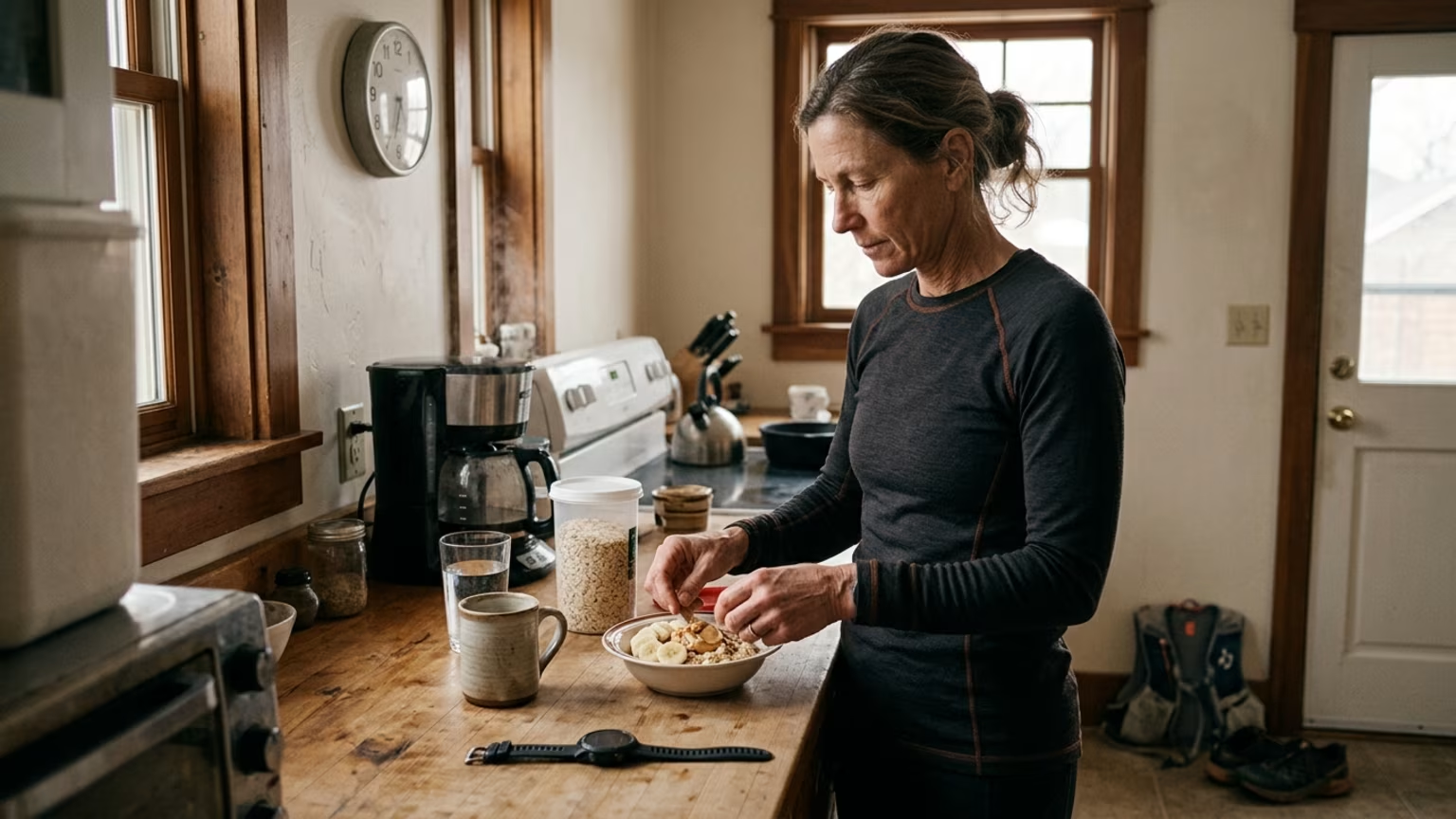


Read practical ideas on endurance training, recovery, nutrition and healthy aging to keep progressing for years to come.
Read the Blog