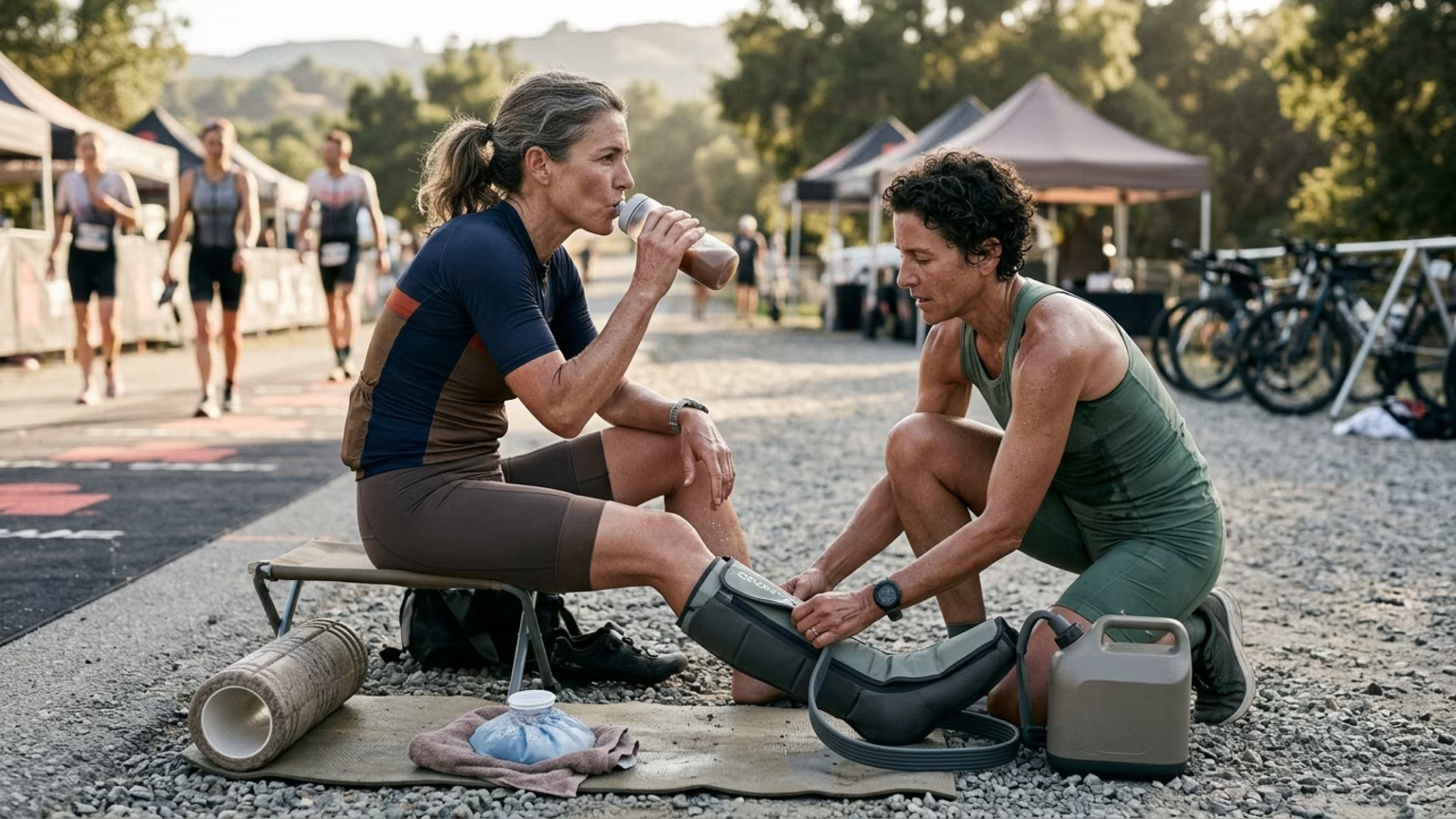

Learn how elite championship racing dictates post race recovery protocols. Discover evidence based strategies to manage fatigue, protect sleep, and rebuild safely.





The 2026 European Athletics Championships in Birmingham demanded extraordinary physical tolls from the competing athletes. María Pérez crossed the finish line of the half marathon race walk in 1:30:06. Later, 21 year old Sofia Fiorini won the marathon race walk in 3:15:11. Both women set inaugural world records after World Athletics made those distances official on 1 January 2026.
A structured post race recovery block is a deliberate period of reduced physical stress designed to restore normal bodily function after a peak event. It is a biological reset that allows tissue repair and nervous system recovery before structured training resumes. Elite performances illustrate why athletes need planned downtime following massive efforts. The sheer physiological cost of a championship race requires immediate and disciplined rest.
The inaugural records set in Birmingham show the immense output required at the elite level. Pérez beat the World Athletics performance standard of 1:30:30 by a full 24 seconds. She passed the 20 kilometre mark in 1:25:30, which equalled her own Spanish record at that specific distance. She ultimately finished ahead of Italy’s Alexandrina Mihai, who recorded 1:31:04, and Ukraine’s Lyudmyla Olyanovska, who finished in 1:31:07.
Fiorini delivered an equally punishing performance in the longer event. The Italian athlete beat the inaugural performance standard of 3:17:00 by 1 minute 49 seconds. She made her decisive move with just over 9 kilometres remaining and extended her lead steadily thereafter. Her final time improved by 10 minutes 31 seconds compared to her previous best. She had previously recorded a time of 3:25:42 when winning silver at the World Race Walking Team Championships in Brasília in April.
Endurance competition creates profound muscular damage and systemic metabolic fatigue. Preparing for a race involves shedding fatigue while maintaining fitness, which is technically known as a taper. A summary of tapering research shows endurance performance can improve when training volume is progressively reduced. Specifically, volume drops by approximately 41% to 60% for up to 21 days while intensity and frequency remain steady.
It is crucial to remember that tapering strategies are designed for athletes preparing for an impending competition. A taper assumes the athlete is already healthy, fully trained, and simply looking to drop residual fatigue. The 41% to 60% volume reduction range over a period of up to 21 days is a pre race tool, not a post race prescription. Post race physiology deals with acute tissue damage, which requires a much softer approach.
Post race recovery serves a completely different physical purpose than pre race tapering. The period immediately following a grueling race is meant to heal structural damage rather than preserve race readiness. You cannot simply apply the 41% to 60% tapering reduction to your post race week and expect optimal healing. Instead, you must dramatically reduce intensity before attempting to restore any competitive fitness.
Easy movement helps maintain your routine without adding destructive physiological stress. Activities like walking or relaxed cycling encourage blood flow to damaged tissues without straining the nervous system. You must avoid demanding intervals, heavy strength work, or long tempo runs until easy sessions feel entirely normal. Returning to structured progression is only safe when your capacity to absorb stress fully returns.
Master athletes face unique physiological shifts that alter their recovery timelines and general health considerations. A recent narrative review discusses possible cardiovascular remodeling in some long term high intensity endurance athletes. However, the review clearly emphasizes that physical activity remains associated with better health outcomes than sedentary behavior. The goal is to balance athletic ambition with the biological realities of aging.
Life stress also significantly impacts how quickly an older athlete bounces back from a massive effort. Practitioner guidance recommends adapting your training according to broader life stress rather than blindly following a rigid template. Work obligations and family responsibilities constantly compete with the body for available recovery resources. This is why healthy aging resources focus heavily on comprehensive lifestyle management alongside structured workouts.
Sleep serves as the foundational infrastructure for physical repair after any major endurance event. Poor sleep quality directly limits the body's ability to rebuild muscle tissue and stabilize metabolic hormones. If you fail to protect a regular sleep window, your post race recovery timeline will stretch considerably. Quality rest is a strict, non negotiable requirement for veteran athletes looking to sustain performance.
Supplemental rest can sometimes support the recovery process when nighttime sleep falls short of optimal levels. A 2026 meta analysis of team sport athletes reported improved endurance performance after daytime napping. The study noted a large positive effect, showing a standardized mean difference of 0.96 and a 95% confidence interval of 0.62 to 1.29. However, you should use brief naps cautiously so they do not interfere with your primary nighttime schedule.
While the napping meta analysis offers interesting insights, it specifically studied team sport athletes rather than recreational older runners. The impressive standardized mean difference of 0.96 on endurance performance does not guarantee universal results for everyone. Athletes dealing with persistent insomnia or daytime sleepiness should seek proper clinical evaluation instead of relying on longer naps. True recovery stems from consistent, high quality nighttime sleep rather than sporadic daytime rest.
You do not need a laboratory to gauge your recovery status following a major race. Practitioner guidance recommends tracking several subjective metrics without changing too many variables at once. You should monitor sleep timing alongside sleep quality and your perceived readiness. It is also important to track training load, general muscle soreness, and overall fatigue markers.
These subjective and objective signals provide a clear, comprehensive picture of your central nervous system. Relying on multiple data points prevents you from making rash, emotionally driven training decisions. You can avoid serious setbacks by addressing subtle signs of fatigue before they compound into larger issues. This comprehensive tracking ensures you return to training only when your body is genuinely ready.
Start by evaluating your morning mood and daily motivation levels as soon as you wake up. Noticeable dips in motivation often precede a deeper physical breakdown or the onset of overtraining. If you feel genuinely apathetic toward exercise, your body is still heavily processing the race effort. Proper recovery strategies require you to respect these vital, subjective warning signs before lacing up your shoes.
Pay close attention to your perceived exertion during early warmups or basic daily movements. If an easy pace feels unusually taxing, your muscular recovery remains incomplete and requires more time. Persistent joint pain or severe muscle soreness dictates an immediate need for continued rest over active training. Never let a predefined training schedule overrule clear physical symptoms of fatigue.
Resting heart rate acts as a reliable, objective window into your cardiovascular recovery status. A resting heart rate that remains abnormally high indicates that your system is still fighting post race inflammation. Tracking this metric consistently allows you to spot trends rather than reacting to single erratic readings. Combine this data with your subjective feelings to form a complete recovery assessment.
When evaluating your overall readiness, remember to monitor your appetite and general daytime energy levels. A suppressed appetite following a hard race can delay the absorption of critical nutrients needed for tissue repair. You must ensure you are fueling adequately even when your training volume drops significantly. Establishing robust nutritional habits supports your injury prevention goals and accelerates the healing process.
Transitioning back to regular training requires extreme patience and strict personal discipline. After clearing the initial recovery block, reintroduce just one demanding stimulus at a time. Do not stack intense intervals and a long endurance run into the same weekend. This gradual, deliberate approach minimizes the risk of sudden overuse injuries while rebuilding your base fitness.
Let your subjective feeling of physical normalcy guide the exact timeline of your return. A successful recovery week leaves you eager, refreshed, and physically prepared to handle progression. If you feel anxious or depleted during routine sessions, you simply need more dedicated downtime. The ultimate goal is maintaining long term athletic consistency over chasing short term gratification.
The extreme efforts seen in Birmingham provide a stark, humbling reminder of human athletic limits. Reaching the finish line of a major endurance event drains the body in profound, measurable ways. Elite performances set a standard for competition, but they also highlight the massive physiological debts incurred by the body. Addressing that debt through disciplined endurance performance routines ensures you can continue competing for years to come.
Enduring success belongs to the athlete who treats dedicated rest with the same absolute reverence as a race day effort.
Stay patient, stay healthy, and keep moving forward.

Follow ReEndure for practical insights on endurance training, recovery, nutrition and healthy aging. Stay connected for new articles, research led guidance and ideas to help you perform better for longer.






Read practical ideas on endurance training, recovery, nutrition and healthy aging to keep progressing for years to come.
Read the Blog