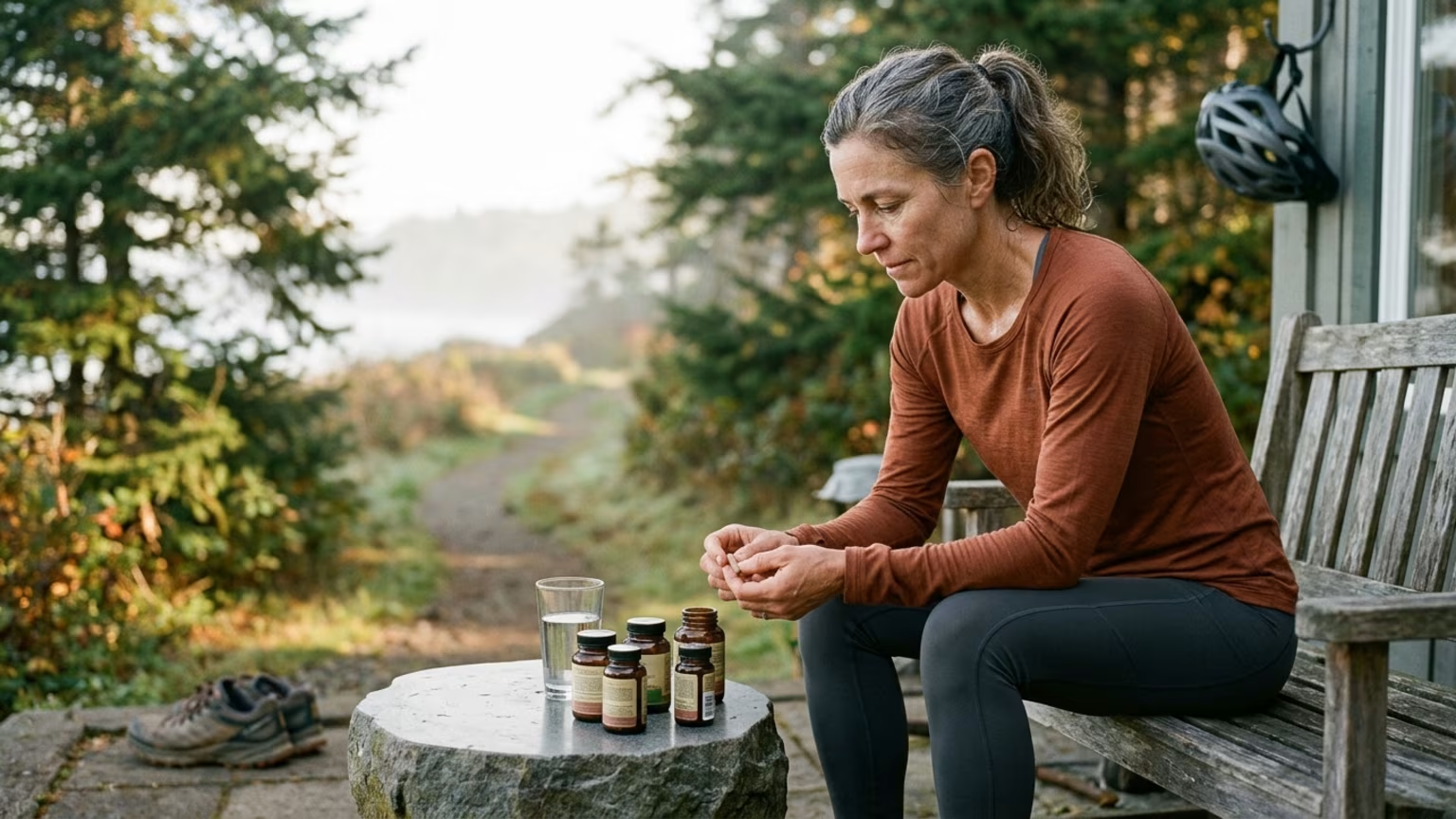

Learn what recent clinical research reveals about iron deficiency in female endurance athletes, and why blood testing always beats blind supplementation.





Secondary research estimates that up to 60 percent of female athletes experience iron deficiency. This number is alarming, and it explains why so many endurance competitors immediately reach for iron tablets the moment they feel tired. We need to stop treating high dose iron as a universal performance enhancer. If you are an ambitious female athlete, blindly taking iron without clinical assessment is a mistake.
The sports industry loves a quick fix. When heavy training leads to persistent fatigue, the easiest answer is to assume you are deficient and start swallowing supplements. However, sports nutrition guidance firmly advises against taking high dose iron unless a deficiency is clearly established. More iron does not automatically equal more oxygen delivery or faster race times. Indiscriminate supplementation ignores the physiological reality of how the human body actually absorbs and uses nutrients.
Taking random doses of a mineral without professional oversight is bad science. A low energy phase during your marathon build does not mean your body suddenly needs a massive influx of iron. Reendure consistently advises athletes to look at the entire training picture before altering their internal chemistry. The smartest competitors avoid blind supplementation and prioritize rigorous clinical testing instead.
Endurance culture often normalizes extreme exhaustion. We are conditioned to push through pain, which makes it incredibly difficult to distinguish between regular training fatigue and an actual nutrient deficiency. When your legs feel unusually heavy on a standard base ride, the temptation to search for a quick physiological explanation is powerful. But true endurance requires separating daily fatigue from clinical medical issues.
The appeal of blind supplementation is easy to understand. As endurance athletes age, recovery slows down, and we naturally look for ways to regain our old energy levels. A simple tablet feels like an ideal solution to chronic fatigue. The reality is that fatigue can stem from inadequate sleep, heavy training loads, or insufficient energy intake.
It is tempting to blame every bad workout on poor iron status. Instead of doing the hard work of balancing nutrition and recovery, athletes often self diagnose. But real adaptation requires deliberate strategy rather than hoping a random supplement will fix the issue. For years, I capped my mid ride fueling at around sixty grams of carbs per hour, convinced that taking in more would wreck my stomach.
Then I read a series of recent studies on gut training and higher oxidation limits for endurance athletes. I spent a three month base phase gradually increasing my intake up to ninety grams using a mix of glucose and fructose. The difference during my next Gran Fondo was staggering. I had a late race surge that I had never experienced before, completely avoiding the usual energy crash.
The patience required for gut training directly mirrors the patience required for proper iron management. You cannot simply flood your system with iron and expect immediate absorption. Your body requires a measured, scientific approach to safely process and utilize these inputs. True veterans understand that steady adaptation always beats aggressive intervention.
Trying to force performance with unverified iron pills operates on flawed logic. Taking excess iron when you do not need it can cause gastrointestinal side effects and even long term iron overload. Low iron stores can occur even when hemoglobin remains normal, because ferritin and hemoglobin reflect different stages of your iron status. A normal hemoglobin result does not prove your stores are optimal, which is why a clinical professional must look at the complete picture.
A recent article from ChiliTri summarizes a 2025 systematic review of iron deficiency and sports performance. This review synthesized 23 studies involving 669 high level female athletes. The included athletes represented 16 sports and ranged in age from 13 to 47. The review found that iron deficiency was associated with poorer endurance performance in the included female athlete studies.
Secondary reporting of the review quantified the performance difference at approximately 3 to 4 percent between deficient and sufficient athletes. However, this precise estimate must be viewed cautiously due to variation between the studies. The review used serum ferritin as an indicator of iron status. One summary identified ferritin below 40 µg/L as the review's specific deficiency classification.
Several studies in the review reported improved endurance performance after iron deficient athletes were treated. Secondary summaries report endurance performance improvements ranging from 2 to 20 percent. They also note maximal aerobic capacity improvements of 6 to 15 percent. These wide ranges combine different protocols and do not represent an expected outcome for every single athlete.
The ChiliTri article explicitly notes that these studies contained substantial variation in design and relatively small sample sizes. Consequently, we cannot treat these performance improvements as universal certainties for the broader athletic population. Athletes must also consider their broader dietary landscape before isolating a single mineral. Comprehensive nutrition remains the absolute foundation of your endurance performance strategy.
Furthermore, diet quality plays a massive role in baseline health. A 2026 review of vegetarian diets in female athletes reported that available evidence generally shows comparable performance and health outcomes between vegetarian and omnivorous diets when nutritional requirements are met. The focus should always be on meeting total energy and nutritional needs first. When genuine deficiency is confirmed, clinical treatment works.
Patience and progressive overload will always outperform short term fixes. For female masters athletes, building resilience is a long game that requires discipline. Since the systematic review included athletes only up to age 47, women in their 50s and 60s should view the findings as relevant but indirect. Older athletes must rely on personalized data rather than assuming they fit cleanly into general demographic trends.
As we progress through our late 30s and into our 60s, our physiological margin for error shrinks. A younger athlete might bounce back from poor nutritional choices or indiscriminate supplementation, but a master athlete will feel the negative impacts much longer. We have to train smarter, which means replacing guesswork with hard laboratory data. Working with a registered sports dietitian or physician to establish your baseline metrics is one of the best investments you can make in your athletic longevity.
Building lifelong endurance means prioritizing sound healthy aging principles. Instead of rushing to supplement, athletes should monitor their menstrual health and track their recovery metrics over time. Persistent fatigue or an unexplained drop in training quality is a reason to investigate with a qualified professional. Discuss blood testing with a physician when symptoms persist during a heavy training block.
If a blood test confirms a genuine deficiency, follow the recommended treatment plan closely. Expect any possible performance benefit to depend on correcting that specific deficit. High level endurance requires honoring the basics of sound nutrition, adequate sleep, and carefully measured training stress. Skipping these fundamentals in favor of a fast chemical fix never works for long.
True resilience comes from a deep understanding of your own physiology. You must review whether your daily eating habits are actually fueling your training adequately. Include iron rich foods regularly as a baseline habit. Your best performances will come from years of consistent, thoughtful injury prevention and recovery.
The endurance sports world is moving rapidly toward individualized monitoring. We are stepping away from blanket supplement recommendations and adopting precise, personalized data. Combining symptoms, training response, diet, and laboratory results is becoming the new standard for serious competitors. This comprehensive approach is essential for staying active and competitive for life.
Athletes who follow this shift will have a massive advantage. You will learn to read your body's subtle signals before a minor issue becomes a major setback. Stop guessing about your iron levels and start taking a clinical approach to your health. A patient, well informed athlete will always cross the finish line stronger.
The best endurance athletes are evolving from passive consumers of supplements into active students of their own biology. By combining clinical lab work with detailed daily tracking, you build an unshakeable foundation for your future seasons. There are no shortcuts in endurance sports, and that is exactly why the rewards are so profound. Respect your physiology, demand real data, and commit entirely to the long game.

Follow ReEndure for practical insights on endurance training, recovery, nutrition and healthy aging. Stay connected for new articles, research led guidance and ideas to help you perform better for longer.



Read practical ideas on endurance training, recovery, nutrition and healthy aging to keep progressing for years to come.
Read the Blog