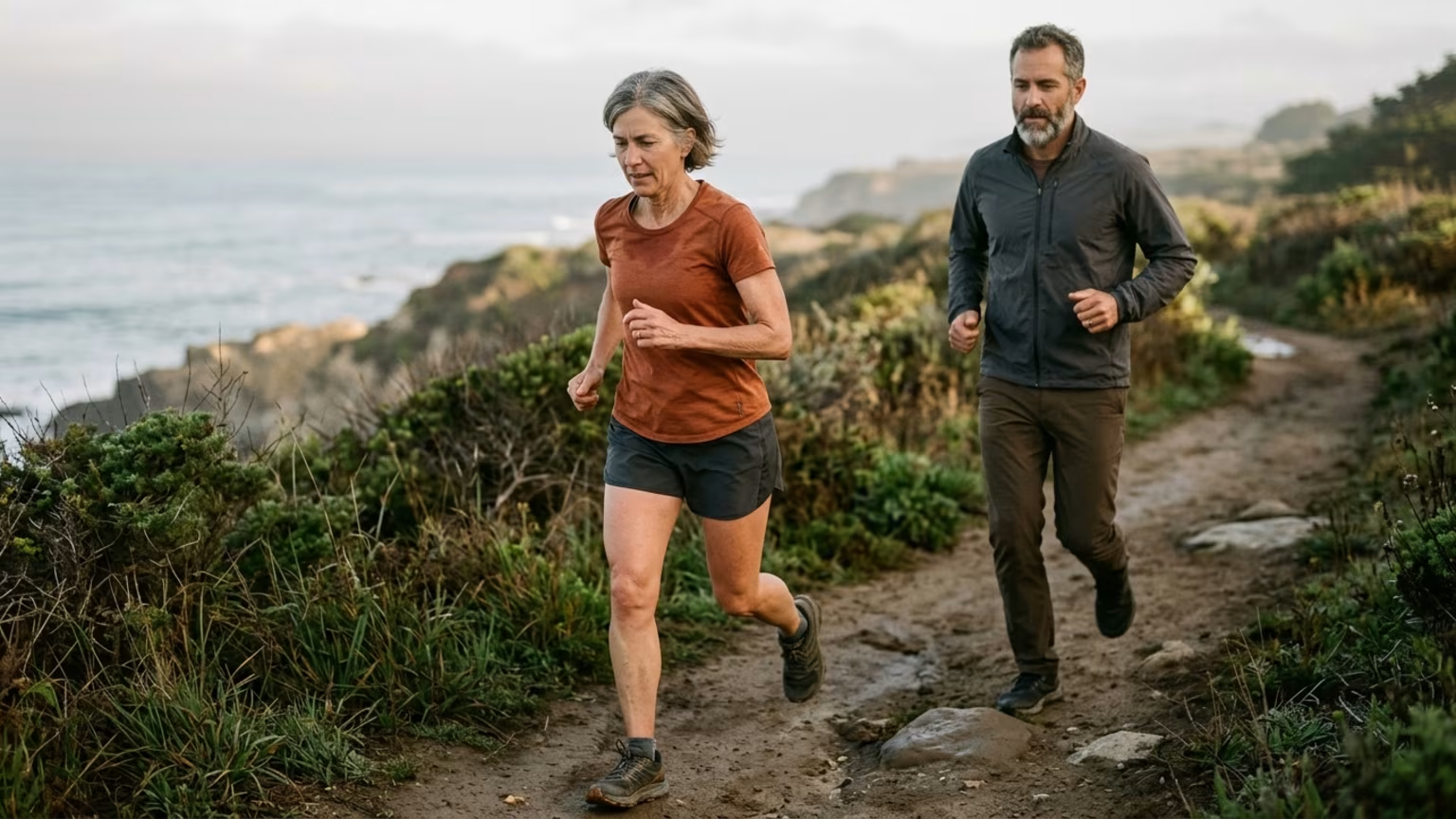

A practical goal setting system for athletes over 35. Learn how to balance essential training targets with changing recovery limits and daily demands.





Longitudinal studies of masters endurance athletes show VO2max declines ranging widely from roughly 5 percent to 46 percent per decade. This massive variation tells us that chronological age alone does not dictate your athletic future. Maintaining purposeful training volume plays a major role in preserving your engine. You simply need a smarter operating system to keep that training consistent.
Current cardiovascular sports literature commonly defines masters athletes as people aged 35 and older who train consistently for fitness or performance. Aging shifts your constraints but does not erase the value of your goals. Older endurance athletes retain beneficial adaptations like high mitochondrial density and strong cardiorespiratory fitness. They also maintain improved fat oxidation rates compared to sedentary peers.
However, recovery and metabolic factors like hormonal regulation and glucose metabolism eventually change. You cannot simply ignore these biological shifts. A coaching summary of research by Hirofumi Tanaka and Douglas Seals highlights the profound importance of consistency. It reports that changes in training volume statistically explained approximately 54 percent of observed VO2max decline in men.
For women, volume changes explained 39 percent of that decline among masters athletes. This means your training continuity matters just as much as your biological age. Reendure strongly advocates for adapting your training rather than abandoning your ambition. You simply need a refined approach to accommodate your changing body.
We must also balance our ambition with a realistic view of health. A recent narrative review concludes that intensive sport is generally safe for most athletes. It does note possible cumulative cardiovascular stress in some individuals. The review cites research reporting an approximately tenfold higher atrial fibrillation risk in some male masters endurance athletes over 40 compared with sedentary individuals.
This finding requires careful handling by older athletes. It does not mean endurance training is broadly dangerous for everyone. The overall evidence supports favorable health and survival outcomes for most active adults. Persistent symptoms like unexplained palpitations or a declining exercise tolerance warrant medical assessment rather than being dismissed as normal aging.
Building a sustainable season requires separating the mandatory work from the optional stretch targets. A useful sports goal hierarchy separates outcome goals from performance goals and controllable process goals. The Canadian Sport Information Resource Centre recommends a Prepare Execute Reflect Adjust approach to process focused sport. We can apply this logic to build a tiered goal system for older athletes.
First, you must establish your essential objectives for the year. These are the non negotiable habits that keep you healthy enough to train consistently next month. Examples include protecting your sleep schedule and maintaining two or three purposeful training sessions per week. Process goals work perfectly here because they focus entirely on behaviors you control completely.
Essential goals form the absolute foundation of your athletic identity. They preserve your strength and mobility during periods of high life stress. Maintaining a minimum amount of easy aerobic activity ensures you do not lose your baseline fitness. These are not easy goals in a dismissive sense.
Next, you define your performance objectives for the upcoming season. These targets measure progress against your own recent baseline rather than an idealized younger self. You might aim to improve a sustainable 20 minute power benchmark or hold a more even pace in a half marathon. Performance goals remain controllable while providing a clear standard for your endurance performance resources and daily training blocks.
Another excellent performance objective is returning to a previous level after injury without increasing symptoms. The aim is to make improvement measurable while defining success around your current physical capacity. These targets depend heavily on weather and accumulated fatigue. They still give you a tangible metric to track over a training block.
Finally, you outline your optional ambitions for the calendar year. These are stretch targets like qualifying for a major event or setting a personal best. You only pursue an optional ambition when you have sufficient time and recovery capacity. If work or family responsibilities suddenly reduce your available energy, you can temporarily drop the optional target without abandoning your essential baseline.
Before committing to any optional ambition, you must pass the capacity gate. Ask yourself how many training hours are genuinely available after work and family commitments. Consider what foreseeable events could disrupt your schedule over the next training block. You must honestly evaluate your current life stability.
If your time and recovery are highly stable, you can confidently pursue the optional ambition. We call this a green state for your training block. An amber state means you should pursue the performance objective while keeping the ambition provisional. A red state means you must focus solely on essential objectives until your capacity improves.
This capacity gate follows the logic of periodic goal review and adjustment. Research on subjective aging describes both persistent goal pursuit and goal adjustment as self regulatory strategies. The literature links perceived control over aging with physical activity and functional health. You retain control by choosing the right target for your current circumstances.
Hitting my forties brought a harsh reality check. The track workouts were not getting slower, but the days after them felt significantly heavier. Instead of forcing my old Tuesday and Thursday intensity schedule, I looked at the data on Masters athletes and muscle protein synthesis. I pushed my second hard session to Friday, allowing an extra forty eight hours of low intensity recovery.
My total weekly volume stayed the same, but the quality of my intervals skyrocketed. This personal adjustment aligns directly with what the research tells us about tissue stress. A review oriented coaching source reports that masters and younger athletes can show comparable recovery after non damaging endurance efforts. However, recovery takes longer after muscle damaging activities like hard running or eccentric heavy strength work.
Athletes must evaluate their capacity objectively before committing to a demanding training block. Ask yourself how many hard sessions your body can absorb without persistent fatigue or deteriorating sleep. One sports goal setting guide recommends translating broad outcomes into measurable performance targets and reviewing goals every four to six weeks. This review rhythm allows you to adjust your workload before acute fatigue becomes a chronic injury.
Your long term success depends on keeping the engine running smoothly. The goal is to build healthy aging habits that support both your athletic identity and your daily life. Sometimes adjusting a goal means changing the pacing strategy or event distance. It simply means updating your expectations to match current evidence.
Older athletes might also find new competitive life in longer event formats. A review of marathon pacing reports that age related differences in pacing were small and inconsistent. It noted that marathon participants tended to be older than half marathon participants. A separate report on ultramarathon research indicates that peak performance age increased as event duration became longer.
This matters for your goal setting because performance is highly event specific. A fifty year old athlete may reasonably choose a long course objective that rewards durability. You do not have to assume that every target must be a short distance speed benchmark. You can lean into the endurance traits that your older body handles exceptionally well.
Many veteran athletes attempt to buy their way out of poor recovery habits. They lean heavily on passive treatments rather than managing their actual training and performance load. A 2026 systematic review found very low certainty evidence that post exercise compression garments reduce delayed onset muscle soreness. The same review found very low certainty evidence that they improve subsequent endurance performance.
Across nine studies involving 158 participants, soreness results around 24 hours leaned toward compression. However, the evidence was statistically uncertain and rated very low quality. Relying on a tight pair of socks will not save you from a poorly designed interval program. Proper sleep, consistent nutrition, and intelligent pacing will always outperform external recovery tools.
You must prioritize foundational recovery habits over shiny consumer products. Managing your total training load remains the most effective tool for preventing excessive fatigue. Focus your attention on executing your process goals flawlessly. A sensible training plan that respects your current capacity is your best defense against burnout.
We started by looking at a wide 5 to 46 percent per decade variation in VO2max decline among masters athletes. That statistic proves that the aging process offers a massive range of possible outcomes. Your daily habits and your willingness to adapt will heavily influence where you land on that spectrum. Stubbornly clinging to old routines will only accelerate your decline.
You possess the experience to train smarter than you did in your twenties. The essential objectives provide a safety net that protects your long term athletic identity. The optional ambitions give you a reason to push hard when your life circumstances permit. How will you restructure your goals to ensure you are still competing in your next decade?

Follow ReEndure for practical insights on endurance training, recovery, nutrition and healthy aging. Stay connected for new articles, research led guidance and ideas to help you perform better for longer.




Read practical ideas on endurance training, recovery, nutrition and healthy aging to keep progressing for years to come.
Read the Blog