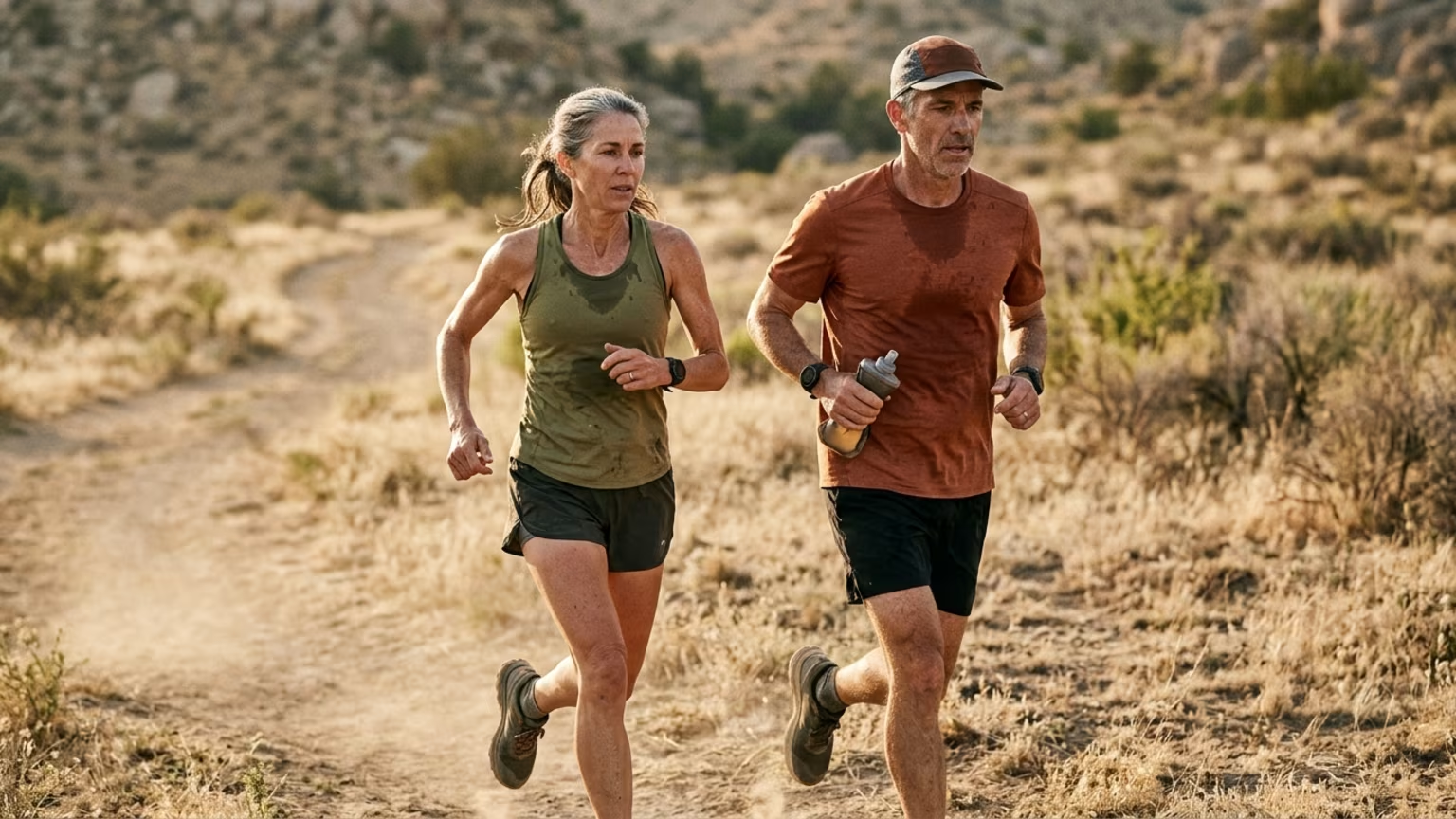

As global temperatures rise, marathon runners are integrating new cooling strategies and heat acclimation routines to manage long-term endurance performance.





July 2026 was jointly the warmest July on record globally according to NOAA. That temperature data confirms what athletes already feel on the pavement. The World Meteorological Organization reported that the ten warmest Julys on record had all occurred since 2016. The agency noted that the four most recent years occupied the top four positions for warmest July.
On August 18, 2026, Bloomberg reported that marathon trainees are increasingly adding cooling equipment and heat-management routines to their preparation. The publication highlighted Jen Dimascio-Donohue, a New York City Marathon trainee who bought a $234 Omius cooling headband after a hot seven-mile run in Massachusetts. She had noticed the headband after seeing Sifan Hassan wear one while winning Olympic gold in Paris in 2024. The runner told Bloomberg that she rewets the headband about every 30 minutes and feels it has already paid for itself in her sanity.
Regional heat was also intense across the globe. North America, Africa and Asia experienced their warmest July on record according to NOAA. Outdoor athletes faced especially demanding conditions in parts of Europe during August 2026. Météo-France expected many locations to exceed 35°C during the week of August 10, and the UK Met Office said southern England could reach 36°C on August 13.
This story illustrates a broader shift in endurance preparation. Runners are experimenting with cooling headbands, breathable clothing and altered hydration routines. Treating heat as a factor that determines pacing is becoming essential.
The conversation around hot weather training is shifting from survival to intentional adaptation. A recent peer-reviewed study tested five consecutive days of heat acclimation in 14 healthy, endurance-trained male athletes. The research showed that short blocks of controlled heat exposure create rapid cardiovascular changes. The findings clarify how the human body reacts to sustained environmental stress.
The heat-acclimation group experienced an eight-beats-per-minute reduction in resting heart rate. The study found that its heat-acclimation group increased plasma volume by 7.3% and sweat loss by about 500 milliliters during subsequent testing. These physiological shifts help the body regulate temperature more efficiently. A larger blood plasma volume improves cooling capacity while supporting working muscles.
However, the researchers found that heat acclimation does not erase the physical toll of hot conditions. The study did not show significant changes in several renal-stress or fluid-regulation biomarkers, including NGAL, KIM-1, copeptin and normetanephrine. Runners still face kidney stress and dehydration risks regardless of their adaptation level. Acclimation provides a buffer but does not make athletes invincible.
Understanding how this data was gathered helps older athletes apply it safely. The researchers split the 14 endurance-trained men into two groups for the five-day protocol. Seven athletes completed 90-minute sessions in conditions averaging approximately 32.2°C and 69.7% relative humidity. The remaining seven participants completed a temperate exercise intervention to serve as a control group.
The findings are compelling, but they come with important limitations for the general running population. The study measured laboratory cycling responses rather than marathon performance and did not directly measure kidney function. Because the sample was small and consisted exclusively of healthy men, older runners should interpret the results carefully. Extrapolating these exact adaptations to masters athletes requires caution.
Furthermore, global climate data provides essential context for these laboratory results. Copernicus reported July 2026 as the second-warmest July on record, at 1.47°C above its estimated pre-industrial baseline. The WMO’s John Kennedy attributed the 2026 heat pattern to the combined effects of long-term warming and persistent northern-hemisphere high-pressure patterns. The WMO cautioned that the ranking of individual months matters less than the long-term temperature trend.
For the ambitious athlete over 35, rising temperatures demand a more calculated approach to training load. Coping with this environment requires treating heat as an equal variable to pace, volume and nutrition. We know firsthand how rigid adherence to a plan can cause setbacks. Adjusting to new data is a necessary skill for longevity.
When my Achilles flared up right before a major marathon build, the standard advice was total rest. But reading the clinical research on tendon loading changed my approach entirely. I swapped complete rest for heavy slow resistance training, specifically utilizing heavy calf raises on a deficit. It felt counterintuitive to load an injured tendon, but the science was clear. Within six weeks, the morning stiffness faded, and I was back to building mileage without the chronic ache.
That same principle of following the science applies to managing thermal stress. Older athletes cannot just push through rising temperatures using willpower alone. Great Run advises runners to minimize heat exposure and move training to cooler hours or an air-conditioned environment when appropriate. Adjusting expectations based on weather is a hallmark of an experienced athlete.
Runners are experimenting with breathable clothing and wearable cooling devices to manage core temperatures. Nike describes its Aero-FIT product as a breathable running base layer designed to channel airflow between the skin and fabric. While product claims vary, testing different materials during long runs is a practical step. Equipment choices should prioritize fabrics that remain comfortable when saturated with sweat.
Active cooling strategies also require a solid logistical plan for race day. The runner featured by Bloomberg noted that she rewets her Omius headband about every 30 minutes to maintain evaporation. Ambitious athletes must determine if they can carry enough water or access enough aid stations to support these tools. Finding the right gear combinations takes trial and error during the hottest training blocks.
Hydration advice should not be reduced to a universal hourly drinking target. Sweat rate, body size, pace and humidity vary substantially between runners. Testing an individual fluid and carbohydrate plan in training is far more effective than blindly copying an internet schedule. Electrolytes are critical, but excessive drinking can also present severe medical dangers.
Athletes in their 40s, 50s and 60s should treat heat as an additional stressor layered onto their overall load. A sensible approach is to reduce or stop a session when symptoms escalate. Dizziness, unusual weakness or a loss of coordination are clear signals to stop running. Extreme heat is a serious public health hazard that requires absolute respect.
Pacing must become flexible when conditions turn dangerous. Extreme heat increases cardiovascular strain, which means heart rate will climb even at conservative paces. Trying to force a specific split on a hot day often leads to premature exhaustion or serious health risks. Effort, heart rate and physical symptoms are far more useful metrics than a rigid stopwatch target.
Athletes should prepare a secondary pacing plan based entirely on effort rather than speed. As heat waves become more frequent, learning to race by feel is essential for healthy aging in endurance sports. The central lesson of the Bloomberg report is that heat management is becoming part of race preparation itself. Athletes who prepare for hot conditions will perform better and recover faster.
The global data showing July 2026 as jointly the warmest on record proves that extreme weather is a permanent training fixture. Ambitious runners must accept this reality and plan accordingly. Treating heat management as a planned training variable, rather than a race-day emergency, is now a mandatory requirement for long-term athletic success.

Follow ReEndure for practical insights on endurance training, recovery, nutrition and healthy aging. Stay connected for new articles, research led guidance and ideas to help you perform better for longer.




Read practical ideas on endurance training, recovery, nutrition and healthy aging to keep progressing for years to come.
Read the Blog