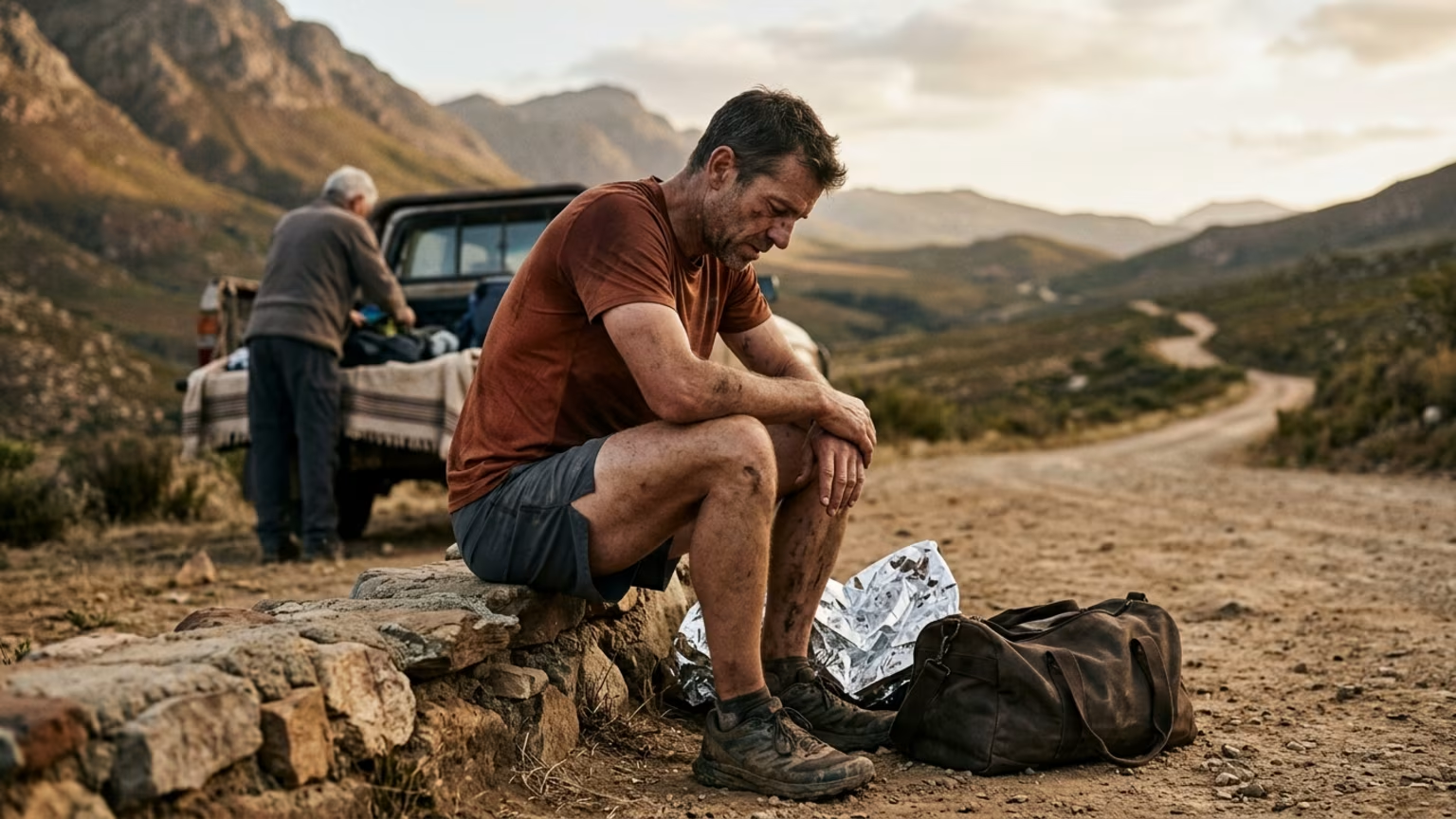

Mark Dowdle won the Last Soul Ultra by running 395 miles over four days. Learn the mental pacing and sleep strategies that make multi-day racing possible.





Mental toughness is rarely about fighting through immense pain. It is usually the mechanical discipline of making one rational choice when your brain demands rest. Mark Dowdle demonstrated this reality at the Last Soul Ultra in Germany. He won the 2026 event after running for four continuous days.
Multi-day endurance pacing is the conscious reduction of a massive physical task into a single, repeatable time block. You only focus on the immediate physical demands of the current hour. This strict mental boundary prevents the brain from panicking over accumulated fatigue. It allows an athlete to execute basic survival routines until the race simply ends.
The Last Soul Ultra began on Friday, August 14, 2026. The event took place at a former military base near Düsseldorf, Germany. According to Men's Journal, 169 athletes started the competition. They all faced a classic backyard-ultra structure that requires immense discipline.
Runners start together on a 4.17-mile loop. They must return to the starting corral before the next hourly start. Failure to cross the line before the hour expires results in immediate elimination. The race continues in this exact pattern until only one runner remains.
The final remaining athlete must complete one additional solo loop to be officially declared the winner. This format creates a very different competitive problem compared to a traditional ultramarathon. Athletes are not racing toward a fixed finish line or trying to achieve a specific pace. They must balance forward movement, eating, equipment changes, and sleep within a rigid hourly cycle.
Dowdle claimed the title on Tuesday morning after completing 94 total loops. Men's Journal reported his final distance as roughly 395 miles. However, this reported figure creates a slight mathematical discrepancy that is common in multi-day event coverage. If an athlete completes 94 loops at the official 4.17-mile distance, the total distance equals approximately 392 miles.
A German report noted a similar total of roughly 630.4 kilometers. This metric conversion also translates to about 392 miles rather than the reported 395. The slight gap likely stems from rounding or different course measurement conventions. Regardless of the exact rounding, Dowdle surpassed his previous backyard best by nearly 90 miles.
He had already won the BPN G1M Ultramarathon earlier in 2026. That previous victory required him to cover 306 miles over four days of continuous effort. His performance in Germany confirmed that multi-day racing has become a recurring element of his athletic calendar. The physical tolerance required to win two massive events in one year is staggering.
A 29-year-old athlete known for his positive mindset, Dowdle approached the immense distance through psychological narrowing. In a video quoted by Men's Journal, he explained his exact thought process. He said the runners repeatedly returned to race headquarters or their tent. Once there, they discussed whether the job was finished before deciding to continue.
Dowdle viewed exhaustion and pain as reasons that might justify stopping. However, he refused to let those sensations act as the final answer. He framed the decisive challenge as a series of repeated choices. He made those choices despite severe fatigue.
This mental commitment strategy relies on answering one simple question every hour. The athlete does not confront the entire projected distance at once. They simply look at the present moment and decide to start the next loop. This psychological model is a highly effective way to manage overwhelming physical stress.
The most significant challenge in a multi-day event is not the running itself. Sleep deprivation quickly becomes the central difficulty because athletes must repeatedly run while accumulating severe fatigue. The available event coverage explicitly highlights this tension. Competitors must constantly balance their desire to continue with rapidly deteriorating judgment.
Dowdle faced a fierce final duel against German runner Ayyoub El Osrouti. Known as "Ello" in the racing community, El Osrouti remained in contention for days. He eventually stopped after 93 hours. He finished exactly one loop behind Dowdle.
During those final hours, El Osrouti reportedly walked for longer periods while still making the hourly cutoff. The physical breakdown is inevitable, but the neurological breakdown is far more dangerous. The Men's Journal article does not document a specific sleep schedule or micro-sleep protocol for Dowdle. Therefore, we must rely on broader sports science to understand the risks.
Health coverage of the event emphasized the severe consequences of sleep restriction. Focus reports that attention, reaction time, and judgment decline substantially after two or three nights without adequate sleep. This cognitive decline creates significant risks for any athlete.
Sleep deprivation makes it much harder for athletes to recognize physical warning signs. They may ignore a dangerous cardiac symptom or a severe biomechanical failure because their impaired brain cannot process the threat. This is why strict pre-race planning is absolutely critical.
The Focus report firmly cautions that stopping for medical reasons should never be treated as a sporting failure. A decision to withdraw due to medical concerns is a sign of rational judgment. It is not a symptom of a weak character or poor preparation. You must protect your long-term health over any single race result.
There is also a significant misconception about the benefits of extreme endurance events. The same health report states there is no scientific evidence that covering hundreds of kilometers provides special health benefits. The human body does not gain a metabolic advantage from extreme sleep restriction. Substantially more moderate training is just as effective for your overall longevity.
Ambitious athletes aged 35 to 65 face very different realities than a 29-year-old elite runner. You likely balance structured training plans with a demanding career and family responsibilities. You cannot simply imitate an elite ultrarunner's sleep restriction without individualized preparation and strict medical guidance. Dowdle’s result is a fascinating individual performance report.
It is not a broad safety study for the general public. Instead of copying his exact mileage, you should borrow his underlying organizational discipline. Use his next loop concept as a practical planning tool for your own events.
Divide a long race into manageable decisions involving movement, fueling, clothing, and foot care. Focus on reaching the next rest opportunity rather than constantly calculating the remaining distance. This approach significantly reduces the mental burden of endurance competition.
Before you start any major event, you must build a strict pre-race stopping framework. Define exactly which physical symptoms require an immediate medical assessment. Outline the specific conditions that will mandate your absolute withdrawal from the race. This predetermined checklist is vital because sleep loss will inevitably compromise your reasoning.
When your brain is compromised, your pre-written rules will protect you from catastrophic injury. Treat sleep as a critical performance and safety variable rather than a mere inconvenience. You should also practice your race routines well in advance. Every rest period should trigger a short, automated checklist.
You must hydrate, consume calories, address chafing, and verify your medical safety. A repeatable routine reduces your decision load when you are deeply exhausted. It ensures you take care of your fundamental needs without wasting precious mental energy. This level of preparation keeps you moving safely toward your goals.
Older athletes must prioritize consistency and recovery over maximal suffering. A brilliant mental strategy cannot replace adequate rest or sound medical judgment. You want to stay competitive and active for decades to come.
Treat extreme endurance outcomes as interesting case studies rather than universal health prescriptions. Learn from the immense discipline required to run 395 miles. Apply that discipline to your daily habits and your long-term recovery.
True endurance is not the absence of suffering, but the presence of absolute clarity when the body begs to stop.

Follow ReEndure for practical insights on endurance training, recovery, nutrition and healthy aging. Stay connected for new articles, research led guidance and ideas to help you perform better for longer.


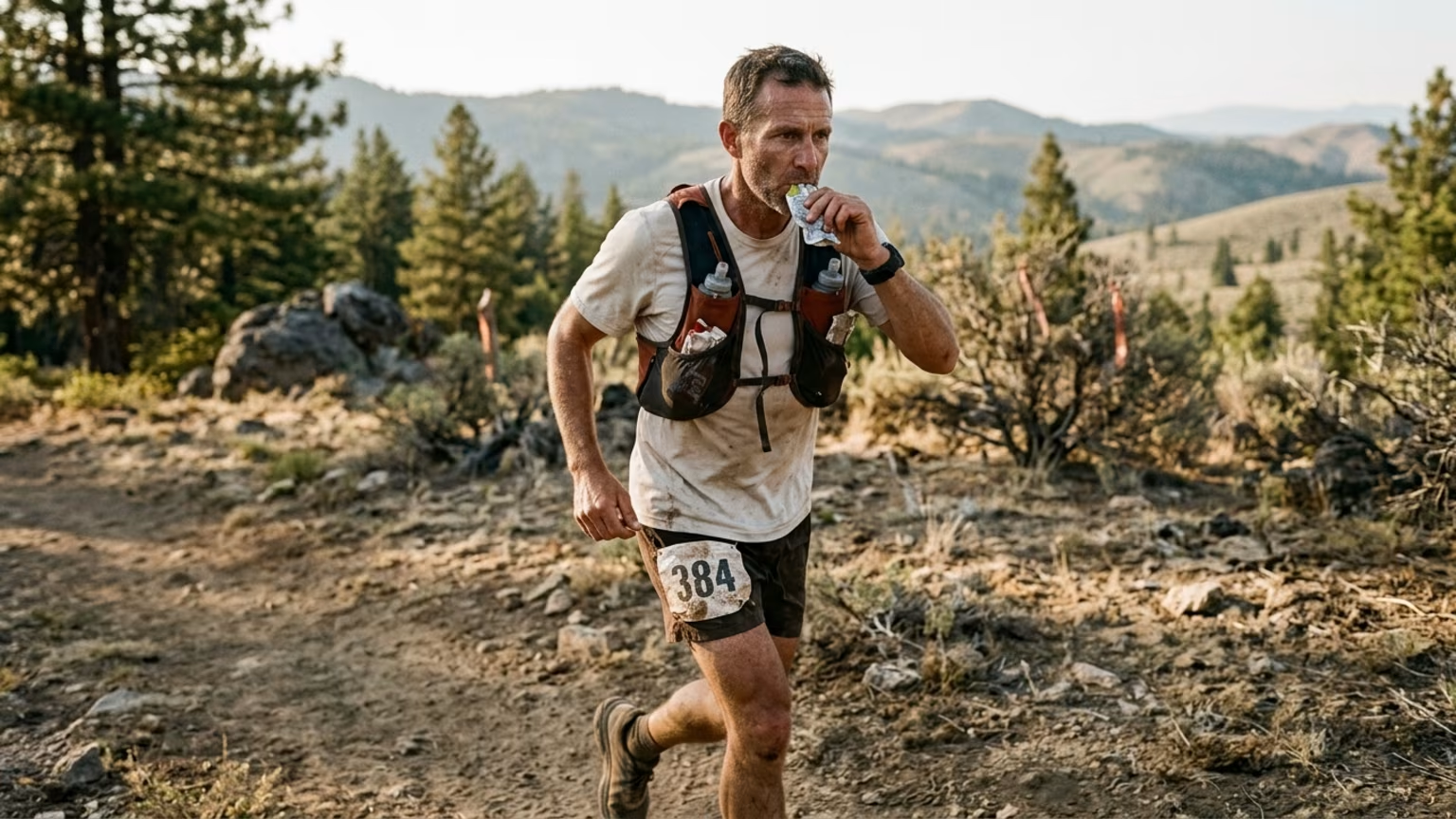



Read practical ideas on endurance training, recovery, nutrition and healthy aging to keep progressing for years to come.
Read the Blog