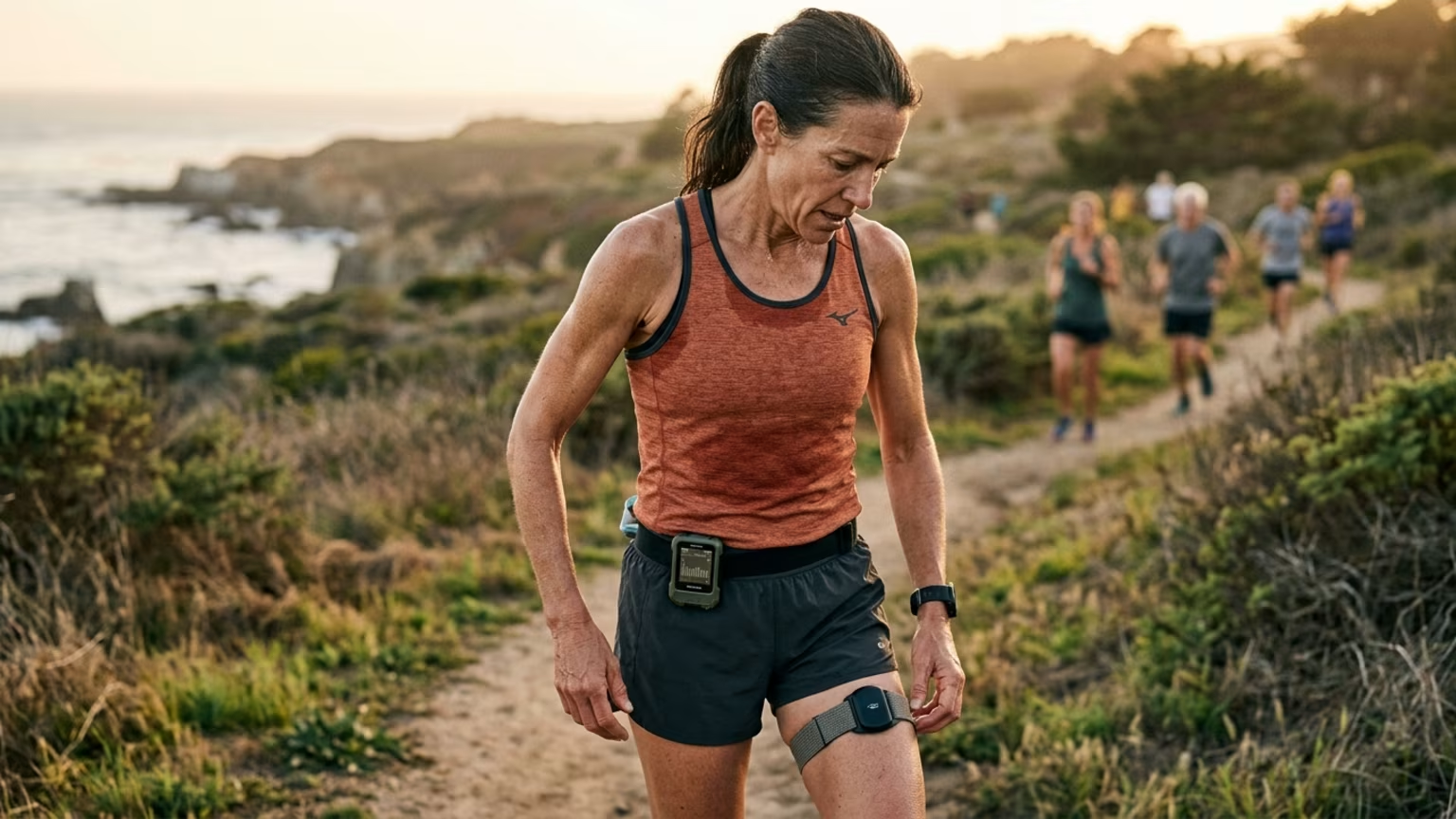

Mizuno and SMK Corporation are developing a myoelectric sensing garment to measure muscle activity. Learn what this ongoing project means for aging athletes.





In recent industry developments, Mizuno announced the ongoing development of a myoelectric sensing garment. The Japanese sports brand is collaborating with electronic components manufacturer SMK Corporation on the project. They aim to capture detailed muscle use data that traditionally required complex laboratory equipment. This technology could eventually offer athletes objective feedback on movement efficiency and muscular fatigue.
Mizuno is designing the physical apparel and contributing its expertise in compression garments. SMK Corporation is developing the integrated sensing devices and the electromyographic signal analysis algorithms. The stated goal is to make muscle activity measurable simply by putting on a piece of clothing. This approach removes the need to attach numerous conventional electrodes directly to the skin.
Historically, conventional electromyography systems have been difficult to use outside clinical settings. They are hard to manage during intense exercise or over long periods. Measuring multiple athletes simultaneously is also impractical when multiple electrodes must be adhered to the body. By embedding electrodes precisely into a compression garment, Mizuno seeks to bypass these logistical hurdles.
The collaborative nature of this project highlights the complexity of modern sports science. Mizuno brings decades of human body measurement knowledge and apparel engineering to the table. SMK Corporation complements this with deep expertise in electronic components and signal analysis. Together, they are attempting to bridge the gap between rigid laboratory hardware and flexible athletic clothing.
Current movement analysis often relies on video recording or external force plates. These tools are excellent for showing external joint loads and how the body physically moves. However, the actual internal muscle activity remains difficult to measure in practical sports settings. The proposed sensing garment is designed to expose information about how muscles work during real world movement.
Mizuno identifies potential applications ranging from analyzing golf swings to monitoring endurance fatigue. The company also notes possible uses in medical rehabilitation, academic research, and workplace assessment. However, this remains an ongoing development project rather than a finished consumer product. Mizuno does not provide an electrode count, accuracy figure, price, or commercial launch date.
The project is actively addressing durability, noise reduction, and measurement consistency. These elements remain technical objectives rather than proven capabilities at this stage.
Understanding muscle activity in real time requires robust data filtering and reliable sensor contact. Wearable electromyography research is currently moving toward multimodal systems that combine surface sensors with machine learning. One 2026 report tested a controlled upper limb system using eight sensor channels and two inertial measurement units. That system achieved high accuracy for its specific tasks, though it used a different experimental design than Mizuno.
Laboratory grade electromyography provides a highly detailed picture of neuromuscular function. Translating that precision to a consumer wearable involves overcoming immense physical interference. Every time a runner strikes the ground, the impact creates vibrations that can obscure the electrical signal. SMK's algorithms must separate the true physiological data from the mechanical noise generated by the exercise itself.
Furthermore, sweat changes the electrical conductivity of human skin during a workout. A garment that fits perfectly initially might shift slightly as the athlete continues to sweat. Mizuno states that its compression tights experience is informing material selection and pattern design. The objective is to maintain strict electrode positioning while preserving the athlete's freedom of movement.
Developing hardware that survives the reality of endurance training is an immense undertaking. An endurance athlete produces significant amounts of corrosive sweat and repetitive friction during a single marathon training block. Clothing intended to measure precise electrical signals must withstand these harsh conditions without rapidly degrading. These elements highlight just how difficult it is to transition medical technology into the sporting goods market.
The broader scientific consensus on sports biofeedback currently shows promise alongside distinct limitations. A 2026 systematic review evaluated biofeedback interventions for athletes and individuals with sports related injuries. The review reported potential benefits including improved muscle activation and better functional recovery. However, researchers characterized the certainty of that evidence as low due to mixed intervention methods.
This gap in current literature is especially relevant for older athletes testing new platforms. A 2026 review of mobile health applications in sport training analyzed 111 distinct studies on performance monitoring. The researchers noted that masters populations were largely absent from the literature they examined. Evidence gathered from young collegiate runners does not automatically apply to an older endurance competitor.
Age related sarcopenia involves reductions in muscle fiber size and a gradual decline in strength. These changes make objective monitoring incredibly relevant for adults aged thirty five to sixty five. Maintaining muscle function is critical to staying competitive and avoiding overuse injuries. If a garment can eventually quantify fatigue, it could help athletes pinpoint when mechanical form degrades.
Older athletes have less margin for error when adjusting their weekly training loads. A younger runner might bounce back quickly from a poorly executed track session or an excessively heavy lifting day. In contrast, an athlete over forty might require several days of careful active recovery to clear that stress. Recognizing muscular fatigue before it causes a compensatory movement pattern could prevent weeks of forced rest.
This aligns with our own lived experiences managing training loads at Reendure. Hitting my forties brought a harsh reality check. The track workouts were not getting slower, but the days after them felt significantly heavier. Instead of forcing my old intensity schedule, I looked at data on Masters athletes and protein synthesis.
I pushed my second hard session to Friday, allowing an extra forty eight hours of low intensity recovery. My total weekly volume stayed the same, but the quality of my intervals skyrocketed. I learned that subjective feelings of fatigue are not always enough to guide complex programming. Objective physiological data helps us justify necessary rest and optimize the tension applied during our key sessions.
The Mizuno project holds particular interest for strength sessions that support endurance goals. A 2026 scoping review of muscle excitation in resistance training provides helpful context. It reports that higher training intensity and faster repetitions generally correspond with greater surface sensor signals. This suggests that future garments could help athletes verify that their lifting sessions hit the targeted intensity.
However, athletes should not interpret a future sensor reading as a standalone verdict on their technique. A raw data point cannot replace a coach's visual assessment or a comprehensive physical examination. Any useful interpretation must combine muscle activity data with an athlete's training history and current recovery status. Biofeedback technology should always serve as an adjunct to established clinical methods rather than a standalone replacement.
For the ambitious endurance runner or cyclist, the strongest practical opportunity lies in tracking personal trends. An athlete could monitor whether a familiar movement produces a different activation pattern after detraining or fatigue. Cross person comparisons will remain unreliable until researchers publish extensive validation data on fit and calibration. Until then, trend tracking within a single individual offers the most realistic path to actionable insights.
Tracking changes in muscle activity during prolonged exercise is one of Mizuno's stated goals. Yet, interpreting that fatigue data requires caution and a deep understanding of human physiology. A wearable system must accurately distinguish between central nervous system fatigue and local muscular exhaustion. It must also account for altered technique, subtle pacing changes, simple hydration effects, and general sensor noise.
Athletes often face confusion when physiological data disagrees with perceived effort during hard sessions. If a garment indicates high muscle activation but the athlete feels fresh, pacing decisions become complicated. Any future device will need robust algorithms to translate raw electrical noise into clear tactical guidance. Without that translation, more data simply creates more cognitive load for the tired competitor.
This underscores the importance of training by data after forty with a clear understanding of technology limits. We cannot assume that higher muscle activation always equals better performance or reduced injury risk. Sarcopenia alters our baseline activation requirements and changes the physical demands of basic movement. Older athletes must adapt their training based on complete movement patterns rather than chasing a specific localized metric.
A complete approach to using wearable data always prioritizes long term trends over isolated daily metrics. If an athlete wears a sensing garment weekly, they can establish a reliable personal baseline. Deviations from that baseline might indicate a need for extra recovery or a specific mobility intervention. The value is not in a single perfect reading, but in the sustained observation of an aging body.
As companies refine their gear and technology offerings, the true value lies in practical application rather than novelty. Mizuno is actively working toward making muscle activation data easier to collect outside a laboratory environment. If successful, this could reduce our reliance on subjective coaching intuition for complex biomechanical problems. Until the final product arrives, we must rely on our existing metrics and our honest assessments of physical fatigue.
While the development of Mizuno's myoelectric garment points toward a fascinating future for objective biomechanical data, veteran athletes should continue relying on proven progressive strength training and disciplined recovery until commercial validation is complete.

Follow ReEndure for practical insights on endurance training, recovery, nutrition and healthy aging. Stay connected for new articles, research led guidance and ideas to help you perform better for longer.





Read practical ideas on endurance training, recovery, nutrition and healthy aging to keep progressing for years to come.
Read the Blog