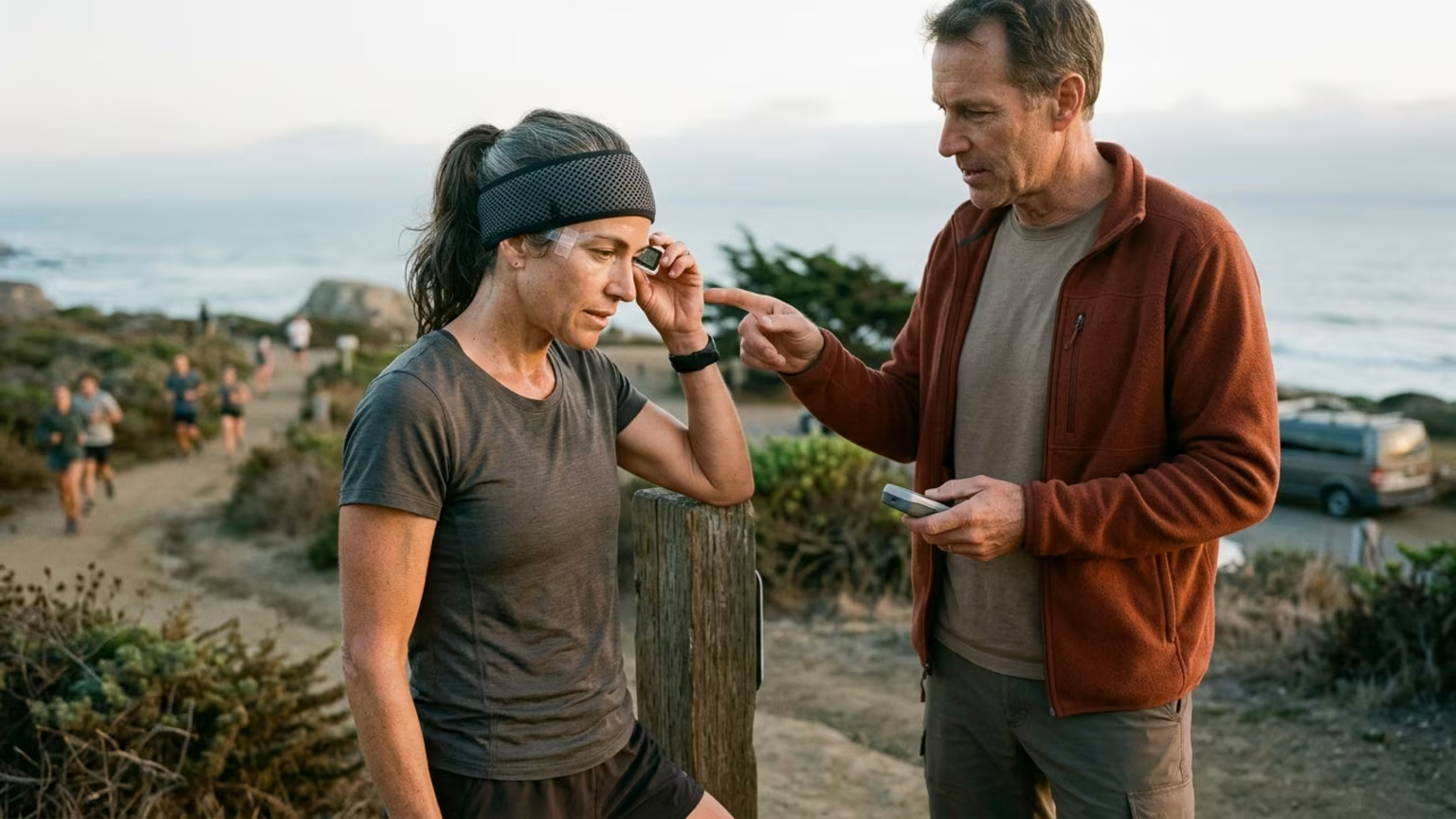

Marathoners are testing the $234 Omius cooling headband for hot races. Reendure explains why true heat acclimation matters more than wearable gadgets.





Jen Dimascio-Donohue strapped the $234 Omius headband on for her long run, hoping to beat the oppressive heat. The graphite blocks felt like a literal ice pack against her forehead. She felt instantly cooler as she navigated the sweltering summer miles. But feeling cooler and actually being cooler are two completely different things.
It is a persistent myth that wearing a localized cooling gadget will lower your core body temperature and guarantee a faster race time. In reality, localized cooling products manipulate perceived comfort, but they do not materially change your whole-body heat storage or improve physiological endurance performance.
Athletes have long believed that cooling a sensitive patch of skin is enough to protect the entire body. The human forehead is packed with temperature receptors that are highly responsive to environmental changes. When we apply cold water to this area, the brain immediately registers a profound sense of relief. This sensory feedback loop convinced early endurance coaches that keeping the head cold was the ultimate solution for hot racing.
Athletes historically relied on splashing water on their heads at aid stations to survive sweltering miles. This crude method provided a burst of immediate energy by temporarily shocking the nervous system. The brain interpreted this sudden temperature drop as a signal that the entire body was cooling down. However, this surface-level relief did nothing to lower the core temperature that dictates true endurance capacity. The gap between sensory relief and biological reality remained a persistent blind spot in sports science for decades.
This historical assumption sparked an entire industry of wearable gear. Runners assumed that if they felt a chill on their skin, their core temperature was naturally dropping in response. We equated sensory relief with physiological safety. That misunderstanding led athletes to prioritize surface cooling over the more difficult process of genuine physiological adaptation.
The current market response includes far more than just headwear to satisfy this desire for comfort. Runners are buying Nike’s $150 ACG Radical Airflow shirt, Adidas’s $20 Climacool arm sleeves, and Lululemon’s $38 ice neck wraps. There are Oiselle’s $62 cooling tanks and Raide’s $149 RaceTech shirts designed with rear pockets for ice. Retailers in cities like New York are also seeing increased interest in electrolyte drink mixes, chewable electrolyte tablets, and moisture-wicking apparel.
Apparel brands often highlight elite successes to validate these products to consumers. Nike professional trail runner Caleb Olsen reportedly wore a prototype ACG Radical Airflow shirt when he won the 100-mile Western States Endurance Run in 2025. But an athlete wearing a product during a victory is an association, not scientific proof that the clothing caused the result. For athletes navigating daily endurance life, understanding this distinction prevents wasted money on unproven performance claims.
The evidence paints a highly nuanced picture regarding actual endurance performance. The Omius headband uses graphite blocks to draw heat from the skin as water evaporates. The product seller says the design creates approximately five times more evaporative surface area. The product is entirely passive, meaning it requires water, airflow, and periodic rewetting rather than batteries or ice.
But recent coverage notes that cooling a small surface area is unlikely to substantially reduce core temperature. A peer-reviewed study tested the Omius headband during a 5-kilometer time trial in hot, humid conditions. The research found that local cooling did not produce a whole-body or performance benefit under that specific protocol. The Omius founder even acknowledged that cooling a relatively small area makes it difficult to change the body’s core temperature.
The device certainly makes hot runs more tolerable for many athletes, which has its own psychological value. A hands-on review reported a noticeable forehead-cooling sensation while noting that the headband does not lower body temperature. Another athlete quoted in recent reporting said the device made long runs more tolerable, but he acknowledged the benefit might be only mental. The review also said Omius recommends adding water approximately every 20 minutes to sustain evaporation.
This practical burden is a significant factor for marathoners managing aid stations and fueling logistics. Rewetting a headband every 20 to 30 minutes requires consistent water access, which is not always guaranteed during a long training block. Sports scientists note that perceived cooling may provide a psychological advantage when the athlete has also completed appropriate physiological preparation. Whether the product is worth the cost depends on where you train and how much inconvenience you tolerate from extra equipment.
Instead of relying entirely on gear, mature athletes should prioritize physiological adaptation. A 2026 peer-reviewed study available through PubMed Central tested the effects of short-term adaptation protocols. The study found that five days of isothermic heat acclimation improved cardiovascular and thermoregulatory responses in endurance athletes. The reported changes included a 7.3% increase in plasma volume and approximately 500 milliliters more sweat loss.
These are actual physiological changes that prepare the body to handle intense thermal stress safely. However, the five-day study did not show changes in surrogate markers of sympathetic activation, fluid regulation, or renal stress. This supports a nuanced interpretation of the data. Short heat-acclimation blocks can produce measurable adaptations, but the protocol does not prove that every athlete will run a faster marathon.
Passive heat strategies also require careful implementation and realistic expectations from older athletes. A 2025 systematic review pooled 10 studies involving 199 participants to evaluate post-exercise heat exposure. The review found that post-exercise heat exposure had a trivial, statistically nonsignificant effect on endurance performance in hot conditions. Another review of 14 studies involving 194 participants found low-to-moderate evidence for some outcomes, with one study even reporting worse subsequent performance.
University of Oregon professor Chris Minson recommends starting heat acclimation at least a month before racing. He suggests making some heat exposure a regular part of training through post-training sauna sessions or training in a heated room. He specifically advises against using hard interval sessions as your main heat-exposure workout. For anyone focused on continuous injury prevention, keeping intense sessions in cooler conditions is a necessary safety boundary. Heat exhaustion and heatstroke are serious hazards that can damage the brain and organs, making gradual exposure essential.
Heat is fundamentally altering how organizers and athletes approach endurance events worldwide. A Climate Central analysis examined 221 global marathons and concluded that historically cooler race days are becoming less reliable. For example, temperatures reached a record-setting 33°C during the canceled 2023 Twin Cities Marathon. The previous year’s Berlin Marathon reached approximately 27°C, which was 8.3°C above the normal late-September temperature.
Analyst Andrew Pershing stated that climate change made that specific temperature increase at least twice as likely. Race organizers have begun responding to heat risk in very different ways to protect participants. The Cape Town Marathon moved its date entirely from October to May. The Los Angeles Marathon allowed runners to stop at Mile 18 and still receive a finisher medal when temperatures reached 31°C.
Runners are constantly adapting their daily routines to accommodate these rising temperatures and shifting norms. Traditional midday heat windows can now extend well into the evening, complicating the assumption that a later workout will be cooler. The training platform Runna reported that 80% of its users adapt or skip runs because of hot weather. That figure reaches an astounding 92% in the U.S. Sun Belt region.
These changing conditions require a completely different approach to training metrics and daily execution. Runna introduced a heat-adaptation feature that uses local weather data to adjust a subscriber’s pace. Coach Steph Kessell explained that runners should preserve intended effort rather than force a specific pace. She noted that our bodies only know effort, not an arbitrary pace on a watch. Following a structured endurance training plan requires absolute flexibility when the weather turns hostile.
As an ambitious older athlete, you must shift your perspective on training in hot conditions. Cooling gadgets can offer psychological relief, but they cannot replace the biological work of true physiological acclimation. You cannot buy your way out of a heatwave with a $234 graphite headband or an ice-filled shirt. You must do the systematic work of exposing your body to warmer temperatures safely and gradually over several weeks.
Your body is a highly adaptable machine when given adequate time to process environmental stress. Treating heat exposure as a carefully dosed training stimulus will yield far better results than panic-buying expensive gear right before race day. By prioritizing physiological adaptation over technological shortcuts, you protect your health while optimizing your overall performance capacity.
Respect the reality of the changing climate by slowing down when the humidity and temperature climb. Focus on your perceived effort and proper recovery instead of forcing cool-weather paces on sweltering days. Build a layered preparation plan that includes smart scheduling, appropriate clothing, and genuine heat exposure. Treat niche devices as an optional comfort bonus rather than a mandatory performance tool.
For your next warm-weather run, leave the pace expectations at home and strictly monitor your perceived effort to ensure you stay within a safe physiological zone.

Follow ReEndure for practical insights on endurance training, recovery, nutrition and healthy aging. Stay connected for new articles, research led guidance and ideas to help you perform better for longer.




Read practical ideas on endurance training, recovery, nutrition and healthy aging to keep progressing for years to come.
Read the Blog