

Learn how endurance athletes over 35 can redefine progress. Discover how smart pacing, consistency, and health markers create durable ambition for healthy aging.





Sedentary men experience a relative VO2max decline of about 12 percent per decade, while endurance-trained men reduce that drop to just 5.5 percent. This gap illustrates how much influence we hold over our own biological timeline. Consistent training cannot pause the clock entirely, but it certainly changes the math.
Aerobic capacity measures the maximum amount of oxygen your body can use during intense exercise. As we get older, maintaining this capacity becomes a complex biological battle. A 2026 review on muscle aging identified multiple physiological hurdles that athletes face. These include mitochondrial dysfunction, chronic inflammation, immune aging, and changes to the neuromuscular junction.
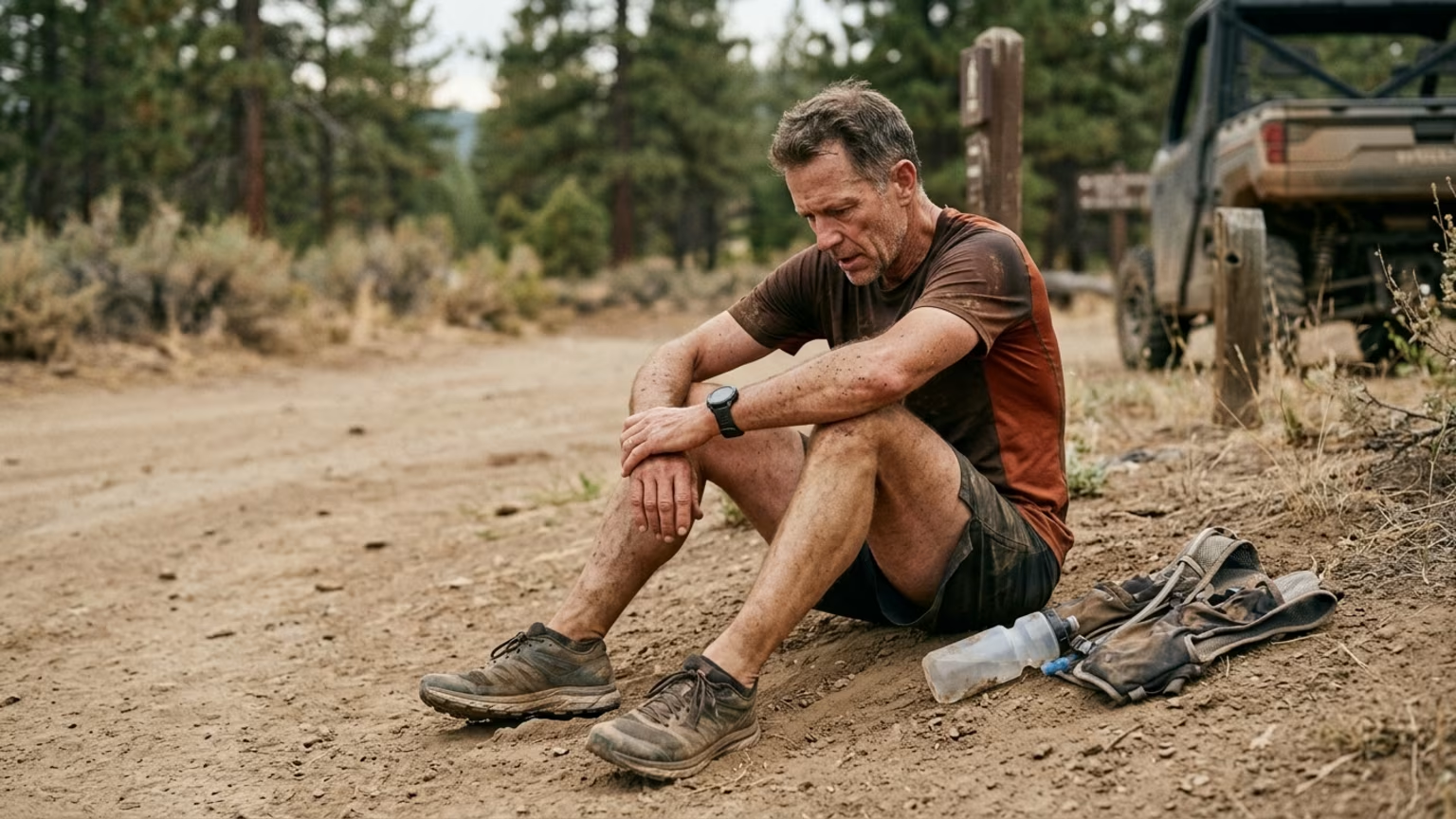
Together, these cellular changes lead to a significantly reduced regenerative capacity in our muscles. This means our bodies require more deliberate care to repair standard tissue damage. We cannot simply pound the pavement endlessly and expect rapid, automatic healing. Recovery must become a proactive and highly structured part of our routine.
I learned this firsthand when my Achilles flared up right before a major marathon build. The standard medical advice at the time was total rest. But reading the clinical research on tendon loading changed my approach entirely. I realized that passive rest often leads to further tissue deconditioning.
I swapped complete rest for heavy slow resistance training, specifically utilizing heavy calf raises on a deficit. It felt counterintuitive to load an injured tendon, but the science was clear. Within six weeks, the morning stiffness faded, and I was back to building mileage without the chronic ache. The lesson is that smart, targeted load is often superior to complete inactivity.
Aging is also heavily associated with sarcopenia, which is a progressive loss of skeletal-muscle mass and function. This condition is linked to frailty and increased mortality in the general population. For athletes, it means that endurance work alone is no longer enough. We must actively build strength to maintain our physical infrastructure.
The loss of aerobic capacity is not a uniform slide into our later years. Recent reporting summarizes that longitudinal VO2max losses among masters athletes range from approximately 5 percent to 46 percent per decade. This wide range depends heavily on training status and the specific study population. The data shows that our endurance training history remains an incredibly powerful variable.
During our thirties and forties, the initial drops in maximum heart rate are often subtle. Many athletes compensate by simply increasing their training volume or intensity. However, changes in training volume reportedly explain a massive portion of physiological decline. Among men, volume changes explain 54 percent of the variation in VO2max decline.
For women, training volume changes explain 39 percent of this variation. This highlights the importance of maintaining consistent weekly hours as we age. As we transition into our fifties, sarcopenia becomes a more pressing threat. This progressive loss of skeletal-muscle mass requires dedicated resistance work to counter.
By our sixties, reduced regenerative capacity means that minor tweaks can linger for weeks. Our neuromuscular junctions change, making explosive movements feel significantly harder. This is why preserving movement quality must become a primary training objective. We cannot afford to ignore mobility and basic strength maintenance.
This is exactly why healthcare professionals are changing their approach to exercise. The American College of Sports Medicine wants physical-activity assessment to become part of routine clinical care. Their implementation model includes brief activity counseling and tailored exercise prescriptions. They even suggest referring patients to qualified programs when appropriate.
Cardiorespiratory fitness has a direct link to long-term survival. A 2026 UK Biobank study tracked more than 11,500 adults over a median follow-up of 14 years. The study recorded 921 incident cardiovascular-disease events and 119 cardiovascular-related deaths. Researchers found a strong association between fitness improvements and longevity.
Specifically, each annual increase of 1 mL/kg/min in VO2max was associated with lower risks. It showed a hazard ratio of 0.85 for incident cardiovascular disease and 0.66 for cardiovascular mortality. Furthermore, participants who improved their fitness by at least 1 mL/kg/min per year saw incredible benefits. They had a 16 percent lower risk of cardiovascular disease than stable individuals.
Conversely, people whose fitness declined by that same amount faced a 33 percent higher risk. This proves that holding steady or making small gains carries massive health relevance. We do not need to constantly break records to see immense biological benefits. The simple act of maintaining our fitness provides a profound physiological advantage.
Athletes should not obsess over physiological metrics as the sole definition of success. Instead, we can use these numbers as loose guidelines to build a broader goal portfolio. The 2026 Training Competence Questionnaire frames training competence around planning, execution, monitoring, and adjustment. This multidimensional approach is far more practical for the veteran athlete.
It teaches us to measure success by our adaptability and our consistency. We can define progress by how well we manage our sleep, nutrition, and daily recovery routines. These process goals are entirely within our control. They provide a sense of achievement even on days when our legs feel heavy.
Instead of chasing a single outcome, veterans should build a multifaceted goal portfolio. The first layer is the outcome goal, like a specific race or completion target. The second layer is a performance goal, such as improved pacing or a stronger finish. The third layer involves process goals, like completing planned sessions or prioritizing sleep.
The final layer focuses entirely on health and long-term physical longevity. This might include maintaining blood-pressure management or training without recurring injuries. This structure preserves our ambition while reducing the emotional dependence on one race result. It allows us to succeed on multiple fronts simultaneously.
After an event, we should conduct a better post-race review. Instead of just checking our finish time, we need to ask if we protected our health. We should evaluate if we managed discomfort without making poor physiological decisions. Assessing whether we fueled and hydrated appropriately tells us if we are prepared for the next training cycle.
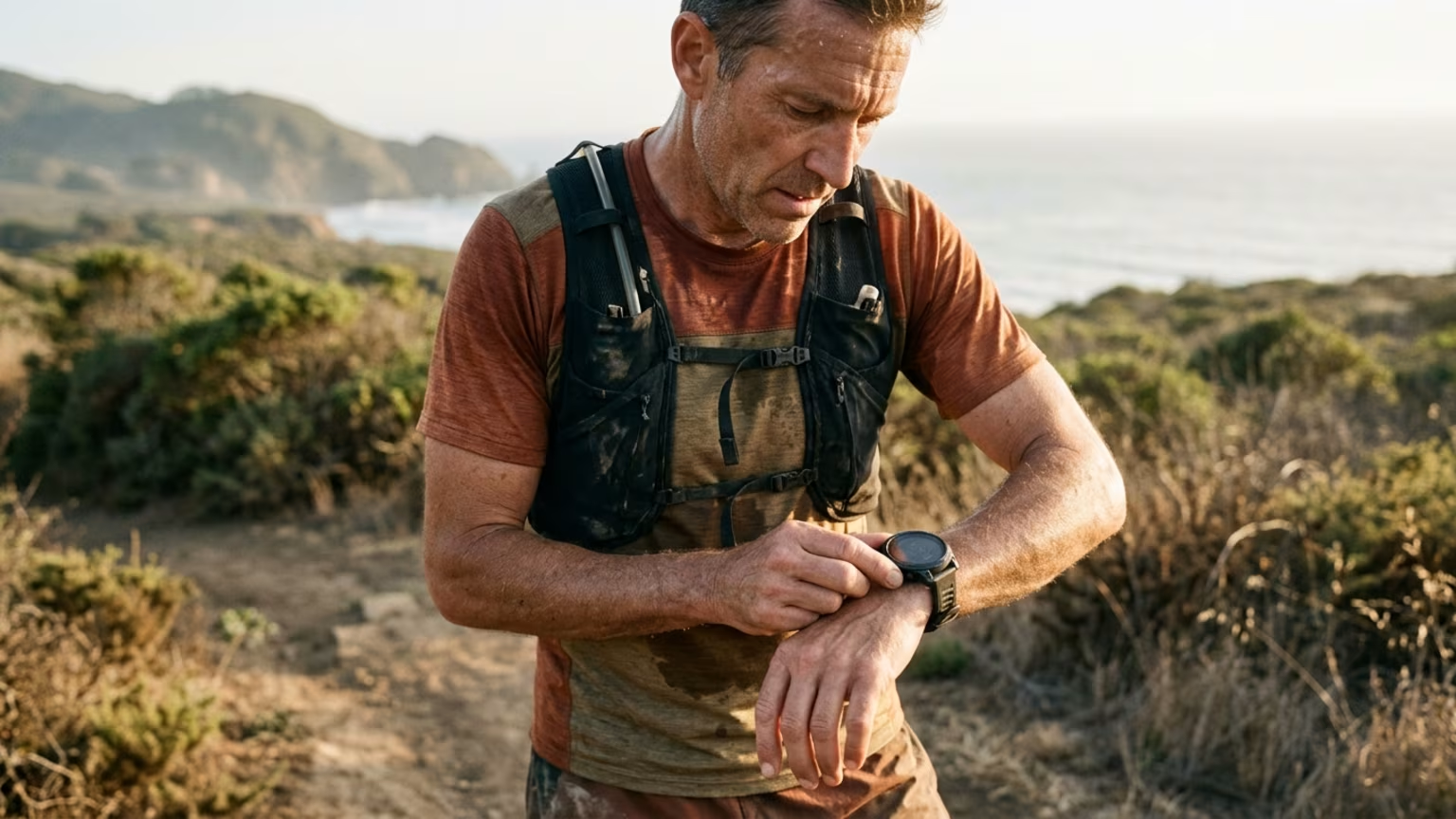
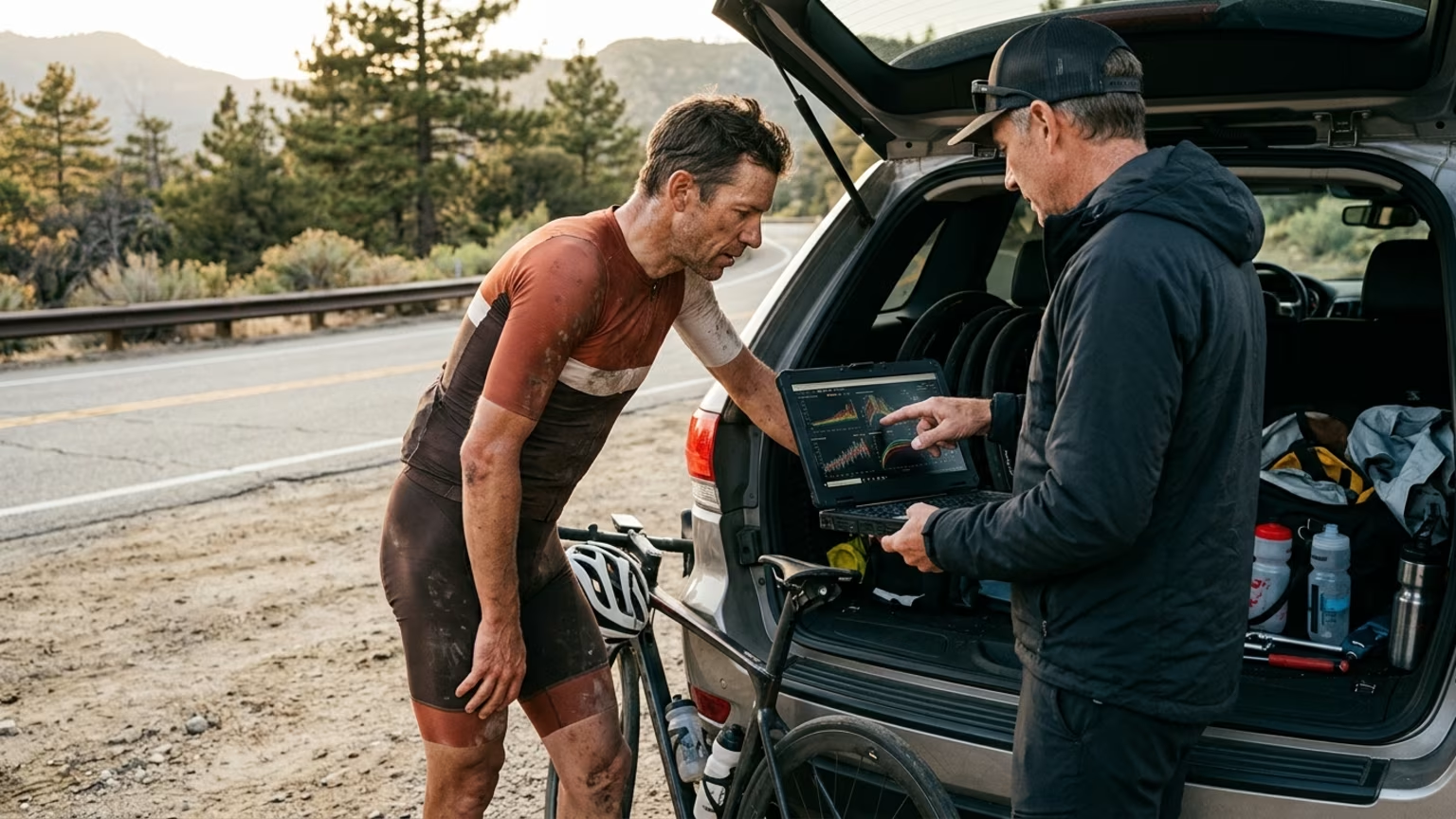
We must also learn to track broad trends rather than isolating bad sessions. A single slow run might just reflect heat, stress, or poor sleep. Far more useful indicators include your heart-rate response to familiar sessions over time. Tracking your ability to repeat quality work without excessive soreness provides true insight into your recovery status.
Pacing is another area where experience heavily outweighs raw speed. Research shows that faster runners tend to display more stable pacing, while slower runners show greater variability and more pronounced pace decline. However, a recent review notes that age-related differences in pacing are small and inconsistent. This means an older athlete can absolutely master race execution.
Finishing a race with a disciplined pacing plan can be incredibly rewarding. It is a sign of deep physical awareness and tactical maturity. An athlete might improve simply by reducing their late-race fade. Executing a more even effort is a massive victory, even if the final average pace is not a personal best.
Competition can remain an important source of challenge, community, and personal feedback. The evidence supports broadening the definition of success rather than eliminating performance ambition entirely. Racing an age-group rival whose performance inspires you is a completely valid target. Choosing a course or distance that rewards patience and judgment often favors the older athlete.
Ultimately, the goal is to stay active, competitive, and healthy for life. We should define consistency as the ability to repeatedly return to appropriate training. That might mean resting when health markers deteriorate. It is about playing the long game with deep intelligence and calculated patience.
If we combine strength work, smart pacing, and consistent endurance training, we become highly resilient. We might lose absolute top-end speed, but we gain incredible physical durability. Tracking our health markers ensures that our athletic ambition supports our long-term wellbeing. This balanced approach is the true foundation of longevity in endurance sports.
Reflecting on the stark contrast between a 12 percent and a 5.5 percent decade-long decline, the path is clear. The daily work we put in fundamentally changes how our bodies navigate time. We do not need to set personal bests to prove that our endurance life is thriving. The real victory is simply showing up to the start line year after year.

Follow ReEndure for practical insights on endurance training, recovery, nutrition and healthy aging. Stay connected for new articles, research led guidance and ideas to help you perform better for longer.



Read practical ideas on endurance training, recovery, nutrition and healthy aging to keep progressing for years to come.
Read the Blog