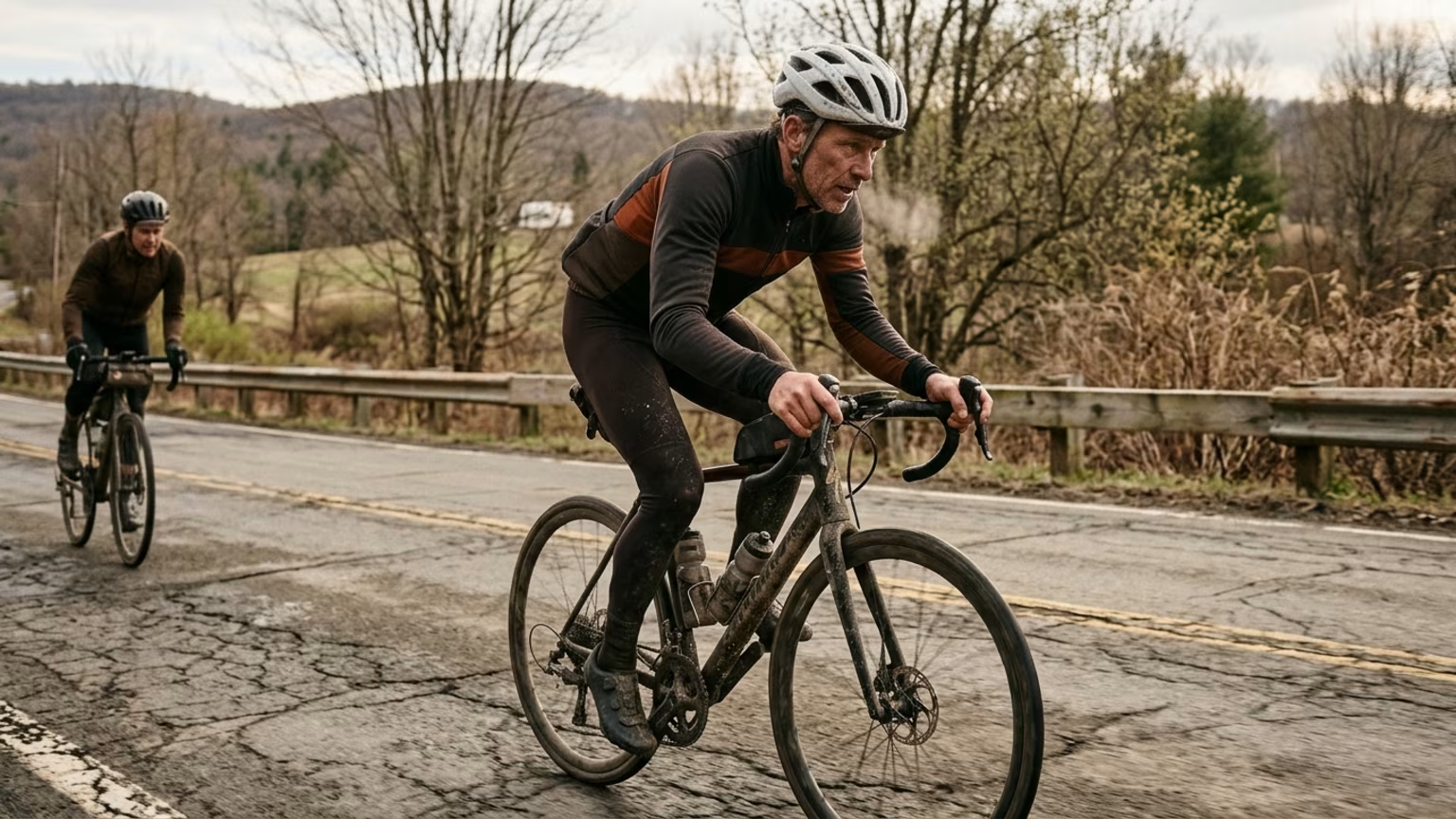

A Spring Classics report and a small cycling study put late-race power in focus. Here is how to interpret the findings for athletes over 35.





Pro Cycling UK’s October 26, 2026 report on Spring Classics preparation describes a progression from winter aerobic conditioning and strength work toward race-specific intervals and reconnaissance. Its central point is straightforward: readiness includes producing decisive efforts after several hours of riding, not just showing speed on fresh legs.
That distinction matters for ambitious cyclists over 35. The useful question is not simply how much power a rider can produce. It is how well the rider can meet the demands that arrive later in the event.
Pro Cycling UK describes a preparation model that becomes more specific as racing approaches. Early winter emphasizes rebuilding aerobic fitness and strength. Later work brings the rider closer to the efforts and conditions expected in competition.
The report contrasts the demands of different Classics. A Tour of Flanders specialist may need repeated high-power efforts on short climbs. A Paris-Roubaix specialist faces a different emphasis on sustained power and fatigue resistance alongside control on rough ground.
The common thread is the timing of those demands. Riders need to accelerate and close gaps after prolonged exertion. The report therefore includes efforts late in long rides rather than treating a strong fresh sprint as a complete picture of readiness.
Preparation also extends beyond physiology. Reconnaissance covers surfaces and riding lines as well as positioning and team roles. Riders assess where teammates should help bring a leader toward the front.
Strength work forms another part of the discussion. In its 2026 report, BikeRadar describes a coach’s view that strength training is increasingly periodized throughout the year rather than confined to winter. It also reports that some teams use velocity-based resistance training with the aim of limiting unnecessary fatigue during lifting.
Taken together, these reports describe preparation as a coordinated process. Aerobic work and strength training sit alongside event-specific efforts and course planning. The objective is not simply to collect more demanding sessions.
A research summary of a 2025 study provides a more focused look at performance under fatigue. The study involved 14 endurance-trained age-group cyclists. Participants averaged 37.5 years of age and 9.6 training hours per week.
Researchers compared fresh efforts with efforts performed after 1,000 kJ of cycling. That preceding workload was prescribed relative to each participant’s initial 20-minute time-trial power.
The results differed between the more successful and less successful amateur cyclists:
That final point is important. The difference appeared in the sustained effort tested under fatigue. It did not appear across every performance measure in the study.
The evidence has several boundaries worth stating together. The study was small and its comparison between success groups was observational. It showed an association rather than proving that the smaller power decline caused competitive success. Its percentages describe results after a prescribed workload and are not expected losses or performance targets for other riders.
The preparation reports describe coaching practices rather than controlled trials of a complete training plan. BikeRadar’s account does not establish that a particular lifting approach improves every rider’s late-race power. These sources also do not establish an optimal training progression for older recreational cyclists.
The practical interpretation is narrower and useful: performance after accumulated work deserves consideration alongside fresh performance. A single fatigued test belongs within a broader assessment rather than serving as a definitive verdict on ability.
For Reendure’s audience of endurance athletes over 35, the useful translation is specificity rather than imitation. The aim is to connect preparation to the event while keeping long-term participation in view. Professional practice supplies questions to consider, not a schedule that must be copied.
The contrast between Flanders and Roubaix is a useful starting point. Both are Classics, yet the report describes different performance demands. That makes a generic “Classics workout” an incomplete answer to event preparation.
For an amateur road event, the first planning question is what the course will ask of the rider. Repeated short climbs suggest a different emphasis from sustained efforts combined with rough-ground control. Preparation should reflect that distinction rather than rely only on the event’s label.
A useful event review can separate the demands into three areas:
This is the broader preparation question behind rehearsing the demands of a target race. Fitness is part of the task, but it is not the entire task described in the report.
Late-ride intensity is a specific training choice. In Pro Cycling UK’s account, it appears within a progression toward racing. It is not presented as an instruction to finish every long ride with hard intervals.
The practical distinction is between purposeful specificity and an automatic addition of stress. A late effort should have an identifiable connection to the event being prepared for. Simply making a ride harder does not explain what that extra work is intended to address.
For a rider and coach reviewing preparation, useful questions include whether late-event demands are represented and how the work fits the broader training load. Those questions keep the focus on preparation rather than exhaustion.
This also gives context to thinking about durability alongside other performance measures. The study’s sustained-power result adds a reason to look beyond fresh numbers without turning one laboratory-style comparison into a universal standard.
Reconnaissance is one of the clearest practical themes in the report. Riders examine surfaces and lines while considering positioning and team support. The course becomes something to prepare for deliberately rather than merely a route to complete.
For adult athletes, the transferable principle is to include event knowledge in preparation. Terrain and technical requirements belong in that review. So do the logistics that shape how the event will unfold.
The amateur application need not reproduce a professional team’s planning structure. It can remain focused on understanding the target event and identifying demands that fitness metrics alone do not describe. That keeps reconnaissance connected to the rider’s actual goal.
BikeRadar’s reporting places strength training within the wider cycling year. The relevant idea is coordination: gym work is planned alongside riding rather than treated as a separate obligation with no relationship to cycling demands.
For athletes over 35, that is a useful discussion to have with a qualified coach. The question is how resistance training fits the broader program and its intended outcomes. It is not whether every professional lifting practice should become part of an amateur schedule.
The reports provide no personal exercise prescription. Individual health concerns belong with a clinician. Strength training can remain part of the preparation discussion without becoming a promise of better late-race power.
Pro Cycling UK describes the closing preparation phase as a shift toward specific work and final reconnaissance. Coaches adjust training load according to the rider’s condition and previous racing. The adjustment is part of the reported model, not an exception to it.
That principle fits the realities of athletes balancing sport with other commitments. A preparation plan can be event-specific without becoming rigid. The useful planning question is where the important work belongs within the time and training capacity available.
Our discussion of building an athletic year around real-life commitments addresses that wider planning problem. The aim remains a coherent progression rather than a collection of sessions borrowed from professional cycling.
The Spring Classics report makes a clear case for considering when power is needed. Its preparation model combines a winter foundation with event-specific efforts and reconnaissance. The small amateur study adds evidence that sustained power under fatigue can distinguish groups even when another tested effort does not.
For athletes over 35, the takeaway is to assess the event’s late demands and prepare for them deliberately. That does not require copying professional volume or adding intensity to every long ride. Race readiness is the objective. Finishing training as tired as possible is not.

Follow ReEndure for practical insights on endurance training, recovery, nutrition and healthy aging. Stay connected for new articles, research led guidance and ideas to help you perform better for longer.




Read practical ideas on endurance training, recovery, nutrition and healthy aging to keep progressing for years to come.
Read the Blog