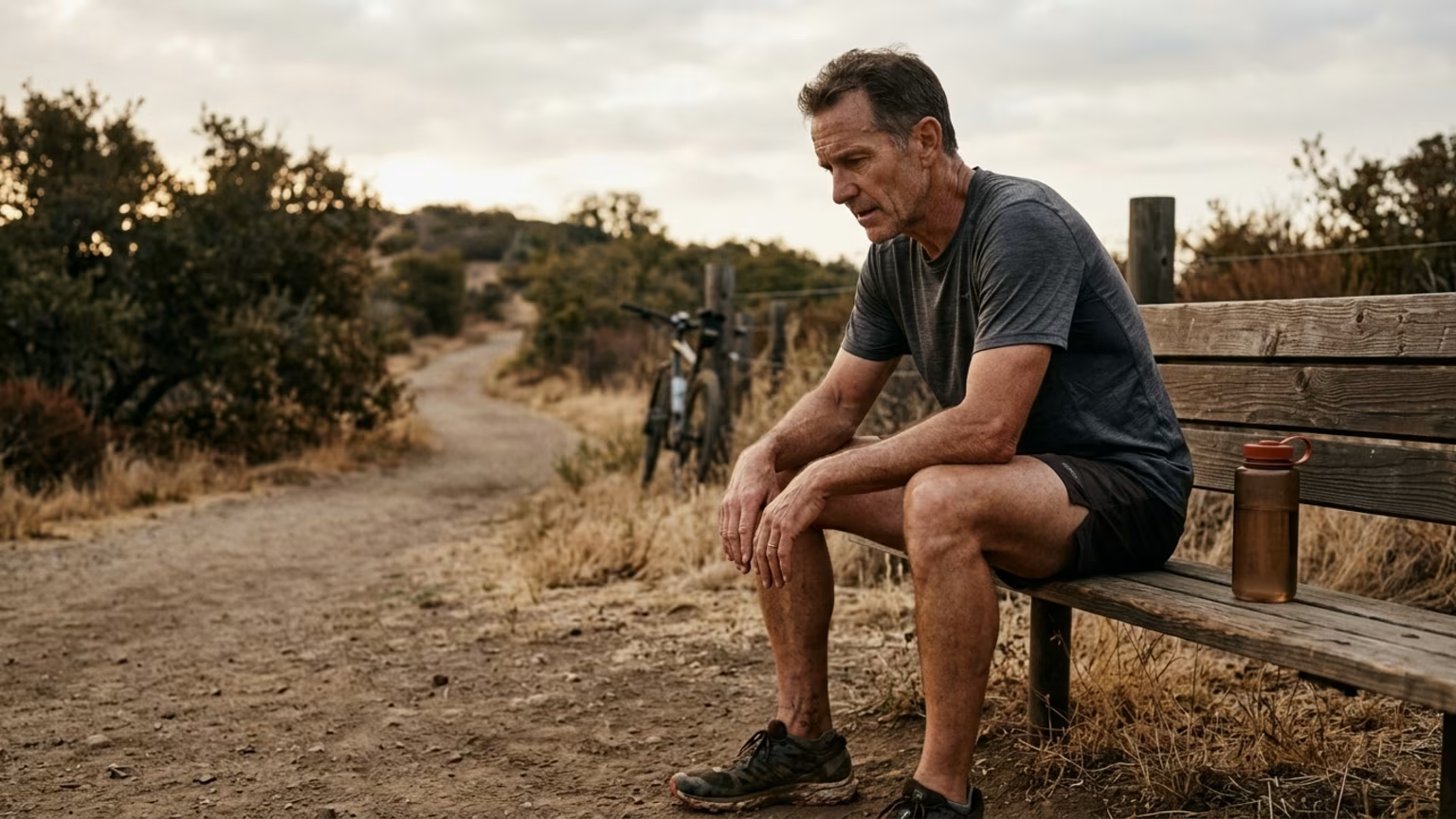

Discover how strength, balance, and stamina decline with age. Learn how progressive resistance and targeted mobility training can offset these changes after 35.





In a three-year follow-up of nearly 1,900 adults aged 70 to 79, leg strength declined about three times faster than leg muscle mass. This data highlights a critical gap in our understanding of longevity. Preserving visible muscle size does not guarantee that physical force and joint stability remain intact.
Age-related capacity decline is the progressive loss of maximum physical force, rapid reaction speed, balance and peak aerobic output that occurs independently of changes in visible muscle size.
When athletes age, neuromuscular activation and the ability to produce force naturally deteriorate. The MedicalXpress article reports that older adults who maintained or gained muscle mass still lost leg strength over three years. This finding suggests that ageing-related loss of physical capacity is not explained by muscle size alone. Muscle quality and nerve-to-muscle signaling also play massive roles in maintaining movement.
The aerobic engine changes just as fundamentally over time. The Baltimore Longitudinal Study of Aging tracked cardiovascular output and found that peak aerobic capacity declines by roughly 3% to 6% per decade. This occurs during the twenties and thirties before eventually accelerating to more than 20% per decade after age 70. This massive post-70 acceleration occurs at broadly similar rates in both highly active and totally inactive people.
Cardiovascular limits also shift downwards as we accumulate decades of training. A separate analysis involving more than 18,000 people found that maximum heart rate declined with age at essentially the same rate in athletes and sedentary individuals. Endurance training simply does not eliminate this particular age-related biological change. A lifelong runner will experience a dropping maximum heart rate just like a lifelong sedentary worker.
However, your starting fitness level still dictates how much usable capacity you retain later in life. Building a massive aerobic base early means your baseline remains high even as the inevitable percentage drops occur. This is a foundational principle within our healthy aging framework. Maintaining your endurance habit gives you a higher ceiling to fall from.
For ambitious endurance athletes passing their mid-thirties, these physiological realities dictate a strategic shift in training. Relying purely on high volume aerobic work leaves your most vulnerable physical capacities completely exposed. You must treat force production and reactive balance as independent skills that require specific attention. If you only focus on cardiovascular output, you ignore the hidden decay of mechanical power.
In our experience, standard injury advice often requires deeper scrutiny. When an Achilles flared up before a major marathon build, the standard recommendation was total rest. Studying the clinical research on tendon loading changed our team's approach entirely. We swapped complete rest for heavy slow resistance training by utilizing heavy calf raises on a deficit.
Loading an injured tendon felt counterintuitive at first. However, the scientific evidence supporting this progressive tissue stress was incredibly clear. Within six weeks, the morning stiffness faded completely. We were back to building our weekly mileage without the chronic ache.
This exact approach to tissue resilience forms the core of a smart injury prevention approach. We must purposefully load the body to maintain its structural integrity. A 2026 meta-analysis of 41 randomized controlled trials involving 3,141 older adults found that resistance exercise significantly improved muscle-specific strength. The standardized mean difference was 0.61 with a 95% confidence interval of 0.27 to 0.94.
Going to the gym and lifting comfortably light weights is entirely insufficient for maintaining power. The principal training recommendation from the research is progressive overload. The final two or three repetitions of a set should feel genuinely hard. When a specific load no longer provides a meaningful challenge, you must increase the weight.
It is vital to recognize that individual responses to lifting will vary significantly. The same 2026 meta-analysis reported substantial heterogeneity among the studies with an I² value of 81%. This overall result should not be interpreted as a guarantee of identical benefits for every older adult. The appropriate load and exercise selection depend heavily on your current capacity and medical constraints.
A highly practical strength program should include a few functional movement patterns. You might select a sit-to-stand pattern alongside a hip-dominant movement, a calf-raise exercise, and a pressing motion. You must carefully adjust this specific exercise selection to your chosen sport and your personal injury history. Progressive resistance training remains incredibly effective for improving strength and physical function even in very old age.
These physical adaptations directly support your training and performance strategies on the road or the trail. Your endurance output is ultimately limited by the structural strength of your muscular chassis. By prioritizing your mechanical force production, you buy yourself more years of competitive racing. You also reduce the chronic fatigue that plagues many veteran runners.
Balance is not a single uniform trait that degrades evenly across your body. Ageing impairs reaction time and the ability to recover from unexpected trips. A 2026 network meta-analysis covering 423 trials and 33,901 participants found that 18 of 19 exercise modalities improved overall balance. The largest estimated effects in that massive analysis were associated with perturbation training, sensory training, dance, and agility stepping.
Endurance athletes benefit heavily from rapid voluntary step training. A separate meta-analysis of seven trials found that step training and practice recovering from deliberate trips reduced fall rates by approximately half. It also reduced the proportion of people who fell by a similar amount. Avoiding a crash on the trail requires you to place a foot quickly and accurately before your body’s center of mass shifts too far.
Activities like single-leg stands, heel-to-toe walking, and agility stepping align closely with these specific reactive demands. Stretching alone is a poor defense mechanism for this purpose. The cited 2024 review found only small balance improvements from stretching, noting weak evidence and no benefit compared with other exercise. Balance requires task-specific challenges rather than passive flexibility.
Athletes must train their muscles to handle heavy deceleration forces. A meta-analysis of 19 trials found that eccentric training improved chair-stand performance and short-distance walking speed more than conventional strength training. Eccentric training involves actively controlling the muscle while it lengthens under a load. The evidence for this benefit was rated as fair by the researchers.
You can apply this concept by practicing slow chair descents, controlled step-downs, and deliberate stair descents. These controlled movements directly train your braking strength and your overall movement control. Such habits pair perfectly with basic recovery and mobility routines.
The MedicalXpress article notes that simple habits like chair stands and stair climbing can meaningfully support strength and stamina for older athletes. However, you should not treat ordinary stair climbing as a complete replacement for clinical step training. The evidence for halving fall rates specifically relates to rapid stepping and trip-recovery practice.
Building a comprehensive defense against physical decline requires a multi-layered approach to fitness. The primary article cites a massive review of 59 trials in which exercise overall reduced fall rates by 23%. Programs that specifically utilized balance and everyday-movement exercises reduced fall rates by 24%. Combined balance-plus-resistance programs provided the greatest protective benefit by reducing fall rates by an impressive 34%.
Interestingly, programs based primarily on traditional resistance training had uncertain effects on falls in that exact review. Heavy strength work alone does not provide complete protection against physical decline or clumsiness. You need a highly coordinated routine that safely stresses your cardiovascular engine, your maximum force production, and your reactive speed. Missing any one of these pillars leaves your athletic foundation physically vulnerable.
The most defensible long-term strategy is to deliberately preserve several physical capacities simultaneously as we get older. We must routinely train maximal force alongside lower-limb power and eccentric control. We should also prioritize reactive balance, reaction speed, and aerobic fitness. Adapting to the reality of an aging body means training smarter rather than simply pushing harder.
Intelligent programming always beats blind volume. True athletic longevity requires us to deliberately train the subtle mechanical forces that sustain our independence.

Follow ReEndure for practical insights on endurance training, recovery, nutrition and healthy aging. Stay connected for new articles, research led guidance and ideas to help you perform better for longer.


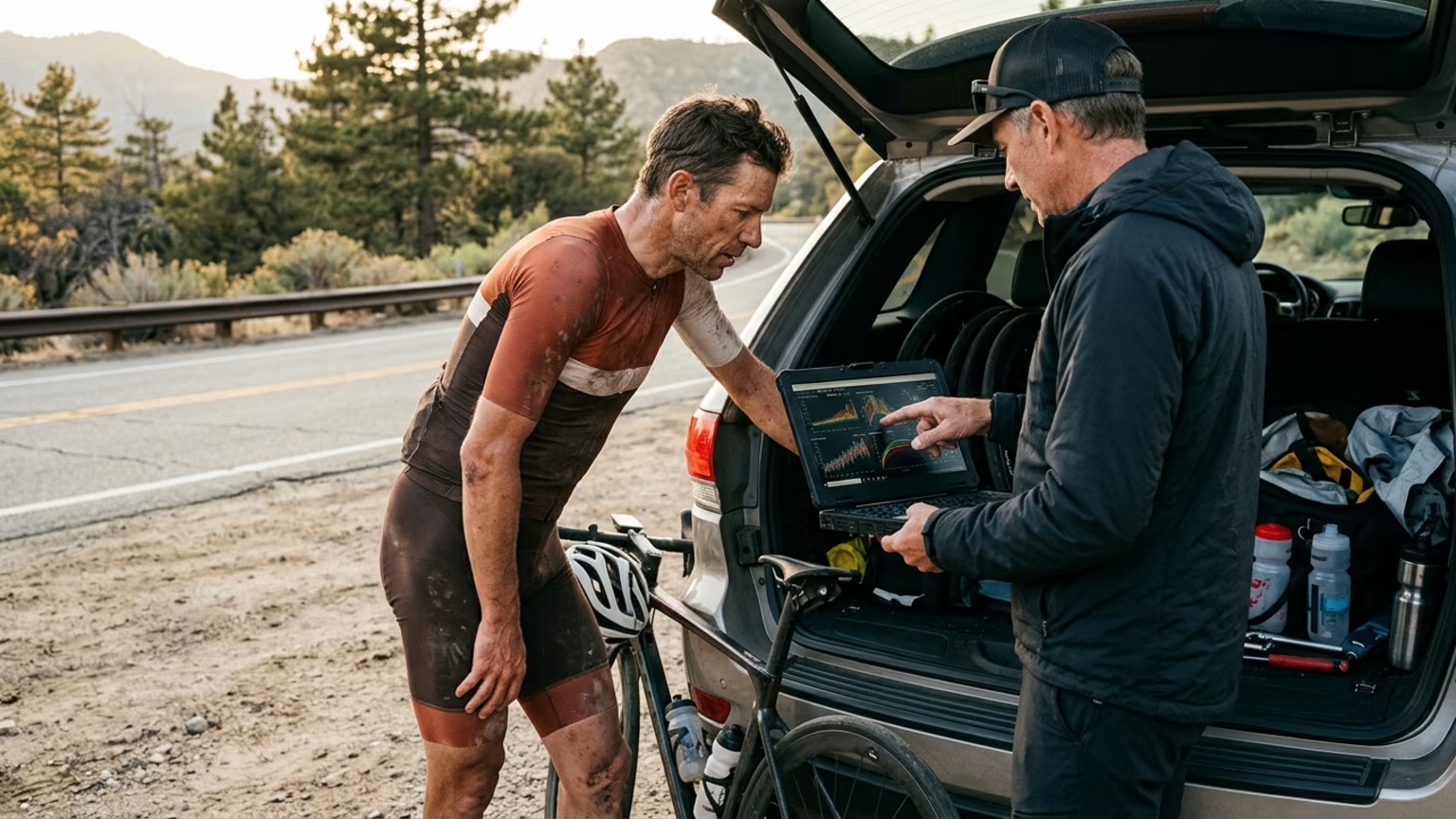

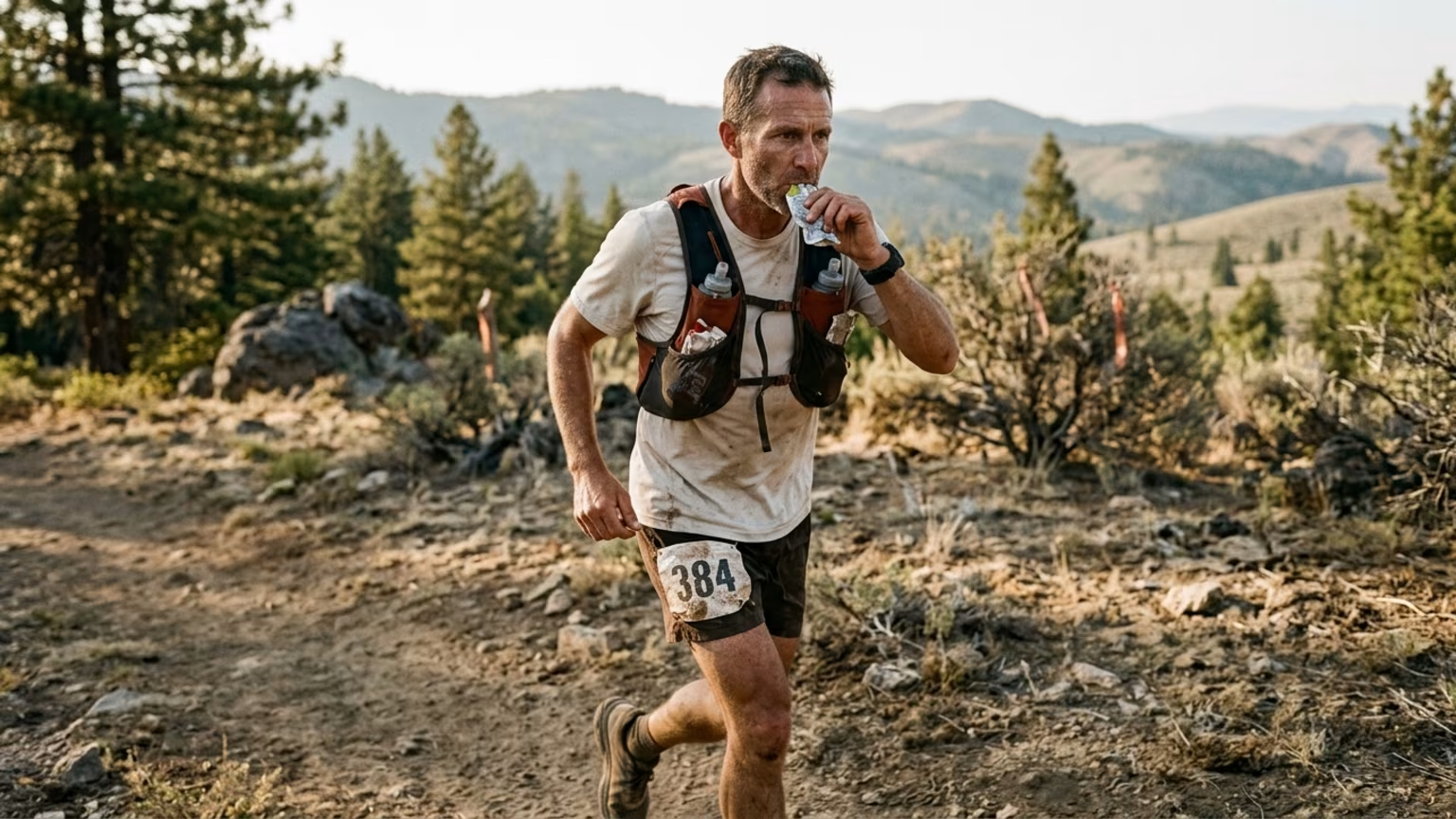
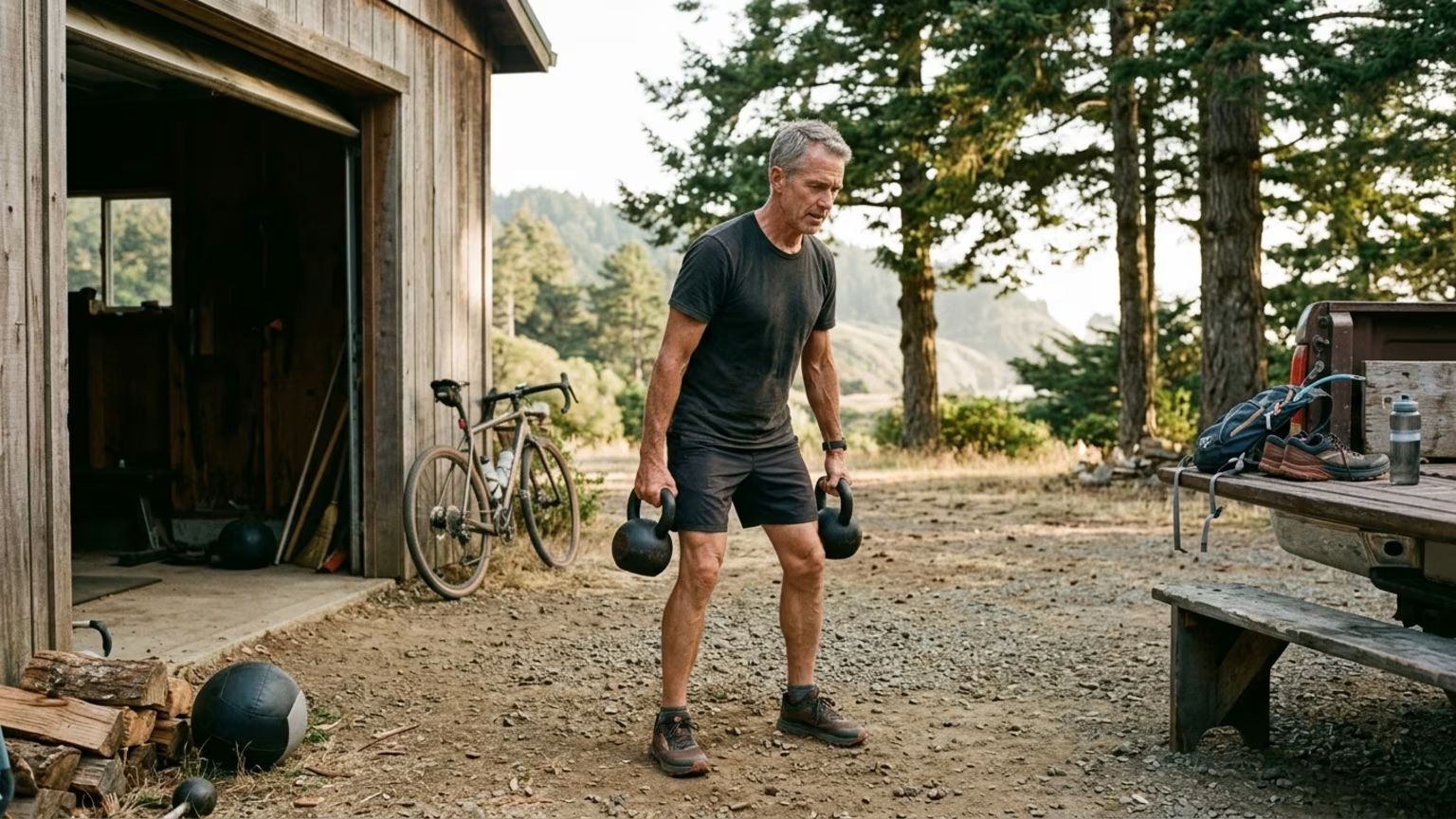
Read practical ideas on endurance training, recovery, nutrition and healthy aging to keep progressing for years to come.
Read the Blog