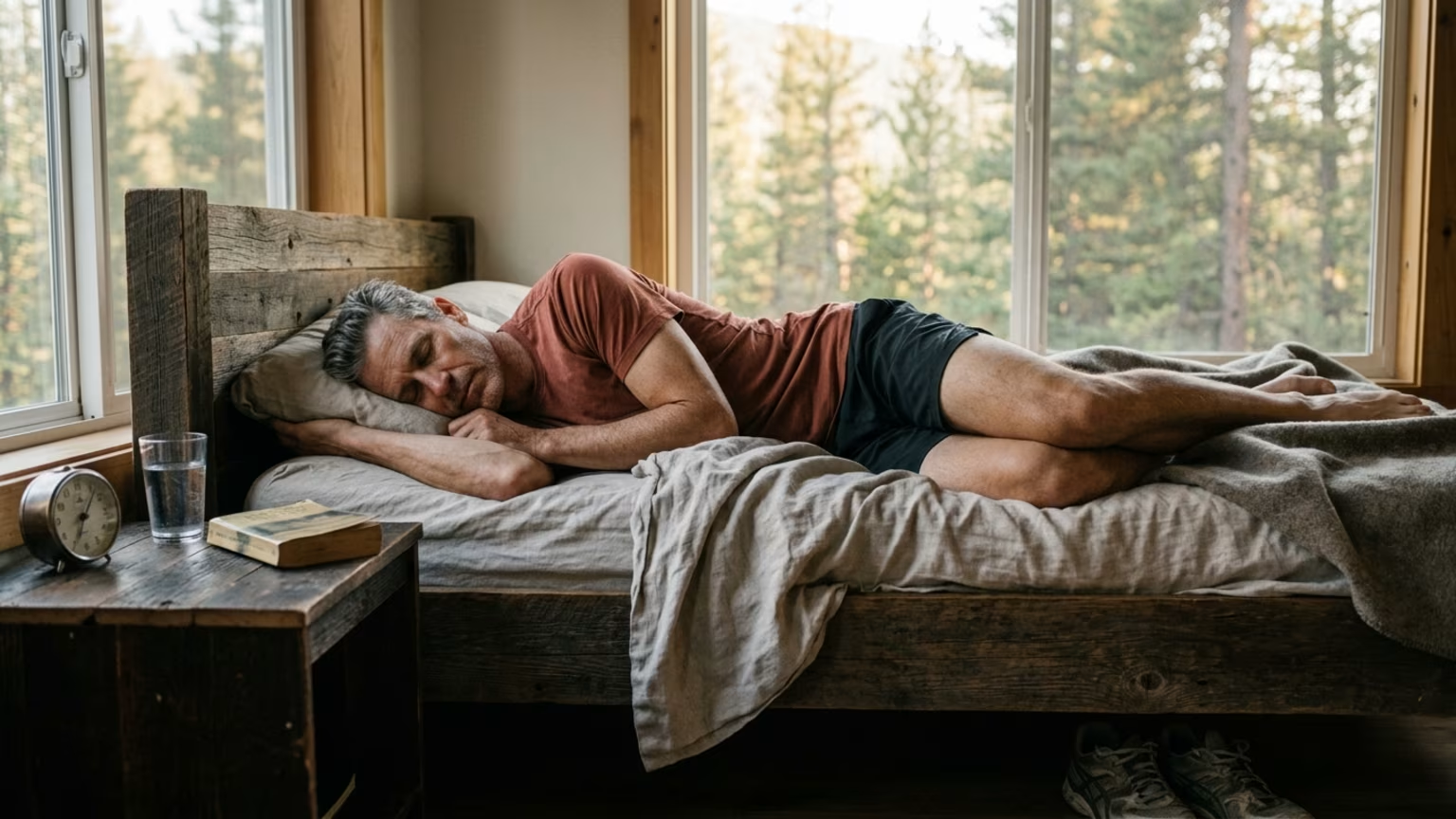

Discover why evidence-based recovery for older endurance athletes prioritizes passive rest and structured sleep routines over complex active recovery gadgets.





A veteran player for Liverpool FC stares at the dressing room floor after a grueling fixture. His legs feel entirely empty. The medical staff is already analyzing his physiological match data. The tension between forcing an active warm-down or simply sending him home to bed will dictate his readiness for the next match.
The persistent myth in endurance training is that sophisticated active recovery protocols always accelerate physiological healing better than simply resting. Many recreational competitors believe that total rest is a sign of athletic weakness. In reality, modern sports science confirms that passive rest and optimized sleep are often equally effective for genuine tissue repair. True physical readiness stems from foundational sleep habits rather than forcing tired legs to pedal on a stationary bike.
How did endurance competitors start believing that constant physical movement was mandatory for recovery? Over the past decade, amateur athletes closely watched professional football squads adopt highly visible post-match routines. Reports detailed Liverpool using Peloton equipment for next-day warm-downs, including after a hard-fought 1-0 victory over Nottingham Forest. Many age-group athletes saw these structured low-load sessions and incorrectly assumed the equipment itself generated the physiological benefits.
We gradually began to view complete rest as a failure of dedication. Instead of listening to our own cumulative fatigue, ambitious athletes aged 35 to 65 forced themselves onto indoor trainers for active recovery rides. We did this even when our aging bodies desperately needed passive rest. We completely ignored the underlying context of these professional protocols, assuming that moving tired legs was always the definitive answer to muscular soreness. This misguided mindset frequently led to chronic fatigue rather than improved cardiovascular fitness.
The undeniable foundation of any evidence-based recovery model is sleep duration and nighttime consistency. Former Liverpool manager Arne Slot reportedly encouraged his players to sleep in their own beds before home matches rather than stay in standard team hotels. Slot stated that people with greater medical expertise had told him athletes generally sleep better in their own beds. He directly connected this high-quality sleep with optimal match performance on the pitch. This sensible approach emphasizes that environment plays a critical role in calming the nervous system after intense physical exertion.
We see similar performance links in targeted academic research regarding young athletes. In a widely cited study by Mah et al., 11 collegiate basketball players extended their time in bed to 10 hours nightly for five to seven weeks. The researchers reported clear improvements in both sprinting speed and shooting accuracy for the young competitors. Their 282-foot sprint times improved from 16.2 to 15.5 seconds, while free-throw and three-point shooting accuracy saw roughly 9% improvements.
The researchers meticulously documented that ensuring ten continuous hours in bed allowed these athletes to fully repair muscle fibers damaged during heavy practice sessions. While the sheer volume of that specific sleep target is largely impractical for working adults, the mechanism remains identical across age groups. Protecting a predictable, lengthy sleep opportunity dictates how well you handle cumulative training stress over a long season. Attempting to replace lost sleep with expensive technological gadgets will always result in diminished physical output. Your body requires uninterrupted time in a dark, quiet environment to properly rebuild damaged muscle tissue.
The common assumption that active movement always clears fatigue faster than resting is simply not supported by comparative scientific data. A 2026 systematic review and network meta-analysis rigorously evaluated various recovery modalities in competitive and elite endurance athletes. The researchers found limited evidence that any single recovery modality consistently outperformed passive recovery for delayed-onset muscle soreness, creatine kinase levels, or sport-specific performance.
The comprehensive review analyzed numerous studies to determine if complex recovery protocols actually reduced next-day fatigue metrics. They specifically looked at popular methods like massage, compression garments, and structured cool-downs. The data definitively proved that sitting quietly or taking a simple nap cleared metabolic byproducts just as effectively as elaborate active routines. Sometimes, doing absolutely nothing is the most scientifically sound choice an athlete can make.
This significant finding does not mean easy movement is entirely useless for aging athletes. It simply means that marketing claims praising active recovery as a universal physiological cure are stronger than the current comparative evidence supports. A sensible trial is very easy cycling or walking that leaves you feeling refreshed rather than adding any meaningful muscular fatigue. The intensity of an active session should be low enough that it never becomes a second workout.
Proper fatigue management requires honest self-assessment from the athlete. If poor sleep, lingering soreness, or elevated resting heart rates persist for multiple days, taking a full rest day is often more appropriate than forcing a structured recovery session. Pushing through severe fatigue with an active recovery ride often delays actual healing. Prioritizing passive rest during these highly fatigued states is a crucial component of injury prevention for older competitors.
Professional football schedules perfectly highlight the severe physical impact of unmanaged athletic load. As Liverpool entered the 2026/27 season, the prominent club faced significant concerns about squad fitness and overall roster depth. After Liverpool suffered a 3-2 pre-season defeat by Monaco, manager Andoni Iraola noted the team struggled to sustain its first-half level. Iraola observed that Monaco improved significantly in the second half as systemic fatigue set into the opposing squad.
This competitive scenario perfectly illustrates the danger of carrying accumulated stress into a demanding physical event. Elite teams must carefully weigh passive rest against continued loading, especially when dealing with lingering musculoskeletal injuries. Arsenal defender William Saliba prioritized complete rest while managing a complicated back injury during his campaign. Liverpool also faced major injury concerns involving Jeremie Frimpong and Conor Bradley during the demanding 2025/26 season.
While systemic fatigue often requires total passive rest, localized tissue issues sometimes demand highly structured physical loading. When one of our team members experienced a painful Achilles flare-up right before a major marathon build, the standard medical advice was total rest. However, reading the clinical science on tendon loading changed our approach entirely. We swapped complete rest for heavy slow resistance training, specifically utilizing heavy calf raises on a physical deficit.
It felt entirely counterintuitive to intentionally load an injured tendon during a critical recovery phase. The clinical science on the matter, however, was exceptionally clear and thoroughly documented. Within six weeks, the morning stiffness faded completely, and the chronic ache subsided. Our athlete was successfully back to building necessary running mileage without experiencing the previous debilitating pain. The valuable lesson is that true physical recovery requires very specific interventions for very specific bodily problems.
Discussions around chronic physical pain often bring up alternative management approaches, including the use of medical cannabis. The featured reports on professional football routines mention these alternative methods but do not establish any clinical effectiveness for healing. Medical cannabis is never an appropriate substitute for proper clinical diagnosis, structured physical rehabilitation, or clinician-supervised treatment. Older athletes must seek professional medical assessment for persistent pain rather than relying on unproven alternative remedies.
Ambitious adult athletes must begin viewing sleep as a structured, mandatory part of the endurance performance cycle rather than leftover time. You should recreate the most useful aspect of the Liverpool home-sleep policy by strictly prioritizing a quiet, familiar, and highly predictable resting environment. Set a two-week baseline of your regular bedtime, wake time, and perceived muscular soreness before adding any new fitness protocols. This dedicated tracking allows you to see exactly how your body responds to accumulated stress.
Judge your actual physical readiness by the quality of your subsequent training sessions rather than the complexity of your evening routine. You absolutely do not need to purchase expensive equipment just because a professional sports team uses it in their facility. Reendure athletes succeed by mastering the mundane fundamentals of sleep hygiene before layering on any advanced recovery techniques. Keep your personal approach remarkably simple, highly consistent, and genuinely responsive to how you feel each morning.
When you focus on these essential habits, you remove the unnecessary anxiety of trying to optimize every single minute of your day. Recovery is fundamentally a biological process, not a technological one. Your primary goal is to provide your body with the basic resources it needs to heal itself naturally over time. If a recovery routine causes you additional mental stress, it is actively detracting from your overall physical readiness.
Tonight, set a firm wind-down alarm 30 minutes before bed to strictly protect your sleep window and prioritize true rest over forced activity.

Follow ReEndure for practical insights on endurance training, recovery, nutrition and healthy aging. Stay connected for new articles, research led guidance and ideas to help you perform better for longer.




Read practical ideas on endurance training, recovery, nutrition and healthy aging to keep progressing for years to come.
Read the Blog