

A 90-day trial found 300 mg of sustained-release ashwagandha improved strength and aerobic capacity in active adults when combined with structured training.





In September 2026, NutraIngredients covered a randomized, double-blind, placebo-controlled trial published in Frontiers in Nutrition. The researchers evaluated a specific sustained-release ashwagandha root extract marketed as Ashwanova. This extract was formerly known as Prolanza, and it is produced by the ingredient manufacturer Nutriventia. The clinical trial set out to measure the specific effects of this sustained-release formulation on muscle strength, aerobic capacity, and general quality of life over a clear timeline.
The primary conclusion of the study is that a daily 300 mg dose of this sustained-release ashwagandha extract meaningfully improved physical performance. NutraIngredients summarized the final data as a 2.1-fold improvement in bench-press strength compared with a placebo group. Furthermore, the active supplement group recorded a 1.5-fold improvement in cardiorespiratory endurance. These outcomes were achieved while both groups adhered strictly to a supervised exercise program.
Early progress in the trial was clearly documented and separated from the placebo effect quickly. By day 30 of the study, the active ashwagandha group had gained an average of 4.69 kg in estimated bench-press strength. The placebo group saw a much smaller average gain of 2.23 kg over that exact same period. This early data point establishes that the benefits of this specific sustained-release extract begin to accumulate within the first month of consistent use.
The benefits of the formulation extended beyond purely physical output to include psychological metrics. The industry reporting highlighted a 2.6-fold greater improvement in emotional well-being and calmness for the intervention group. Rajat Mittal Shah, the co-founder and executive director of Nutriventia, provided commentary on these outcomes. He stated that adults taking Ashwanova showed a statistically significant separation from the placebo group for both muscle strength and cardiorespiratory endurance. Rather than offering a generalized claim about herbal supplements, this trial proved that a precise botanical formulation can yield measurable clinical differences.
The study took place at a single research center in Bangalore, India, during the year 2025. It initially enrolled 84 recreationally active adults, and 83 of those participants successfully completed the trial. The participant pool specifically included individuals aged 25 to 50 with a body mass index between 25.0 and just under 29.9 kg/m². This specific demographic provided a controlled sample of moderately active adults rather than a group of elite professional competitors.
Participants were carefully divided to take either 300 mg per day of the sustained-release ashwagandha or a matching placebo. The intervention period lasted for exactly 90 days. Because both groups followed a structured training schedule, the study effectively isolated the direct impact of the supplement from the raw physical benefits of regular exercise.
Safety and general tolerability were also prioritized as key components of the research protocol. The trial investigators recorded a total of 16 adverse events across the entire study cohort. Interestingly, only six of these mild events occurred in the active ashwagandha group, while ten occurred in the placebo group. The low incidence of reported side effects supports the basic tolerability of this specific formulation over a full three-month training block.
Broader safety data in the general ashwagandha category provides additional helpful context for endurance athletes. A separate NutraIngredients report described an eight-week placebo-controlled trial involving 1,002 adults. That larger safety trial evaluated a different root extract called KSM-66 and found it to be well tolerated based on liver, kidney, and blood measures.
For the ambitious endurance athlete over 35, navigating modern sports science requires a highly critical eye. Hitting my forties brought a harsh reality check regarding how my aging body responds to intense track workouts. Instead of forcing my old Tuesday and Thursday intensity schedule, I looked closely at the available data on Masters athletes and muscle protein synthesis. I pushed my second hard session to Friday, allowing an extra forty-eight hours of low-intensity recovery.
My total weekly volume stayed exactly the same, but the quality of my intervals skyrocketed immediately. I learned that optimizing physical output as we age requires patience, structural discipline, and a willingness to adapt. Supplements should never replace the core fundamentals of adequate sleep, proper fueling, and smart training programming. When we combine strength and endurance in our weekly routines, the true foundation of our progress will always be our own consistent effort.
This new ashwagandha trial reinforces a highly similar principle of consistency and structured effort. The active participants saw clear physical improvements precisely because the supplement was paired with an exercise program over 90 days. An endurance athlete looking to improve their aerobic base cannot simply take a botanical capsule and expect effortless progress. The supplement clearly acts as an adjunct catalyst for the hard work you are already executing in the gym and on the road.
A 90-day clinical timeline aligns perfectly with the standard training macrocycle for a marathon or triathlon build. Athletes frequently make the mistake of abandoning a new nutritional strategy after just two or three weeks when they do not feel immediate physiological changes. The fact that the study measured clear progress at day 30, but continued to track improvements through day 90, validates the need for profound patience. Adapting to a heavy training load takes time, and your nutritional support requires the same long-term commitment.
Furthermore, the specific formulation matters deeply when you are evaluating any sports nutrition product. The trial tested a sustained-release capsule deliberately designed to deliver active compounds gradually into the system. Many older athletes struggle with sudden recovery bottlenecks and turn to generalized supplements without checking the clinical evidence for the specific extract. Identifying targeted strength work for better recovery is always highly effective when it is paired with clinically tested nutritional interventions.
The chosen age bracket in this particular study is also highly relevant for our experienced readers. By testing adults up to age 50, the researchers provided reliable data that applies directly to middle-aged recreational athletes. We often see sports science studies conducted exclusively on college students in their early twenties. This current trial offers a much closer approximation of how a mature metabolic system might respond to a sustained-release extract.
Ambitious athletes should also appreciate the dual benefit of physical gains and psychological improvements. Long-distance endurance sports require immense mental resilience during heavy training blocks and difficult race conditions. The documented 2.6-fold greater improvement in emotional well-being suggests that this extract may help athletes manage the heavy mental stress of peak training. Balancing deep physical fatigue with a calm state of mind is absolutely crucial for long-term longevity in endurance sports.
However, it is always essential to respect the documented limitations of the available scientific data. The study did not specifically test older athletes over the age of 50. Older competitors must remember that their individual response to any new supplement can vary significantly based on their unique physiology. We strongly recommend discussing new supplement protocols with a qualified clinician, especially if you currently manage existing health conditions.
When integrating new sports science into your routine, take a highly measured and objective approach. If you decide to test a sustained-release ashwagandha extract, try to mimic the strict discipline of the study itself. Commit to a full 90-day trial period, maintain a highly consistent training log, and track your performance objectively. Mastering strength training for older endurance athletes requires treating your aging body like an ongoing, carefully monitored experiment.
For ambitious endurance athletes, this trial provides promising evidence that a specific 300 mg sustained-release ashwagandha extract can support measurable strength and aerobic gains when it acts as an addition to a disciplined training plan rather than a replacement for it.

Follow ReEndure for practical insights on endurance training, recovery, nutrition and healthy aging. Stay connected for new articles, research led guidance and ideas to help you perform better for longer.


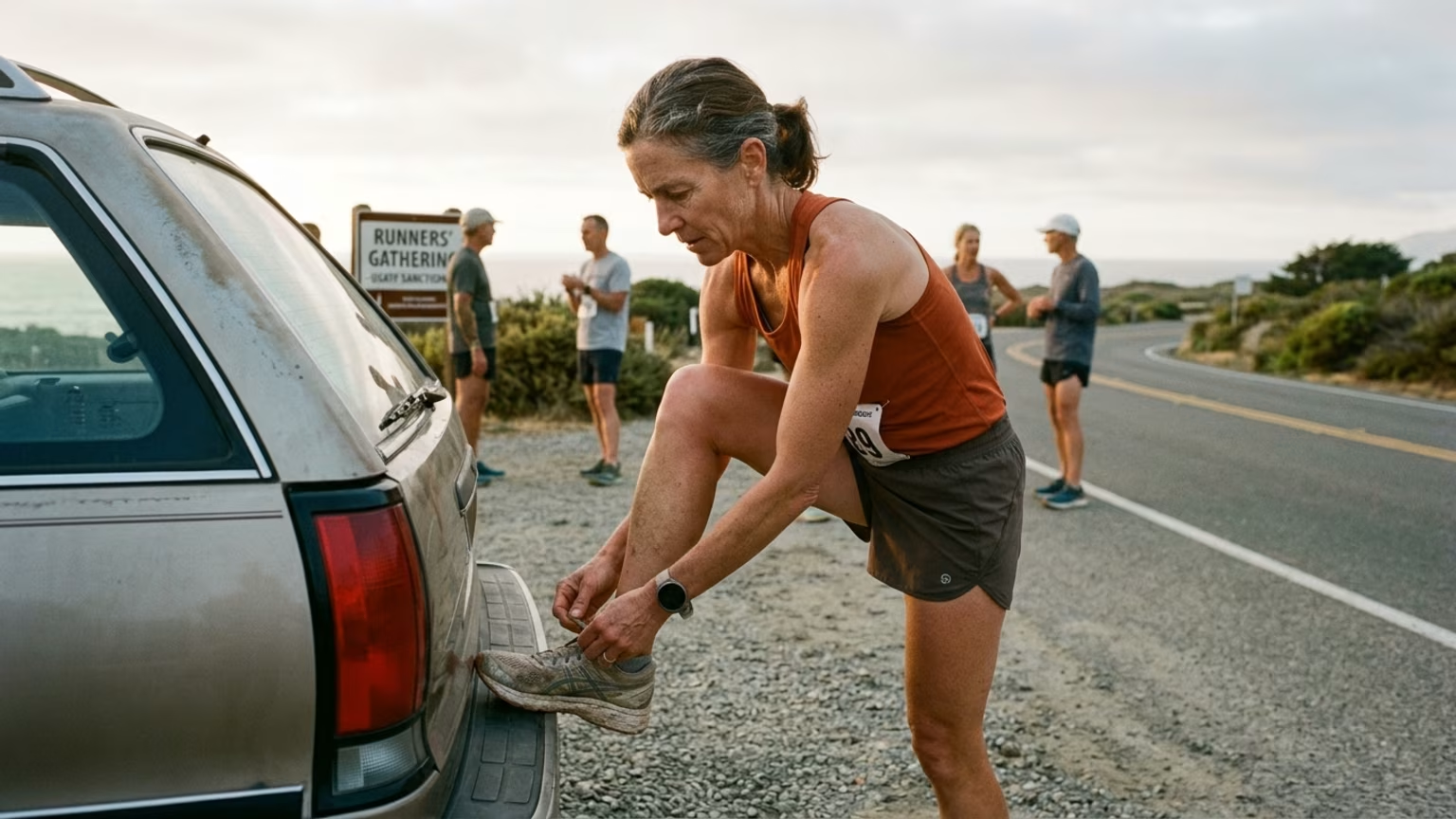



Read practical ideas on endurance training, recovery, nutrition and healthy aging to keep progressing for years to come.
Read the Blog