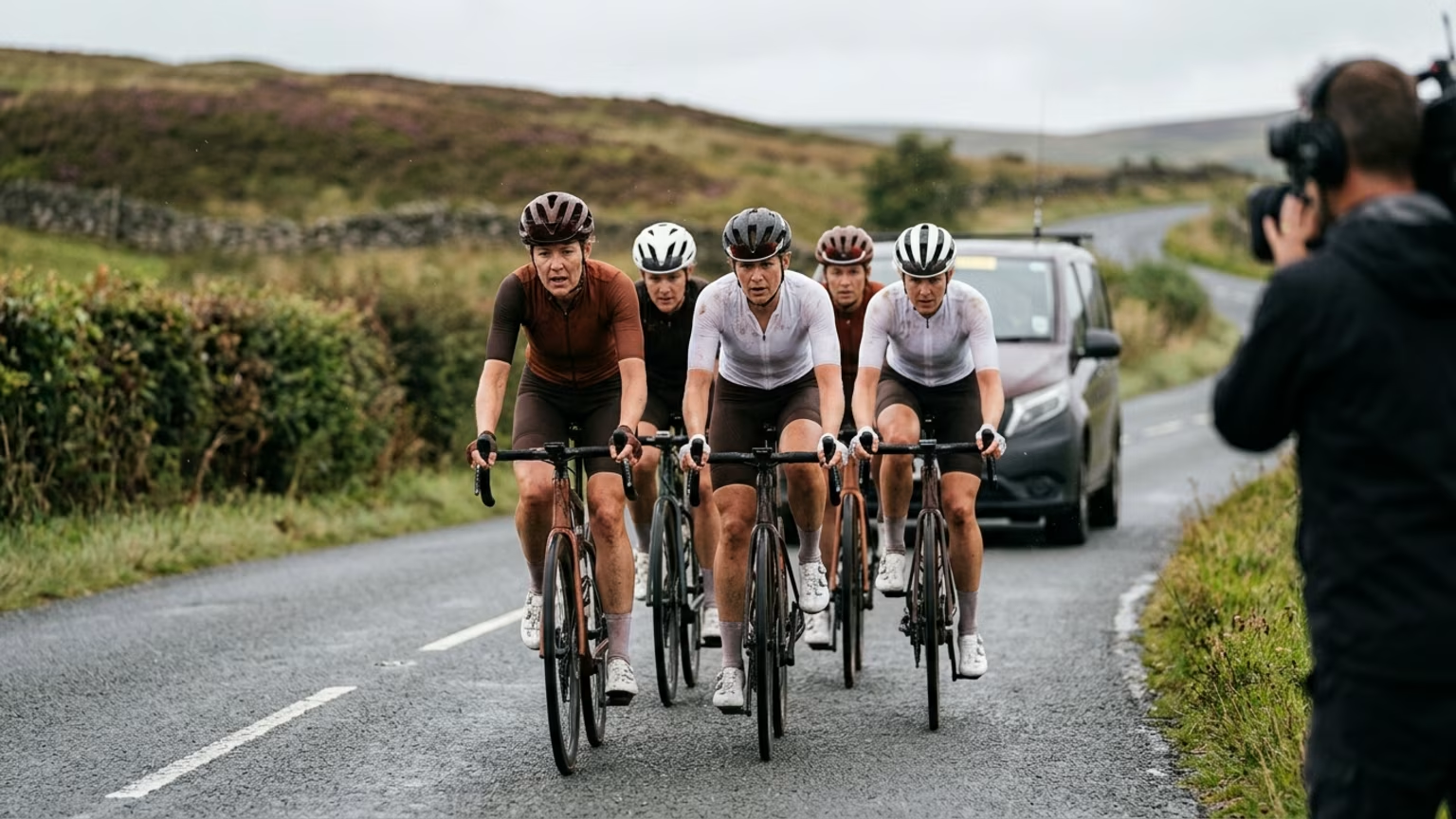

The Tour of Britain Women introduces live rider data to its broadcast. Learn how ambitious athletes over 35 can use elite pacing insights to improve training.





A lone rider hits the final climb of the stage. Her power output spikes sharply to hold the wheel ahead. In a living room miles away, a master athlete takes notes. The age of invisible race tactics is finally ending.
On August 18, 2026, Road.cc reported that the 2026 Tour of Britain Women is introducing live rider performance data into its television coverage. The project brings together the Tour of Britain, consulting firm Elixirr and cycling media company Velon. Organisers describe this initiative as the first use of live rider data in a women’s WorldTour stage race. Viewers can watch the women’s stages live through the official YouTube stream and paid platforms.
British Cycling Ventures director of events Jonathan Day said the partnership would give fans live rider data and unique performance insight. The data feed will be used during both the women’s and men’s Tour of Britain races. Velon will also contribute onboard footage and performance graphics for social media distribution. This coverage provides a richer viewing experience for endurance athletes who want to analyze tactical execution.
The Guardian previously reported that television coverage has become a debated issue in women’s cycling as audiences grow. Expanded free access directly addresses this historical gap. BBC Sport reported that only three of nine stages of the previous edition were shown live in their entirety. The new YouTube stream makes it possible to observe the complete build up to attacks.
Stage 1 covers 158.9 kilometres and starts in Cockermouth. The stage is scheduled to begin at 11:30 BST, with the finish expected at approximately 15:25 BST. ITV4 and ITVX will carry highlights of the race for viewers who cannot watch the live broadcast. This detailed programming allows fans to carefully study the decisive moments of each racing day.
A data rich broadcast makes invisible race decisions much easier to discuss. Viewers can see exactly when professional riders conserve energy. They can also observe how sharply competitors respond to sudden attacks. The most useful viewing approach is comparative rather than imitative.
Professional racing is not a direct template for every adult athlete. Elite riders can tolerate workloads that are unsuitable for a recreational or masters cyclist. Differences in body mass, equipment and training history make direct numerical copying inappropriate. Viewers should clearly distinguish between external mechanical output and internal physiological strain.
In my experience, hitting my forties brought a harsh reality check. The track workouts were not getting slower, but the days after them felt significantly heavier. Instead of forcing my old Tuesday and Thursday intensity schedule, I looked at the data on Masters athletes and muscle protein synthesis. I pushed my second hard session to Friday, allowing an extra forty eight hours of low intensity recovery. My total weekly volume stayed the same, but the quality of my intervals skyrocketed.
This personal adjustment reflects the core lesson of watching elite sports data. You cannot adopt a professional rider's absolute power target or recovery timeline. You can only borrow the structural logic behind their racing and event preparation strategies. The broadcast provides an excellent lesson in pacing strategy without serving as an exact daily prescription.
Ambitious athletes can use these live broadcasts to inform their own training rhythms. A practical exercise is to watch one stage with your training app open. Record the visible effort preceding an attack and the apparent recovery period afterward. Note the pacing patterns rather than absolute numeric equivalence.
Review your own endurance performance resources to see how your heart rate responds to similar tactical changes. The next time you ride a familiar climb, try one controlled effort with a perfectly even pace. Then try another attempt with a deliberately conservative first half. Compare your power stability and heart rate drift between the two distinct attempts.
Always remember to record what the data cannot show you. Factors like wind, terrain, and team positioning heavily influence a professional rider's power output. A short power spike might represent a steep climb or a sprint lead out. These environmental details prevent a displayed metric from being interpreted as a complete explanation of physical performance.
The team at Reendure constantly reminds athletes to view data as just one part of the wider picture. Metrics are useful measurements, but they remain dependent on sensor accuracy and transmission quality. A broadcast graphic showing high watts might inspire you to push harder. However, ambitious veterans must keep hard efforts limited and strictly purposeful.
The availability of live broadcast metrics does more than entertain fans. It provides a real time study in energy preservation and mechanical efficiency. Older athletes often struggle with the transition from brute force to calculated execution. We naturally want to attack every local hill with the same aggression we possessed in our younger years.
Watching professional riders manage their efforts teaches a crucial lesson in physiological patience. They constantly calculate the exact minimum effort required to maintain their peloton position. This calculated restraint is the absolute cornerstone of healthy aging in endurance sports. Master athletes must ruthlessly manage their recovery capital to avoid chronic overuse injuries.
Every unnecessary surge on a training ride steals valuable energy from tomorrow's recovery cycle. A professional rider relies on an entire team of mechanics and physiotherapists to handle their daily stress. An amateur athlete relies solely on sensible sleep habits and careful intensity management. When you watch a televised breakaway fail, you are watching the harsh reality of strict biological limits.
The human body can only sustain a massive oxygen deficit for a brief window. Once a rider burns through their glycogen stores, their power output collapses dramatically. You can use this visual evidence to reinforce your own nutritional discipline during long weekend events. Proper fueling is the literal dividing line between finishing strong and completely falling apart.
You can apply these televised lessons to your daily fueling and hydration strategies. Note how frequently the professional peloton consumes fluids and carbohydrates during transition stages. They do not wait until they feel thirsty or completely depleted to begin eating. They follow a rigid nutritional schedule to maintain blood glucose levels over multiple hours.
You can replicate elite pacing structures without matching their raw athletic output. Notice how a professional rider settles into a steady rhythm after bridging a gap. They deliberately lower their power output to clear lactate and stabilize their breathing. You can practice this exact physiological transition during your own weekend long rides.
Accelerate smoothly over a short hill, then immediately focus on lowering your heart rate on the descent. This practice improves your metabolic flexibility and tactical discipline. Professional riders understand that endurance racing is fundamentally an energy conservation contest. They only spend matches when the tactical situation absolutely requires a maximal effort.
The men’s Tour of Britain takes place from September 2 to September 6, 2026. The coverage includes live broadcasts of the first four stages on ITV4. The fifth stage will be available through ITVX alongside YouTube streaming. This broad access means athletes have multiple stages of live data to study.
You can use this extended window to review your own recovery and mobility guidelines while observing the peloton. Weighing televised professional pacing patterns against your biological reality is the true foundation of long term athletic progression. Watch the final broadcast kilometers today to map out tactical effort timing, then immediately apply that disciplined restraint to your next scheduled interval session.

Follow ReEndure for practical insights on endurance training, recovery, nutrition and healthy aging. Stay connected for new articles, research led guidance and ideas to help you perform better for longer.



Read practical ideas on endurance training, recovery, nutrition and healthy aging to keep progressing for years to come.
Read the Blog