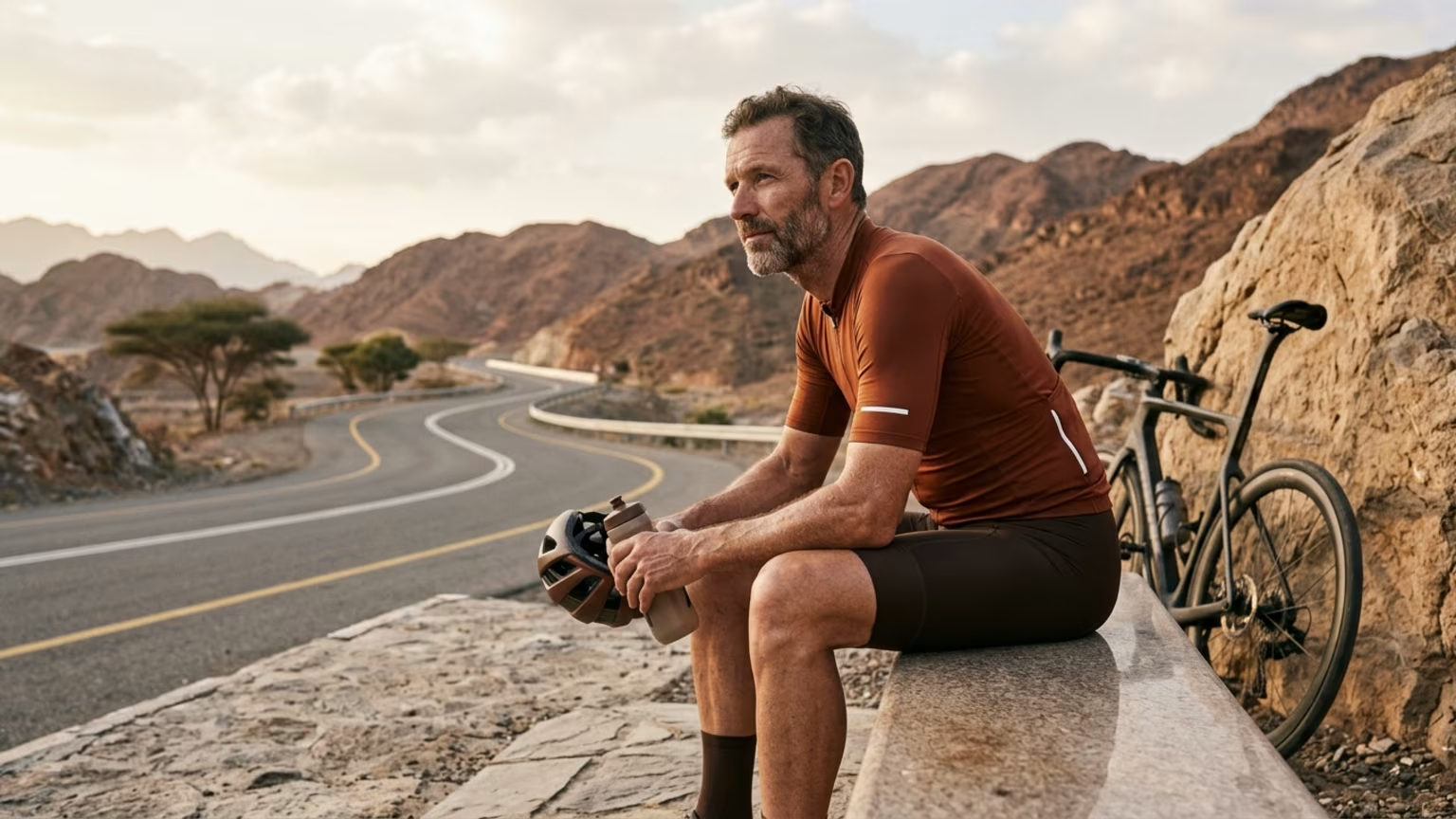

Learn how UAE Team Emirates-XRG prepared Tadej Pogačar for the 2026 Vuelta by prioritizing mental freshness, time at home, and minimizing travel stress.





Tadej Pogačar is entering the 2026 Vuelta a España just weeks after claiming his fifth Tour de France victory on July 26. This timeline leaves a remarkably short gap between two of the most demanding racing objectives in professional cycling. Instead of adding physical strain, UAE Team Emirates-XRG deliberately reduced his calendar to protect his mental freshness.
Many amateur athletes struggle with the crushing fatigue that accumulates between major racing objectives. The natural instinct is to push harder to maintain fitness when a new race approaches. However, elite performance often requires a disciplined reduction in total life stress. We will examine how treating recovery as a central priority can completely change an athlete's season.
Altitude training is a traditional cornerstone of Grand Tour preparation for professional cyclists. CyclingUpToDate reports that UAE Team Emirates-XRG designed Tadej Pogačar’s 2026 racing calendar to preserve the option of riding the Vuelta a España without making it an obligation. Jeroen Swart serves as the team's performance director and helped shape this strategy. He told Cyclingnews that Pogačar’s physical preparation was focused primarily on July.
The Vuelta was treated strictly as an add-on rather than the central target of the racing year. Because the Tour de France remained the principal objective, the team had to manage the subsequent transition carefully. Swart said the racing calendar was deliberately made less arduous to help preserve Pogačar’s mental freshness and interest in racing. UAE also chose not to use an altitude camp between the Tour and Vuelta.
Swart explained that in this remarkably short interval, altitude training could have added unnecessary mental fatigue. The team considered the limited time available and made a highly calculated choice. Omitting the camp was not a rejection of altitude training as a general high-performance concept. It was a precise adjustment to avoid overburdening a rider who had just completed a massive effort.
A lighter schedule kept the door open for the Vuelta without turning it into a mandatory physical grind. This strategy highlights a sophisticated understanding of cumulative fatigue across a long season. Physical fitness can often be maintained with relatively straightforward preparation methods. Psychological readiness requires active protection from unnecessary demands.
Professional racing surrounds athletes with intense environmental stress on a daily basis. Media duties, public appearances, and podium commitments rapidly drain critical emotional reserves. To combat this, the team's strategy reportedly included significantly more time at home. Removing a rider from the high-pressure racing bubble is a highly effective way to manage non-training stress.
After the Tour, Pogačar spent time at home in Slovenia to unwind. He was also seen supporting his fiancée, Urška Žigart, at the Tour de France Femmes. He engaged in these personal activities rather than immediately entering another formal training block. This deliberate step back allowed his nervous system to settle after the intense demands of July.
For anyone engaged in endurance sports, balancing everyday life and rigorous training is paramount. At Reendure, we believe travel and logistical friction can easily outweigh the physiological benefits of a structured training camp. Time at home removes the friction of packing, flying, and living out of a cramped suitcase. This allows the body to allocate more systemic resources directly to deep physiological recovery.
If you want to read more about integrating these habits, reviewing our endurance life articles can be incredibly helpful. The mind and body are not separate entities during the recovery process. When you reduce cognitive load, your physical tissues repair themselves much more efficiently. Family time and familiar surroundings are legitimate components of a highly effective performance program.
The 2026 Vuelta a España is scheduled to run from August 22 to September 13. Pogačar returns to the race seven years after finishing third overall and winning three stages in 2019. He is widely described by contemporary race coverage as the clear favourite for the 2026 Vuelta. However, the sequence of racing the Tour and the Vuelta is an unusually demanding undertaking.
The race profile will test the riders immediately upon arrival in Spain. Swart described the course as demanding even for a rider who had already completed the Tour. Early climbing and time-trial demands could potentially make the general classification decisive early in the race. Arriving heavily fatigued would be a disastrous disadvantage on such an unforgiving route.
UAE Team Emirates-XRG understood that an exhausted rider simply cannot compete for a general classification. The decision to arrive mentally recovered was a direct response to the intense early stages. Maintaining the fitness gained in July was deemed completely sufficient for the upcoming challenge. Pushing for new physiological peaks would have been too risky in the short timeframe.
This approach emphasizes the crucial concept of minimum effective preparation. When the gap between competitions is brief, piling on complexity creates severe negative returns. A streamlined preparation phase ensures that the athlete retains their sharp competitive edge. Arriving fresh is often the most powerful tactical advantage any competitor can possess.
When a top contender skips a major training tool, it invites broad speculation from the community. Athletes might wonder if the science behind altitude exposure has shifted entirely. The report does not establish that altitude training is harmful in general. It simply describes a team-specific decision made under incredibly tight timeline constraints.
The physiological impacts of altitude require careful timing and strict management. A 2026 Frontiers in Physiology study of elite youth endurance runners provided some context on acute exposure. It reported a temporary, non-linear response to acute exposure at 1,300 metres. The study noted that the greatest impairment occurred around day four, with partial recovery by day six.
While this study involved elite youth runners, it highlights the significant disruption that altitude can cause. Adding this strain between two Grand Tours could easily compromise a professional rider's recovery timeline. Swart indicated there was simply insufficient time for an extensive training intervention. The logistical and physical burden of a high-altitude camp was deemed too high.
Every athlete must individualize their approach to altitude based on their specific season calendar. You must weigh the expected benefit of an intervention against sleep disruption and accumulated physical fatigue. If you are focused on optimizing recovery protocols, timing your hardest blocks is everything. Altitude remains a potent tool when deployed intelligently in the correct phase of a season.
Most amateur athletes do not race multiple Grand Tours in a single summer. However, the lessons from this elite transition apply directly to ambitious adults with busy schedules. Athletes aged 35 to 65 must treat recovery capacity as an uncompromisable part of the training plan. Managing your total workload is the absolute key to healthy aging and continuous athletic improvement.
Work deadlines, family responsibilities, and poor sleep all act as massive non-training stressors. Your body processes a stressful travel schedule the same way it processes a hard interval session. When you face a short gap between key events, utilize the minimum effective preparation. Do not force an intense weekend training camp if it completely ruins your sleep schedule.
Protecting your motivation is just as critical as protecting your muscles and joints. If you constantly force yourself to train through extreme fatigue, your interest in the sport will wither. Swart noted that UAE deliberately kept the racing calendar less arduous to keep their rider engaged. We should all adopt a similar mindset to preserve our long term passion for endurance sports.
Building a sustainable relationship with the sport requires immense patience and adaptability. Prioritizing healthy aging resources means knowing exactly when to step back. Staying home to rest is sometimes the most productive thing an athlete can possibly do. Consistency over decades is built entirely on a solid foundation of mental freshness.
We started by looking at the remarkably short gap following a fifth Tour de France victory on July 26. The instinct for many competitors facing a compressed timeline would be to panic and train relentlessly. UAE Team Emirates-XRG proved that sometimes the most advanced performance strategy is simply going home. Protecting an athlete's psychological readiness is the most important factor in sustained elite performance.
Physical fitness means nothing if you lack the mental energy to properly deploy it. A fatigued mind will shut down a strong body long before the muscles actually fail. By prioritizing time at home and reducing unnecessary obligations, the team shielded their rider from burnout. That is a professional standard of care we should all apply to our own training lives.
Success in endurance sports is not just about accumulating the highest amount of suffering. It is about arriving at the starting line completely eager to compete. Guard your motivation fiercely, eliminate unnecessary stress, and respect your fundamental need for downtime. When you master the art of stepping back, you guarantee your ability to move forward.

Follow ReEndure for practical insights on endurance training, recovery, nutrition and healthy aging. Stay connected for new articles, research led guidance and ideas to help you perform better for longer.




Read practical ideas on endurance training, recovery, nutrition and healthy aging to keep progressing for years to come.
Read the Blog