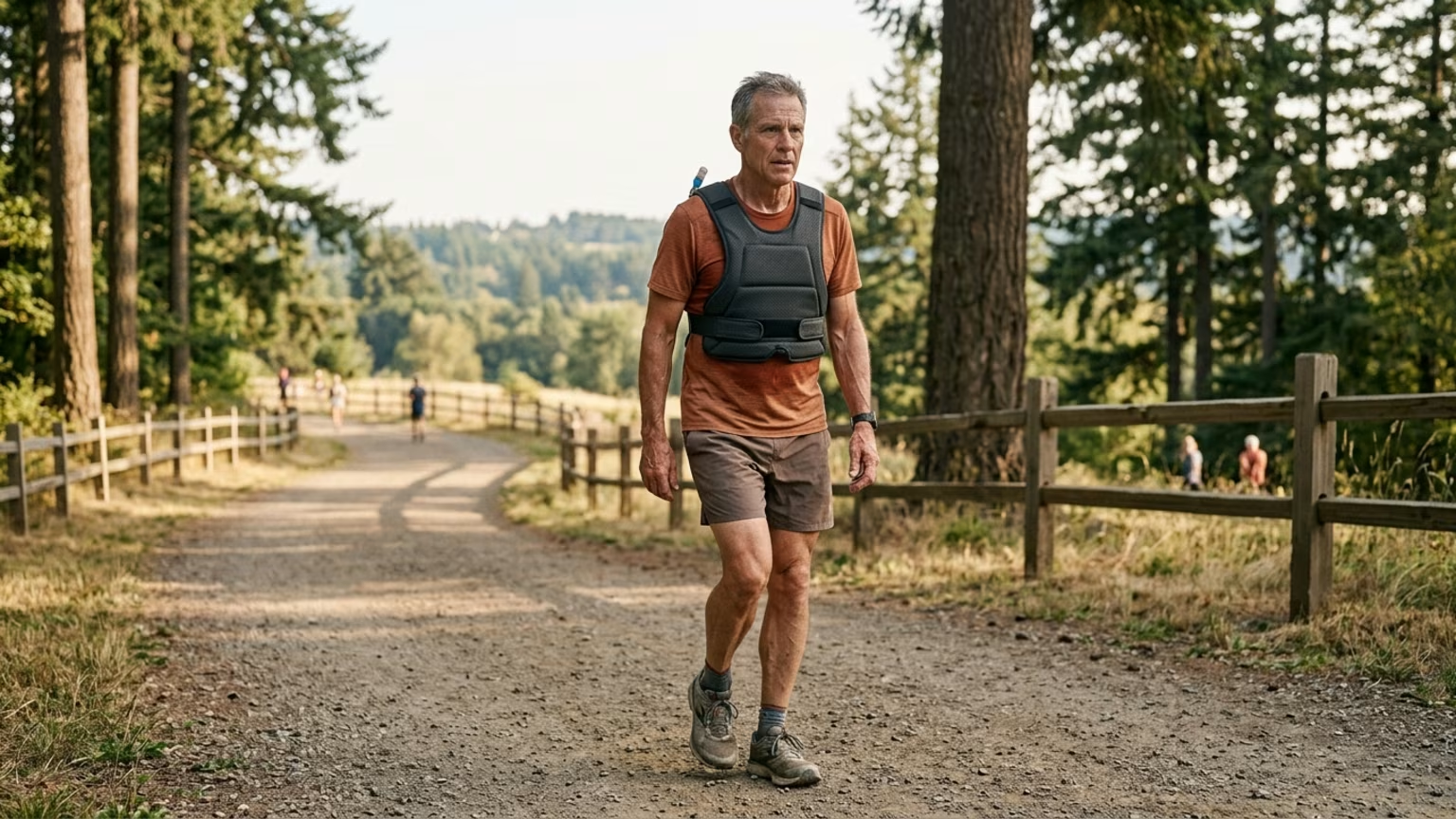

Outside's recent analysis shows weighted-vest walking adds cardiovascular demand but cannot replace heavy resistance training for masters endurance athletes.





On September 15, 2026, Outside published a detailed analysis of weighted-vest walking and rucking. The updated September 16 report examines these activities as forms of load-bearing conditioning. The publication clarified that adding a weighted vest to your routine should not replace conventional strength training. The piece provides a much-needed objective look at a growing fitness trend.
The central conclusion from Outside is straightforward and highly relevant for older athletes. A weighted vest can clearly increase the cardiovascular and postural demands of a standard walk. It also adds a layer of difficulty to functional bodyweight movements. However, athletes who need substantial gains in strength or force capacity still require high-load resistance training.
Weighted vests have recently surged from clinical and military settings into mainstream fitness programs. Outside notes that Peloton added weighted-vest streaming classes in May 2025. This integration into a major digital fitness platform highlights how quickly the trend is spreading. Furthermore, the article cites a 2025 Forbes projection estimating that the global weighted-vest market could reach 350 million dollars by 2033.
High market projections do not equate to proven athletic superiority. The evidence does not justify claims that weighted vests are a standalone solution for preserving bone density or extending athletic longevity. The most defensible claim is simply that a vest makes walking more physically demanding. Heavy resistance training remains essential when your goal is real strength development.
Outside bases part of its analysis on a 2026 study published in Physiological Reports. This research involved 51 people with obesity. Participants wore either a heavy vest equivalent to 15 percent of their body weight or a light vest equivalent to 1 percent. Researchers monitored the participants to see how the added mass affected their baseline metrics.
The heavier-vest group experienced increased heart rates and a higher overall cardiovascular workload. This study proves that external loads make walking more physiologically demanding. It does not establish that vest walking improves endurance race performance for healthy athletes. It also does not prove that vests reduce injury risks in a masters athlete population.
Other cited studies focus heavily on weight loss and bone health in older demographics. One randomized clinical trial looked at older adults with obesity who were intentionally losing weight. That trial found that neither daily weighted-vest use nor progressive resistance exercise prevented hip bone loss. A secondary analysis similarly reported that vest use did not produce statistically significant improvements across measured muscle outcomes.
The resistance training group actually showed more favorable muscle results in that secondary analysis. This data reinforces why we cannot abandon traditional heavy lifting. A well-rounded program requires understanding which workout recovery techniques truly help athletes stay consistent and strong. You have to put in the actual work in the weight room to see lasting results.
The guidance for integrating this tool into an existing endurance plan requires caution. Outside recommends beginning with a vest weighing approximately 5 percent of your body weight. For a 160-pound athlete, that starting load would be about 8 pounds. You should limit this initial use to one or two non-consecutive walking sessions per week.
Physical therapist Peter Mason told Outside that a reasonable upper target is 10 to 15 percent of body weight. He emphasizes that athletes should only progress to these heavier loads if their movement quality remains good. You must be able to walk without experiencing pain or substantial fatigue. The vest needs to fit snugly enough to prevent friction but loose enough to allow unrestricted breathing and trunk motion.
Many athletes are tempted to replicate extreme military standards when they start load carriage. Cal Coblentz is a former United States Air Force survival specialist quoted in the Outside piece. He detailed his extensive experience with load carriage during his service. He described baseline military loads of an additional 50 pounds, and he noted that packs routinely exceeded 100 pounds during specific training missions.
That historical context is fascinating but entirely inappropriate for a recreational endurance athlete. We learned this the hard way while attempting to blend new conditioning trends with structured running plans. Our team realized that adding extra weight to an easy walk fundamentally alters the physical stress of the day.
Respecting the recovery curve after forty means recognizing that extra weight causes hidden muscular fatigue. If you want to know how older athletes should handle training intensity, the answer is strict scheduling. Treating a loaded walk as a demanding session is the only way to avoid compounding fatigue. If we fail to schedule adequate rest, the accumulated stress ruins the quality of our primary endurance workouts.
You must monitor your gait constantly during these sessions. If the vest causes pain, dizziness, or pelvic pressure, Outside explicitly advises removing it immediately. Athletes with osteoporosis, known vertebral fractures, spine conditions, or pelvic-floor symptoms should seek medical input before trying this. The goal is to build resilience rather than accumulate unnecessary orthopedic stress.
Think of the vest as an optional conditioning tool to make your neighborhood walks slightly more productive. It is a terrible idea to wear one on days directly preceding a long run or a heavy lower-body strength session. You want to place these load-bearing walks on days where the fatigue will not compromise your primary sport. Learning how to use simple field tests for fitness can help you measure if the vest is actually adding value.
The cardiovascular response to wearing a vest is definitely real and documented. Carrying extra mass forces your heart to pump more blood to the working muscles in your legs. This increased cardiac workload occurs even at relatively slow walking speeds. It offers a practical way to achieve a higher heart rate without the repetitive impact forces of running.
However, you must carefully weigh this cardiovascular benefit against the increased joint load. Walking with a vest changes your biomechanics slightly to accommodate the shifted center of gravity. This adaptation can be beneficial if your body has the time and capacity to recover from it. It becomes detrimental if you ignore early warning signs of joint discomfort or natural gait breakdown.
Building strength safely requires exposing muscles to high tension in a controlled environment. A vest might make a lunge or a squat slightly harder for a pure novice. An ambitious masters athlete will quickly outgrow the resistance provided by a 15 percent body weight load. You must keep lifting heavy weights if your goal includes maintaining or increasing maximal force production.
Many fitness influencers incorrectly claim that carrying weight automatically fortifies your skeleton. The clinical evidence cited by Outside presents a far more nuanced and grounded reality. The randomized clinical trial on older adults with obesity showed no hip bone protection during intentional weight loss. This data demonstrates that you cannot rely on a single piece of equipment to solve complex physiological changes.
Programming a weighted walk into a busy week requires a strategic approach. You should start by replacing one of your standard short walks with a loaded session. Keep the duration under thirty minutes for the first few weeks to observe how your lower legs respond. Monitor your calves and Achilles tendons specifically, as they will bear the brunt of the additional weight.
It is also important to consider the terrain you choose for your loaded walks. Walking on flat and even pavement provides a predictable environment for your first few sessions. Venturing onto uneven trails or steep hills dramatically increases the demand on your ankles and knees. You should master the basic flat walk before attempting to navigate complex outdoor terrain with extra weight.
If you decide to use the vest for bodyweight exercises, focus on slow and controlled execution. Outside discusses using a vest with lunges, squats, and push-ups for functional loading. These movements are excellent for general conditioning and stability work at home. They still fall short of the stimulus provided by a heavily loaded barbell or leg press machine.
A smart endurance athlete treats the vest as an accessory rather than a primary training modality. It sits in the same category as mobility work, core routines, and light plyometrics. These activities support your ability to run, cycle, or swim efficiently over the long term. They are supplemental habits designed to build a more robust and resilient athletic foundation.
We always encourage athletes to find small ways to increase their daily movement quality. A weighted walk fits perfectly into a lifestyle focused on longevity and persistent physical capability. If you are balancing multiple goals, you need a smart race prioritization framework to decide when to push hard. Just remember to leave the massive rucksacks to the military professionals.
Weighted-vest walking is a useful supplemental conditioning tool for increasing cardiovascular demand, but it cannot replace heavy resistance training for athletes seeking true strength and resilience.

Follow ReEndure for practical insights on endurance training, recovery, nutrition and healthy aging. Stay connected for new articles, research led guidance and ideas to help you perform better for longer.






Read practical ideas on endurance training, recovery, nutrition and healthy aging to keep progressing for years to come.
Read the Blog