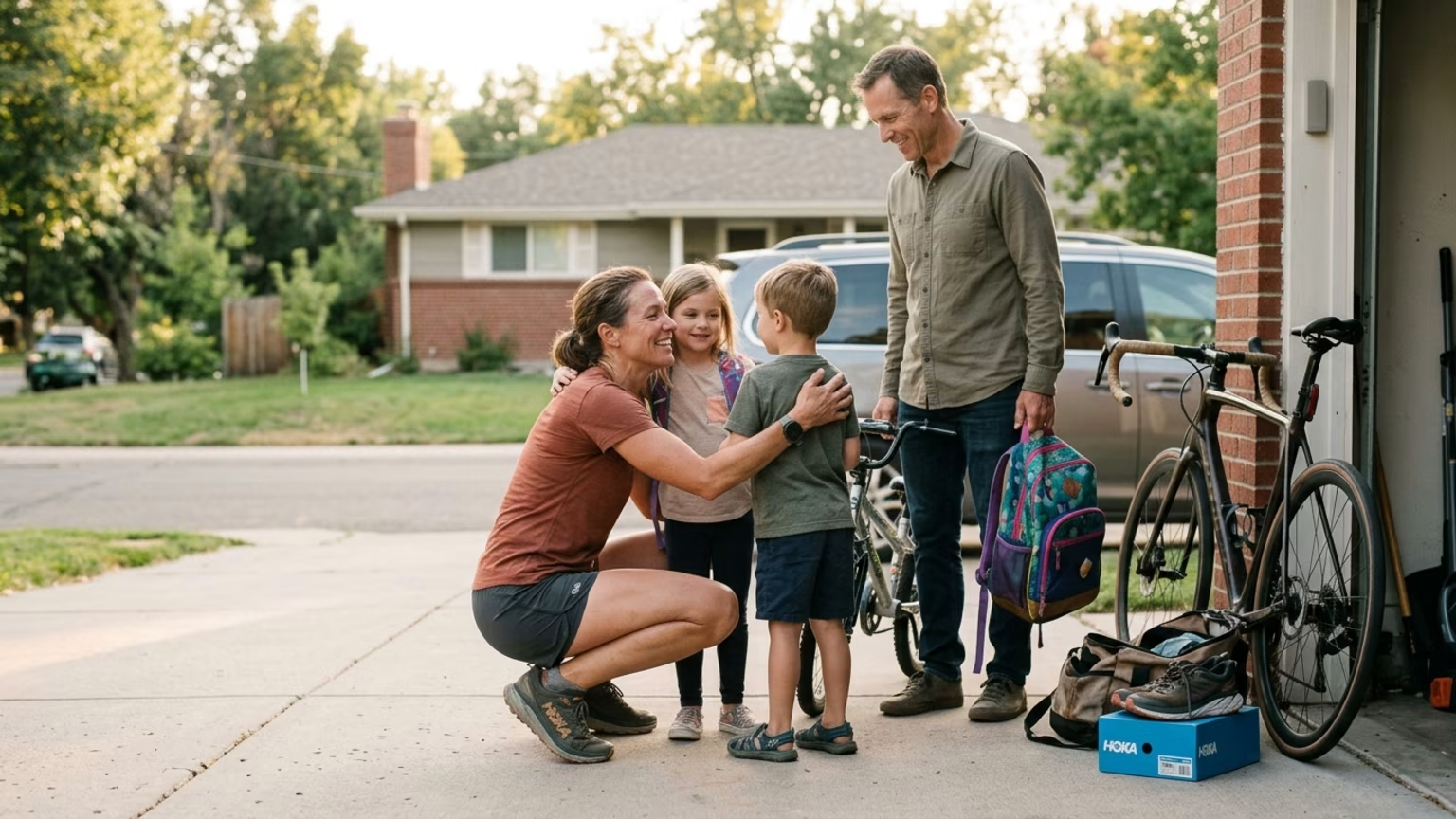

Learn how to balance serious endurance training with family life using practical routines, clear communication, and science-backed recovery strategies.





A recent meta analysis of 41 randomized controlled trials involving 3,141 participants found that resistance exercise significantly improved muscle specific strength for older adults. The same review concluded that the effects of aerobic exercise on its own were inconclusive. This data matters because it shatters the assumption that endless endurance volume is the only path to health. Athletes often prioritize massive aerobic hours at the direct expense of their relationships. How do you pursue serious endurance goals without turning your partner and children into unpaid logistics staff? The answer is to treat your athletic life as a shared household system rather than a solitary pursuit.
Endurance sports demand massive investments of time, energy, and financial resources. For ambitious adults between the ages of 35 and 65, these demands routinely collide with career peaks and caregiving duties. Navigating this tension requires moving beyond the myth of the lone warrior. A sustainable endurance life requires explicit agreements about when to train, when to race, and when to step back.
The friction usually begins when training plans ignore the reality of a shared household. If every weekend revolves around your long run, resentment will eventually build. You have to communicate your goals clearly and compromise where necessary. True longevity in sport is only possible when your family is willing to support the journey over the long haul.
The most effective way to protect family time is to eliminate low value training hours. Many amateur athletes accumulate volume out of habit rather than physiological necessity. Coaching advice frequently highlights that three to seven hours of structured training may produce better gains than seven to ten hours of unstructured efforts. By stripping away random miles, you immediately reclaim time for your household.
You must also periodize your training to accommodate life stress. The National Academy of Sports Medicine advises athletes to treat life stress as part of their total stress load. NASM specifically recommends reducing training volume when personal or professional stress is high. Pushing through a chaotic family period to hit arbitrary mileage targets often leads to underperformance.
A practical approach is to classify weekly workouts into rigid and flexible categories. A Cycling Weekly coaching rule of thumb suggests two to three higher intensity sessions per week for time crunched riders. These 45 to 60 minute hard efforts can serve as your anchored appointments. The rest of your aerobic volume can remain flexible and adjust to daily family needs.
Athletes should also integrate strength work to protect their long term health and free up aerobic time. Reallocating one long ride toward a shorter resistance session aligns with the evidence on longevity. You can often complete this work near your family without requiring a massive logistical effort. For more guidance on optimizing your physical preparation, you can read our training and performance articles.
Sharing your physical activity with a partner can build connection, but it is not a mandatory requirement for a healthy relationship. A 2026 Family Relations study reported that couples who exercised together showed better communication and conflict resolution. The researchers also noted that these couples reported better listening and stronger feelings of being supported. However, the study reported associations rather than proof that joint exercise directly causes marital harmony.
Couples must navigate different fitness levels, competitive drives, and preferred pacing. Forcing a shared session when one partner wants a relaxed recovery run and the other wants a tempo effort will create friction. Joint exercise works best when both people agree on the objective of the workout. If the goals clash, training separately is often the healthier choice for the relationship.
When you do choose to train together, prioritize the social benefits over precise physiological targets. You can use easy aerobic days to chat, reconnect, and spend quality time outdoors. If you need to hit specific interval splits, do that work on your own time. Treating a spouse like a pacing metric will quickly erode the joy of shared movement.
Even if your partner has no interest in endurance sports, you can still find common ground. A 2026 review chapter describes physical activity and social support as interacting determinants of quality of life. Your partner might enjoy a relaxed evening walk or a short bike ride to a coffee shop. Shared movement does not need to resemble a race preparation block to be valuable.
Family burnout occurs when support becomes an unspoken, infinite obligation. Practical logistics like childcare, transportation, and meal preparation require significant energy. Research summarized in a 2026 editorial suggests that practical help may matter more than encouragement alone for children activity levels. The same principle applies to adult athletes who rely heavily on their families for scheduling and access.
You can prevent burnout by defining exactly what kind of support you actually need. Sometimes, the most valuable assistance is simply protecting a two hour training window on a Saturday morning. Other times, you might need someone to handle school drop offs while you complete a crucial workout. Clear and finite requests are much easier for a partner to fulfill than vague expectations.
It is equally important to separate emotional support from performance analysis. Do not turn your spouse or children into your default coaching staff. Youth sport research summarized by We Ride Together distinguishes supportive involvement from pressure and criticism. While that research focuses on children, adults also suffer when love feels conditional upon race results.
Finally, you must respect your family need for recovery and downtime. Bupa recovery guidance recommends seven to nine hours of sleep for adults aged 18 to 64. If your early morning alarms or late night gear preparations disrupt your household sleep, your training is actively harming them. You can learn more about protecting rest by reading our recovery resources.
Bringing your workouts into the house can drastically reduce the logistical friction of endurance training. Home based physical exercise interventions improved aerobic capacity in a 2026 systematic review and meta analysis. By eliminating the commute to a trailhead or a pool, you immediately return hours to your weekly schedule. This approach allows you to remain physically present for emergencies or family interactions.
However, home training requires clear boundaries to prevent your sport from consuming the living space. An indoor trainer in the middle of the living room can be loud and disruptive. You need to communicate with your family about when and where you will complete these sessions. Setting expectations ensures that your convenience does not become a nuisance for everyone else.
Community based physical activity interventions also showed measurable improvements in several outcomes across a review of 24 studies. This includes 11 randomized controlled trials that highlight the value of local and accessible group activities. If home training feels too isolating, finding a local club that meets nearby can offer a balanced compromise. Exploring different formats helps you find a routine that fits your life.
The ultimate goal is to build a flexible system that adapts to your changing circumstances. Some weeks will allow for long outdoor adventures, while others will demand short indoor efforts. Adapting to these changes is a fundamental part of healthy aging. Flexibility keeps you consistent without alienating the people who matter most.
Building a sustainable endurance life requires the same discipline as building physical muscle. Just as the meta analysis of 3,141 participants proved that targeted resistance work builds strength, targeted communication builds resilient relationships. You cannot simply accumulate hours of training and expect your household to effortlessly absorb the impact. Every ambitious athlete must eventually recognize that their family is their most important support structure.
True longevity in sport comes from integrating your goals with the reality of your daily life. You have to negotiate training blocks, agree on race calendars, and ensure your partner gets equal time for their own pursuits. When everyone feels heard and respected, the friction around your training schedule dramatically decreases. The goal is not just to cross the finish line, but to have your family waiting there because they actually want to be.

Follow ReEndure for practical insights on endurance training, recovery, nutrition and healthy aging. Stay connected for new articles, research led guidance and ideas to help you perform better for longer.




Read practical ideas on endurance training, recovery, nutrition and healthy aging to keep progressing for years to come.
Read the Blog