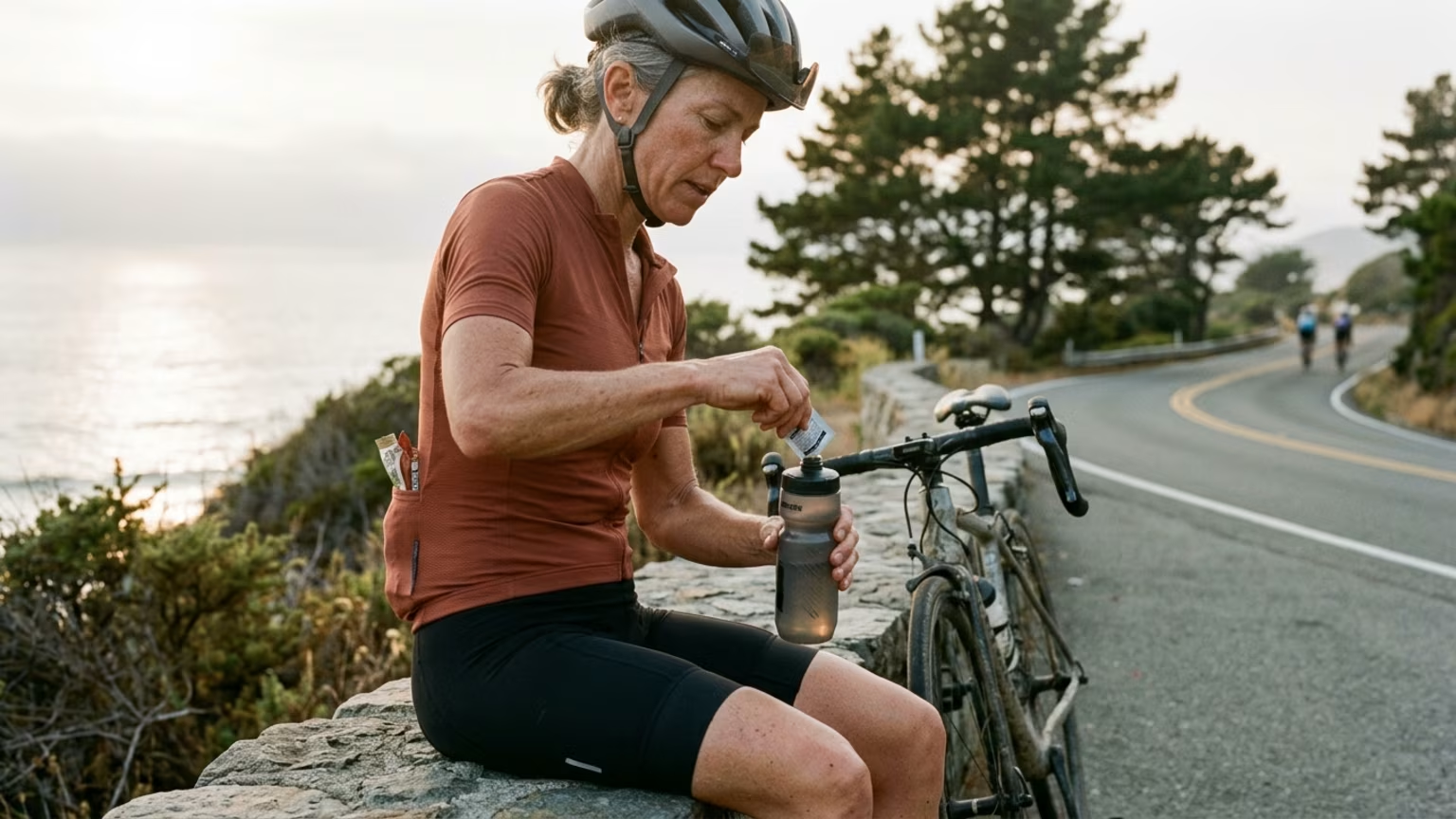

A September 2026 Darebee guide clarifies the ACSM electrolyte guidelines, explaining when endurance athletes need deliberate sodium for long and hot sessions.





On September 13, 2026, Darebee updated its complete guide to electrolytes. The publication presents a practical interpretation of the American College of Sports Medicine position stand on fluid replacement for everyday athletes. Instead of pushing a universal requirement for sports drinks, the guide clarifies exactly when sodium replacement becomes a performance necessity. It strictly separates ordinary training routines from the specific demands of prolonged endurance efforts and significant heat exposure.
The primary conclusion is that athletes do not need deliberate electrolyte planning for standard daily workouts. For a normal session lasting less than ninety minutes in moderate weather, plain water and ordinary meals provide adequate support. The physiological demand changes significantly when exercise approaches or exceeds two hours. Darebee presents this ninety minute mark as a practical planning threshold rather than a strict physiological switch.
Your body does not suddenly run out of sodium at the ninety first minute of exercise. Instead, the performance relevance of deliberate sodium replacement becomes progressively more apparent as your session extends past two hours. During these longer endurance sessions, heat exposure and high sweat losses make sodium replacement highly relevant. Darebee recommends a practical starting point of approximately 0.5 to just under 1 gram of sodium per liter of fluid for these demanding workouts.
However, athletes must understand that this is not a rigid medical prescription. Sweat sodium concentration varies widely among individuals, ranging from well below 0.5 grams per liter to above 1.5 grams per liter. Because of this high variability, a fixed recipe cannot precisely replace every endurance runner's daily sodium losses.
Furthermore, the consensus explicitly warns against drinking rigidly to a forced schedule. The guide highlights the 2015 International Exercise-Associated Hyponatremia Consensus statement. This consensus identified excessive fluid intake as the primary cause of dangerously diluted blood sodium in endurance athletes. The clearest instruction is to drink according to thirst rather than forcing water down to meet an arbitrary hourly target.
For ambitious athletes over thirty five, this guidance simplifies race planning and daily training. We often overcomplicate our bottles for short Tuesday morning efforts. This research confirms that we can save the heavy sodium mixes for our weekend long runs. By keeping our nutrition simple on easy days, we maintain better gut health for our primary workouts.
Our team at Reendure understands the realities of aging and recovery. Hitting my forties brought a harsh reality check. The track workouts were not getting slower, but the days after them felt significantly heavier. Instead of forcing my old Tuesday and Thursday intensity schedule, I looked at the data on Masters athletes and muscle protein synthesis.
I pushed my second hard session to Friday, allowing an extra forty eight hours of low intensity recovery. My total weekly volume stayed the same, but the quality of my intervals skyrocketed. That same respect for the recovery curve applies to our fluid management and sodium replacement protocols. The Darebee guide notes that masters athletes training on consecutive days face cumulative sweat losses that require deliberate planning.
You cannot rely on thirst alone when you have two dense sessions separated by limited rest. In these scenarios, post workout rehydration requires replacing approximately 1.5 times the fluid lost over the following few hours. Darebee cites research showing that broth and chicken noodle soup restored blood volume better than water. These warm options performed at least as well as the tested commercial sports drinks.
The guide also references the Beverage Hydration Index research for post exercise recovery. This index found that milk and oral rehydration solution were retained longer in the body than plain water. Interestingly, a standard sports drink was retained no better than water under the tested conditions. This proves that ordinary foods like milk, yogurt, and potatoes can easily supply adequate sodium between your hardest efforts.
You can even create your own effective hydration products at home. Darebee translates the concentration guidance into a simple homemade drink using one quarter level teaspoon of table salt per liter of water. You can add optional ingredients like sugar, honey, maple syrup, and citrus juice. These additions provide essential carbohydrates for energy and improve the flavor for better palatability.
Electrolytes should not be presented as a universal cure for exercise associated muscle cramps. Darebee reports that these painful cramps are highly multifactorial in nature. They are most often associated with profound fatigue, unfamiliar exercise intensity, and local muscle overload rather than a simple systemic salt deficiency. Consuming excess salt during a race will not save legs that are underprepared for the pace.
Athletes must also carefully distinguish between fluid concentration and total hourly intake. A bottle's sodium concentration simply dictates how much sodium exists in the mixed fluid. Your actual hourly sodium consumption depends entirely on how much of that fluid you physically drink. A heavily concentrated bottle provides very little physiological benefit if gastrointestinal distress prevents you from consuming it.
Your race day execution requires extensive testing during your peak training blocks. A separate guide from AthleteData Health reinforces this individualized approach to fluid replacement. It describes a personalized method based on pre and post session weighing, specific environmental conditions, and exercise intensity. The guide moves entirely away from a universal bottles per hour formula.
Instead, AthleteData Health recommends beginning with approximately 300 to 700 milligrams of sodium per liter for sessions longer than ninety minutes. You must then adjust this baseline plan according to your observed sweat loss and your individual physical response. Treating your hydration as a personal experiment helps you navigate training adaptations safely.
Sweat rates can range from roughly 0.5 to 2 liters per hour depending on your body size, exercise intensity, and the local heat. You can build a personal hydration record by measuring your body mass before and after your sessions. The Darebee guide treats each kilogram of weight lost as approximately equivalent to one liter of sweat. Tracking these numbers is an essential step in optimizing your endurance nutrition for healthy aging.
Athletes managing specific medical conditions must proceed with exceptional care. If you take diuretics or manage cardiovascular health issues, you should review your sodium plans with a medical clinician. For the healthy veteran athlete, the focus remains on rehearsing your exact drink concentration during your longest training runs.
Finally, always watch for medical warning signs during your longest events. Nausea, bloating, confusion, and swollen hands can occur with exercise associated hyponatremia. These specific warning signs are frequently mistaken for simple dehydration by well meaning athletes. Understanding these specific physiological limits helps protect your long term cardiovascular performance.
If these symptoms occur, do not automatically drink more water, as excessive plain fluid can quickly worsen the condition.
Endurance athletes should rely on thirst and water for standard daily workouts, reserving deliberate sodium replacement for efforts that exceed ninety minutes in the heat.

Follow ReEndure for practical insights on endurance training, recovery, nutrition and healthy aging. Stay connected for new articles, research led guidance and ideas to help you perform better for longer.


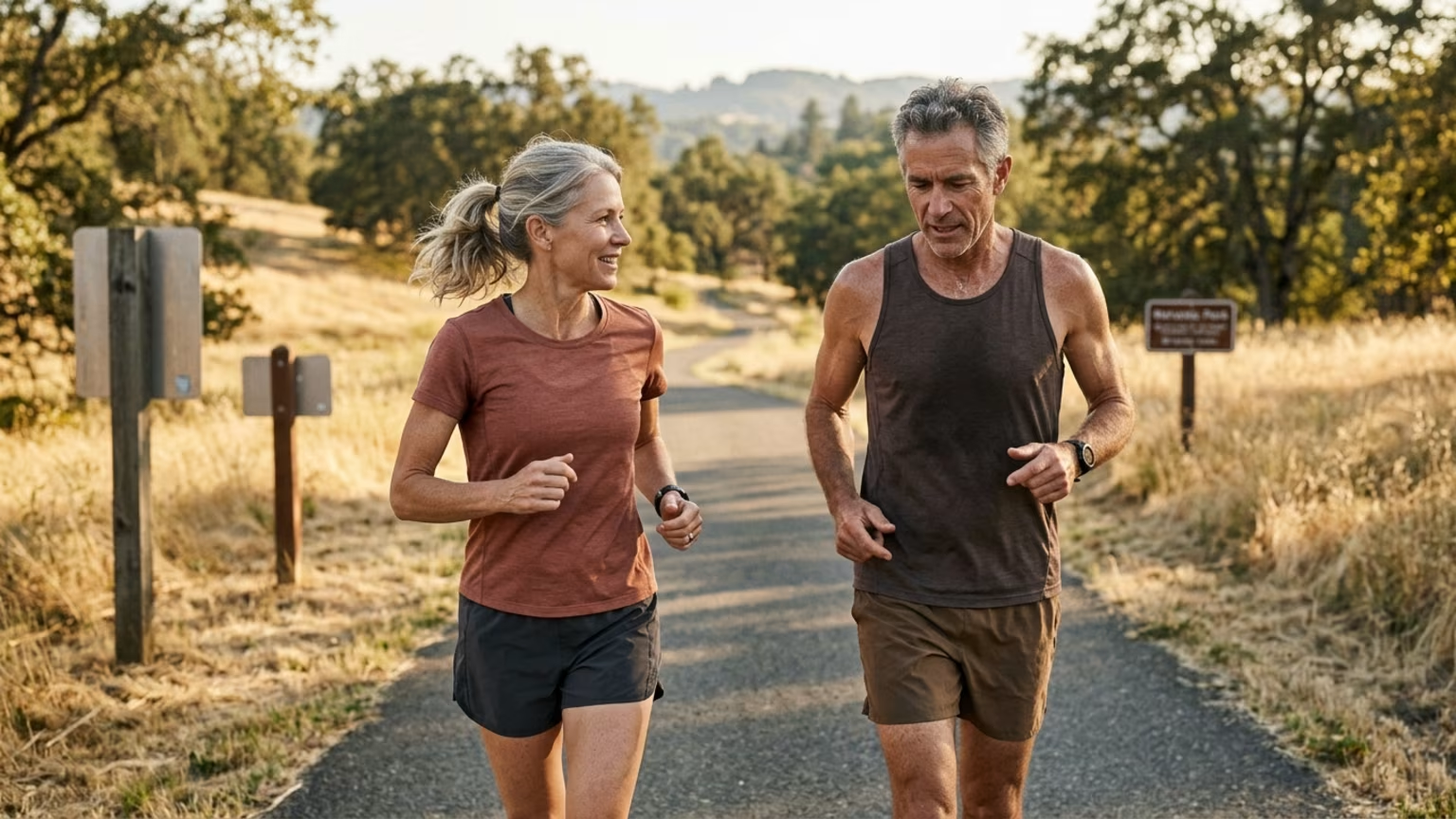



Read practical ideas on endurance training, recovery, nutrition and healthy aging to keep progressing for years to come.
Read the Blog