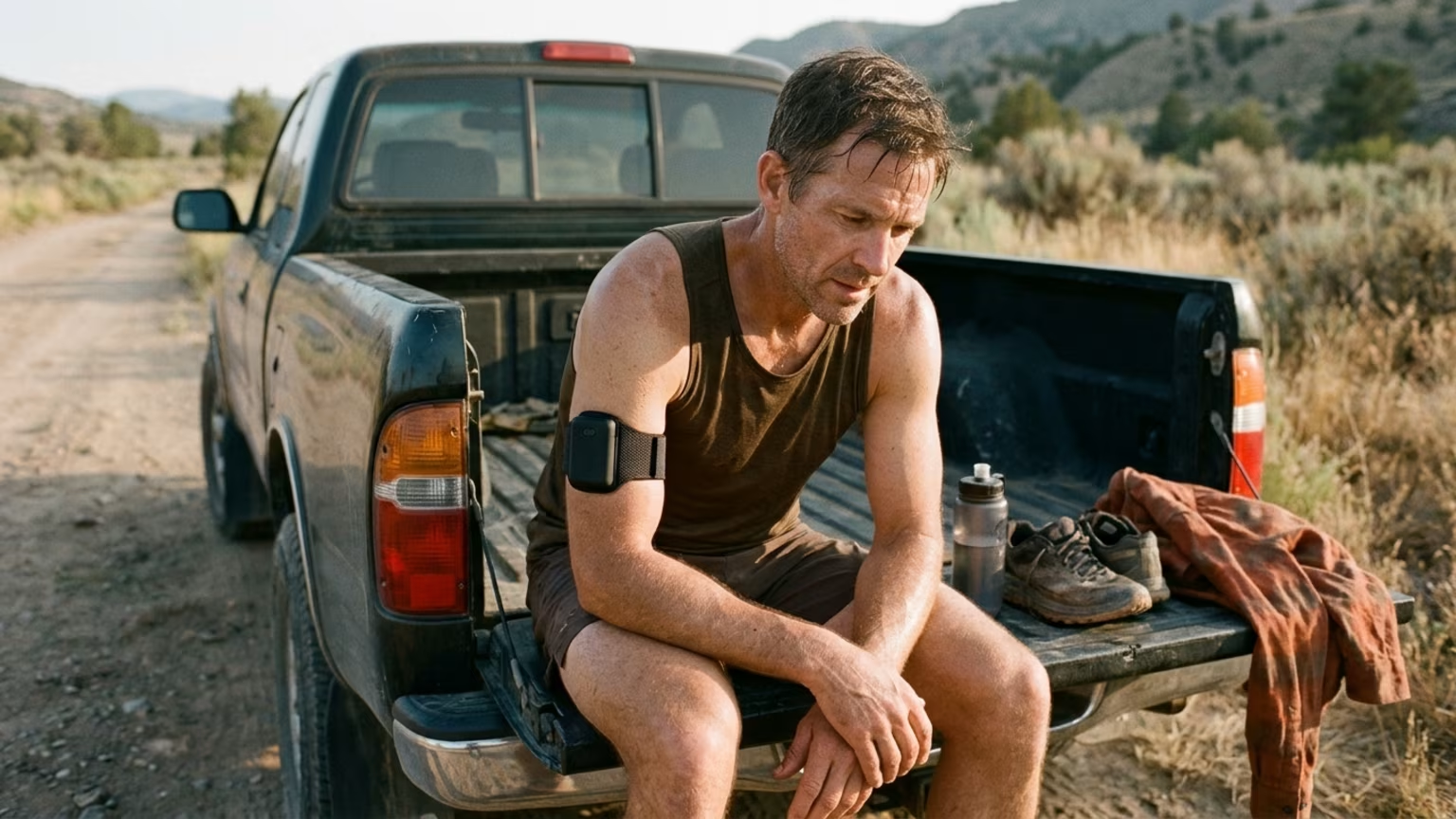

WHOOP's PowerPack patent proposes a core-temperature estimate, not a confirmed feature. See what the concept means for endurance athletes.





WHOOP, the wearable technology brand, is the subject of coverage of a patent application describing a possible way to estimate core body temperature. The report says the application was published on October 22, 2026. It describes a concept rather than a confirmed product feature.
The proposal gives the removable PowerPack a role beyond charging: it would help calibrate a model of heat transfer. That model would then support a temperature estimate based on wearable sensor data.
For endurance athletes, the useful question is not simply whether another number might appear on a screen. It is what that number would represent and what evidence would justify using it. Reendure's approach to understanding wearable technology starts with that distinction.
As described in a second report on the proposal, the system would use multiple temperature sensors. One would sit near the skin and another would be in the removable PowerPack. During charging, the PowerPack would supply controlled heat.
The proposed sequence is straightforward to describe:
The reporting says calibration information could be collected during ordinary charging and stored for later estimates. The PowerPack would therefore not need to remain attached during exercise. Its proposed role is to help establish the model rather than to measure internal temperature directly.
The important word is calibrate. Here it means using the response to controlled heat to set up the model. It is a preparation step for the later estimate, not a separate core-temperature measurement.
Skin temperature is the capability the coverage describes WHOOP as currently providing. The reporting characterizes it as tracking overnight trends against a personal baseline rather than taking a reading from inside the body.
The first report explains why that distinction matters: skin temperature can vary with environmental conditions, clothing and sweating. Those influences make it difficult to infer internal temperature from skin temperature alone.
The patent concept attempts to address that problem by adding estimated heat flow and a calibrated model. The result would still be an estimate of core temperature rather than a direct internal measurement.
That difference is about how the value is produced. A skin-temperature trend describes a signal from the body's surface. The proposed core-temperature value would be the output of a model using sensor data. Reading the label correctly is the starting point for interpreting either one.
A useful way to read the story is to separate two questions: How would the device generate the number? How well would the number perform during exercise? The filing coverage addresses the proposed mechanism; validation would have to address the second question.
Neither report provides an independent assessment of accuracy or establishes whether WHOOP has tested a prototype. The coverage also leaves performance across different kinds of exercise unresolved. Those are the evidence gaps that matter here: a proposed mechanism explains how an estimate might be generated, but it does not show how closely that estimate would track an accepted reference.
For athletes aged 35 to 65, the right next step is an evidence standard rather than a new training prescription. If a future product introduces this estimate, look for the following before using it to guide heat training, pacing or safety decisions:
These are questions about usefulness, not objections to innovation. They keep the focus on whether a future metric is fit for its intended purpose. The existence of a model and the usefulness of its output are separate issues.
The practical response is to keep the concept separate from your current training plan. Nothing in this report supports changing a session, recovery routine or fueling strategy. Interest in a new sensor idea does not create a reason to act on it.
For an endurance athlete over 35, that is a positive position rather than a dismissal of technology. You can follow the development of a potentially useful tool while keeping established training decisions independent of an early proposal. There is no age-specific prescription to draw from the filing.
Keep today's temperature information in its stated context. A skin-temperature trend should remain a skin-temperature signal in your interpretation. Do not relabel it as an internal temperature reading or use this patent report as a reason to assign it a new meaning.
An overnight trend and an exercise decision are different uses of information. The report's description of the former does not establish the latter. Keep the intended purpose of a metric in view rather than assuming that a temperature label makes it suitable for every temperature-related question.
The same discipline applies to high-stakes decisions. An unvalidated estimate should not become the basis for deciding that a demanding session is safe or that a pacing change is necessary. For personal health or heat-safety questions, seek qualified care rather than treating a wearable value as medical guidance.
Reendure's priority is clear guidance that supports performance today and long-term participation. Keeping broader training decisions grounded in evidence leaves room for new tools without allowing a promising technical description to take over the plan.
Treat this as an engineering proposal worth following, not a reason to train differently today. The most interesting claim is that ordinary charging could help calibrate a thermal model for later use during exercise.
The milestone that would matter for athletes is independent validation of the implemented system under relevant conditions. Until that evidence exists, the sound response is curiosity without reliance. A useful wearable metric earns its place through the quality of the evidence behind the decision it is meant to support.

Follow ReEndure for practical insights on endurance training, recovery, nutrition and healthy aging. Stay connected for new articles, research led guidance and ideas to help you perform better for longer.



Read practical ideas on endurance training, recovery, nutrition and healthy aging to keep progressing for years to come.
Read the Blog