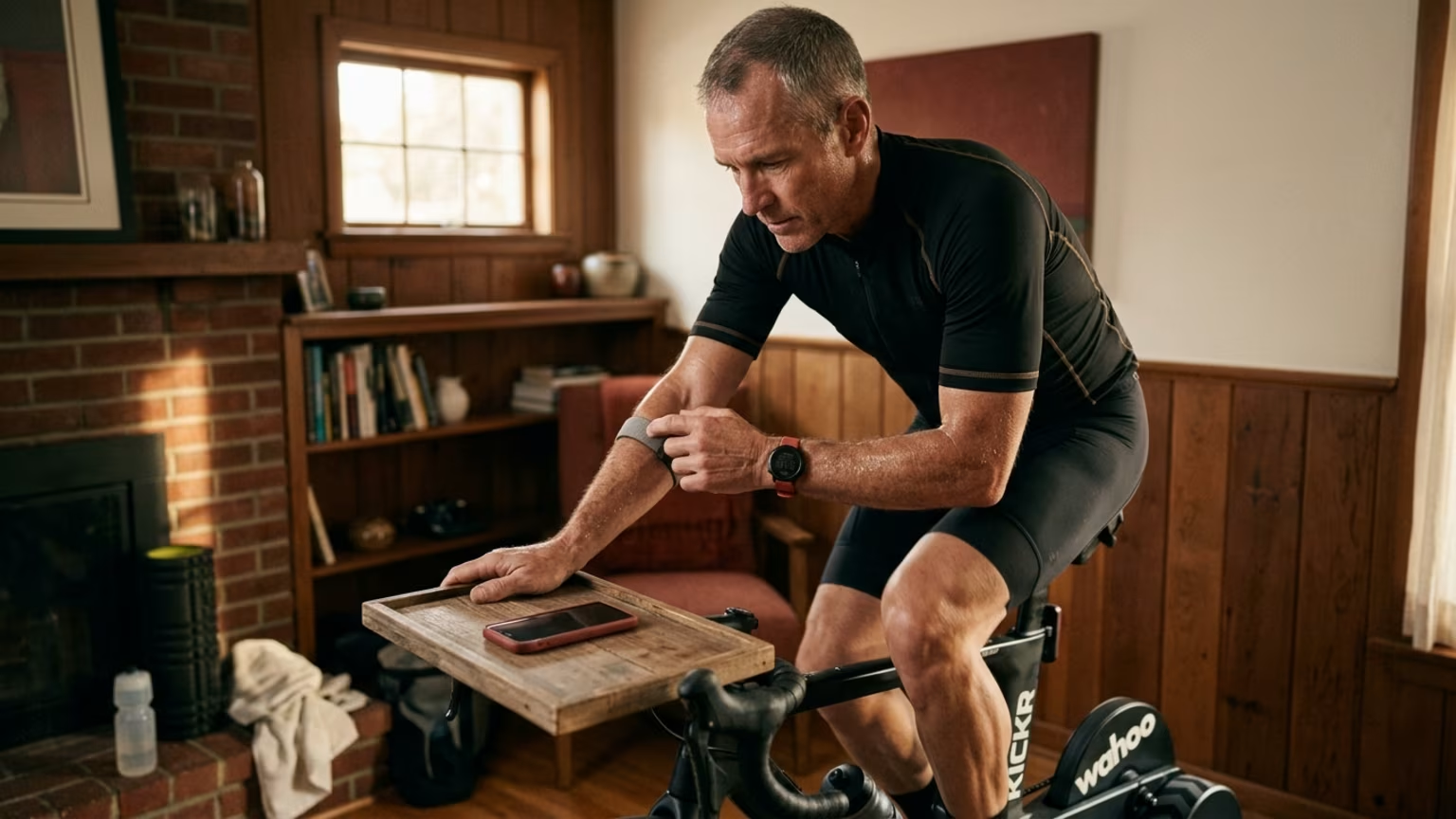

Zwift integrates WHOOP Recovery Scores to adjust indoor training loads. We analyze what the new software and Ride v2 smart bike mean for athletes over 35.





On September 16, 2026, IT Brief reported that Zwift announced a new season of updates focused heavily on recovery tracking and hardware refinement. The most consequential change is the integration of the WHOOP Recovery Score directly into the Zwift Personal Recommendations system. Zwift says the platform will use a rider's Recovery Score to adjust recommended training load on a daily basis. This integration effectively reduces the suggested workload on lower recovery days to prioritize physical readiness.
The core of this software update bridges the gap between passive wearable data and active training prescriptions. WHOOP calculates a Recovery Score described as a percentage from zero to 100. This score uses overnight signals including heart rate variability, resting heart rate, respiratory rate, and sleep related data. Rather than simply displaying this percentage as a passive dashboard metric, Zwift translates it into an actionable session adjustment that scales back workout intensity if your metrics indicate excessive fatigue.
Alongside the recovery integration, the company revealed hardware updates designed to accommodate a wider variety of athletes. The new Zwift Ride v2 uses a more compact frame and expands fit adjustability for riders between 146 and 198 centimetres tall. It includes adjustable cranks with five available crank lengths ranging from 160 to 175 millimetres. The revised bike also receives an updated seatpost intended to provide more fore and aft saddle adjustment.
Current users are not forced into purchasing a completely new setup. Zwift plans to offer the adjustable cranks and updated seatpost as accessories for first generation Zwift Ride owners who do not want to replace the entire bike. For those looking to purchase the new model, Zwift Ride v2 is scheduled to arrive in Australia toward the end of 2026. It will be priced at AU$2,299.95, which matches the listed price of the first generation model.
The broader update package includes significant interface redesigns for both the main game and the mobile application. The game home screen is intended to make planning and progress more visible for dedicated athletes. Meanwhile, the Companion app is scheduled to receive a redesigned home screen in October. These visual changes aim to streamline how athletes interact with their structured plans.
Zwift is also adding a feature called Watt Lock to give riders more direct control over target power during ERG mode training. This tool is scheduled for a full October release. Riders using Zwift Ride, Zwift Click, or Zwift Play controllers will be able to adjust target power from the controllers while riding.
The virtual environment updates provide fresh terrain for these structured sessions. A Watopia expansion is scheduled for October 26, alongside the Tour of Watopia running from October 5 through November 22. The season also includes Power Play, scheduled for November 23 through December 27, along with Drop Shop updates and two new Halo Bikes. These visual additions ensure that riders remain engaged while executing their carefully managed winter intervals.
Relying on an automated recovery system requires understanding the limitations of the data behind it. Wearable metrics are sophisticated model outputs rather than direct medical assessments of your complete physical readiness. A 2025 peer reviewed study cited in the available reporting provides valuable context for this technology. The study examined 536 nights and found acceptable agreement between WHOOP 4.0 HRV readings and an electrocardiogram reference.
While Oura Gen 4 performed better in that particular dataset, the results support the general utility of wearable HRV tracking. However, these findings do not prove that an algorithm can accurately prescribe your ideal daily workout. An automated score cannot account for variables like joint pain, muscle soreness, or daily motivation.
Experts consistently advise against relying on a single metric to dictate your training week. Runner's World quoted a sports cardiology expert who recommended considering HRV alongside other variables. This expert specifically noted the importance of monitoring your own perceived exertion. Wearable data serves as an excellent reference point, but it should never override your own physical sensations.
Ambitious athletes must learn to interpret these metrics as part of a larger picture. It is crucial to look for trends over several days rather than reacting wildly to a single poor reading. Maintaining consistent routines and observing how your body responds to training stress is the most reliable approach. Understanding how endurance athletes should use daily metrics for recovery decisions remains a vital skill.
For the endurance athlete over 35, recovery is often the greatest hurdle to consistent long term progress. We want to train aggressively, but our bodies require more deliberate care between highly demanding sessions. Hitting my forties brought a harsh reality check. The track workouts were not getting slower, but the days after them felt significantly heavier.
Instead of forcing my old Tuesday and Thursday intensity schedule, I looked at the data on Masters athletes and muscle protein synthesis. I pushed my second hard session to Friday, allowing an extra forty eight hours of low intensity recovery. My total weekly volume stayed the same, but the quality of my intervals skyrocketed.
This kind of necessary flexibility is exactly what the new Zwift and WHOOP integration aims to support. Midlife athletes juggle their athletic goals with demanding careers, family responsibilities, and age related sleep changes. A persistently low score from accumulated stress might prompt the system to repeatedly suggest rest or light spinning. This automated downshifting provides a helpful safety net against dangerous overtraining cycles.
However, veteran athletes must remain vigilant about protecting their key development sessions. If an important interval workout is scheduled, you should evaluate an automated reduction against your actual fatigue levels. A low score might justify moving the session, but it could also reflect a temporary anomaly that you can safely train through. Taking ownership of your programming is essential for masters endurance athletes managing recovery intensity and volume.
At Reendure, we deliver clear, evidence based guidance to help you perform at your best today and keep racing for decades to come. Properly fitted equipment is a foundational element of this longevity. The hardware changes introduced with the Ride v2 offer significant benefits for joint health and biomechanical efficiency. The expanded height range and multiple crank lengths allow for a highly tailored indoor riding position. Choosing a shorter crank length can dramatically reduce hip impingement and knee strain during long winter base miles.
This adjustability is particularly valuable for households with multiple riders sharing a single training space. The revised seatpost and compact frame make it easier to switch between athletes without compromising individual biomechanics. Properly fitted hardware prevents repetitive motion injuries that often sideline older adults.
The emphasis on precise control extends to the new Watt Lock feature for structured workouts. Having the ability to manually adjust target power from your controllers allows for quick modifications during tough intervals. If your heart rate spikes earlier than expected, you can quickly dial back the intensity without breaking your rhythm. This granular control helps athletes execute their plans with greater precision and safety.
We are witnessing a broader industry shift toward smarter, more adaptable training tools. The integration of overnight recovery metrics into active session planning mirrors developments seen in other consumer tech ecosystems. For example, recent wearable updates highlight how platforms are combining activity data with vital signs. This trend is visible as Apple Watch Series 12 adds recovery HRV tracking and readiness scores to its health suite.
Success for the veteran athlete lies in combining these advanced tools with earned bodily awareness. Automated recommendations offer a brilliant starting point, but they do not replace the wisdom gained through years of training. Keep detailed subjective notes on your sleep quality, mood, and workout performance alongside your wearable scores. Older athletes often benefit from rethinking traditional weekly schedules for extended recovery time.
Automated training adjustments based on overnight recovery data offer a valuable safeguard against overtraining, provided veteran athletes still prioritize their own perceived exertion above any digital score.

Follow ReEndure for practical insights on endurance training, recovery, nutrition and healthy aging. Stay connected for new articles, research led guidance and ideas to help you perform better for longer.





Read practical ideas on endurance training, recovery, nutrition and healthy aging to keep progressing for years to come.
Read the Blog