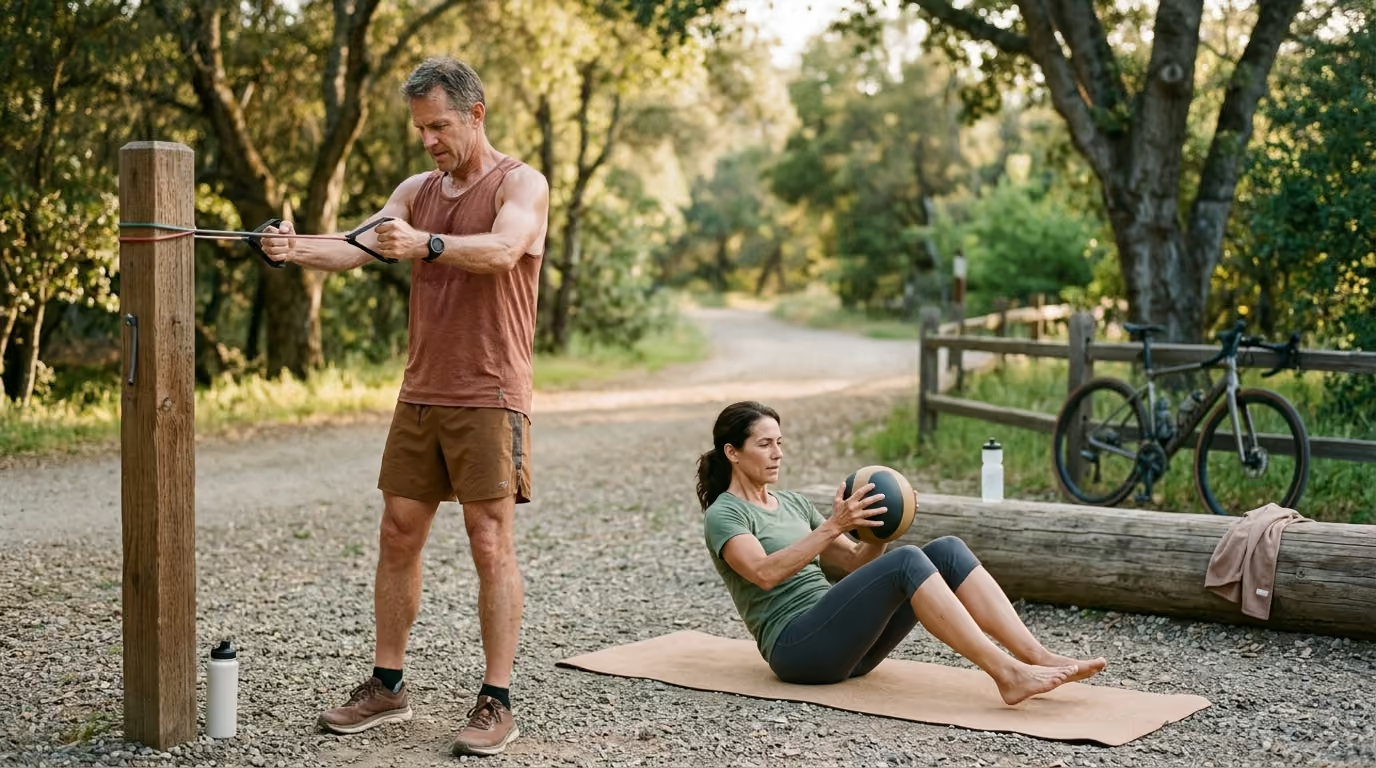

Smart cross-training routines help athletes maintain peak aerobic conditioning and protect overused tendons without sacrificing total weekly exercise volume or endurance.





You wake up with a sharp ache along your tibia or an unmistakable tightness in your Achilles tendon, and you open a search bar to type a familiar question: how to maintain cardiovascular fitness with an overuse injury. You want to keep your hard-earned endurance, but you know that pounding through another run will turn an irritation into a structural breakdown.
The standard advice is often vague, telling athletes to simply get on a bike or jump in the pool. That advice ignores the specific mechanical forces that cause breakdown in the first place.
This guide provides a definitive framework for using cross-training as a load-management tool. You will learn how to preserve your aerobic capacity, protect vulnerable tissues, and return to your primary sport without losing months of progress.
Cross-training refers to the deliberate substitution of alternative exercise modes to maintain cardiovascular conditioning while altering mechanical stress. The primary objective is to separate central cardiovascular stimulus from local tissue strain.
Your heart, lungs, and blood vessels do not know whether you are running, cycling, or rowing. They respond to oxygen demand, cardiac output, and systemic metabolic stress.
Your bones, tendons, ligaments, and cartilage respond to local mechanical loads. These local loads include peak ground reaction forces, loading rates, joint angles, and contraction types.
A systematic review published in 2026 evaluated running and cycling cross-training across multiple intervention studies. The researchers found no statistically significant differences in maximal oxygen uptake or running performance when cycling substituted for running over short to moderate training blocks.
The review also emphasized that cardiorespiratory maintenance does not equate to full sport-specific readiness. Earlier foundational research on cross-training reached a similar conclusion. Alternative exercise modes preserve systemic fitness effectively during rehabilitation or periods of excessive fatigue.
However, cross-training benefits rarely exceed the adaptations produced by sport-specific training. The transfer of fitness becomes increasingly narrow as an athlete reaches higher levels of performance.
The fundamental distinction lies between whole-body capacity and tissue-specific readiness. A runner who cycles for six weeks may retain excellent VO2 max and capillary density. Yet, cycling does not expose the skeletal system to ground impact, nor does it train the eccentric braking capacity of the calf complex.
Injury occurs when cumulative mechanical exposure exceeds the biological capacity of a given tissue. The International Olympic Committee consensus framework on training load emphasizes that physical workload extends beyond simple duration or mileage.
Total load includes rapid workload spikes, surface changes, muscle contraction patterns, and non-physical life stressors. Managing this load requires adjusting tissue-specific exposure rather than eliminating all physiological work. For athletes navigating these physical demands, exploring structured endurance training and performance guides helps create sustainable training progressions.
To build a safe training plan, you must understand the difference between internal and external training load. External load describes the physical work performed, such as miles ridden, watts produced, or strokes completed.
Internal load measures your physiological and psychological response to that work, including heart rate, perceived exertion, and muscular strain.
One practical method for tracking internal stress is the session rating of perceived exertion. You calculate this by multiplying the total duration of a session in minutes by your perceived effort on a scale from one to ten.
While session rating of perceived exertion tracks overall metabolic load, it does not reflect localized joint or tendon stress. A sixty-minute easy bike ride and a sixty-minute steep mountain hike may produce identical internal load scores.
However, the mountain hike imposes massive eccentric forces on the quadriceps and high tension on the Achilles tendon. The bicycle ride unloads the Achilles and removes ground impact entirely.
Effective cross-training is not about finding a universally safe exercise. It is about matching the mechanical demands of an alternative activity to the specific capacity of your recovering tissue.
Every cross-training modality applies a unique combination of forces to the musculoskeletal system. Selecting the right alternative requires analyzing ground impact, joint moments, muscle activation patterns, and spinal loading.
The following breakdown compares the six most common cross-training modes used by endurance athletes.
Cycling is a closed-chain, non-impact activity performed in a fixed sagittal plane. It allows athletes to generate high cardiovascular output and sustained muscular tension without subjecting bones and joints to foot-strike collisions.
Biomechanical studies show that cycling creates substantially lower knee compressive forces, extension torques, and abduction torques than walking or running. Clinical protocols for lower-limb bone stress rehabilitation frequently prioritize cycling to maintain aerobic volume while impact is restricted.
The mechanical advantages of cycling include:
Cycling is not entirely free of mechanical risk. The repetitive pedal stroke requires thousands of revolutions within a restricted range of motion.
Low cadences combined with high gear resistance significantly increase patellofemoral compressive forces and patellar tendon strain.
A poorly fitted bicycle can cause excessive lumbar flexion, neck strain, or hip impingement. Athletes recovering from knee extensor problems must maintain a moderate to high cadence and avoid heavy standing climbs.
Swimming is a non-weight-bearing modality that relies on the natural buoyancy of water to support the body. It unloads the lower extremities almost completely, making it an ideal option when weight-bearing is prohibited.
Earlier physiological research shows that swimming produces a lower transfer of running-specific VO2 max compared to cycling. This difference occurs because swimming relies heavily on upper-body musculature and uses a horizontal, non-weight-bearing posture.
The mechanical advantages of swimming include:
The primary disadvantage of swimming involves the shoulder girdle and the cervical spine. Freestyle and butterfly strokes require repetitive overhead arm rotations that can aggravate subacromial impingement or rotator cuff tendinopathy.
The whip-kick motion in breaststroke places high valgus stress on the medial collateral ligament of the knee. Lumbar hyperextension during breaststroke or front crawl can irritate athletes with spondylolysis or facet joint irritation.
Using a pull buoy eliminates lower-body kicking, but it increases the mechanical demand placed on the shoulders.
Elliptical exercise provides an upright, closed-chain movement pattern that mimics the posture of walking and running. Because the feet remain in continuous contact with the footplates, the machine eliminates the distinct flight and landing phases of running.
Research by Burnfield and colleagues demonstrated that elliptical exercise produces lower vertical pedal reaction forces and lower loading rates than level walking. However, the same study revealed that elliptical training creates significantly greater hip-flexor and knee-extensor moments than walking.
Electromyographic investigations show elevated recruitment of the gluteus maximus and vastus lateralis on the elliptical, accompanied by reduced activation in the lower-leg musculature.
The mechanical advantages of elliptical training include:
Despite lower ground impact, elliptical machines generate higher peak knee-joint torque than stationary cycling. Studies comparing stationary cycling and elliptical training have found that faster pedal cadences increase peak joint torques at the knee and ankle.
Athletes with patellofemoral pain syndrome, quadriceps tendinopathy, or acute knee joint inflammation may find that the elliptical aggravates their symptoms.
Indoor rowing is a coordinated, whole-body exercise that combines lower-body leg drive with trunk stabilization and upper-body pulling. The movement eliminates foot-strike collisions while delivering substantial cardiovascular and muscular endurance stimuli.
The mechanical advantages of rowing include:
Rowing imposes significant mechanical stress on the spine and knees. Biomechanical research on rowing mechanics highlights large back-extensor muscle activation and substantial lumbar compressive and shear loads during the catch and drive phases.
The catch position requires deep knee flexion, high hip flexion, and active ankle dorsiflexion under load. This position can irritate meniscal tears, hip impingement, or patellar tendinopathy.
Poor rowing technique, characterized by rounding the lower back at the catch, dramatically increases the risk of lumbar disc herniation.
Hiking and steep incline treadmill walking provide the closest biomechanical crossover to running. They preserve an upright gait, single-leg support phases, and balance requirements without the high flight-phase impacts seen in distance running.
Terrain selection fundamentally alters the mechanical demands of hiking:
Hiking is an effective bridge back to running because it maintains weight-bearing bone loading and foot-ankle mechanics. However, cumulative distance on rough terrain can quickly overload vulnerable tissues.
Athletes recovering from Achilles tendinopathy or calf strains must be cautious with steep inclines. Those recovering from patellofemoral pain must limit prolonged, steep descents.
Strength training is an essential component of an injury-prevention program rather than just a cross-training alternative. A systematic review and meta-analysis of randomized controlled trials by Lauersen and colleagues found that strength training reduced sports injuries to less than one third. The same analysis demonstrated that overuse injuries were reduced by almost fifty percent.
Traditional resistance training allows you to isolate and strengthen specific muscle-tendon units without accumulating excessive cardiovascular fatigue.
Systematic reviews on resistance training safety confirm that traditional barbell, dumbbell, and machine exercises have very low injury rates when performed with proper form. In contrast, complex, high-velocity lifting formats carried significantly higher rates of injury.
The mechanical advantages of strength training include:
Strength training becomes counterproductive when it is programmed as a high-intensity conditioning circuit with minimal rest. High-velocity lifting to muscular failure increases tissue shear and compromises joint control.
Strength work must focus on progressive mechanical tension and tissue capacity rather than metabolic exhaustion. Athletes looking to integrate smart functional work can study evidence-based injury prevention resources to guide their exercise selection.
When pain or tissue vulnerability appears, you must avoid selecting a cross-training modality based solely on personal preference. Instead, select your training mode by identifying the specific mechanical stress that must be reduced.
Use the following framework to match your condition to the most appropriate alternative exercise mode.
Bone stress injuries, such as tibial or metatarsal stress fractures, are caused by repetitive skeletal microdamage that exceeds the rate of bone remodeling. The primary mechanical triggers are high impact forces, rapid loading rates, and cumulative cyclic weight-bearing.
Tendons respond to high-velocity stretch-shortening cycles, heavy eccentric braking forces, and compressive loading over bony prominences. Achilles, patellar, and proximal hamstring tendinopathies require controlled mechanical tension to stimulate collagen synthesis, but they react poorly to fast, reactive loading.
Articular cartilage injuries and osteoarthritis are aggravated by high peak joint contact forces, deep end-range flexion, and excessive shearing forces. The knee and hip joints require gentle, cyclic motion to promote synovial fluid circulation without excessive focal compression.
Low-back pain, disc irritations, and facet syndrome are aggravated by prolonged lumbar flexion, high axial loading, and uncoordinated rotational forces. Maintaining aerobic fitness without loading the lumbar spine requires careful attention to body position.
Replacing sport-specific workouts with cross-training requires deliberate manipulation of duration, intensity, and work-to-rest ratios. You cannot simply ride a bicycle for the exact duration of your planned run and expect an identical training effect.
Cycling, swimming, and rowing engage different muscle masses and generate different peripheral fatigue profiles. Running generally elicits a higher maximum heart rate than cycling or swimming due to its upright posture and full weight-bearing nature.
When cross-training, you should expect your cycling heart rate to be five to eight beats per minute lower than your running heart rate at a comparable perceived effort. Your swimming heart rate may be ten to fifteen beats lower.
To preserve different energy systems, structure your cross-training sessions around targeted physiological zones.
The goal of Zone 2 training is to stimulate mitochondrial biogenesis, increase capillary density, and maintain lipid oxidation capacity. Because non-impact cross-training causes minimal muscle damage, you can comfortably increase the duration of these sessions.
High-intensity intervals are essential for preserving VO2 max, stroke volume, and cardiac output when sport-specific volume is reduced. High-intensity cross-training allows you to reach peak cardiovascular strain without subjecting your limbs to ground impact.
The International Olympic Committee consensus literature discusses monitoring training volume to prevent rapid load spikes. Early research suggested maintaining an acute-to-chronic workload ratio between 0.8 and 1.3 to minimize injury risk.
Critical methodological reviews published by Impellizzeri and colleagues have noted that workload ratios should not be viewed as mathematical injury predictors. Training load formulas cannot account for individual tissue biology, movement mechanics, or recovery state.
Instead of treating formulas as biological laws, use them as general guidelines to avoid drastic workload jumps. If you introduce a new cross-training modality, start with low resistance and moderate duration.
Treat every new exercise mode as an unconditioned mechanical stimulus for your muscles and connective tissues.
Maintaining cardiovascular fitness during an injury is only half the battle. The true test of a cross-training program is how smoothly you transition back to your primary sport.
A common mistake is returning immediately to previous training volumes once pain subsides. Cardiovascular fitness adapts much faster than bone, tendon, and articular cartilage.
While your aerobic engine may remain fit from weeks of cycling and swimming, your skeletal tissues have undergone local deconditioning. They require progressive re-exposure to the specific forces of your sport.
Clinical return-to-run protocols designed by Warden and colleagues establish clear criteria for progressing from cross-training back to running:
Throughout this transition, continue using cross-training to fill your remaining aerobic volume. If you previously ran five days per week, return with two days of run-walk intervals and three days of non-impact cross-training.
This hybrid approach maintains your cardiovascular development while allowing your structural tissues forty-eight hours of recovery between impact sessions. For further ideas on managing this transition, review specialized active recovery and mobility protocols.
For endurance athletes over forty and fifty, cross-training shifts from an occasional rehabilitation tool to a necessary component of long-term athletic health. Aging introduces distinct biological changes in connective tissue, skeletal muscle, and recovery rates.
Tendon tissues lose water content and elasticity as we age, resulting in decreased compliance and a reduced capacity to absorb elastic energy. Collagen synthesis rates slow, meaning that tendons and ligaments require longer recovery windows following high-impact loading.
At the same time, natural age-related muscle loss, known as sarcopenia, selectively affects high-threshold fast-twitch motor units.
Masters athletes benefit from structured cross-training in several specific ways:
Athletes over fifty should prioritize two dedicated resistance-training sessions each week. Focus on heavy, slow compound exercises, such as trap-bar deadlifts, goblet squats, calf raises, and overhead presses.
These movements stimulate neuromuscular recruitment, maintain muscle mass, and strengthen tendon structures in ways that endurance cross-training cannot replicate. Older competitors can deepen their knowledge by reviewing evidence-based healthy aging strategies for athletes.
Implementing a cross-training routine requires an understanding of how exercise modes interact. Athletes frequently make critical programming mistakes that delay healing or create secondary overuse injuries.
Many athletes assume that if an exercise is low impact, it is entirely safe for every injury. As biomechanical research confirms, low impact does not mean low total joint load.
Elliptical machines eliminate foot impact, yet they generate higher knee-extensor moments and knee joint torques than cycling. Rowing removes ground impact, but it places significant compressive and shear forces on the lumbar spine.
Always match the specific mechanical profile of the exercise to your injured tissue.
Maintaining a high VO2 max on the bicycle can give athletes a false sense of security. When their pain disappears, they often return directly to long, hard runs because their cardiovascular system feels capable.
However, their bones, tendons, and calf muscles have deconditioned during the layoff. Cardiovascular fitness cannot shield underprepared connective tissues from impact trauma.
Always follow a gradual, progressive reload regardless of how fit your heart and lungs feel.
Athletes often view cross-training as free volume that does not count toward total fatigue. They schedule a hard cycling interval workout or a demanding rowing session on an active recovery day.
High-intensity cross-training drains glycogen stores, stresses the central nervous system, and generates muscular fatigue. You must account for every cross-training session within your total weekly training budget.
Switching rapidly to an unfamiliar cross-training mode can overload unconditioned tissues. A runner who abruptly starts swimming thirty thousand meters per week may develop subacromial shoulder impingement.
A runner who takes up intense rowing may develop lower-back spasms or forearm tendon pain. Introduce alternative modalities gradually, allowing your body to adapt to the new movement mechanics.
To ensure that your cross-training protocol is promoting recovery rather than causing harm, you need reliable objective and subjective tracking metrics.
The most critical test of tissue tolerance is how the injured area feels the next morning. Certain tendon and bone injuries remain relatively comfortable during warm, low-intensity exercise, only to become stiff, inflamed, and painful hours later.
Evaluate your symptoms using a simple three-step check:
If pain increases the next day, the previous day's mechanical load was excessive. Regress the duration, intensity, or range of motion in your next session.
Tracking morning resting heart rate and heart rate variability provides useful data on systemic recovery. A sustained elevation in resting heart rate of more than five beats per minute often signals incomplete autonomic recovery or systemic fatigue.
A notable drop in heart rate variability reflects sympathetic dominance, indicating that your body is managing high total stress. When these systemic markers indicate fatigue, reduce cross-training intensity and prioritize sleep and nutrition.
Keep a daily log tracking the session rating of perceived exertion for all cross-training and rehabilitation workouts.
Compare your total weekly load scores week over week. Aim for smooth, steady progressions in total volume rather than abrupt spikes.
Ensure that high-intensity cross-training days are balanced by dedicated low-intensity base days and rest days.
You can put these principles into practice immediately using this step-by-step checklist for your upcoming training week:

Follow ReEndure for practical insights on endurance training, recovery, nutrition and healthy aging. Stay connected for new articles, research led guidance and ideas to help you perform better for longer.


Read practical ideas on endurance training, recovery, nutrition and healthy aging to keep progressing for years to come.
Read the Blog