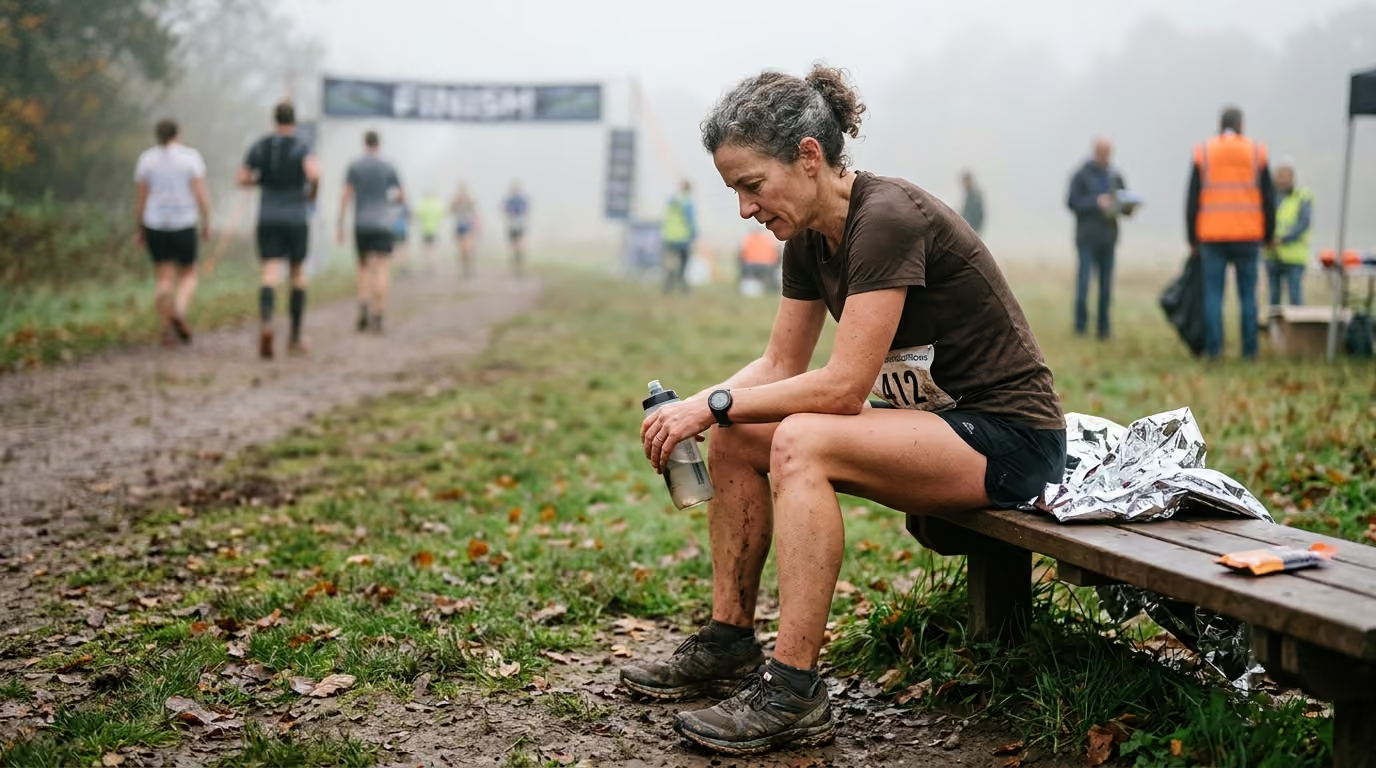

Standing at a crowded downtown starting line presents completely different physical and mental challenges than navigating remote rocky mountain singletrack trails.





Most endurance athletes treat course selection as a simple math problem of distance and total elevation gain. They review an elevation profile, glance at the map, and assume their general fitness will transfer seamlessly across any venue. Yet the physical setting of an event dictates mechanical strain, thermoregulation, cognitive fatigue, and logistical stress far more than mileage alone. A flat city marathon, a rolling rural gravel event, and a technical mountain trail impose radically different physiological costs on the human body.
Choosing the wrong race environment can derail months of dedicated training. An athlete conditioned entirely on predictable asphalt may find their stabilizer muscles failing on technical descents. Conversely, an athlete accustomed to quiet forest paths may struggle with the sensory overload and hard surface impacts of a metropolitan race. Understanding how different environments affect your physiology, psychology, and recovery is critical for long-term athletic development.
Every race surface generates a distinct mechanical interaction with the muscular and skeletal systems. When running on asphalt or concrete, the ground reaction forces remain highly repetitive. Each foot strike lands at nearly identical angles, loading the same tendons, joints, and muscle fibers thousands of times in succession. This uniformity allows for maximum metabolic efficiency and steady pacing, but it concentrates tissue strain in narrow anatomical zones.
In contrast, natural surfaces like dirt, mud, gravel, and rock disperse mechanical stress across a wider variety of muscle groups. Irregular terrain forces subtle shifts in stride length, cadence, and foot strike position with every step. While this continuous variation reduces repetitive stress on specific tendons, it dramatically increases the energetic cost of running. Stabilizer muscles in the ankles, hips, and core must work continuously to maintain balance and posture.
Elevation change also functions differently depending on the setting. On paved roads, climbs and descents generally feature consistent grades that allow runners to establish a steady mechanical rhythm. On technical trails, steep climbs frequently require power hiking, while descents demand intense eccentric contractions to control braking forces. Eccentric muscle actions cause micro-tears in muscle fibers, leading to severe delayed onset muscle soreness if an athlete is unprepared.
Course width and turning geometry further alter the physical demand. Wide city boulevards permit smooth cornering and uninterrupted pacing. Rural lanes and winding singletrack trails introduce sharp turns, roots, and bottlenecks that disrupt forward momentum. Every deceleration and subsequent re-acceleration consumes precious glycogen, raising the overall physiological cost of the event.
Urban endurance events are defined by paved infrastructure, high athlete density, and structured municipal organization. These races provide the most reliable conditions for athletes targeting specific time goals or personal records. Measured distances are certified, mile or kilometer markers are clearly posted, and pace groups offer predictable targets. The predictable nature of paved city streets allows athletes to optimize their metabolic output and practice strict split pacing.
Logistical convenience is another major advantage of metropolitan racing. Major cities offer extensive hotel options, public transit networks, and direct airport access. Spectators can easily travel between different points along the course, creating an electric atmosphere that boosts psychological drive. For athletes who thrive on external energy, the dense crowds and municipal landmarks provide substantial motivation during difficult race phases.
However, urban environments introduce unique environmental challenges. The built environment creates an urban heat island effect, where buildings and asphalt absorb solar radiation and radiate heat back onto the course. Research indicates that endurance performance and medical safety decline significantly as thermal stress rises. Medical workload in mass endurance events increases sharply outside the optimal range of 4.4 to 15.0 degrees Celsius wet-bulb globe temperature. When conditions exceed 15.5 degrees WBGT, the rate of medical encounters and non-finishes rises substantially.
Air quality represents another consideration in metropolitan settings. Research shows that exercising in high concentrations of particulate matter can trigger airway inflammation and increase oxidative stress. Studies examining outdoor athletic championships found that daily heat illness rates doubled when thermal stress indicators increased from 25 to 35 degrees Universal Thermal Climate Index. Athletes with asthma or respiratory sensitivities must monitor local air quality indices carefully before committing to an urban target race. Exploring structured training performance strategies can help athletes prepare their cardiovascular systems for these distinct environmental demands.
Rural events occupy a distinct middle ground between crowded city marathons and remote wilderness ultras. These races take place on country lanes, paved backroads, gravel routes, or converted rail trails. The defining characteristic of a rural event is low environmental density, offering wide open landscapes and minimal sensory distraction. Athletes who become overstimulated or anxious in massive crowds often find rural settings ideal for maintaining internal pacing discipline.
The atmosphere at rural events is typically shaped by local community hospitality. Rather than commercial brand activations, aid stations are frequently staffed by local schools, athletic clubs, and farming families. This creates an intimate, supportive environment where participants are treated as individuals rather than numbers in a wave start. The lower participant density also prevents bottlenecking at the start line and aid stations.
Despite their apparent simplicity, rural courses present logistical challenges that require careful planning. Accommodation near the start line is often limited, requiring athletes to rent vehicles and drive significant distances on race morning. Emergency medical access is naturally more dispersed than in metropolitan centers. If an athlete experiences severe dehydration or an acute injury, transport times to the nearest regional hospital can be extended.
Weather exposure is another critical factor on rural courses. Wide agricultural plains and open valleys offer virtually no protection from sustained headwinds, crosswinds, or direct sun exposure. Running into a 25-kilometer-per-hour headwind on an exposed country road dramatically increases aerodynamic drag and energy expenditure. Athletes must develop strong mental resilience to maintain pacing across long, visually uniform stretches of open roadway.
Trail and mountain racing requires a complete shift in athletic mindset. In this setting, traditional metrics like average pace per mile lose their utility. A five-kilometer stretch of technical trail featuring 400 meters of vertical ascent and loose scree may take longer than ten kilometers on flat pavement. Trail performance is governed by effort management, movement economy, balance, and terrain appraisal rather than strict split times.
The governing bodies of athletics note that trail courses represent the natural discovery of a region, with no arbitrary limits on distance or vertical gain. Foot placement, traction management, and route finding are core technical skills. Running smoothly over roots, rocks, and mud requires rapid neuromuscular recruitment and continuous visual scanning. Developing proper racing and event preparation allows athletes to adapt their stride mechanics to these complex, unpredictable surfaces.
Epidemiological research highlights the distinct physical risks associated with trail running. A systematic review of trail runners identified the foot as the most frequent injury location, followed by the knee, lower leg, thigh, and ankle. Unlike the repetitive overuse injuries common on the road, trail injuries frequently include acute trauma such as lateral ankle sprains, severe lacerations, and deep contusions from falls.
High-altitude and mountain trail events introduce additional physiological stressors. In clinical evaluations of medical encounters during mountain ultramarathons, acute gastrointestinal distress accounted for approximately 18 percent of medical visits, while musculoskeletal injuries represented 17 percent. Symptoms of acute mountain sickness and high-altitude pulmonary edema also appear in remote high-elevation events. Evacuation from remote wilderness sections can take hours, making mandatory survival gear and self-reliance absolute necessities.
Destination races combine competitive endurance goals with the logistical complexity of long-distance travel. Whether traveling across the country for a World Marathon Major or flying overseas for an alpine ultra, these events turn racing into a broader lifestyle experience. The narrative appeal of competing in an iconic landscape or historic city provides powerful motivation during long months of training.
However, the non-running stressors of destination racing can silently degrade performance. Long flights, airport delays, and extended periods of sitting stiffen the hip flexors and disrupt circulation. Crossing multiple time zones disrupts circadian rhythms, impairing sleep quality and core temperature regulation. Furthermore, relying on restaurant food in the days leading up to an event increases the risk of unexpected gastrointestinal upset.
Our team has tracked the subtle variables that derail destination events, and nutritional disruption consistently ranks at the top. For years, I capped my mid ride fueling at around sixty grams of carbs per hour, convinced that taking in more would wreck my stomach. Then I read a series of recent studies on gut training and higher oxidation limits for endurance athletes. I spent a three month base phase gradually increasing my intake up to ninety grams using a mix of glucose and fructose. The difference during my next Gran Fondo was staggering. I had a late race surge that I had never experienced before, completely avoiding the usual energy crash. Practicing robust fueling and hydration protocols well before traveling ensures that unfamiliar destination environments do not compromise your digestive stability.
Environmental sustainability is an increasingly vital factor in destination race planning. Research analyzing mass sporting events revealed that participant travel accounted for 84.2 percent of total event greenhouse gas emissions. A carbon footprint modeling study estimated that a typical marathon runner generates roughly 4.3 tonnes of carbon dioxide equivalent across a season of training and racing. The study modeled that substituting a transatlantic flight with a local regional race could reduce an athlete's event-related carbon footprint by up to 80 percent. Integrating mindful endurance lifestyle choices helps balance personal athletic ambition with environmental responsibility.
Small local events form the bedrock of a sustainable endurance lifestyle. These races take place in neighborhood parks, county recreation areas, or nearby town roads. Because they require minimal travel and zero hotel bookings, local races present an exceptionally low logistical burden. Athletes can sleep in their own beds, follow their standard morning nutrition routines, and arrive at the start line with minimal psychological stress.
Local events serve as perfect laboratories for testing equipment, pacing plans, and fueling strategies under real competitive conditions. Testing a new shoe model, hydration pack, or pre-race meal during a low-stakes local 10K or half marathon provides vital data without risking a major season goal. Furthermore, the low financial cost allows athletes to race more frequently throughout a training block.
The community connection fostered by local racing is invaluable for athletic longevity. Regularly interacting with local race directors, running clubs, and fellow competitors builds a strong social support network. This social cohesion keeps athletes grounded and motivated, especially during heavy base-building phases.
The primary limitation of small local events centers on support infrastructure. Course measurement may rely on basic GPS rather than certified survey methods, and timing systems might use simple finish-line clocks rather than multi-split chip mats. Aid stations may be spaced farther apart, requiring runners to carry their own hydration. As long as athletes adjust their expectations, local races remain an unmatched resource for consistent athletic progression.
As endurance athletes advance beyond age 40, biological shifts alter how the body responds to specific racing environments. Tendons and ligaments gradually lose water content and elasticity, reducing passive force transmission and shock absorption. Concurrently, recovery rates for eccentric muscle damage slow down. These physiological changes mean that venue selection directly influences injury risk and post-race recovery timelines.
Master athletes competing on hard urban asphalt must pay close attention to cumulative joint impact and recovery. While road racing remains entirely viable, older runners require more structured post-race rest following a hard road marathon than their younger peers. The repetitive, unyielding surface can aggravate sub-clinical cartilage wear and Achilles tendon stiffness. Prioritizing structured healthy aging considerations helps mature competitors maintain tissue resilience across decades of road racing.
When transitioning to trail and mountain venues, master athletes face different challenges. Age-related declines in proprioception and dynamic balance increase the likelihood of trips and ankle rolls on technical singletrack. Furthermore, downhill running imposes severe eccentric loading that takes longer for older muscle fibers to repair. Master trail runners must build dedicated strength programs focusing on calf strength, hip stability, and quadriceps control.
Thermoregulation also shifts with age. Sweating efficiency and cutaneous vasodilation decline slightly, making older athletes more susceptible to heat-related illness during unseasonably hot events. When planning destination or urban races in warm climates, master competitors should build longer heat acclimatization windows into their schedules. Mastering comprehensive recovery and adaptation protocols ensures that older athletes bounce back efficiently from harsh competitive environments.
Athletes frequently undermine their performance by applying the assumptions of one race setting to an entirely different environment. The most prevalent error is assuming that flat road pace translates directly to trail or gravel courses. A 4:30 per kilometer road pace requires substantially higher power output when maintained on soft dirt, loose gravel, or technical paths. Pacing must always be adjusted for surface resistance and terrain irregularity.
Another dangerous mistake is underestimating the medical and logistical demands of remote events. Urban marathons place medical tents and fluid stations every two kilometers. In rural ultras or mountain trail events, aid stations may sit fifteen kilometers apart across rugged terrain. Athletes who fail to carry mandatory survival gear, water purification tools, or adequate calories expose themselves to severe hypothermia or dehydration if an emergency occurs.
Conversely, athletes sometimes overcomplicate simple events by carrying unnecessary gear. Wearing a heavy hydration vest with trekking poles in a flat, fully supported urban marathon adds useless dead weight that increases energy expenditure. Equipment should match the specific infrastructure and emergency reality of the chosen course.
Finally, many athletes fail to account for travel stress when budgeting their energy for destination races. Walking ten miles through an expo and sightseeing the day before a race depletes glycogen stores and fatigues the legs. Destination racing requires disciplined rest schedules during the 48 hours preceding the start gun.
To make informed decisions about race venues, endurance athletes should track specific environmental and physiological data points across their training blocks. Monitoring these variables enables you to objectively evaluate which race settings match your physiological profile.
Calculate the ratio of your heart rate to running speed across different surfaces. On flat pavement, an aerobic run should show minimal cardiac drift over two hours. Run the same duration on rolling gravel or technical trail and measure the difference in heart rate elevation. If your heart rate drifts significantly higher on uneven terrain at the same speed, your stabilizer muscles and running economy require specific adaptation.
Track how many days of recovery you need before completing a quality workout after long runs on different terrains. Record muscle soreness, resting heart rate, and heart rate variability following a long road run versus a long mountain run. If technical downhills depress your recovery metrics for five days while roads take only two, your eccentric strength requires targeted development before entering a mountain race.
Log your performance, fluid consumption, and sweat rate across varying temperatures and humidity levels. Use wet-bulb globe temperature measurements when possible to quantify your personal thermal thresholds. If your pace drops by more than ten percent when temperatures exceed 18 degrees Celsius WBGT, prioritize spring and autumn events in cooler climates.
Rate the non-running stress of every race on a simple scale from 1 to 10. Factor in transit time, sleep quality, food accessibility, and financial cost. Compare your logistical stress score directly against your race performance. Many athletes discover that low-stress local events yield superior competitive outcomes compared to high-stress destination races.
Matching your competitive goals to the right physical setting is an essential skill that safeguards your health, optimizes your performance, and sustains your athletic journey for decades to come.

Follow ReEndure for practical insights on endurance training, recovery, nutrition and healthy aging. Stay connected for new articles, research led guidance and ideas to help you perform better for longer.


Read practical ideas on endurance training, recovery, nutrition and healthy aging to keep progressing for years to come.
Read the Blog