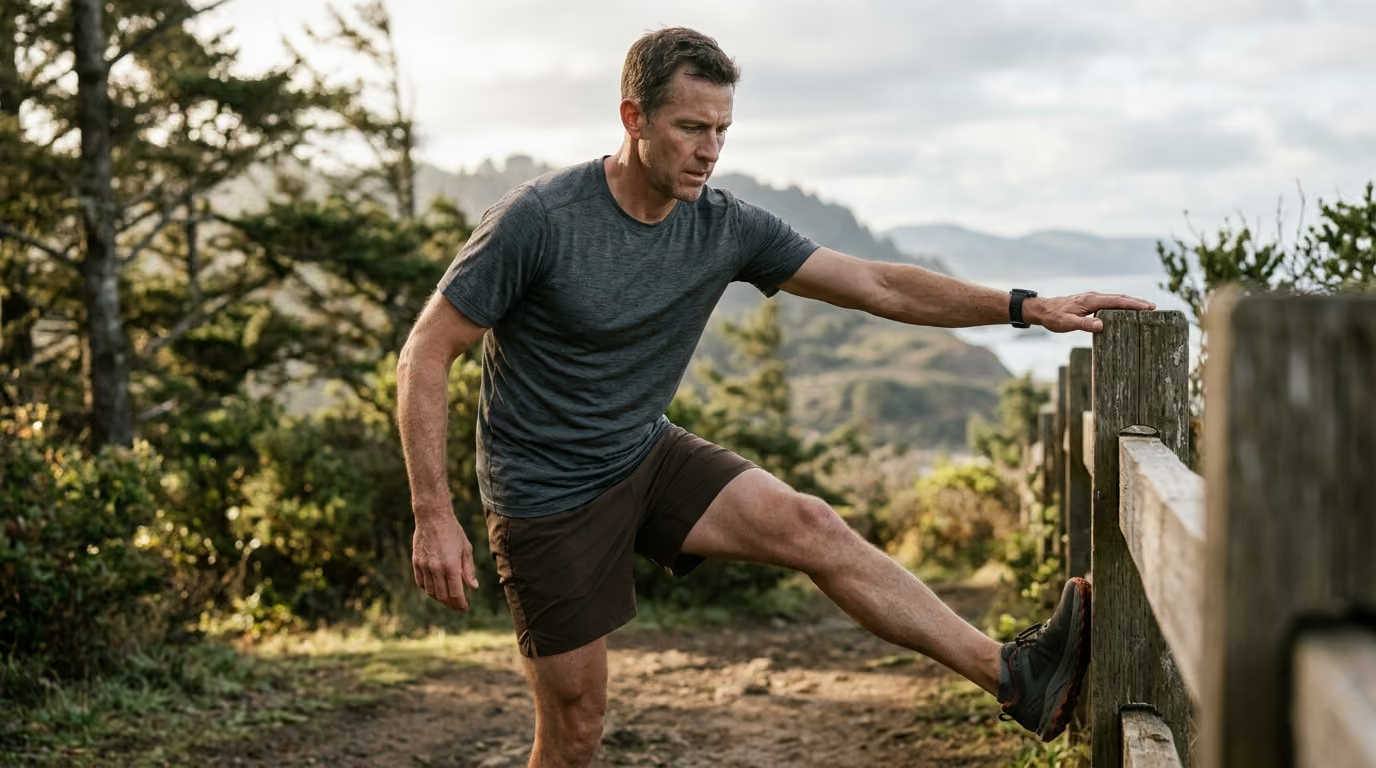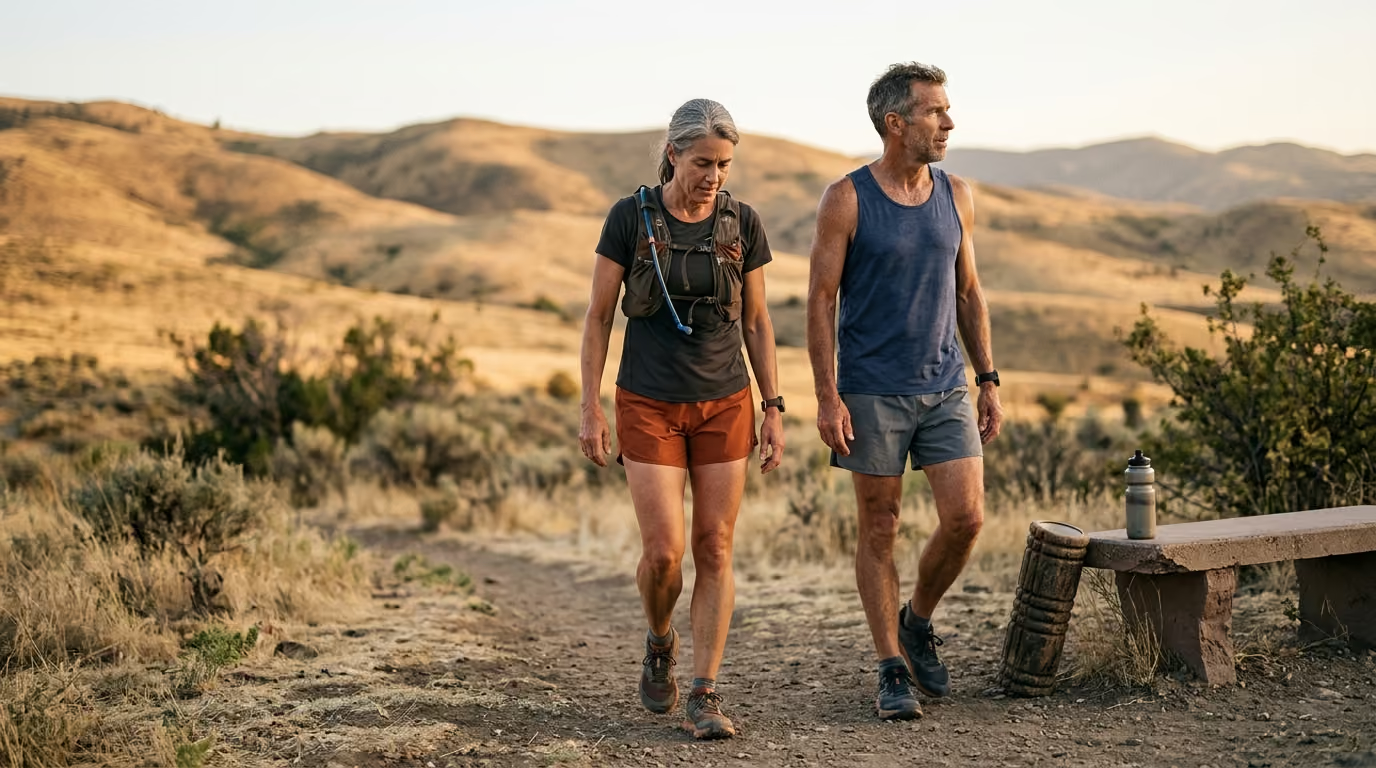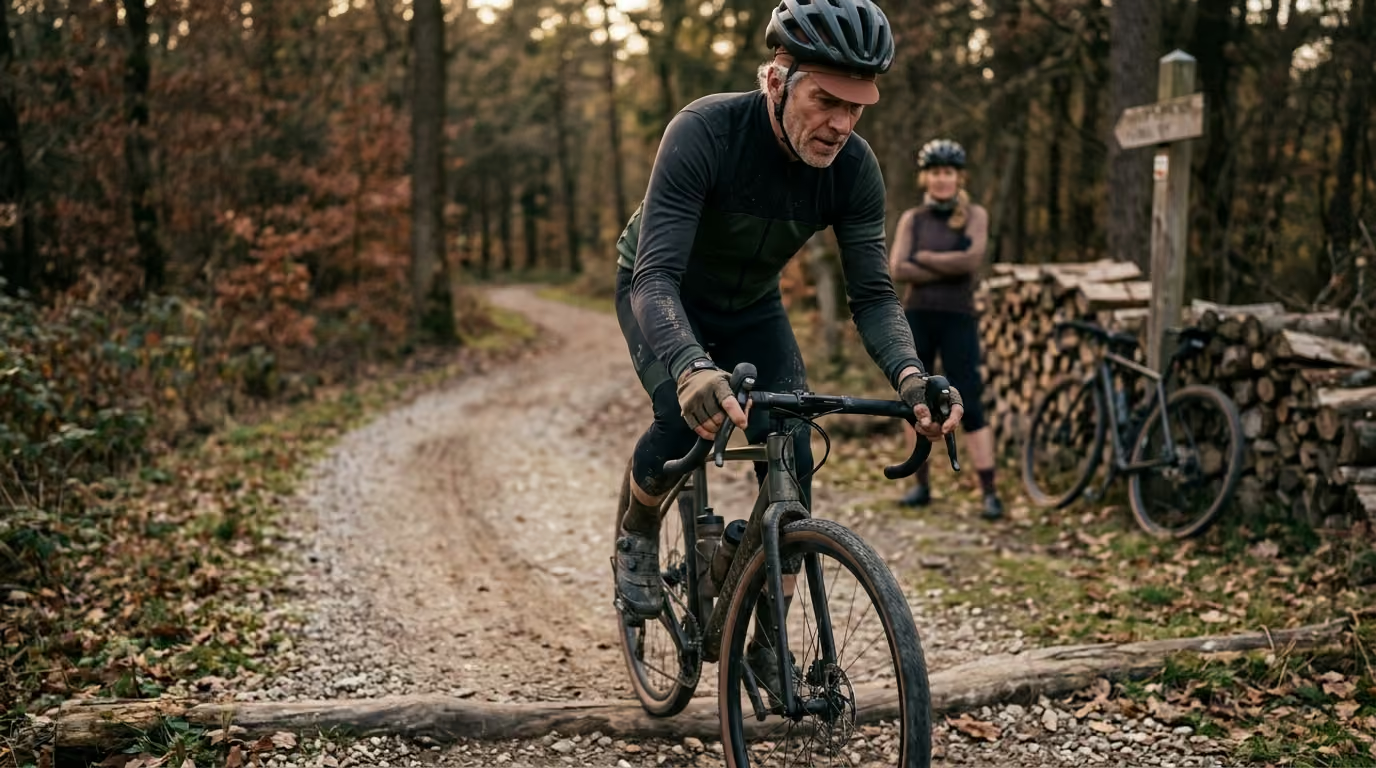

Fall prevention in endurance sports relies on maintaining safety margins, recognizing physical fatigue, and adapting movement skills to shifting outdoor trail conditions.





Most endurance athletes treat falls and crashes as random bad luck or lapses in bravery. When a rider slides out on a gravel corner or a trail runner catches a toe on a hidden root, the post-incident analysis rarely goes beyond bad luck or poor trail conditions. This mindset is fundamentally flawed. Traumatic injury in outdoor sports is rarely an unpredictable bolt from the blue.
Instead, a crash is almost always the final output of a predictable systems failure. It happens when accumulated physical fatigue, deteriorating visual scanning, excessive speed, and shifting environmental conditions overwhelm an athlete's diminishing safety margin.
Consider a typical Saturday morning scenario. A 48-year-old cyclist joins a fast group ride after a demanding work week and five hours of interrupted sleep. Forty miles into the ride, the group hits a twisting, repaved descent with shaded patches of loose grit. The rider's aerobic engine feels fine, but mental processing is lagging by a fraction of a second. When the lead rider brakes suddenly for a tight switchback, our cyclist reacts with a sudden grab of the front brake while leaned over on cold tires. The front wheel washes out instantly, resulting in deep road rash, a cracked helmet, and a fractured collarbone.
The crash was not caused simply by the grit in the corner. It was caused by the combined effect of poor sleep, high group speed, late braking, and zero margin for error.
Preventing acute trauma requires shifting away from relying on luck or protective gear as your primary defense. Whether you ride pavement, navigate technical singletrack, or run remote mountain ridges, crash prevention demands a systematic approach. You must learn to manage risk, preserve handling margins, and maintain situational awareness long before you find yourself sliding across the dirt.
In endurance sports, safety is not an absolute state. It is a dynamic balance between environmental demands and athlete capacity. A sports science perspective treats fall and crash risk as a product of three distinct variables.
First is the likelihood of losing control. Second is the severity of the consequences if control is lost. Third is the difficulty of executing an emergency rescue or medical evacuation.
A loose gravel corner on a flat, open fire road has a moderate likelihood of causing a slide, but the consequences are usually limited to minor abrasions. That exact same patch of gravel positioned on an off-camber turn beside a steep ravine carries a catastrophic consequence profile. The physical hazard is identical, but the total risk is vastly higher. Athletes often make the mistake of treating these two situations with the same level of caution.
To control this equation, you must understand your safety margin. The safety margin is the operational buffer between the physical demands of the trail or road and your current technical capacity. This buffer is constantly degraded during a workout by multiple factors:
Whenever one factor increases the demand, you must deliberately adjust another factor to maintain your margin. If terrain difficulty spikes or rain begins to fall, your only logical response is to reduce your speed, widen your following distance, and increase your scanning frequency. Integrating evidence-based injury prevention principles requires viewing safety as an active calculation rather than passive hope.
Another critical concept is risk compensation. When athletes put on upgraded protective gear or ride high-end equipment with advanced suspension, they often feel an artificial sense of security. This false confidence frequently prompts them to carry higher speeds into dangerous terrain, completely erasing the safety benefit of the equipment.
Research published in the International Journal of Epidemiology shows that bicycle helmets significantly reduce the odds of head injury, serious brain trauma, and facial injuries during a crash. However, a helmet cannot protect your spine, prevent broken limbs, or stop a collision with an oncoming vehicle. Protective equipment should serve as an emergency backstop, never as an excuse to override your technical limits.
Loss of control on a bicycle usually traces back to improper braking, flawed cornering lines, or abrupt steering inputs. Your tires possess a finite budget of traction. That traction budget must be divided between two competing actions: slowing the bike down and changing its direction.
When you ask a tire to provide maximum braking force and sharp cornering traction at the exact same moment, the tire will break traction and slide. Mastering basic bike handling requires isolating these physical demands through disciplined execution.
To corner safely on any surface, you must separate braking from turning:
Trail braking, where a rider gently drags a brake into a turn, has a place in advanced racing scenarios. However, for everyday training and longevity, straight-line deceleration provides a vastly superior margin of safety.
Crashes frequently happen at the exact interface where road surfaces change. Transitioning from dry asphalt onto a wet wooden bridge, moving from packed dirt into deep sand, or crossing railroad tracks can instantly destabilize the bike.
When approaching a surface transition, reduce your speed beforehand. Relax your grip on the handlebars, soften your elbows, and keep your body weight centered. Avoid making sudden steering corrections, pedaling hard, or applying sharp braking inputs while crossing the slick or unstable transition zone. Let the bike track naturally across the surface before asserting directional control.
Your front brake provides roughly 70 percent of your total stopping power on flat, dry pavement due to forward weight transfer. However, grabbing the front brake aggressively on loose gravel or wet leaves will cause the front wheel to tuck under instantly.
Modulate your levers smoothly by applying progressive finger pressure rather than snatching at the levers in panic. On steep descents or loose surfaces, shift your hips backward behind the saddle to keep weight over the rear wheel. This posture balances braking traction, prevents rear-wheel lift, and stabilizes your chassis.
Trail runners face a distinct set of physical hazards. Without wheels, the primary mechanisms of traumatic injury are trips, slips, ankle inversions, and high-speed tumbling falls. A comprehensive review of trail-running injuries published in sports medicine literature emphasizes that trail running places extreme multifactorial demands on neuromotor control and biomechanics.
Preventing falls on singletrack requires active visual processing and precise footwork.
Many trail runners fall because they suffer from visual tunnel vision. They either stare directly down at their shoes or look far up the trail, leaving them blind to immediate or upcoming hazards.
Safe trail running requires a continuous, rhythmic scanning pattern between two distinct zones:
Your eyes must alternate continuously between these two zones. This dual-zone technique allows your brain to map an optimal line while executing immediate micro-adjustments for roots, loose rocks, and mud patches.
Overstriding is the single greatest mechanical contributor to trail running falls. When you reach forward with a straight leg and strike the ground heel-first, you create a harsh braking force. If your heel catches a root or slips on wet clay in this extended position, your center of mass is trapped far behind your base of support. This biomechanical error leads directly to severe ankle sprains, hyper-extensions, or violent forward falls.
Shorten your stride and increase your step rate to roughly 170 to 185 steps per minute on technical terrain. A higher cadence ensures that your feet land directly beneath your hips with a slightly flexed knee. If your lead foot encounters a loose stone or slick root, your trailing foot is already cycling forward to catch your weight. This rapid foot turnover turns potential falls into minor, recoverable stumbles.
Use your arms actively for balance by holding your elbows slightly wider than you would on the road. Wide arms lower your rotational inertia and allow for instant counter-balancing when crossing off-camber rock slabs or narrow ridgelines.
Descending is not simply climbing in reverse. Gravity constantly accelerates your speed, shortens your available reaction windows, and increases impact forces if you make an error.
Data from the National Interscholastic Cycling Association injury surveillance system reveals a stark reality: more than 56 percent of all traumatic mountain-bike injury events occur while riding downhill. Descents demand intense mental focus, precise muscle coordination, and strict speed discipline.
A fundamental safety rule for any descent is simple: you must always be capable of coming to a complete, controlled stop within the distance of visible trail or road ahead of you.
If you are descending a blind road switchback or a narrow trail choked with vegetation, you cannot predict what lies around the corner. A fallen tree, an oncoming hiker, a parked vehicle, or a washboard rut could block your path. If your stopping distance exceeds your visual horizon, you are essentially gambling with your safety.
When descending steep terrain on a bicycle, adopt the "ready" or "athletic" position:
This dynamic position allows the bicycle to move freely beneath you without throwing your upper body off balance when rolling through rock gardens or deep ruts.
There is zero shame in walking a technical feature or steep downhill pitch. A study on mountain-bike head impacts showed that riders who proactively dismount during hazardous descents significantly lower their odds of head trauma.
Recognizing when a feature exceeds your current skill, energy levels, or traction conditions is a hallmark of an intelligent athlete. Make the decision to dismount early. Stopping on a flat, manageable approach is far safer than attempting to unclip halfway down a 30-degree rock slab after losing momentum.
For trail runners, descending requires shifting into a controlled, light-footed jog or a fast power-hike on steep gradients. Resist the temptation to let gravity pull you into an uncontrolled, runaway sprint. Lean forward slightly from the ankles to keep your chest perpendicular to the slope, keeping your feet moving underneath you like a downhill skier.
When sharing the road with motor vehicles, crashes carry catastrophic consequences. According to data from the National Highway Traffic Safety Administration, 1,166 pedalcyclists were killed in traffic crashes in the United States in 2023. Furthermore, historical safety data indicates that 62 percent of bicyclist fatalities occur at non-intersection locations, and 56 percent take place during dawn, dusk, or nighttime conditions.
To survive on the road, you cannot merely hope drivers see you. You must actively manage your visibility and road positioning.
True visibility consists of three distinct stages:
To maximize detection during daylight hours, wear high-visibility fluorescent colors such as safety yellow or bright orange. In low-light, dawn, or nighttime conditions, switch to retro-reflective materials placed strategically on moving parts of your body, such as your shoes, ankles, and gloves. The biological motion of pedaling feet draws a driver's attention far more effectively than static reflective patches on a jacket.
Equip your bicycle with a high-output, daytime-visible flashing white headlight and a pulsed red taillight. Ensure that long jackets, saddlebags, or hydration packs do not obscure your lights or reflectors.
Riding defensively does not mean hugging the extreme right edge of the road where broken glass, debris, and drainage grates accumulate. Hugging the curb makes you invisible to drivers pulling out of side streets and encourages motorists to attempt dangerous, close-proximity passes within the same lane.
Treat every intersection, commercial driveway, and side street as a high-risk conflict zone. Never assume eye contact with a stopped driver guarantees they will yield the right of way. Maintain a covering hand on your brake levers until you have cleared the intersection completely.
Riding or running in a pack introduces social pressure and compressed reaction times. While group training offers substantial physiological and psychological benefits, it also creates distinct collision risks if communication breaks down. A single touch of wheels in a cycling peloton or a sudden trip in a tight trail-running pack can trigger a domino-effect crash that takes down multiple athletes.
A safety signal is only effective if it is delivered early, loudly, and passed down through the entire line. The lead athlete must act as the eyes of the group, scanning far ahead and calling out obstacles long before reaching them.
Essential group communication calls include:
Vague warnings such as "Watch out!" or "Look out!" cause panic without providing actionable information. Be precise, calm, and loud.
The golden rule of road and gravel group cycling is simple: never overlap your front wheel with the rear wheel of the rider ahead of you. If the front rider swerves suddenly to avoid a piece of road debris, their rear tire will strike your front wheel. In almost every wheel-overlap collision, the trailing rider goes down instantly while the front rider remains upright.
Expand your following distance dynamically based on environmental conditions:
One of the most dangerous dynamics in endurance sports is the unspoken pressure to keep up with faster, more technically skilled athletes. When a less experienced rider tries to match the descending pace of a veteran, or a fatigued runner attempts to hold an aggressive pace on rocky terrain, crashes occur.
Establish clear group norms before rolling out. Set planned regroup points at the tops and bottoms of major climbs and descents. Designate a supportive sweep rider or runner whose sole job is to accompany the slowest participant. Ensure that every member of the group understands that choosing a conservative, self-regulated pace on technical terrain is a mark of tactical intelligence, not weakness.
As athletes move through their forties, fifties, and sixties, physical changes alter how their bodies process technical tasks and absorb impact forces. Recognizing these age-related shifts allows you to adapt your training habits and maintain peak performance safely.
Advancing age brings gradual changes across several physiological systems:
Adapting your athletic routine through training strategies for healthy aging requires proactively adjusting your technical margins to stay ahead of these physiological changes.
First, upgrade your visual setup. If you ride or run in low-light conditions, invest in lighting systems with wider beam patterns and higher lumen ratings. Do not use dark, heavily tinted sunglasses under dense forest canopies or during overcast days; switch to photochromic or clear lenses to maximize ground contrast.
Second, adjust your stopping buffers. Because central processing and physical reaction times slow slightly with age, you must expand your visual scanning distance and widen your following space behind other athletes. Anticipate braking zones several seconds earlier on descents.
Third, commit to dedicated neuromotor training. Spend five to ten minutes three times a week performing single-leg balance drills, dynamic lateral hops, and ankle stability exercises. Prioritizing structured balance training sharpens your nervous system, allowing you to catch stumbles and recover equilibrium instantly.
Fourth, implement heavy, compound strength training. Lifting weights twice a week stimulates bone remineralization, strengthens connective tissue, and reinforces the structural framework that protects your vital organs and skeleton in a tumble. Supplement your hard efforts with dedicated recovery and mobility routines to keep your joints supple and reactive.
Athletes frequently fall victim to predictable mental mistakes when assessing their risk on the road or trail. Avoiding these common traps is essential for long-term safety:
To systematically prevent traumatic injuries, you must start tracking warnings long before an actual crash happens. In industrial safety science, major accidents are almost always preceded by dozens of minor incidents and near misses. Tracking these signals provides the objective data you need to adjust your approach.
Use a simple, actionable stoplight framework to assess your safety margin during every outing:
In your training log, record a qualitative safety score alongside your standard pace, heart rate, and power metrics. Ask yourself three simple diagnostic questions after every technical ride or run:
If you log two or more amber or red sessions in a single week, treat it as a clear warning sign. Your nervous system is carrying excessive fatigue, or your terrain choices are outstripping your present handling skills. Dial back your technical exposure, schedule extra rest, and run through progressive handling drills before ramping up your training complexity again.
Longevity in endurance sports is built on consistent, uninterrupted training, and staying on your feet and on your bike is the most effective performance strategy you will ever master.

Follow ReEndure for practical insights on endurance training, recovery, nutrition and healthy aging. Stay connected for new articles, research led guidance and ideas to help you perform better for longer.


Read practical ideas on endurance training, recovery, nutrition and healthy aging to keep progressing for years to come.
Read the Blog