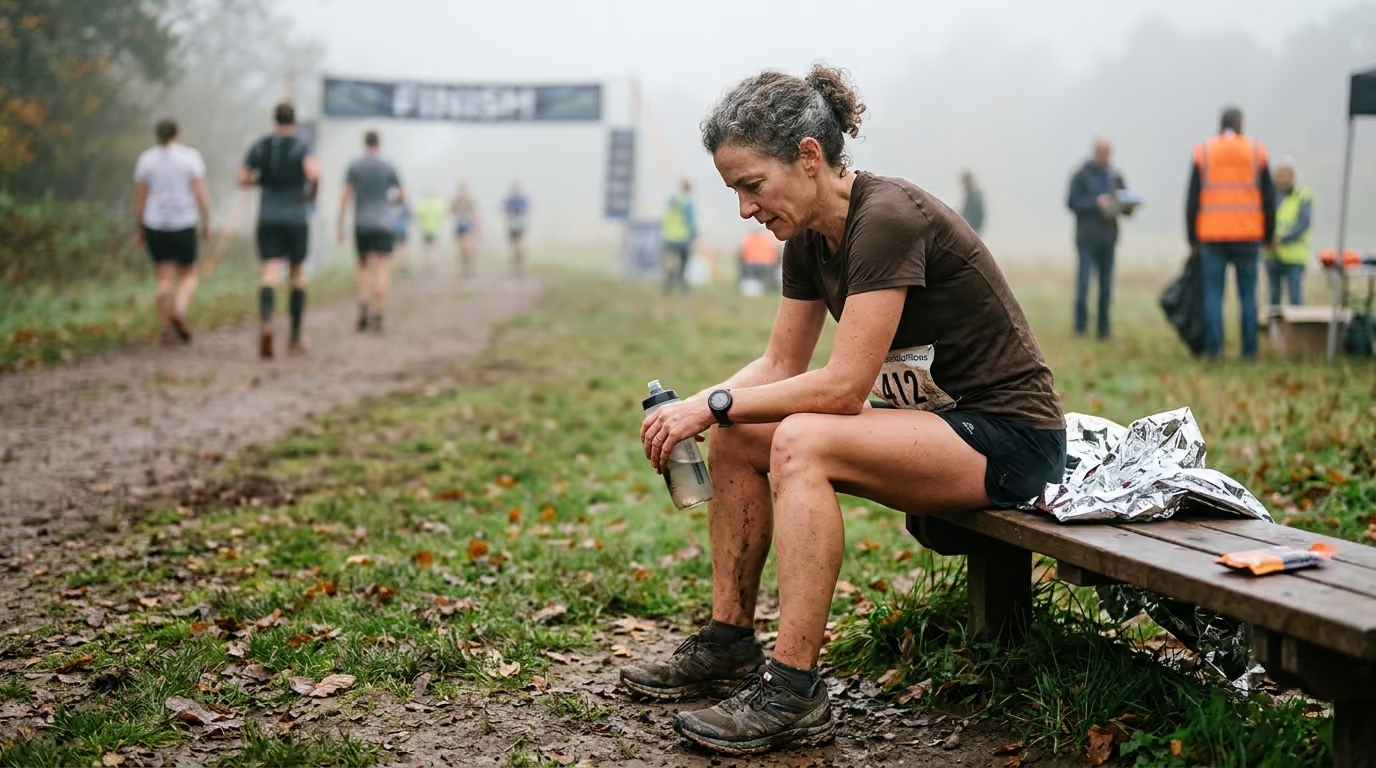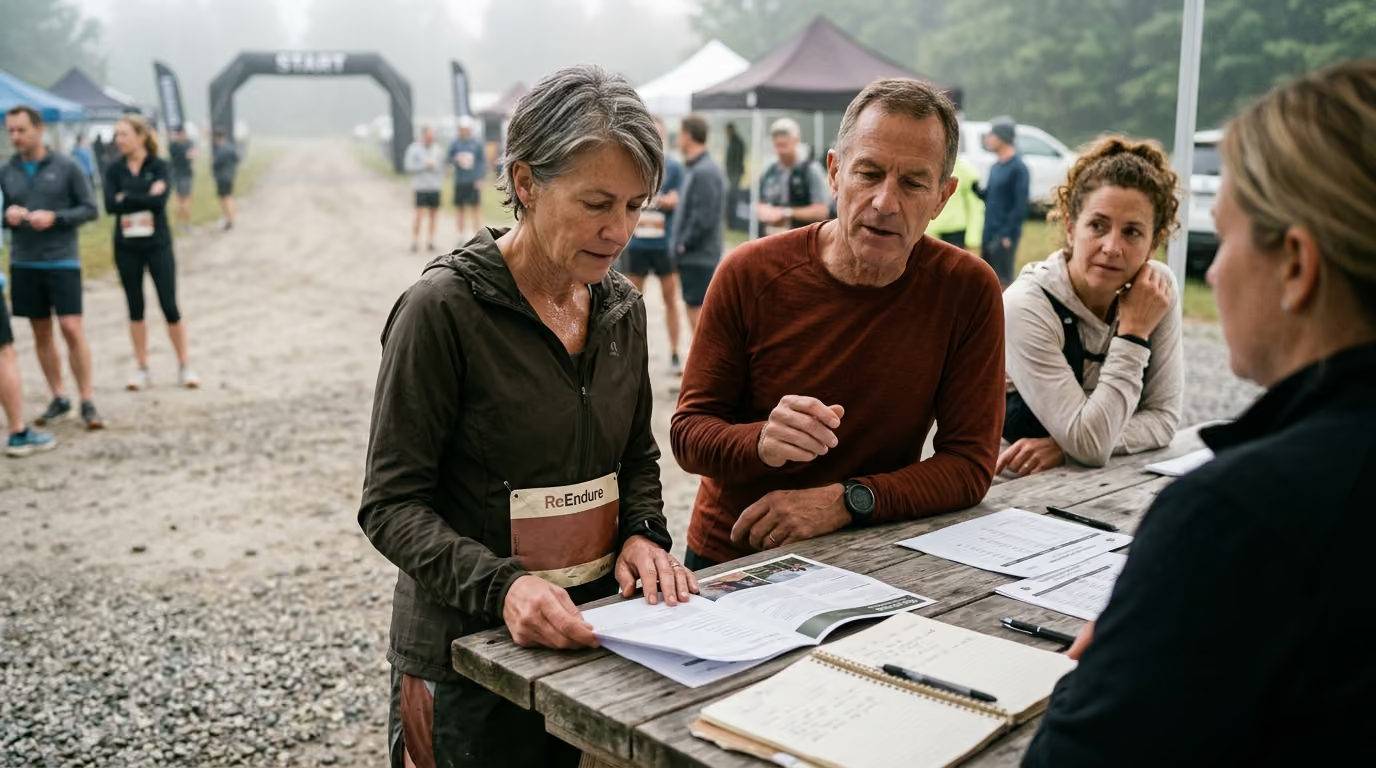

Endurance racing is assumed to test only physical limits, but protecting a relationship requires structured communication and fair domestic labor allocation.





Protecting a relationship while pursuing a serious endurance goal is not simply a matter of managing your training calendar. It is a systematic process of resource allocation, mutual consent, and shared household planning. A relationship does not strain because an athlete runs, rides, or swims for many hours each week. It strains when athletic decisions are made unilaterally, when invisible domestic labor goes unacknowledged, and when athletic ambition overrides the basic emotional needs of a partnership.
Balancing high-performance endurance ambitions with a thriving personal life requires viewing your household as an interconnected athletic unit. Every mile on the road carries an emotional and operational footprint inside the home. When couples address these demands with clear agreements and reciprocal respect, athletic pursuits can enrich a relationship rather than diminish it.
Consider a standard Saturday morning long ride. The training log calls for a three-hour zone 2 session. On paper, three hours appears manageable within a weekend schedule. The athlete sets an alarm for 5:30 AM, quietly prepares gear, and rolls out the door by 6:30 AM.
The true footprint of that session, however, is rarely three hours. The preparation, route adjustments, post-ride cool down, equipment cleaning, and long shower easily extend the total commitment to four and a half hours. By the time the athlete returns to the kitchen, glycogen depletion and systemic fatigue set in. The athlete sits on the couch, mentally fogged and physically depleted, unable to engage in meaningful conversation or share household duties.
For the non-training partner, the experience is completely different. The partner wakes up alone, manages morning routines, feeds the children, handles household maintenance, and waits for the athlete to return. When the athlete arrives home exhausted, the partner realizes that parenting and domestic labor remain solely on their shoulders for the rest of the day. The issue is not that the workout took three hours. The issue is that the session consumed six hours of shared energy and left one partner carrying the entire household load.
When this dynamic repeats over months, friction builds. The partner feels like an unpaid logistics coordinator and a secondary priority. The athlete feels micromanaged, misunderstood, and guilty for pursuing personal health and performance. Without an intervention, this pattern turns healthy athletic ambition into persistent household tension.
To understand why endurance training challenges partnerships, we must look at how sports scientists and sociologists examine serious leisure. Researchers frequently describe the social dynamics of endurance sports as a paradox of serious leisure. Spouses and partners often report significant stressors, including chronic absenteeism, disrupted family routines, financial strain, and elevated household stress. At the same time, partners report positive benefits, including shared athletic identity, healthier family habits, and pride in their partner's accomplishments.
A grounded-theory study examining the spouses of endurance athletes published in Leisure Sciences highlighted this exact paradox. Partners did not view the sport in simple terms of good or bad. They experienced genuine tension between the joy of supporting someone they loved and the heavy burden of managing life around a rigid training schedule. A survey of 165 triathletes and 127 partners showed that while roughly 70 percent of participants felt the sport had a positive net impact on their relationship, the primary stressor remained a severe lack of quality time together as a couple.
Recent qualitative research published in Leisure Sciences examined the lived experiences of partners of ultra-endurance athletes. The authors identified a central dilemma that many endurance couples face: the choice to share, support, or separate. A partner must decide whether to participate directly in the sport, offer active support from the sidelines, or establish strict boundaries to protect their own autonomy. When an endurance goal becomes dominant, it leaves minimal cognitive and physical energy for domestic roles, career demands, and shared intimacy.
Psychologists explain this dynamic through the dualistic model of passion, developed by Dr. Robert Vallerand and colleagues. Passion for an activity generally falls into two categories:
Harmonious passion occurs when an athlete loves the sport and freely chooses to participate without feeling compelled by external pressure. The sport integrates smoothly with other areas of life, including marriage, career, and parenting. An athlete with harmonious passion can modify a workout, shift a rest day, or skip a session when a family emergency or relationship priority arises without experiencing identity panic.
Obsessive passion develops when the sport takes over the athlete's sense of self-worth. The athlete feels an uncontrollable urge to train, often driven by rigid identity protection, social validation, or deep anxiety about lost fitness. Research across sports psychology shows that obsessive passion strongly predicts athlete burnout, emotional distress, and relationship conflict. When an athlete views every missed mile as a personal failure, flexibility vanishes, and household relationships suffer.
The strain is rarely about physical mileage alone. It stems from the psychological rigidity that accompanies obsessive commitment. When training becomes an untouchable priority, partners feel isolated and powerless within their own homes.
Athletic preparation requires substantial energy, but the support required to sustain that preparation is multidimensional. Sociological and sports psychology research categorizes social support into distinct types:
A partner might gladly offer emotional and esteem support while feeling overwhelmed by tangible support demands. When an athlete assumes that general relationship love automatically includes unpaid logistical labor, resentment begins to build.
A comprehensive meta-analysis on athlete well-being found that high social support correlates strongly with reduced depression, anxiety, and perceived stress. Notably, support from family and friends had a significantly stronger protective effect against depressive symptoms than support from teammates or coaches. When relationship strain degrades that home support system, the athlete loses their most important psychological buffer against athletic burnout.
This dynamic also impacts physical resilience. Research examining psychosocial factors and sports injuries shows a direct correlation between high life stress and elevated injury rates. A meta-analysis published in sports medicine literature confirmed that stress history and negative life events significantly increase an athlete's susceptibility to acute and overuse injuries. Interpersonal conflict at home elevates baseline cortisol, disrupts sleep quality, and impairs physical tissue repair.
Physical recovery is far broader than lying on a couch with compression boots. European College of Sport Science consensus statements emphasize that complete recovery requires balancing training load with overall daily-life stress. Social connection, relaxed conversation, shared meals, and low-stress leisure represent active physiological recovery. If your relationship is filled with tension, your nervous system remains in a heightened sympathetic state, compromising performance regardless of what your wearable device claims.
Over time, athletic motivations also evolve. In the ten-year ULTRA study tracking hundreds of ultramarathon runners, researchers found that competitive drive, recognition seeking, and psychological coping motivations declined steadily over a decade. Long-term health orientation, however, remained completely stable. Sacrificing long-term personal relationships for a short-term competitive peak often leaves athletes feeling hollow years later when competitive drives naturally recede.
Understanding the balance between training loads, tissue repair, and lifestyle stress is central to maintaining longevity in endurance performance. Long-term success requires an infrastructure that supports both the athlete and the household.
To prevent resentment and build an equitable household system, couples can use the RELATE endurance framework. This systematic process converts emotional assumptions into concrete, operational agreements.
Before signing up for an event, calculate the full footprint of the training block. This includes total training hours, travel time, morning schedule shifts, race registration fees, equipment costs, coaching expenses, and travel days. Do not evaluate a workout based solely on moving time. A two-hour run represents a four-hour household footprint when accounting for preparation, travel, post-workout nutrition, showering, and recovery fatigue.
Both partners must write down their non-negotiable personal, career, and family priorities for the upcoming season. Identify key family events, children's milestones, work deadlines, and relationship vacations. When you identify competing priorities months in advance, you can adjust training blocks before they create acute household crises.
Establish clear operational boundaries around the sport. Define the maximum allowable training hours per week, the ceiling for annual race expenditures, and the maximum number of travel weekends per year. Setting firm boundaries provides psychological safety for the non-training partner, ensuring the sport will not expand indefinitely to fill all available household bandwidth.
Map out domestic responsibilities explicitly. If an athlete spends twelve hours training over a weekend, the couple must determine who manages household duties, cooking, and childcare. Research shows that shared consumer decisions and joint household planning significantly increase relationship satisfaction and perceived relationship equity. A healthy athletic plan never treats a partner's domestic coverage as free labor.
Do not postpone relationship care until the competitive season ends. Schedule weekly, non-negotiable couple time that has no connection to sports, training metrics, or race planning. Express specific appreciation for the tangible support your partner provides. Regular, micro-level relationship maintenance prevents the slow accumulation of emotional distance.
Establish clear trigger conditions that require modifying or pausing the training plan. These conditions might include severe sleep deprivation, acute relationship conflict, major family illness, unexpected employment changes, or signs of overtraining. Adapting a goal when external stress spikes is not a lack of athletic discipline. It is a sign of mature, sustainable sports management.
Integrating structured recovery principles and communication into your routine helps optimize sustainable recovery methods for both the body and the mind.
Most relationship conflict begins long before race day. It starts the moment an athlete clicks the registration button without consulting their partner. Preventing tension requires five specific structured conversations.
Before registering for an event, the athlete should discuss the underlying motivation with their partner. Use these five questions:
Sit down together and evaluate current life capacity across eight core domains on a scale of 1 to 10:
The lowest score identifies the household bottleneck. If financial capacity or sleep capacity rates at a 3 out of 10, adding a fifteen-hour weekly training schedule will inevitably cause structural failure. Address the bottleneck before expanding athletic volume.
Support should be chosen voluntarily, not assigned by default. Provide your partner with an open menu of potential support roles, allowing them to choose where they want to engage:
A partner has the right to support your athletic dream while declining to spend their vacation weekend crewing at an isolated aid station. Clarifying roles in advance eliminates unmet expectations.
Endurance sports carry substantial hidden financial costs. Calculate the comprehensive financial footprint before committing to a season. Include entry fees, travel, lodging, restaurant meals, specialty gear, coaching, physical therapy, laboratory testing, and race-day nutrition.
Establish an agreed spending ceiling. Any athletic expense exceeding a predetermined threshold, such as two hundred dollars, should require mutual discussion. Respecting financial boundaries ensures athletic pursuits do not jeopardize shared financial goals like home ownership, retirement savings, or family vacations.
Establish explicit boundaries governing daily life during the peak training block:
Establishing clear boundaries protects both physical health and household stability, functioning as an effective method for injury prevention and longevity.
Balancing serious training with personal relationships becomes more complex for athletes over forty and fifty. Masters athletes frequently manage peak career responsibilities, adolescent children, and aging parents simultaneously. At the same time, biological aging alters recovery dynamics.
As athletes age, muscle protein synthesis slows, connective tissues lose elasticity, and autonomic nervous system recovery requires more time. A hard interval session or long endurance ride that required twenty-four hours of recovery at age twenty-five may require forty-eight to seventy-two hours of recovery at age fifty.
This biological reality directly impacts household dynamics:
When an older athlete requires extended rest, horizontal recovery time on the sofa directly conflicts with family obligations. Masters athletes cannot simply demand more passive rest while their partner manages household responsibilities. Training programs must emphasize training density and quality over excessive volume. Utilizing polarized training models allows masters athletes to achieve high cardiovascular fitness while minimizing systemic fatigue that paralyzes domestic life.
Athletes in their forties and fifties frequently enter the sandwich generation, caring for growing children while assisting aging parents. Training plans must include schedule flexibility. If an aging parent requires medical assistance or a teenager needs academic support, the training plan must yield. Rigid adherence to a training calendar during family crises creates profound, lasting relationship damage.
Cardiovascular risks and musculoskeletal issues increase with age. Partners often carry unspoken anxiety regarding the athlete's health during extreme endurance events. Establishing proactive medical screening protocols, such as regular blood panels, resting electrocardiograms, and appropriate stress testing, provides peace of mind for the entire family. Communicating safety protocols, carrying tracking devices on remote workouts, and respecting medical guidelines demonstrates respect for your partner's emotional well-being.
Even well-intentioned athletes can make predictable communication errors that damage household trust. Identifying these communication traps helps couples navigate training cycles smoothly.
Athletes sometimes frame their partner's concerns as a lack of love or belief in their potential. Saying, "If you loved me, you would support my goals," is a form of emotional manipulation. A partner can love you completely while disliking the chaotic lifestyle, financial drain, and constant absence caused by ultra-endurance training. Separate emotional devotion from operational agreement.
Telling a partner that a workout will only take two hours when you know the total door-to-door time is three and a half hours erodes trust. Always communicate the total domestic footprint, including travel, gear prep, post-ride recovery, and clean-up. Transparent scheduling builds credibility and allows your partner to plan their day accurately.
Claiming that a partner cannot understand your schedule because they do not participate in endurance sports is dismissive and alienating. A partner does not need to understand lactate threshold or VO2 max to understand that the family calendar is overburdened. Your partner is an equal stakeholder in household resources and time.
While exercising together can strengthen a bond, forcing a non-endurance partner to participate, crew, or attend every event creates resentment. Allow your partner the autonomy to choose their own hobbies, social outlets, and weekend activities. Respect their personal space as much as you ask them to respect your athletic pursuits.
One of the most common mistakes occurs within forty-eight hours of crossing a finish line. Riding the emotional high of a successful race, the athlete immediately signs up for a longer, more demanding event. This denies the household a decompression period. Implement a mandatory four-week post-race moratorium during which no new races may be booked, allowing both partners to physically and emotionally recover.
Addressing these lifestyle patterns allows athletes to maintain a healthy balance between athletic goals and overall endurance lifestyle management.
Measuring the health of a relationship during a heavy training block requires consistent, objective monitoring, similar to tracking training metrics. Using structured check-ins ensures problems are identified and resolved before turning into chronic resentment.
Establish a recurring, twenty-minute logistics meeting every Sunday evening. Keep this conversation focused entirely on practical coordination:
Once a month, both partners should independently evaluate the household dynamic on a scale from 1 to 5 across key areas:
Any category that scores a 1 or 2 represents an operational breakdown that requires a structured adjustment, not an emotional argument. If partner rest scores a 2 for two consecutive months, the athlete must scale back training volume or outsource domestic chores to restore balance.
At the end of each competitive season, conduct a comprehensive review before building the next year's training calendar. Discuss what worked well, what created unnecessary household stress, and whether the athletic investments provided meaningful value for the family. Write down these agreements to guide future race planning.
Tracking these relationship metrics alongside structured training data helps optimize long-term health, performance, and training adaptation over time.
When both partners compete in endurance sports, mutual empathy for training demands is high, but competition for scarce household resources intensifies. Weekend training time, recovery windows, financial budgets, and morning energy become limited.
Dual-athlete couples should use an alternating priority model. Designate one partner as the primary racer for a specific four-month block, while the other maintains baseline fitness and handles primary household logistics. Reverse the roles for the next racing cycle. Maintain a shared calendar to ensure both athletes do not schedule peak training sessions on the same weekend.
Major life events, such as the birth of a child, career changes, moving homes, or managing family illness, temporarily reduce household capacity. During these phases, trying to maintain a peak competitive schedule often causes relationship distress and physical overtraining.
Shift focus from performance-based racing to health-focused maintenance training. Reduce weekly volume, eliminate high-friction travel races, and focus on efficient, home-based workouts. Treat this period as an investment in family stability and long-term athletic longevity.
Compulsive exercise occurs when an athlete feels unable to modify or miss a training session despite severe negative consequences to their health, career, or marriage. Warning signs include:
If these behaviors occur, the issue is no longer about athletic discipline. It reflects an underlying psychological struggle that benefits from professional clinical support.
A sudden, season-ending injury can disrupt an athlete's identity, mood regulation, and daily structure. Injured athletes often experience grief, depression, and heightened irritability, which can strain home life.
Do not expect your partner to serve as your sole emotional counselor or absorb unvented frustration. Redirect your athletic energy into non-impact rehabilitation, non-athletic hobbies, and household projects. Use the recovered weekend time to invest directly in your partnership, showing your partner that your relationship is a foundational priority, not an afterthought.

Follow ReEndure for practical insights on endurance training, recovery, nutrition and healthy aging. Stay connected for new articles, research led guidance and ideas to help you perform better for longer.


Read practical ideas on endurance training, recovery, nutrition and healthy aging to keep progressing for years to come.
Read the Blog