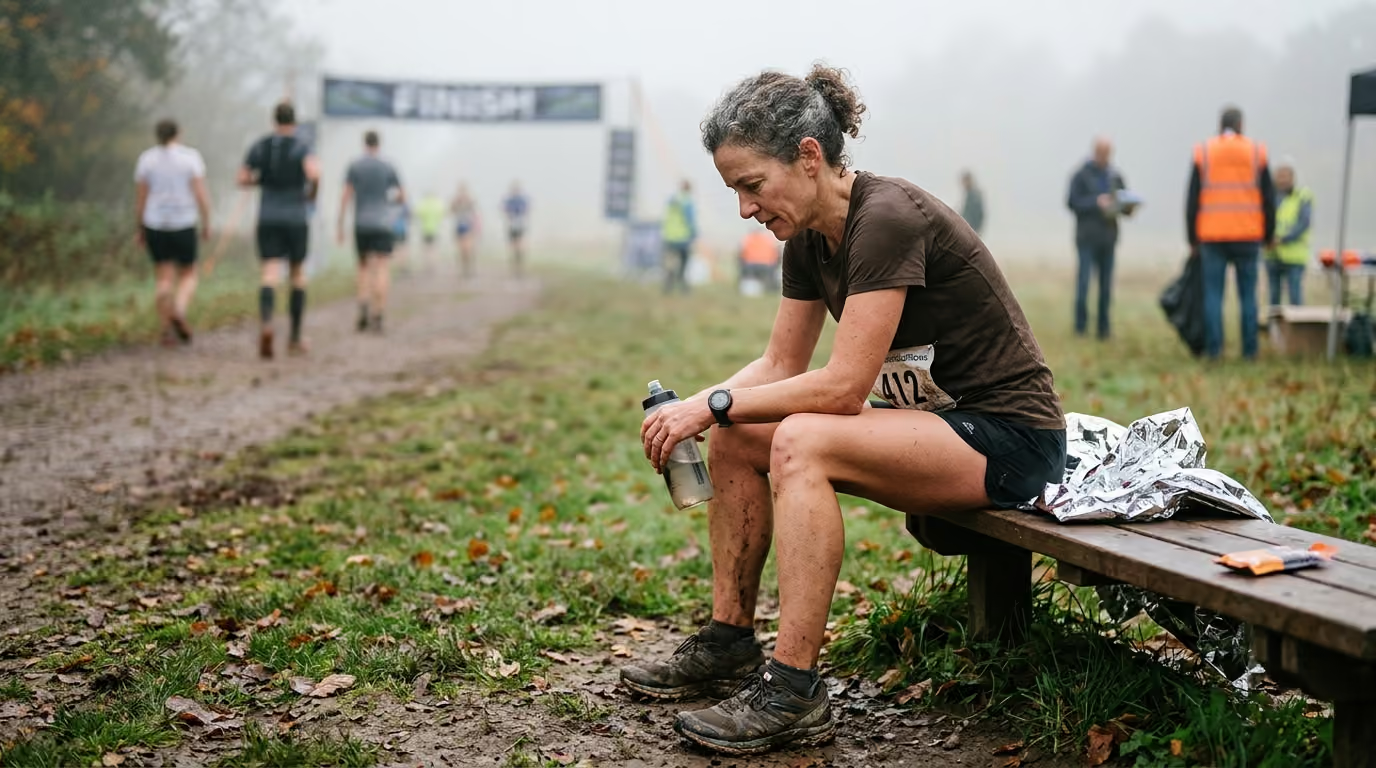

Severe weather seems like pure bad luck for runners and cyclists, but strategic pacing adjustments transform hostile race conditions into a clear competitive advantage.





Most endurance athletes spend months obsessing over functional threshold power, VO2 max intervals, and weekly volume. When race week arrives, they treat the weather forecast like a roll of the dice. If the morning is cool and still, they expect a personal best. If temperatures climb, winds howl, or freezing rain descends, they assume their hard work was wasted.
This mindset is entirely backwards. Fitness does not guarantee a successful race outcome. Fitness only determines the maximum metabolic engine you can operate. The surrounding environment dictates how much of that engine you can safely use without falling apart.
A seasoned competitor does not view adverse weather as an excuse to abandon the event. Instead, they treat environmental factors as physiological constraints that redefine the execution strategy. Heat, humidity, cold, wind, altitude, and poor air quality alter the energetic cost of every mile.
When you learn how to read the atmosphere and adjust your effort before distress sets in, difficult conditions become a competitive advantage. This field manual provides the scientific framework and practical protocols needed to race effectively in any climate.
A common mistake in endurance racing is treating ambient air temperature as the only environmental metric that matters. An air temperature of 70 degrees Fahrenheit feels completely different under a cloudless midday sun with high humidity than it does at dawn on a dry, shaded trail. To prepare effectively, you must understand the combined physical load acting on your body.
Your body interacts with the atmosphere through four primary physical mechanisms of heat exchange: conduction, convection, radiation, and evaporation. The following environmental metrics directly influence these pathways:
Every race environment presents one dominant physiological threat. If you misidentify this threat, you will apply the wrong solutions.
In a summer road marathon, the dominant threat is heat storage and evaporative failure. In an autumn mountain ultra, the primary danger is sudden cold stress caused by soaked clothing and freezing winds during a descent. In an exposed coastal cycling time trial, the dominant issue is aerodynamic drag and mechanical instability from crosswind gusts.
Begin your race preparation by isolating the primary environmental threat. Once you name the core obstacle, every decision regarding clothing, pacing, fueling and hydration strategies, and gear selection falls into place.
Athletes often cling to a predetermined split time regardless of what is happening outside. This approach almost always leads to severe late-race deceleration or medical withdrawal. Research in the Journal of Applied Physiology demonstrates that faster runners experience greater absolute metabolic heat production, which can accelerate core temperature rise in hot conditions.
Pace is an output of metabolic effort, biomechanical efficiency, and environmental resistance. It is not an entitlement earned during training. When environmental resistance increases, your target speed must drop to keep internal physiological strain within sustainable limits.
To manage hot-weather racing, you must understand the internal competition taking place within your cardiovascular system. When your muscles contract during exercise, only about 20 to 25 percent of the energy consumed is converted into mechanical work. The remaining 75 to 80 percent is released as metabolic heat.
To keep internal temperatures within a safe range, your body must transport this heat from the core to the skin surface.
Your body moves heat by dilating blood vessels in the skin, allowing warm blood to transfer thermal energy to the external environment. However, working muscles also demand massive volumes of oxygenated blood.
As core temperature rises and sweating continues, your circulating plasma volume declines. Your heart must pump faster simply to maintain cardiac output while splitting blood flow between working muscles and the skin.
This phenomenon is known as cardiovascular drift. Heart rate gradually climbs even if your running pace or cycling wattage remains completely flat. Eventually, the cardiovascular system cannot sustain both demands simultaneously. If you do not reduce your intensity, your central nervous system will force a reduction in muscle activation to prevent catastrophic overheating.
Sweating cools the body only when the moisture evaporates from the skin. In dry conditions, sweat evaporates rapidly, pulling heat away from your tissues. In high humidity, the ambient air is already saturated with water vapor.
Sweat beads up, rolls off your skin, and soaks your clothing without providing meaningful cooling. You lose valuable fluids and electrolytes while retaining metabolic heat.
A controlled laboratory study published in the British Journal of Sports Medicine found that elevated humidity at 36 degrees Celsius slowed endurance time-trial performance by 3.4 percent compared to dry conditions. Seeing sweat pour from your forehead in humid air does not mean you are cooling efficiently. It means your primary cooling mechanism is failing.
During intense competition in hot and humid conditions, core body temperature consistently rises. Clinical data collected during high-level road races show that core temperatures frequently rise by 1.5 degrees Celsius over the course of an event.
Athletes who start aggressively experience a much faster initial spike in core temperature. Once core temperature approaches critical thresholds, the rate of perceived exertion skyrockets. Motor unit recruitment drops, and severe gastrointestinal distress often follows as blood flow is shunted away from the stomach.
Managing severe heat requires proactive intervention before, during, and after the race. You cannot wait until you feel thirsty or overheated to start taking action.
Consensus recommendations published in sports medicine literature identify heat acclimatization as the single most effective intervention for reducing physiological strain. Natural acclimatization involves training in hot outdoor conditions for 10 to 14 days prior to competition. Acclimation refers to artificial protocols, such as post-exercise saunas, hot baths, or indoor heat chambers.
These protocols trigger several major physiological adaptations:
To use passive heating, sit in a hot sauna or hot water bath at roughly 104 degrees Fahrenheit for 20 to 30 minutes immediately following normal endurance sessions. Complete this protocol over 10 to 14 consecutive days during your final preparation block.
World Athletics clinical guidelines emphasize minimizing unnecessary heat exposure prior to the starting gun. Every minute spent standing under direct sunlight raises your baseline core temperature and expends energy on thermoregulation.
Hydration planning should avoid two dangerous extremes: severe dehydration and exercise-associated hyponatremia caused by forced overdrinking.
The American College of Sports Medicine recommends consuming approximately 500 milliliters of fluid two hours before exercise to ensure baseline hydration. During competition, World Athletics guidelines recommend tailoring fluid intake to limit total body weight loss to roughly 2 to 3 percent. Losing more than 2 percent of your body mass in warm conditions increases cardiovascular strain and impairs endurance performance.
To develop an individualized hydration plan, calculate your hourly sweat rate during race-pace training sessions across different temperatures.
$$\text{Sweat Loss per Hour} = \frac{\text{Pre-Exercise Mass} - \text{Post-Exercise Mass} + \text{Fluid Consumed} - \text{Urine Output}}{\text{Exercise Duration in Hours}}$$
Weigh yourself nude before and after a one-hour run or ride. Add the weight of any fluids consumed and subtract the volume of any urine produced. If you lose 1.5 pounds after drinking 16 ounces of fluid over one hour, your total sweat loss is roughly 40 ounces per hour.
During long events in the heat, sodium supplementation is essential. World Athletics materials identify sodium intake as critical for exercise lasting longer than one hour in hot, humid conditions. Sodium maintains the osmotic drive for drinking, promotes fluid retention in the vascular space, and reduces the risk of dangerous electrolyte imbalances.
You must distinguish between ordinary athletic discomfort and medical danger. Severe heat illness requires immediate withdrawal from the event.
If you observe these symptoms in yourself or another competitor, stop racing immediately, move into the shade, apply active cooling to the neck, armpits, and groin, and call for medical support.
Cold-weather racing introduces a completely different set of physical demands. While cold air eliminates the risk of rapid overheating, it introduces the threat of hypothermia, peripheral frostbite, elevated glycogen consumption, and respiratory irritation.
The American College of Sports Medicine notes that endurance exercise can be performed safely across most cold environments when athletes implement proper risk-management protocols.
In cold weather, your internal heat production depends heavily on movement intensity. During high-intensity running or cycling, your working muscles generate plenty of warmth to maintain core temperature even in sub-freezing air.
The danger arises when your intensity suddenly changes. If you climb a steep mountain pass at high effort, you will sweat heavily and saturate your clothing. When you crest the summit and begin a fast, low-effort descent, metabolic heat production drops instantly while convective wind cooling spikes.
Within minutes, your wet clothing pulls heat away from your core, causing uncontrollable shivering and a rapid drop in internal temperature. Cold-weather racing is fundamentally an exercise in managing moisture and adjusting layers.
Never rely on a single heavy jacket during an endurance event. Instead, use a dynamic three-layer clothing system endorsed by environmental exercise guidelines.
Protect your extremities with equal care. Vasoconstriction reduces peripheral blood flow in the cold to protect your core organs, leaving your fingers, toes, ears, and nose vulnerable to cold injury. Carry windproof mittens, a thermal beanie, and a breathable neck gaiter.
Many athletes assume hypothermia only occurs in extreme, sub-zero conditions. In reality, the vast majority of endurance-related hypothermia cases occur between 35 and 50 degrees Fahrenheit when rain and wind are present.
When your skin and clothing are soaked with cold rainwater, conduction and convection strip heat from your body faster than your metabolism can replace it. Once shivering starts, your muscles consume stored glycogen at an accelerated rate, rapidly depleting the fuel reserves you need to sustain movement.
When facing rain near freezing temperatures, pack a fully seam-sealed waterproof jacket, waterproof gloves, and spare dry socks. Apply anti-chafe lubricant generously across your feet, inner thighs, and underarms, as wet fabric dramatically increases friction against the skin.
Inhaling large volumes of cold, dry air can trigger exercise-induced bronchoconstriction, causing coughing, chest tightness, and reduced airflow. ACSM guidelines recommend close monitoring for athletes with asthma or cardiovascular conditions when competing in sub-freezing weather.
Wear a light neck gaiter or thermal mask over your mouth during the warm-up to pre-warm and humidify the air before it reaches your bronchial tubes. Keep prescribed inhalers in an interior pocket close to your body heat so the medication does not freeze.
Wind, altitude, and severe mountain storms alter the mechanical and biochemical demands of endurance sports. Approaching these challenges with a road-racing mindset invites failure.
Wind resistance does not increase in a straight line. Aerodynamic drag increases exponentially with speed. Doubling your velocity through the air quadruples the aerodynamic resistance you must overcome.
For cyclists, a strong headwind turns a flat road into a demanding climb. For runners, pushing into a 20-mile-per-hour headwind dramatically increases the metabolic cost of maintaining a steady pace.
Crucially, having a tailwind on the return leg rarely compensates for the time lost going into a headwind. You spend far more total time moving slowly through the headwind section than you do flying through the tailwind section.
When facing strong headwinds:
As you climb to higher elevations, the percentage of oxygen in the atmosphere remains constant at 20.9 percent. However, barometric pressure drops significantly. This pressure drop reduces the partial pressure of oxygen, making it harder for oxygen molecules to diffuse across your lung membranes into your bloodstream.
The result is arterial oxygen desaturation, an immediate spike in breathing rate, an elevated exercising heart rate, and a sharp reduction in VO2 max. A pace that feels sustainable at sea level will push you into rapid metabolic acidosis at 8,000 feet.
Consensus reviews on high-altitude athletics recommend two primary arrival strategies:
At elevation, the air is extremely dry. You lose significant moisture simply by breathing rapidly. Increase your baseline fluid intake, protect your skin from intense high-altitude UV radiation, and adjust your target power or heart rate downwards by 5 to 15 percent depending on the elevation.
Severe mountain weather is life-threatening. Lightning, flash flooding, hail, and gale-force winds are non-negotiable stop conditions, not athletic challenges to overcome.
The National Athletic Trainers' Association provides clear safety guidelines for outdoor athletic events:
As we pass 40 and 50 years of age, our physiology undergoes subtle changes that directly affect how we respond to environmental extremes. Understanding these shifts allows masters athletes to adjust their race preparation and compete safely at a high level.
Advancing age influences our natural cooling mechanisms through several distinct pathways:
Masters athletes also face distinct challenges in cold conditions:
These physiological shifts do not prevent masters athletes from winning age groups or achieving outstanding performances. They simply require a more disciplined, proactive execution strategy.
First, masters athletes should rely on a strict, time-based hydration schedule rather than drinking purely by thirst. Take measured sips of an electrolyte-rich solution every 10 to 15 minutes during warm races.
Second, extend your heat acclimatization window. While a younger athlete might adapt in 7 to 8 days, athletes over 40 often benefit from a full 10 to 14 days of progressive heat exposure to maximize blood plasma expansion.
Third, take warm-ups and layering seriously in the cold. In sub-freezing air, spend extra time warming up indoors or in protective layers to bring joint synovial fluid and muscle tissue to optimal operating temperatures. Never stand stationary in damp clothes after crossing a race finish line. Change into dry, insulated garments immediately to prevent rapid post-exercise hypothermia.
To support your body through these environmental demands, review our research on healthy aging and endurance longevity to build resilient long-term training habits.
Even highly experienced competitors fall victim to common myths when faced with adverse weather. Eliminate these ten critical errors from your race-day strategy.
Drinking gallons of water will not stop your core temperature from rising if your pacing is too aggressive for the conditions. Fluid intake replaces sweat losses; it does not eliminate the internal heat generated by muscular work. Pacing adjustments and active skin cooling are mandatory.
Forced overdrinking can lead to exercise-associated hyponatremia, a life-threatening medical condition where blood sodium levels drop dangerously low. Match your fluid intake to your calculated sweat rate rather than chugging water at every table.
In high humidity, heavy sweating simply indicates that your sweat glands are working hard. Unless that moisture evaporates into the surrounding air, your core temperature will continue to rise.
Wearing heavy, non-breathable clothing during a cold race causes excessive sweating during hard efforts. That moisture remains trapped against your skin, setting you up for severe hypothermia when you slow down or encounter wind on a descent.
Wind chill measures the rate of heat loss from exposed skin to evaluate frostbite risk. It does not dictate your internal core temperature. Core cooling depends on exercise intensity, clothing wetness, body composition, and external shelter.
Hypothermia cases peak between 40 and 50 degrees Fahrenheit when rain and wind combine. Never start a wet race without proper waterproof protection simply because the thermometer reads above freezing.
Arriving 72 hours before a high-altitude event places you right in the middle of peak travel fatigue and poor sleep. Either race within 24 hours of arrival or allow a full two weeks for your body to adapt.
Never put on an untested ice vest, take an unpracticed ice slurry, or apply new cooling chemicals on race morning. Untested strategies frequently cause stomach cramping, shivering, and severe skin chafing.
Race organizers cannot monitor every single mile of a remote or mountainous course. Retain personal responsibility for your safety. If lightning strikes nearby or you experience hypothermia symptoms, find shelter immediately regardless of race status.
At high elevation, intense solar radiation, low humidity, and hypoxic stress combine to accelerate dehydration and thermal strain. Treat multiple environmental stressors as a combined load that requires conservative pacing.
For more guidance on structuring your long-term athletic calendar, explore our comprehensive endurance training resources to refine your preparation.
To ensure your environmental adaptations are working, you need objective data from your training sessions. Guessing leads to inconsistency; systematic measurement provides clarity.
Tracking body mass changes across various temperature and humidity bands is the foundation of hydration planning.
Weigh yourself before and after every key workout. Record the ambient temperature, dew point, fluid consumed, and total duration.
Your goal is to adjust fluid intake so that your post-workout body mass loss consistently stays between 1 and 3 percent. If you finish long workouts down more than 3 percent, increase your hourly fluid intake. If you finish weighing more than when you started, you are overdrinking and must scale back.
Aerobic decoupling measures the relationship between your mechanical output (running pace or cycling power) and your internal physiological input (heart rate).
In stable conditions, heart rate and power should track together. In adverse weather, internal strain causes heart rate to drift upward while power stays flat or declines.
Use your training software to calculate your decoupling percentage (Pw:Hr or Pa:Hr) during race-pace efforts in the heat or cold:
When undergoing heat acclimation or adapting to high altitude, monitor your morning resting heart rate and Heart Rate Variability (HRV).
Acute exposure to heat or hypoxia initially causes resting heart rate to rise and HRV to drop, indicating systemic stress. As your body acclimatizes, blood plasma volume expands and autonomic balance stabilizes.
Your resting heart rate will return to baseline and your HRV will recover. Do not taper your training or line up for competition until these markers indicate that your body has adapted to the added environmental load.
Athletes lose wildly different amounts of sodium in their sweat, ranging from 400 milligrams to over 1,800 milligrams of sodium per liter.
If you frequently finish hot workouts with white salt rings caked on your apparel, experience late-race muscle cramping, or suffer severe post-race headaches, undergo a clinical sweat sodium test. Knowing your specific sodium loss rate allows you to replace electrolytes accurately, preventing hyponatremia and protecting fluid balance during long events.
To review protocols for post-race tissue repair and systemic resetting, check out our guide to endurance recovery and mobility.
Do not make complex tactical decisions when you are physically exhausted and suffering from heat or cold stress. Establish a clear three-tiered contingency plan before you pin on your race number.
This is your baseline strategy for moderate, manageable weather conditions:
Activate this strategy if the forecast turns hot, highly humid, unusually cold, or extremely windy:
Plan C establishes your non-negotiable safety criteria and bailout procedures for extreme conditions:
To prepare for different race distances and terrain profiles, read through our collection of competitive racing and event guides.
Adverse weather does not have to ruin your race; it simply changes the puzzle you need to solve. When you respect the environment, listen to your physiology, and execute a disciplined plan, you can cross any finish line with confidence.

Follow ReEndure for practical insights on endurance training, recovery, nutrition and healthy aging. Stay connected for new articles, research led guidance and ideas to help you perform better for longer.


Read practical ideas on endurance training, recovery, nutrition and healthy aging to keep progressing for years to come.
Read the Blog