
Poor rest does not automatically ruin endurance races when athletes evaluate morning readiness and adjust pacing, fueling, and tactics effectively.





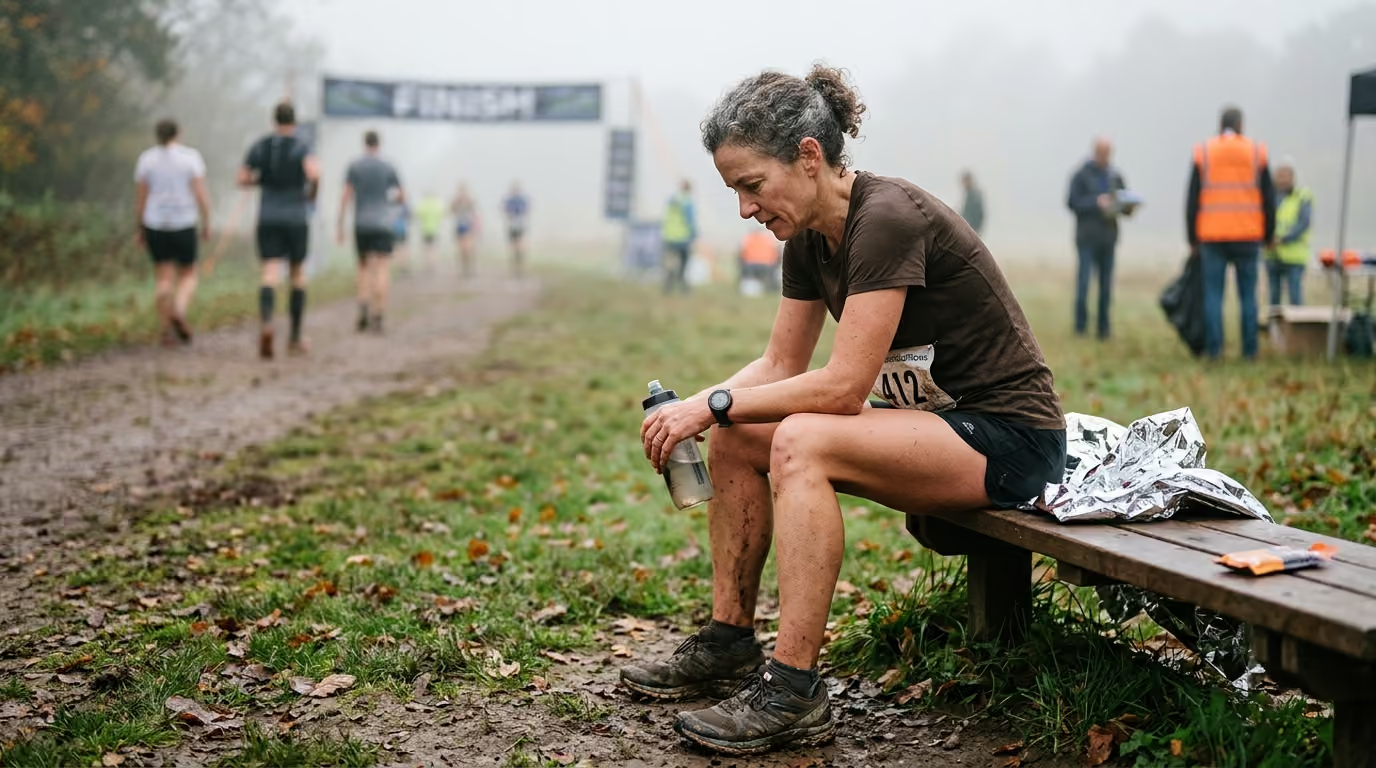
The alarm sounds at 4:30 a.m. in a quiet hotel room. You stare at the ceiling, acutely aware that you only slept for three fragmented hours. Perhaps a sick toddler kept you awake all night, or late work shifts disrupted your schedule for three weeks straight. Maybe travel across several time zones left you staring at the clock, or hormonal hot flashes broke your sleep architecture into pieces. Your immediate reaction is understandable frustration and worry. You wonder if months of disciplined training have been wasted by a single broken night.
Endurance culture often promotes a rigid mindset around race preparation. Athletes are told that optimal performance requires eight hours of deep sleep, unbroken routines, and undisturbed recovery. When real life interferes, many competitors either panic and abandon their goals or attempt to force their original pacing plan through sheer willpower. Neither reaction serves your long-term athletic health or your immediate race outcome.
Sleep is a dynamic biological resource rather than a simple on-off switch for performance. A bad night alters your physiology and raises your perception of effort, but it does not mean your race is ruined. Successful racing under suboptimal sleep requires distinguishing between acute sleep loss and chronic sleep debt. You must learn how to adjust your pacing, calibrate your fueling, and execute sensible safety margins. With a methodical approach, you can deliver a strong, disciplined performance even when your rest falls short of your ideal standard.
To navigate a sleep-disrupted race, you must understand what happens inside your body when sleep opportunity falls short. Sports scientists separate sleep into several distinct dimensions. Sleep duration measures the total time you spend asleep, while time in bed includes periods of wakefulness. Sleep opportunity represents the actual time you have available to rest. Sleep quality reflects sleep continuity, restfulness, and sleep architecture. Sleep regularity describes the consistency of your sleep and wake times across consecutive days.
The American Academy of Sleep Medicine and the Sleep Research Society recommend at least seven hours of sleep per night for healthy adults. Six hours or less on a regular basis is generally insufficient to maintain optimal health and functional capacity. Data from the Centers for Disease Control and Prevention indicate that more than one-third of adults regularly obtain less than this seven-hour baseline. For endurance athletes undergoing heavy physical training, individual needs are often higher. When sleep is restricted, both physical output and cognitive execution suffer measurable declines.
Systematic reviews and meta-analyses show that acute sleep deprivation exerts a moderate negative effect on endurance performance. Exercise bouts lasting longer than thirty minutes show greater impairment than short, explosive events. Sleep loss impairs walking, running, and cycling time trials, as well as incremental exercise tests. The overall negative effect size for endurance capacity sits around negative 0.52, indicating a noticeable physiological disadvantage. High-intensity intermittent performance and complex skill control suffer even larger declines when athletes are sleep-deprived.
The primary physiological challenge during sleep-deprived endurance exercise is an elevated rating of perceived exertion. When you are operating on restricted sleep, a familiar running pace or cycling wattage feels distinctly harder than normal. Your heart rate response may become erratic, and your autonomic nervous system experiences increased stress. Your brain interprets normal muscular feedback as more demanding, which can lead to early deceleration if you do not manage your effort properly.
Understanding the difference between acute sleep loss and chronic sleep restriction is vital for race planning. Acute sleep loss involves one or two bad nights before an event. While acute loss raises perceived effort, your underlying cardiovascular capacity and muscular glycogen stores remain largely intact. Chronic sleep restriction involves weeks or months of sleeping less than your body requires. Chronic restriction degrades cognitive processing, slows reaction times, alters mood, and impairs tissue recovery.
Research demonstrates that sleep debt is not repaid instantly by a single long night in bed. Controlled laboratory studies show that cognitive deficits and mood disturbances from chronic restriction persist even after a ten-hour recovery sleep opportunity. In longer trials, two full nights of eight hours in bed failed to restore baseline cognitive performance after weeks of sleep restriction. Sleep debt acts as a cumulative gap between the sleep you need and the sleep you obtain. You cannot erase weeks of parenting stress or shift work on the night before your event.
A comprehensive review of athletic performance shows that sleep loss also impairs motor control and fine movement coordination. When you are tired, your foot placement becomes less precise and your balance deteriorates. Observational studies in elite athletes show that individuals averaging less than eight hours of sleep face a 1.7 times higher risk of injury compared to those who consistently sleep eight hours or more. When you race on limited rest, you must protect your mechanics and maintain strict awareness of technical terrain.
When you wake up after an imperfect night, you need an objective method to assess your readiness. Relying purely on emotion often leads to poor choices. Some athletes convince themselves that they feel completely normal when their reaction times are dangerously slow. Other athletes assume their race is doomed when their physical capacity is actually adequate for a strong effort.
You can use a structured assessment system to evaluate your readiness on race morning. This system classifies your status into green, amber, or red categories based on observable facts rather than anxiety.
Green status applies when you experience a single poor night after weeks of consistent, adequate sleep. You might have slept only five hours because of pre-race nerves or an early travel departure. However, you have no symptoms of illness, your resting coordination is sound, and you can consume your pre-race breakfast normally.
In a green scenario, your underlying cardiovascular fitness remains ready to perform. You should keep your race goals intact while introducing a conservative approach to the opening miles. You will need to manage your perception of effort carefully, but your body can handle the metabolic demands of the event.
Amber status occurs when you have accumulated several consecutive nights of short or fragmented rest. This pattern is common among parents managing teething infants, professionals enduring intense work cycles, or athletes traveling across multiple time zones. You may notice elevated resting muscle soreness, irritability, reduced focus, and a higher perception of effort during easy warm-up strides.
When you fall into amber status, you must adjust your race expectations. Shift your primary focus from a rigid finishing time to an effort-based execution target. Plan to start at the conservative end of your training zones and establish clear checkpoints to evaluate your physical feedback. Amber status requires you to respect your fatigue rather than attempting to mask it with excess stimulants.
Red status represents a scenario where competing poses a genuine risk to your health or physical safety. This includes total sleep deprivation over twenty-four hours, severe chronic restriction combined with acute illness, or marked cognitive impairment. Warning signs include dizziness, confusion, nausea, chills, loss of motor control, or an inability to maintain normal balance.
If you find yourself in red status, you should not frame your decision as a test of toughness. Continuing to race under severe sleep deprivation or acute illness can lead to catastrophic pacing failure, severe muscular injury, or accidents on course. You should modify the event to a gentle completion walk, reduce the distance, or withdraw entirely to focus on recovery.
Your race morning assessment must include your transportation logistics. Operating a motor vehicle while sleep-deprived represents a major safety hazard for endurance athletes traveling to early morning start lines. Research published by the National Institute for Occupational Safety and Health demonstrates that being awake for seventeen consecutive hours produces cognitive and motor impairment comparable to a blood alcohol concentration of 0.05 percent. Being awake for twenty-four hours produces impairment equivalent to a blood alcohol concentration of 0.10 percent.
Data from the Centers for Disease Control and Prevention show that individuals sleeping six hours or less per night have a 2.6-fold higher risk of falling asleep at the wheel. If you experience heavy eyelids, frequent yawning, lane drifting, or delayed reaction times on your way to a venue, you must pull over immediately. Take a fifteen to twenty minute nap or transfer driving responsibilities to someone else. Reaching the starting line safely is far more important than any athletic result.
Executing a race on imperfect sleep requires tactical adjustments from the starting gun to the finish line. Because sleep loss elevates perceived effort and degrades motor control, your execution strategy must minimize unnecessary physiological stress.
Athletes who rely on a single, rigid time target often struggle when circumstances change. A professional approach relies on a three-tier goal hierarchy that protects your athletic focus under fatigue:
When your sleep is compromised, your process goals become your most valuable tool. By focusing on breathing rhythm, cadence, and fueling intervals, you prevent your mind from fixating on fatigue. You can learn more about structuring your competitive season by reading our practical racing and lifestyle guidance.
Use your pre-race warm-up as an active screening tool rather than an automatic habit. Spend ten to fifteen minutes moving through easy dynamic mobility and gentle aerobic running or cycling. Pay attention to how your body responds to small increases in speed.
Ask yourself specific questions during the warm-up:
If your warm-up reveals sluggish coordination or unusual cardiovascular strain, accept that data calmly. Do not force high-intensity strides in a desperate attempt to wake your nervous system. Settle into your starting corral with a clear commitment to start at a measured, conservative pace.
Because exercise bouts longer than thirty minutes are vulnerable to sleep-induced fatigue, conservative opening pacing is essential. If you attempt to match your normal target pace immediately, your elevated perception of effort will trigger premature muscular fatigue. You risk exhausting your glycogen stores and nervous system long before the finish line.
Begin the first third of your race at the conservative end of your planned pace or power range. Treat the early miles as an extended extension of your warm-up. Check your internal sensations against your objective metrics, including heart rate, power output, and pace.
Triangulate your data using multiple checkpoints:
Avoid reacting to early fatigue by surging or fighting the course. When an athlete feels tired, the temptation is often to push harder to prove that fatigue is absent. This compensatory aggression almost always leads to severe pacing deceleration later in the event.
Sleep deprivation alters appetite-regulating hormones and can impair your decision-making during racing. When you are tired, you are more likely to forget your nutrition timing, skip aid stations, or improvise with unfamiliar products.
Protect your race by simplifying your fueling plan. Set a repeating countdown timer on your watch for every twenty to thirty minutes. Consume easily digestible carbohydrates that you have tested extensively during long training sessions. For comprehensive fueling strategies, consult our guide to endurance fueling and hydration protocols.
Do not experiment with massive doses of caffeine or unproven energy supplements on race morning. While moderate caffeine intake can improve alertness, excessive doses elevate resting heart rate, cause gastrointestinal distress, and amplify anxiety. Stick to the caffeine amounts you regularly consume in training. Treat nutrition as an automated process rather than a spontaneous choice.
Because sleep loss significantly impairs motor control and skill execution, you must increase your safety margins on technical courses. Trail runners, mountain bikers, and road cyclists in packed pelotons must exercise heightened caution.
On technical descents, reduce your speed by five to ten percent to allow extra processing time for foot placement or line choice. In cycling events, increase your following distance from other riders to provide a buffer for delayed braking reactions. If you feel your coordination deteriorating, pull back your pace until your movement mechanics feel completely stable.
Different lifestyle demands create unique patterns of sleep disruption. A parent managing a waking infant experiences a different physiological challenge than an athlete crossing five time zones. Adapting your race strategy requires addressing the specific nature of your sleep disruption.
Parenting-related sleep loss is characterized by frequent fragmentation rather than a simple reduction in total hours. You might spend eight hours in bed but wake four times to care for a child. This broken sleep architecture reduces the amount of restorative deep sleep and rapid eye movement sleep you obtain.
When racing through a demanding parenting phase, plan your logistics well in advance:
Recognize that surviving a heavy parenting phase while maintaining endurance training is an impressive athletic accomplishment in itself. Adjust your goals to celebrate your consistency rather than demanding optimal personal records under fragmented rest.
Shift workers face a dual challenge: short sleep duration and circadian misalignment. A nurse or factory worker finishing a night shift must race when their internal body clock is signaling for sleep and temperature reduction.
If you must race around a shift schedule, follow these practical guidelines:
Prioritize safety above all else. If your shift work schedule leaves you deeply fatigued, treat the event as a low-intensity training session rather than an aggressive competition.
Traveling long distances to destination races introduces travel fatigue and circadian jet lag. Travel fatigue arises from cramped seating, dry cabin air, delayed meals, and the stress of navigating airports. Jet lag occurs when your internal circadian pacemaker is out of sync with local environmental time.
Consensus guidelines for traveling athletes distinguish between these two challenges. Travel fatigue resolves with adequate rest, hydration, and gentle movement. Jet lag requires deliberate manipulation of light exposure to shift your body clock to the new time zone.
When traveling across time zones:
Studies on traveling athletes show that while jet lag disrupts subjective mood, its direct impact on physical endurance can be managed with structured routines. Approach destination races with patience and give your body forty-eight hours to adapt before demanding hard efforts.
Hormonal fluctuations during the menstrual cycle, postpartum recovery, or perimenopause can significantly alter sleep patterns. Progesterone and estrogen shifts influence core body temperature, sleep continuity, and respiratory patterns.
Scientific reviews show that athletic performance does not automatically drop during specific calendar phases of the menstrual cycle. Instead, performance and recovery are driven by individual symptom burden. Athletes experiencing severe cramping, headaches, elevated body temperature, or sleep-disrupting hot flashes face higher physiological strain than those with minimal symptoms.
Manage hormonal sleep disruption with individualized symptom strategies:
Focus on your actual daily symptoms rather than calendar calculations. If you feel alert and coordinated despite hormonal shifts, you can race with confidence.
Pre-race insomnia is extremely common among endurance athletes. The anticipation of competition, travel to unfamiliar hotels, and early alarms trigger sympathetic nervous system arousal that keeps you awake.
Fortunately, one night of poor sleep caused purely by pre-race excitement has a minimal effect on your underlying aerobic capacity. Your cardiovascular system and muscular fuel stores remain ready to work. The primary danger of pre-race insomnia is the psychological panic it can provoke.
If you find yourself lying awake the night before your race:
Accepting that pre-race sleep is rarely ideal helps remove the anxiety that prevents sleep in the first place. Trust the training you completed over the preceding months.
When nighttime sleep is compromised, you can use targeted sleep interventions to restore alertness and protect physical performance. Sports science research highlights two practical tools: daytime naps and pre-race sleep extension.
Systematic reviews on athletic recovery demonstrate that naps lasting between twenty and ninety minutes provide measurable benefits. A daytime nap can improve physical output, reaction time, and subjective alertness after a night of restricted sleep. Naps also offer benefits after normal nights by reducing afternoon fatigue.
However, napping requires careful timing to avoid sleep inertia. Sleep inertia is the grogginess and disorientation that occurs when you wake abruptly from deep, slow-wave sleep. If you wake from a long nap immediately before heading to a race warm-up, your reaction time and muscular power may be temporarily depressed.
Follow these rules for effective competition napping:
Never test an aggressive race-day nap protocol for the first time on the morning of an important competition. Practice napping after training sessions to understand how long your body needs to clear post-sleep grogginess.
Sleep extension involves deliberately increasing your time in bed for several days or weeks leading up to an event. While you cannot fully repay chronic sleep debt in a single night, extending your sleep opportunity during race week builds a functional buffer against pre-race insomnia.
Research on sleep extension in competitive athletes shows that increasing time in bed by thirty to sixty minutes per night improves reaction time, sprint speed, and mood state. Even modest increases in sleep opportunity during your taper week help offset the inevitable sleep loss caused by race-night nerves.
Practical steps for sleep extension during race week:
By banking extra sleep opportunity throughout race week, you ensure that a restless night before the starting gun will not derail your performance. You can explore structured recovery routines in our recovery and mobility resource section.
As athletes advance past the age of forty, sleep architecture undergoes natural physiological changes. Total sleep duration tends to decrease slightly, and the proportion of deep, slow-wave sleep declines. Masters athletes experience more frequent nighttime awakenings due to joint stiffness, thermoregulation changes, or bladder function.
At the same time, older athletes require consistent recovery to support tissue repair, hormone production, and cardiovascular adaptation. Navigating the intersection of aging and sleep requires targeted adjustments to your training and race preparation. For more insights on lifelong athletic development, explore our collection of healthy aging training resources.
The autonomic nervous system of a masters athlete is often more sensitive to the combined stress of hard training and restricted sleep. Heart rate variability may drop more sharply and take longer to rebound after sleep loss compared to younger competitors. Deep sleep is the primary window for growth hormone release and muscle protein synthesis, making adequate rest vital for tendon and joint health.
When sleep is consistently cut short:
Masters athletes must learn to protect their sleep opportunity from excessive training ambition. When work, family, or life stress reduces your sleep to less than six hours per night, forcing high-volume or high-intensity workouts creates a compounding recovery deficit.
Follow a clear training hierarchy when your sleep is compromised:
Longevity in endurance sport requires recognizing that training stimulus and sleep recovery must remain in balance. You cannot out-train chronic sleep deprivation.
When sleep goes wrong, athletes frequently make predictable errors that turn a manageable challenge into a race-day disaster. Recognizing these common pitfalls helps you avoid costly tactical mistakes.
The most common tactical error is attempting to outrun your fatigue. An athlete who slept poorly often feels anxious on the starting line and starts at an unsustainably fast pace to prove their fitness is intact.
This compensatory aggression backfires rapidly. Because sleep loss increases your perception of effort, surging early depletes your mental resolve and muscle glycogen prematurely. By the midpoint of the race, the combination of elevated effort and biological fatigue leads to a severe pace collapse. Disciplined athletes resist the urge to prove anything in the opening miles.
Caffeine is a proven ergogenic aid that blocks adenosine receptors in the brain, reducing feelings of fatigue and improving alertness. However, using massive doses of caffeine to compensate for severe sleep loss is a dangerous strategy.
Excessive caffeine intake triggers several adverse physiological reactions:
Maintain your normal, practiced caffeine routine. Use caffeine to support your natural alertness, not as a chemical substitute for sleep.
Catastrophizing a poor night of sleep creates a self-fulfilling prophecy. When an athlete convinces themselves that their race is ruined before it begins, every normal sensation of early-race discomfort is interpreted as evidence of failure.
Your aerobic capacity, capillary density, mitochondrial efficiency, and muscular power were built across months of consistent training. A single bad night cannot erase those chronic adaptations. Stay objective, follow your process goals, and let your body demonstrate what it can achieve.
After weeks of chronic sleep restriction, athletes often feel subjectively accustomed to fatigue. You might tell yourself that you feel completely fine on five hours of sleep because your grogginess has leveled off.
However, research shows that cognitive processing, reaction time, and motor control remain impaired even when subjective sleepiness stabilizes. Do not assume that feeling normal means your nervous system is operating at full capacity. Maintain conservative margins on technical terrain, stick to structured pacing, and avoid unnecessary race-day risks.
Many athletes believe that downloading a sleep tracking application or buying blue-light blocking glasses will automatically resolve deep sleep deficits. While healthy evening habits are useful, they cannot magically compensate for structural sleep problems like night shifts, infant awakenings, sleep apnea, or overwhelming life schedules.
Do not stress over sleep tracker scores on race morning. Wearable devices can produce inaccurate sleep stage estimates that generate unnecessary anxiety. If your watch tells you that you had a poor recovery score, put the device into race mode and focus on your physical sensations and tactical plan. For more on structuring smart training, visit our endurance training and performance articles.
Managing sleep requires treating rest as a long-term metric rather than an isolated race-week concern. By tracking relevant recovery trends and knowing when to seek clinical guidance, you protect both your athletic performance and your overall health.
Instead of obsessing over individual sleep scores, track multi-week trends across several simple variables. This holistic view helps you identify when fatigue is accumulating to unsustainable levels.
Record these core metrics in your training log:
When these metrics trend in a negative direction for more than two consecutive weeks, treat that data as a clear signal to reduce training volume and expand your sleep opportunity.
Not all sleep problems can be resolved through training adjustments or sleep habits. Athletes are not immune to clinical sleep disorders, including obstructive sleep apnea, restless legs syndrome, and chronic clinical insomnia.
The Athlete Sleep Screening Questionnaire provides validated screening criteria for identifying athletes who need professional evaluation. You should consult a physician or sleep medicine specialist if you experience any of the following symptoms:
Addressing underlying sleep disorders restores athletic recovery capacity, improves cardiovascular health, and enhances long-term quality of life.
Endurance sport is a long-term pursuit. Protecting your capacity to train and compete across decades requires treating sleep as a foundational pillar of your athletic lifestyle. When life demands compromise your rest, respond with flexibility and intelligence rather than frustration.
Develop a seasonal perspective on sleep and training:
By respecting the biological power of sleep and maintaining adaptable race-day strategies, you can perform with confidence under any circumstances. You do not need perfect conditions to deliver a courageous, disciplined, and successful race.
Revisit this guide whenever you encounter major schedule changes, international travel, new parenting demands, or unexpected pre-race insomnia before an important competition.
Managing your performance through imperfect sleep is an essential athletic skill that will keep you racing strong for years to come.

Follow ReEndure for practical insights on endurance training, recovery, nutrition and healthy aging. Stay connected for new articles, research led guidance and ideas to help you perform better for longer.


Read practical ideas on endurance training, recovery, nutrition and healthy aging to keep progressing for years to come.
Read the Blog