
Sudden heat waves during long training sessions alter nutrient absorption and force athletes to adjust carbohydrate intake to prevent severe stomach distress.





Most endurance athletes treat their nutrition strategy as a fixed math problem. They calculate a single target, such as sixty grams of carbohydrates and five hundred milliliters of water per hour, and repeat it regardless of the weather.
This static approach is fundamentally flawed. Your body does not metabolize fuel or manage fluid in a vacuum. A strategy that sustains you during a crisp morning training run will leave you exhausted, cramping, or nauseated when temperatures spike, humidity locks in sweat, or cold suppresses your thirst.
Environmental conditions dramatically shift how your muscles use fuel, how your cardiovascular system moves blood, and how your gut absorbs nutrients. Understanding these shifts allows you to adjust your fueling dynamically, protecting both immediate performance and long-term health.
Imagine lining up for a late-spring marathon. You spent the winter training in near-freezing conditions, perfecting a fueling plan of one gel every thirty minutes washed down with small sips of water. On race morning, the temperature climbs to twenty-five degrees Celsius with high humidity. By mile sixteen, your stomach sloshes with undigested fluid, your heart rate drifts upward despite a slowing pace, and a wave of nausea forces you to walk.
This scenario is common because athletes frequently treat fueling as an isolated discipline. In reality, external weather alters four major physiological pathways simultaneously. These pathways are thermoregulation, respiratory and sweat fluid loss, substrate utilization, and gastrointestinal absorption capacity.
When ambient conditions change, your autonomic nervous system redirects blood flow to manage core temperature. In warm environments, your body shunts blood toward the skin surface to dissipate heat through sweat evaporation. This cutaneous vasodilation reduces blood flow to the splanchnic circulation, meaning your stomach and intestines receive less oxygen and fewer resources to process food.
At the same time, shifting environments alter the primary fuel your muscles burn. When thermal strain rises, muscle glycogen breakdown accelerates, increasing carbohydrate oxidation. Conversely, sub-freezing air requires involuntary muscle contractions, such as shivering, which rapidly depletes stored glycogen. If you do not adjust your nutrition and fueling plans to match these physiological shifts, your performance inevitably deteriorates.
Heat changes endurance fueling primarily by increasing cardiovascular strain and accelerating carbohydrate oxidation. When you exercise in the heat, your body must deliver oxygen to working muscles while transferring core heat to the skin. This dual demand reduces central blood volume, elevating your heart rate at any given pace.
Research shows that exercising in hot conditions increases carbohydrate oxidation compared to identical work performed in temperate climates. A systematic review published in sports physiology demonstrated that heat stress directly elevates muscle glycogenolysis. The body relies more heavily on rapid glucose metabolism as core and muscle temperatures climb.
Dehydration compounds this metabolic shift. When fluid loss exceeds baseline thresholds in hot weather, carbohydrate oxidation and respiratory exchange ratios rise even further. If you maintain a low-carbohydrate fueling rate in high heat, you risk depleting your liver and muscle glycogen stores much earlier in the event.
Sweat rates in hot conditions routinely range between 0.8 and 1.5 liters per hour, with some larger or heavily acclimatized athletes losing over two liters per hour. However, trying to replace one hundred percent of your sweat loss during exercise is often impossible and potentially dangerous. The human gut can rarely empty and absorb more than 1.0 to 1.2 liters of fluid per hour during intense exertion.
The American College of Sports Medicine suggests an intake range of approximately 600 to 1,200 milliliters per hour of fluids containing carbohydrates and sodium for workouts lasting longer than sixty minutes. However, lighter athletes or those moving at lower intensities may require only 400 to 800 milliliters per hour.
You must avoid the temptation to drink as much water as possible. Forcing excessive hypotonic fluid intake can dilute blood sodium levels below 135 mmol/L, causing Exercise-Associated Hyponatremia. Hyponatremia is a severe condition that causes cellular swelling, cerebral edema, confusion, and in extreme cases, death. You should never finish a workout or race heavier than when you started, as weight gain during exercise is a clear indicator of fluid overload.
Sweat contains significant amounts of sodium, typically ranging between 400 and 1,100 milligrams per liter. The ACSM position stand recommends 0.5 to 0.7 grams of sodium per liter of water during prolonged endurance exercise to support palatability, fluid retention, and osmotic balance.
Sodium alone cannot prevent hyponatremia if you drink massive volumes of water beyond your physiological needs. However, matching sodium to moderate fluid intake improves intestinal absorption through sodium-glucose cotransporters.
To maintain gastrointestinal comfort in high heat, follow these practical steps:
High humidity presents a distinct physiological challenge that simple ambient temperature readings fail to capture. Sweat cools your body only when it evaporates from your skin into the surrounding air. Evaporation requires a vapor-pressure gradient between your wet skin and the atmosphere.
When relative humidity exceeds sixty to seventy percent, the air is already saturated with water vapor. Sweat continues to pour out of your eccrine glands, but instead of evaporating, it rolls off your skin onto the ground. This unevaporated sweat provides minimal cooling benefit while draining your plasma volume.
In a landmark trial evaluating exercise capacity in warm conditions across varying humidities, time to exhaustion declined steadily as humidity rose. Athletes lasted sixty-eight minutes at twenty-four percent relative humidity, sixty minutes at forty percent, fifty-four minutes at sixty percent, and only forty-six minutes at eighty percent. Total sweat loss remained nearly identical across trials, but sweat rate was significantly higher in humid conditions.
This creates a deceptive situation. You sweat profusely, your core temperature rises rapidly, and your heart rate drifts upward due to severe cardiovascular strain. Yet, simply drinking more fluids cannot restore evaporative cooling capacity.
Surviving humid conditions requires managing thermal strain externally while adjusting internal fueling. You cannot out-drink a high dew point.
Apply these guidelines when training or competing in high humidity:
You can learn more about managing systematic stress in our guide to training and performance principles.
Cold-weather endurance sports create a paradox. Athletes frequently believe they do not need to fuel or hydrate because they are not visibly sweating or feeling hot. In reality, sub-freezing conditions significantly elevate energy expenditure while blunting normal thirst cues.
Cold exposure causes peripheral vasoconstriction, pulling blood away from your extremities toward your core to preserve vital organ temperatures. This central fluid shift tricks your brain, specifically the volume receptors in the heart and hypothalamus, into registering an adequate or excessive blood volume.
Consequently, thirst sensation drops by as much as forty percent during cold-weather exercise. Furthermore, cold exposure triggers cold-induced diuresis, where the kidneys filter more water to reduce central blood pressure. Combined with heavy respiratory water loss from breathing dry, cold air, you can develop substantial dehydration without ever feeling thirsty.
Sweat loss under heavy winter layers also contributes to fluid deficits. Athletes frequently overdress, trapping sweat against their base layers where it fails to evaporate, soaking fabric and draining bodily fluids.
Total energy expenditure increases substantially in cold environments. Research published by the National Academies estimates that energy requirements during cold-weather operations range between 3,400 and 4,300 kilocalories per day, or forty-five to fifty-seven kilocalories per kilogram of body mass.
Part of this elevated demand stems from carrying heavy gear, wearing restrictive clothing, and navigating challenging terrain like snow or ice. However, involuntary shivering also accounts for a large portion of this energy cost. Shivering is an involuntary muscular contraction designed to generate metabolic heat, and it relies almost exclusively on muscle glycogen for fuel.
Even low-level shivering rapidly drains carbohydrate reserves. If you fail to supply exogenous carbohydrates in the cold, you will exhaust your glycogen stores far faster than you would during mild weather.
Managing nutrition in sub-freezing temperatures requires deliberate planning to overcome thirst suppression and physical freezing of supplies.
Use these practical strategies:
Ascending to altitudes above 1,500 to 2,000 meters alters your fueling dynamics through reduced barometric pressure, lower oxygen availability, dry atmospheric air, and altitude-related shifts in appetite.
As barometric pressure drops, the partial pressure of oxygen decreases. Your body compensates by hyperventilating to maintain arterial oxygen saturation. This persistent hyperventilation expels significant amounts of water vapor into the dry mountain air with every breath.
During early acclimatization, your kidneys excrete bicarbonate to balance blood pH, carrying water and electrolytes out with it. These combined factors make high altitude an environment of high dehydration risk. Daily baseline fluid requirements can rise to three to five liters per day, even before accounting for the fluid lost during actual training sessions.
General mountain activity guidelines suggest consuming 400 to 800 milliliters of fluid per hour of exercise, paired with 500 to 1,000 milligrams of sodium per liter of water.
Athletes arriving at high altitude frequently encounter acute mountain sickness, marked by headaches, nausea, and a profound loss of appetite. Studies examining exercise metabolism at high elevations report suppressed levels of acylated ghrelin, the hunger hormone, following exertion.
This appetite suppression occurs precisely when your caloric and carbohydrate needs are elevated. Hypoxia increases basal metabolic rate and forces your working muscles to rely more heavily on carbohydrate oxidation, because carbohydrates yield more adenosine triphosphate per mole of oxygen consumed than fats.
If you wait for hunger signals at high altitude, you will chronically underfuel. Underfueling at altitude impairs acclimatization, slows recovery, and increases the risk of severe central fatigue.
When training or competing above 2,000 meters, prioritize liquid nutrition and frequent, low-volume feeding.
Follow these proven steps:
For a deeper dive into optimizing your daily intake, review our nutrition and fueling guides.
Endurance events often span multiple hours, crossing diverse microclimates and shifting weather systems. An ultra-marathon or long gravel race might begin in a freezing mountain valley at dawn, transition into a scorching desert basin by noon, and finish during a cold, rainy evening.
A static fueling plan fails in these conditions. Instead, you must utilize a baseline plus modifiers framework.
Your baseline plan is established by the duration and intensity of your event, independent of the weather:
Once your baseline is set, apply environmental modifiers based on real-time race conditions.
Consider a six-hour cycling event that starts at eight degrees Celsius and warms to twenty-eight degrees with rising humidity by mid-afternoon.
During the first two hours, your thirst will be naturally suppressed by the cool air. However, you must deliberately consume thirty to forty grams of carbohydrates and 400 milliliters of fluid per hour. If you skip fueling early, you create an insurmountable energy deficit.
As the temperature rises during hours three and four, adjust your strategy. Increase fluid intake to 700 or 800 milliliters per hour, add electrolyte tablets to maintain sodium concentration, and switch from solid bars to liquid drink mixes or gels. This proactive transition prevents gastric shutdown when heat strain peaks during the final two hours.
In a mountain trail race featuring steep climbs, cold temperatures, and driving rain, hypothermia and glycogen depletion represent the primary threats.
Set a watch timer to buzz every fifteen minutes. At each alarm, take a concentrated gel or high-carbohydrate drink mix, maintaining sixty to seventy-five grams of carbohydrates per hour. The steady influx of simple sugars supplies immediate fuel to your working muscles and provides the substrate needed for shivering thermogenesis if your body temperature drops.
Keep all nutrition tucked inside your waterproof jacket close to your chest. Body heat keeps gels pliable and prevents your fluids from dropping to near-freezing temperatures, protecting your gastrointestinal tract from temperature-induced cramping.
As an endurance athlete over the age of forty or fifty, your physiological response to environmental stress changes in subtle but important ways. Understanding these age-related shifts allows you to preserve performance while supporting healthy aging and longevity.
Aging naturally diminishes the sensitivity of osmoreceptors in the brain. Older adults experience a blunted thirst response to dehydration compared to younger athletes performing identical work. In hot or cold environments, an athlete over fifty may lose two percent of their body mass in sweat without feeling an urgent need to drink.
Relying entirely on thirst-led hydration becomes increasingly risky with age. Master athletes must adopt structured, schedule-based drinking targets during long training sessions and races, using predetermined fluid volumes based on their personal sweat rate testing.
Research indicates that older adults often experience a delayed onset of sweating and a reduced sweat output per gland. The cutaneous vascular response is also slightly attenuated, meaning skin blood flow increases more slowly in response to core heat.
This slower thermoregulatory response causes core temperature to rise faster during the early stages of exercise in the heat. To compensate, master athletes must start pre-cooling earlier, begin hydrating before stepping into the heat, and adjust pacing conservatively during the first thirty minutes of any warm-weather event.
Kidney function changes gradually with age, resulting in a mild decrease in glomerular filtration rate and reduced renal concentrating ability. Older athletes take slightly longer to restore fluid and electrolyte balance after severe dehydration.
Furthermore, resting muscle glycogen concentrations may be slightly reduced in older muscle tissue, particularly if overall carbohydrate intake or resistance training is insufficient. Master athletes benefit from maintaining daily baseline carbohydrate intakes of five to seven grams per kilogram of body weight during heavy training blocks to ensure glycogen stores are fully saturated before environmental stress is applied.
Explore our comprehensive library of longevity and performance recovery protocols for additional recovery tools.
Athletes frequently fall into predictable traps when attempting to manage weather-related fueling. Avoiding these common mistakes will save your race and protect your health.
The most dangerous error in endurance sports is forcing fluid intake to keep your body weight entirely flat during hot races. Drinking beyond your thirst capacity leads to Exercise-Associated Hyponatremia.
Always remember this fundamental physiological rule: fluid volume, not a lack of salt, is the primary driver of dilutional hyponatremia. Sodium tablets cannot save you if you consume two liters of fluid per hour while only sweating one liter.
In high humidity, visible sweat streaming down your legs does not mean your cooling system is functioning properly. Sweating without evaporation produces severe fluid loss without lowering your core temperature.
Never respond to humid fatigue by simply guzzling more water. You must slow your pace, seek airflow, apply ice, and use external water dousing to bring your core temperature down safely.
Assuming you do not need to fuel or hydrate because you are cold is a direct path to early exhaustion. Cold air blunts your thirst, dry air drains respiratory moisture, and shivering accelerates glycogen depletion.
Keep your fluids warm, carry soft foods that do not freeze, and consume carbohydrates on a strict schedule.
A sweat test conducted on a cool treadmill in March provides little useful data for an outdoor race in July. Sweat rates and sweat sodium concentrations fluctuate based on ambient temperature, humidity, exercise intensity, clothing, and your state of heat acclimatization.
Test your sweat loss across diverse environments, seasons, and workout intensities to build an accurate, adaptable range of hydration needs.
Attempting to digest dense energy bars, solid proteins, or fibrous snacks when dealing with altitude-induced nausea almost always leads to gastrointestinal distress.
When racing or training at elevation, transition seventy to eighty percent of your calories to liquid carbohydrate solutions, fruit purées, and easily dissolvable powders.
You cannot improve what you do not measure. Evaluating whether your environmental fueling strategy is functioning requires tracking objective metrics before, during, and after your workouts.
Determining your sweat rate across different weather conditions is the foundation of an individualized fueling plan. Perform this simple field test during key training sessions:
Apply this formula:
$$\text{Sweat Loss (L)} = \text{Pre-Mass (kg)} - \text{Post-Mass (kg)} + \text{Fluid Consumed (L)} - \text{Urine (L)}$$
Divide the total sweat loss in liters by the duration of the workout in hours to establish your hourly sweat rate for that specific environmental condition.
Track your morning waking body mass daily. A sudden drop of more than two percent of your baseline body weight, especially when accompanied by dark, concentrated urine, indicates significant uncorrected fluid deficits from the previous day's environmental exposure.
Conversely, finishing a hot long run or marathon heavier than your starting mass is an immediate warning of overhydration. Adjust your future fluid targets downward until post-workout mass shows a modest, safe loss of one to two percent.
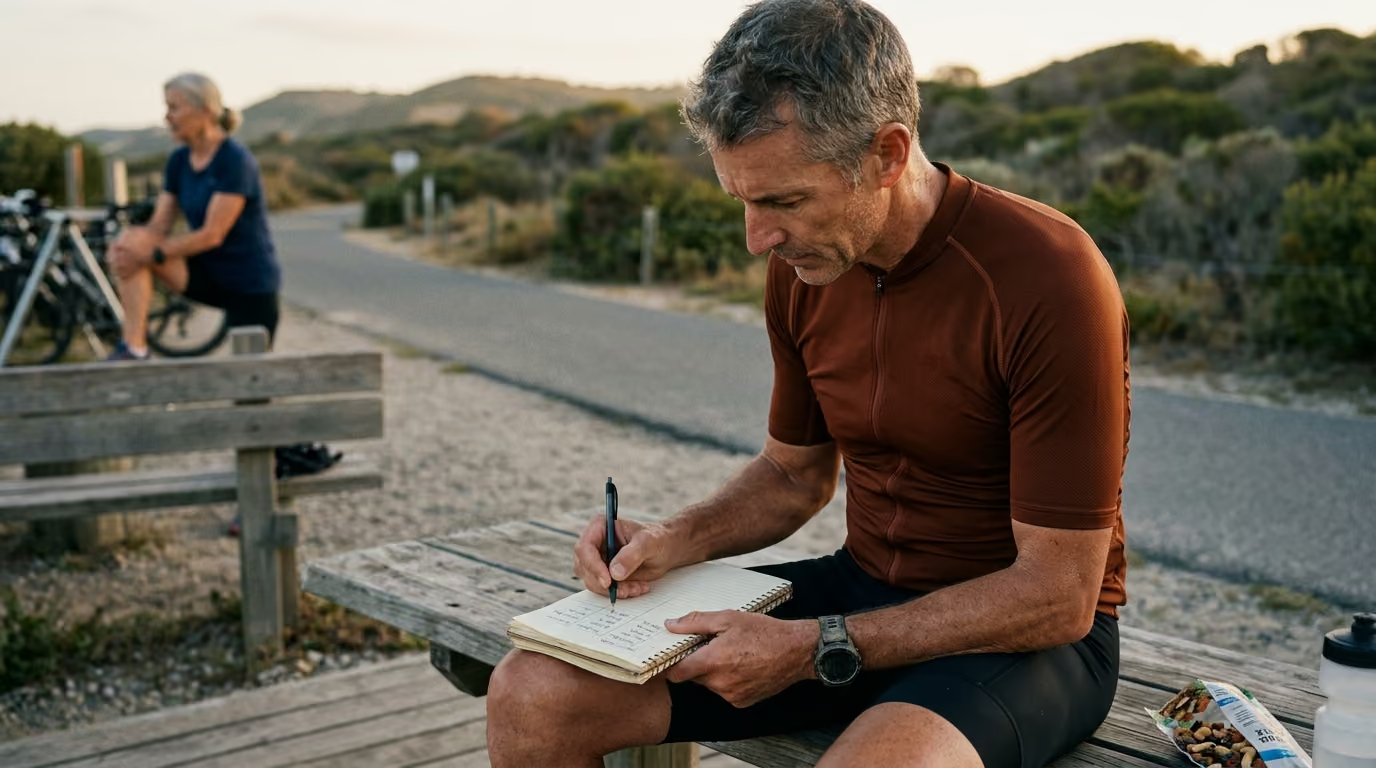
Keep a detailed training log recording what you ate, the weather conditions, and how your gut responded. Use a simple one-to-five scale to grade your gastrointestinal comfort:
If your fueling plan produces Grade 3 or higher ratings when temperatures or altitudes rise, immediately dilute your carbohydrate solutions and reduce your single-dose feeding volumes.
By viewing your nutrition strategy as a dynamic system that adapts to temperature, humidity, and altitude, you can maintain optimal performance and preserve your health in any weather.

Follow ReEndure for practical insights on endurance training, recovery, nutrition and healthy aging. Stay connected for new articles, research led guidance and ideas to help you perform better for longer.


Read practical ideas on endurance training, recovery, nutrition and healthy aging to keep progressing for years to come.
Read the Blog