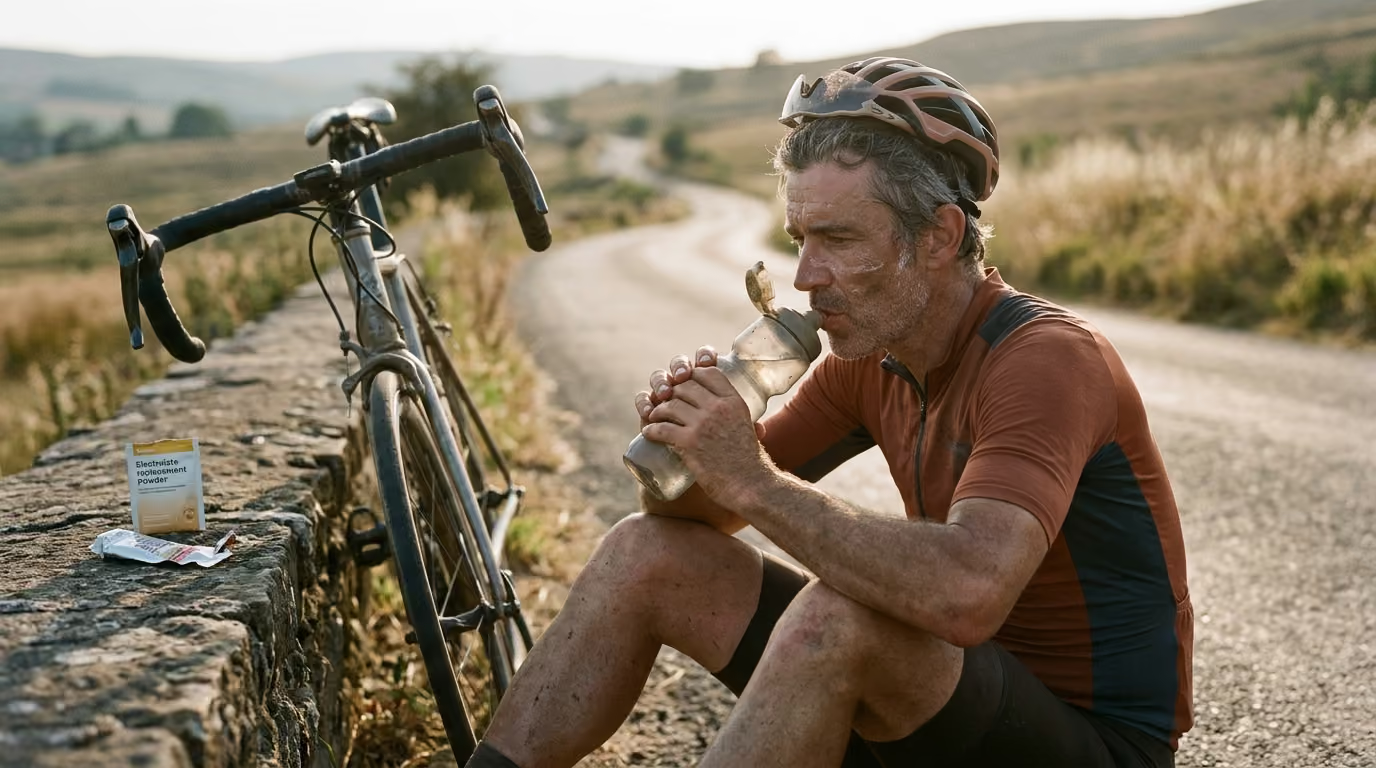

Plain water seems like the ideal post-workout drink, but endurance recovery requires targeted sodium replacement to restore true fluid balance.





Drinking more water after a grueling workout is often the worst thing an endurance athlete can do. While conventional fitness culture treats pure water as the ultimate recovery tool, flooding your body with plain water after heavy sweating rapidly dilutes blood sodium. This triggers your kidneys to dump fluid through urine, leaving you functionally dehydrated despite a sloshing stomach.
True physiological recovery requires replacing fluid and electrolytes in proportion to your individual losses. Sweat rates and sweat sodium concentrations vary dramatically between athletes, across seasons, and across different training intensities. Managing this balance protects your cardiovascular system, accelerates muscular repair, and prevents dangerous fluid imbalances.
Consider a familiar scenario from mid-summer training. You finish a demanding two-hour tempo run in high heat, step on the scale, and notice you are two kilograms lighter. You immediately drink two large bottles of chilled tap water to quench your deep thirst. Within forty-five minutes, your stomach feels distended and uncomfortable. You begin making frequent trips to the bathroom, producing copious clear urine.
Despite consuming two liters of fluid, you wake up the next morning with tight calves, a dull headache, and a lingering sense of fatigue. Your morning body mass is still depressed below your baseline. You assume you simply did not drink enough water, so you drink even more before your next session. This begins a frustrating cycle of bloating, electrolyte dilution, and sluggish performance.
In more extreme cases, this pattern turns hazardous. Endurance athletes competing in events lasting longer than four hours often force fluids at every aid station because they fear dehydration. Some finish their races heavier than when they started. They experience nausea, swollen hands, disorientation, and severe headaches. They have not suffered from dehydration. Instead, they have diluted their systemic sodium levels to dangerous levels by overriding their body's regulatory feedback loops.
Mastering fueling and hydration strategies requires looking past generic advice. Hydration recovery is a physiological process governed by osmolality, blood volume dynamics, and hormonal signaling. Replacing sweat losses requires a structured method that aligns with your specific sweat rate and sodium concentration.
To restore fluid balance efficiently, you must understand what happens inside the body during prolonged exertion. When your muscles contract, they generate substantial metabolic heat. To prevent your core temperature from rising to dangerous levels, your sympathetic nervous system activates eccrine sweat glands across your skin. These glands pull water and electrolytes from the interstitial space and blood plasma, allowing evaporative cooling to dissipate heat.
Sweat is hypotonic compared to blood, meaning it contains a lower concentration of electrolytes than your circulation. However, the total volume of sodium lost during multi-hour sessions can be substantial. Sodium is the primary osmotic driver of your extracellular fluid volume. When you lose sodium through sweat, your circulating plasma volume drops. This forces your heart to beat faster at any given workload to maintain cardiac output and blood pressure.
When you finish exercising in a state of hypohydration, your plasma osmolality is elevated. Specialized osmoreceptors in the hypothalamus detect this concentrated blood state and trigger thirst. Simultaneously, the pituitary gland releases arginine vasopressin, also known as antidiuretic hormone. This hormone signals the kidneys to reabsorb water and concentrate your urine.
If you consume pure water without electrolytes, that water rapidly enters your bloodstream and lowers your plasma osmolality before total fluid volume is restored. Your brain senses this sudden dilution and shuts off vasopressin release. Your kidneys immediately begin excreting the water you just drank, even though your total body water remains compromised. Research on post-exercise rehydration shows that consuming sodium alongside water maintains plasma osmolality, sustains the osmotic drive to drink, and prevents premature urinary water loss.
Sodium is not the only electrolyte present in sweat, but it is the most critical for fluid balance. Potassium, magnesium, and calcium are lost in minor quantities. Replacing sodium is the non-negotiable requirement for retaining ingested fluids and restoring baseline plasma volume after hard training.
The endurance community has historically focused almost entirely on the dangers of hypohydration. While fluid deficits can impair athletic performance, the opposite extreme is far more dangerous. Exercise-associated hyponatremia, commonly abbreviated as EAH, occurs when blood sodium concentration drops below 135 millimoles per liter during or within 24 hours of physical activity.
The primary driver of EAH is excessive fluid consumption that exceeds the body's capacity for sweat and urinary excretion. When excess water enters the vascular space without sufficient sodium, water shifts into the intracellular space through osmosis, causing cellular swelling. In mild cases, this causes nausea, lethargy, lightheadedness, and peripheral swelling. In severe cases, it causes cerebral edema, seizures, coma, and life-threatening complications.
The 2015 International Exercise-Associated Hyponatremia Consensus Guidelines established that overdrinking is the root cause of this condition. A critical finding from sports science research is that consuming electrolyte tablets or conventional sports drinks does not prevent EAH if you continue to overdrink. The sodium content in commercial sports drinks is still hypotonic compared to blood. Pouring large volumes of any hypotonic fluid into the body will eventually dilute serum sodium.
Hypohydration, by comparison, involves an unreplaced loss of body water. The American College of Sports Medicine traditionally highlights a body-mass loss of greater than 2% as a threshold where endurance capacity may decline, particularly in warm environments. However, systematic reviews demonstrate that this 2% metric is not an absolute biological cliff. In temperate or cool conditions, athletes can often tolerate a 2% to 3% body-mass deficit during self-paced events without noticeable performance decrements.
The primary objective during and after exercise is maintaining balance within a safe physiological window. You should avoid accumulating massive fluid deficits that elevate thermal stress and heart rate. Simultaneously, you must never consume fluid at a rate that causes your body mass to increase during exercise.
Generic hydration guidelines fail because human sweat rates vary wildly. Published normative data on endurance athletes reveal sweat rates ranging from 0.26 liters per hour to over 5.70 liters per hour. Sweat sodium concentration is equally variable, ranging from 200 milligrams of sodium per liter of sweat to over 2,000 milligrams per liter. Relying on standard sports nutrition recommendations will inevitably cause some athletes to under-hydrate while driving others toward fluid overload.
You can measure your personal sweat rate by conducting a simple field assessment during representative training sessions. This protocol requires an accurate digital body scale, a measured water bottle, and minimal equipment.
To calculate your total sweat loss, apply the standard formula established by the National Athletic Trainers' Association:
Consider a concrete example. An athlete starts a 2-hour tempo run at 72.0 kilograms. During the workout, they drink 0.6 liters of fluid and produce no urine. At the end of the run, their dry post-exercise mass is 70.6 kilograms.
This athlete lost 1.0 liter of fluid per hour and finished with a 1.94% body-mass deficit. This deficit is well within a manageable range, meaning they managed fluid intake appropriately during the run.
Understanding your sweat rate allows you to track meaningful training and performance metrics across different seasons. Keep in mind that post-exercise mass can be confounded by large food intakes, unrecorded bathroom breaks, or sweat trapped in wet clothing. Standardize your testing procedures to ensure your calculations reflect true fluid shifts.
Once you know your fluid deficit, you must design a rehydration protocol tailored to your recovery timeline. The urgency of fluid replacement depends directly on when you plan to train again.
When you have more than twelve hours before your next strenuous workout, aggressive rehydration protocols are unnecessary. Your normal thirst mechanism, combined with standard, well-salted meals and baseline fluid intake, will restore fluid balance without specialized interventions. The human body is remarkably adept at restoring equilibrium when provided with adequate food and water over a half-day window.
When your next training session or competition takes place within four to eight hours, you must be far more deliberate. In this scenario, clinical research indicates that you should consume between 100% and 150% of your total fluid deficit over the recovery window. Replacing only 100% of your mass loss is often insufficient because ongoing sweat and obligatory urine production will continue to deplete fluid stores.
If you finish a hard morning workout with a 1.5-kilogram deficit and must train again that afternoon, a 120% replacement target requires 1.8 liters of fluid. Consuming this entire volume in a single sitting will trigger acute gastric distension and rapid diuresis. Instead, spread this intake across two to four hours by drinking moderate boluses of 250 to 350 milliliters every twenty minutes.
Sodium concentration is the linchpin of this process. Studies investigating post-exercise fluid retention demonstrate that beverages containing approximately 50 millimoles of sodium per liter (around 1,150 milligrams of sodium per liter) produce superior fluid retention compared to lower-sodium drinks or plain water. This concentration matches the upper end of clinical rehydration solutions and specialized sports recovery formulas.
You do not need to rely exclusively on electrolyte drinks to achieve these numbers. Solid food is an exceptional vehicle for rehydration. Eating a balanced meal that contains sodium, complex carbohydrates, and lean protein alongside plain water allows for steady intestinal absorption. The sodium from your food enters the bloodstream, creates the necessary osmotic gradient, and promotes long-term fluid retention.
Integrating smart nutritional choices into your recovery and mobility habits ensures your soft tissues remain adequately hydrated. Proper cellular hydration supports muscular repair, reduces perceived soreness, and preserves training consistency over long training blocks.
Environmental conditions fundamentally reshape your fluid and electrolyte demands. A strategy that maintains balance on an easy autumn run will fail completely during a humid summer race or a frozen winter ultra.
Hot, humid environments represent the greatest challenge to thermoregulation. When ambient humidity is high, sweat cannot evaporate efficiently from the skin surface. Sweat rolls off your body without providing meaningful cooling, prompting your sweat glands to produce even higher volumes of fluid. In our experience, athletes who fail to adjust their pacing in high humidity rapidly accumulate large fluid and sodium deficits within ninety minutes.
Heat acclimatization significantly alters this physiological response. As your body adapts to heat over ten to fourteen days of consistent exposure, several beneficial adaptations occur:
An acclimatized athlete sweats earlier and more profusely, but their sweat is more dilute. This adaptation improves thermal control while conserving valuable systemic sodium stores.
Cold environments present the opposite challenge. In freezing conditions, cold-induced peripheral vasoconstriction increases central blood volume. Your body interprets this central fluid shift as an excess of water, suppressing vasopressin and increasing urine production. This phenomenon, known as cold-induced diuresis, pairs with a significantly blunted thirst sensation.
Additionally, breathing cold, dry air causes substantial respiratory fluid loss as your lungs humidify every breath. Athletes wearing heavy, non-breathable layers often sweat heavily without realizing it because the sweat is absorbed by internal clothing. You must consciously monitor your fluid intake in cold weather, relying on planned intervals rather than muted thirst cues alone.
Session duration also dictates your operational framework:
Sweat losses are rarely large enough to compromise performance or cardiovascular stability. Drinking to thirst or using plain water after the workout is entirely sufficient. Specialized sodium replenishment is unnecessary unless you started the workout in a pre-existing deficit.
Sweat volume and sodium losses become meaningful. Fluid replacement during the session should target roughly 0.4 to 0.8 liters per hour based on your known sweat rate. Post-exercise recovery should prioritize moderate sodium replacement (500 to 700 milligrams per liter of fluid) paired with recovery nutrition.
Cumulative fluid and mineral imbalances pose high risks for both gastrointestinal distress and hyponatremia. Fluid intake must be strictly guided by thirst, previous sweat-rate testing, and regular body-mass monitoring. Sodium intake should be sustained at 300 to 600 milligrams per hour, integrated across sports nutrition products, electrolyte drinks, and real foods.
Reviewing structured recovery resources will help you tailor these environmental adjustments to your upcoming competitive calendar.
Athletes over the age of forty face distinct physiological changes that affect fluid balance, thirst regulation, and electrolyte handling. Understanding these shifts is vital for maintaining high athletic ambition across multiple decades of competition.
With advancing age, the sensitivity of hypothalamic osmoreceptors naturally declines. Masters athletes often experience a blunted thirst sensation, meaning they do not feel thirsty until they have accumulated a more substantial fluid deficit than younger athletes. Relying strictly on thirst cues can lead to chronic, under-recognized hypohydration during warm-weather training blocks.
Concurrently, age-related structural changes in the kidneys influence recovery:
The aging kidney exhibits a decreased concentrating ability in response to vasopressin. When a masters athlete consumes a large bolus of fluid, their kidneys take longer to process and balance systemic osmolality. This makes older athletes more susceptible to post-exercise fluid loss if sodium intake is insufficient.
In our experience coaching masters runners and cyclists, older athletes also experience greater cardiovascular drift during warm workouts. A two-percent body-mass loss creates a more pronounced heart-rate increase and thermal strain in a 55-year-old athlete than in a 25-year-old counterpart. This elevated strain increases perceived exertion and delays muscular recovery following hard efforts.
To counteract these age-related shifts, masters endurance athletes should implement proactive rehydration habits. Rather than waiting for thirst to appear after a workout, use your known sweat-rate data to begin measured rehydration immediately. Ensure that every post-workout fluid intake is accompanied by a modest sodium source to support renal fluid retention.
Prioritizing these physiological adjustments is a core tenet of healthy aging for endurance athletes. Maintaining circulating plasma volume protects your cardiovascular health, keeps recovery timelines short, and preserves training consistency year after year.
Even dedicated endurance athletes regularly make errors when trying to optimize their fluid balance. Correcting these common misconceptions will immediately improve your post-workout recovery quality.
Many athletes believe their urine must be crystal clear to prove proper hydration. In reality, clear urine often indicates acute overdrinking and the rapid renal excretion of unneeded water. Aim for a pale straw or light yellow color. If your urine is completely clear throughout the day, you are likely overhydrating and diluting circulating electrolyte levels.
A dangerous myth in ultra-endurance racing is that swallowing salt capsules allows you to drink unlimited fluid without risk. While sodium tablets replace lost minerals, they cannot offset the dilutional effects of consuming four or five liters of excess fluid. True protection against hyponatremia comes from managing total fluid volume, not from taking massive doses of supplemental sodium.
Prescribing fixed intake numbers, such as forcing one liter of fluid every hour regardless of body size or pace, is inherently flawed. A 50-kilogram runner cruising at an easy pace in 15°C weather has completely different fluid requirements than an 85-kilogram cyclist riding at threshold in 35°C heat. Always scale your intake to your measured sweat rate, ambient conditions, and physiological feedback.
White salt rings on running hats or cycling jerseys prove that you are sweating and that your sweat contains minerals. However, salt residue does not automatically mean you are an abnormally salty sweater. When sweat evaporates in dry or windy conditions, it naturally leaves all solute minerals behind on your clothing. Do not jump to extreme sodium protocols based solely on white marks without evaluating your total fluid balance and cramping patterns.
Chugging an entire liter of water or recovery drink within thirty seconds overwhelms your stomach and triggers rapid gastric emptying. This sudden fluid surge enters the portal circulation quickly, drops plasma osmolality, and prompts the kidneys to excrete the water before your cells can absorb it. Sip your recovery beverages steadily over several hours to maximize intestinal absorption and cellular retention.
Establishing an individualized hydration routine requires consistent data collection over several weeks of diverse training conditions. Tracking a few key metrics will validate whether your recovery protocol is functioning as intended.
Maintain a dedicated hydration testing log in your training journal. For every significant workout, record the following data points:
Your morning baseline body mass is one of the simplest and most reliable markers of fluid equilibrium. If you wake up more than 1% below your stable baseline mass on consecutive mornings following hard training, you are carrying an unresolved fluid deficit. Adjust your post-workout rehydration volume or increase the sodium density of your evening meals to correct this trend.
Monitor your morning resting heart rate alongside body mass. An elevated morning pulse paired with depressed body mass indicates reduced stroke volume and lingering hypohydration. When your fluid recovery protocol is executed correctly, your body mass should return to its baseline within twelve hours, and your resting heart rate will remain stable.
Be alert for red-flag symptoms that indicate significant fluid mismanagement. Persistent muscle twitching, dark amber urine, and lingering dizziness upon standing point toward persistent hypohydration. Conversely, sudden weight gain during a long event, facial puffiness, nausea, and throbbing headaches demand an immediate halt to fluid intake and medical evaluation for potential hyponatremia.
Mastering your fluid and electrolyte balance eliminates unnecessary physical strain, protects your cardiovascular health, and ensures you show up to every training session fully prepared to perform.

Follow ReEndure for practical insights on endurance training, recovery, nutrition and healthy aging. Stay connected for new articles, research led guidance and ideas to help you perform better for longer.


Read practical ideas on endurance training, recovery, nutrition and healthy aging to keep progressing for years to come.
Read the Blog