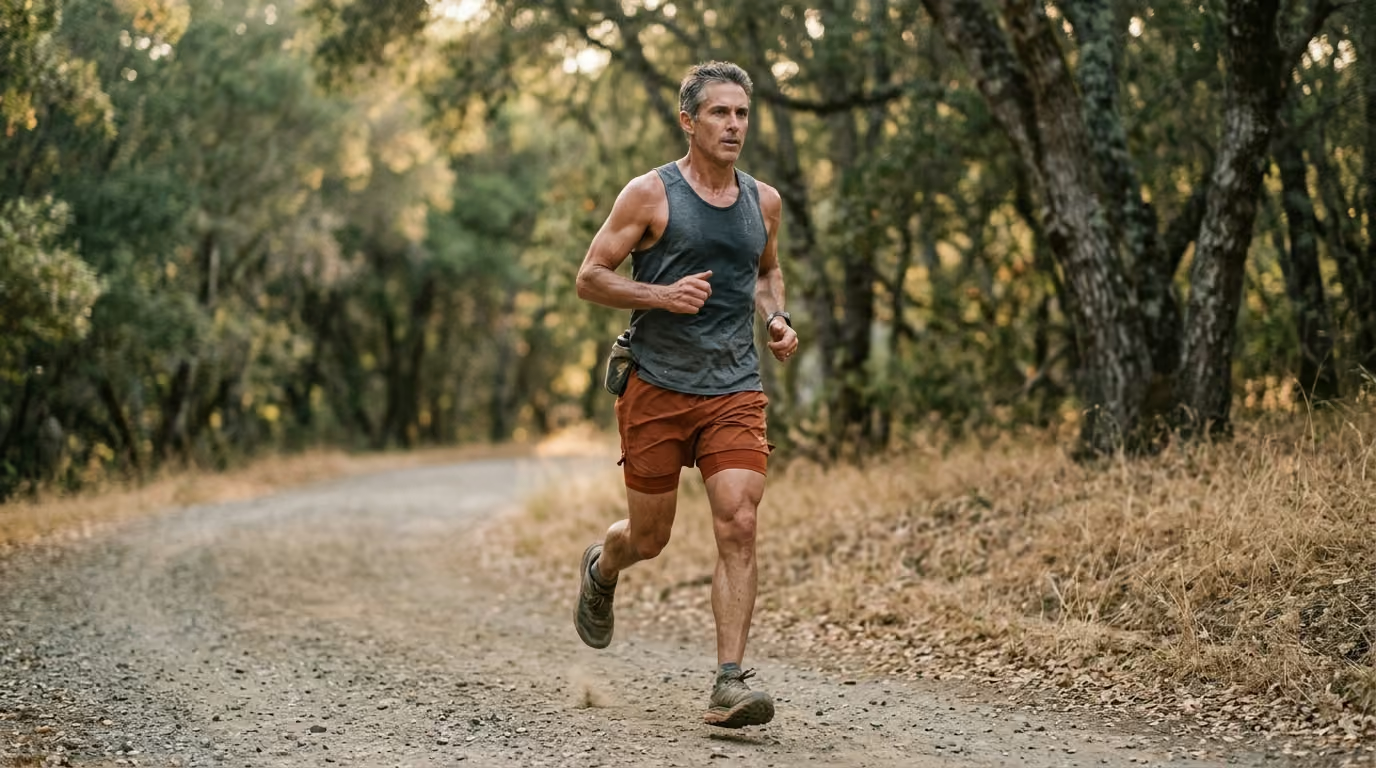

Long-term running health and reduced joint stress result from phased gait retraining, sensible cadence modifications, and structured technique adaptations.





Running form is the neuromuscular strategy an athlete uses to absorb impact, propel mass forward, and manage metabolic demand during locomotion. It is not an aesthetic template, a fixed moral ideal, or a universal safeguard against musculoskeletal pain. Gait biomechanics reflect a personal combination of limb length, joint range of motion, strength capacity, structural history, and movement efficiency.
This guide examines the sports science of running biomechanics across cadence, stride dynamics, foot strike patterns, and trunk posture. It moves past generic gait dogma to outline an individualized, symptom-guided model of movement adaptation.
A master runner notices a nagging ache along the anterior knee after adding weekly tempo intervals. Seeking solutions online, the athlete encounters advice claiming that heel striking causes joint damage and that every efficient runner must land on the forefoot at precisely 180 steps per minute.
Determined to correct the flaw, the runner buys zero-drop footwear and forces a sharp forefoot strike while consciously driving their cadence higher. Within three weeks, the anterior knee pain subsides, but a sharp, burning discomfort develops in the lower Achilles tendon and soleus.
The runner traded a knee complaint for a structural tendon overload. This pattern repeats across the endurance landscape. When athletes treat running form as an aesthetic checklist rather than an interconnected kinetic chain, they shift mechanical loads without preparing the target tissues.
Every adjustment to step rate, contact angle, or torso inclination alters how forces travel through bones, cartilage, tendons, and muscles. Managing movement strategies effectively requires understanding how these internal loads redistribute across the lower extremity.
A systematic review published in the Journal of Orthopaedic & Sports Physical Therapy examined prospective biomechanical risk factors for running-related injuries. The researchers concluded that commonly measured biomechanical variables do not consistently predict injury across diverse running populations. Findings vary substantially depending on the cohort, the specific anatomical condition, and the assessment methodology.
Biomechanical deviations are not automatic signs of pathology. An unusual gait characteristic is entirely benign if the athlete remains pain-free, performs well, and handles their training volume without adverse tissue breakdown.
Research from a meta-analysis in Sports Medicine confirmed that prospective biomechanical and musculoskeletal measurements alone are insufficient to predict injury risk in non-elite runners. Musculoskeletal injuries occur when the cumulative physical stress placed on an anatomical structure exceeds the biological remodeling capacity of that tissue.
Running form dictates where stress concentrates within the kinetic chain. The goal of gait modification is therefore not to achieve a textbook posture. The objective is to identify when a runner's movement pattern, training volume, strength capacity, and tissue tolerance have fallen out of balance.
Running form operates as a closed-loop system of mechanical force redistribution. When an athlete changes how a joint moves or how the foot contacts the ground, they do not eliminate vertical impact forces. They simply reroute the mechanical work from one anatomical structure to another.
A systematic review and meta-analysis published in Sports Medicine evaluated the biomechanical differences between rearfoot and forefoot strike patterns. The data demonstrated that rearfoot striking produces higher ground reaction impact forces and places greater cumulative demands on the knee and patellofemoral joint. Forefoot striking transfers work away from the knee, shifting significant mechanical loads toward the ankle joint, the Achilles tendon, and the plantar flexors.
Torso position creates a similar trade-off. Research in the Journal of Biomechanics demonstrated that increasing forward trunk lean reduces the peak mechanical stress experienced at the knee joint. This reduction at the knee requires a corresponding increase in muscular work and mechanical torque at the hip extensors and lumbar spine.
Technique modifications are functional management strategies rather than universal injury preventatives. Reducing load at an irritated knee joint through gait retraining can be effective, provided the receiving structures at the hip or ankle possess the biological capacity to handle the added demand.
Cadence represents the total number of steps taken per minute across both feet. It naturally fluctuates according to running speed, topography, surface compliance, fatigue, and individual anatomy.
A persistent misconception in endurance running is the belief that every athlete must maintain a fixed cadence of 180 steps per minute. The research underlying step rate adjustments evaluated relative changes rather than universal absolute targets.
A systematic review in the International Journal of Environmental Research and Public Health reviewed the effects of step rate interventions on running mechanics. The researchers observed that a moderate cadence increase of 5 to 10 percent above a runner's spontaneous baseline yielded consistent biomechanical changes. This relative increase reduced vertical ground-reaction forces, lowered loading rates, decreased vertical oscillation, and shortened step length without impairing energy efficiency.
Step length and cadence are mechanically linked. Increasing step rate at a fixed running velocity naturally shortens the distance traveled during each foot flight.
This mechanical relationship helps correct overstriding. Overstriding occurs when the foot lands substantially ahead of the body's center of mass at initial contact, typically with an extended knee and a pronounced braking impulse. This braking action acts as a deceleration force that drives higher impact loads into the tibia and patellofemoral joint.
Overstriding is a functional error rather than a foot strike classification. A rearfoot striker can land with their foot positioned directly under a flexed knee, producing minimal braking forces. Conversely, an athlete can make initial contact on their forefoot while reaching far out in front of their center of mass, generating high braking resistance and excessive calf tension.
To implement cadence adjustments without creating unnatural movement restrictions, athletes can explore practical strategies using evidence-based training resources to guide their progression.
To calculate a personalized step rate adjustment:
Foot strike refers strictly to the anatomical region of the foot that makes initial contact with the ground:
Visual foot strike classification does not serve as a clinical diagnosis. An analysis published in the Journal of Sport and Health Science examined the relationship between foot strike patterns and running-related injuries. The authors concluded that the available evidence is of low quality and fails to support a direct causal connection between foot strike classification and overall injury incidence.
Another systematic review in Sports Medicine confirmed that prospective research is currently insufficient to determine whether converting strike mechanics reduces injury rates. Heel striking is not an inherent technical flaw, and forefoot striking is not an injury prevention panacea.
A deliberate change in foot strike pattern should be reserved for athletes managing persistent, localized joint symptoms that fail to resolve through baseline training load management. An athlete dealing with chronic patellofemoral pain syndrome or knee osteoarthritis might trial a midfoot or forefoot landing under clinical guidance to offload the knee.
Conversely, an athlete recovering from Achilles tendinopathy, retrocalcaneal bursitis, or plantar fasciitis should avoid transitioning to a forefoot landing. Forefoot contact demands high eccentric tension from the gastrocnemius, soleus, and Achilles tendon complex, which can aggravate posterior lower-leg tissues.
For athletes seeking structured rehabilitation frameworks, reviewing dedicated injury prevention strategies provides guidance on managing load without causing collateral joint damage.
Useful cues to refine foot placement without forcing an unnatural strike transition include:
Torso mechanics play a substantial role in distributing mechanical forces throughout the lower body. When a runner maintains an excessively upright or backward-leaning posture, the body's center of mass stays behind the base of support. This position increases knee flexion demands during early stance and drives higher compressive loads into the patellofemoral joint.
Research in the Journal of Biomechanics demonstrates that introducing a slight forward trunk lean reduces peak knee joint moments and patellofemoral stress. Forward inclination allows the large extensor muscles of the hip, including the gluteus maximus and hamstrings, to absorb a higher proportion of the ground contact energy.
This forward posture must be initiated through whole-body inclination rather than bending at the lumbar spine. Collapsing or flexing at the waist compresses the anterior hip structures, restricts diaphragmatic breathing, and strains the erector spinae muscles.
Frontal-plane mechanics at the pelvis and hips also influence force dissipation. Excessive pelvic drop, often termed contralateral pelvic drop, occurs when the non-weight-bearing side of the pelvis dips downward during mid-stance. This movement pattern is frequently accompanied by increased hip adduction and internal femoral rotation.
A prospective review in the Journal of Orthopaedic & Sports Physical Therapy examined biomechanical variables and found limited evidence associating greater peak hip adduction with the development of iliotibial band syndrome and patellofemoral pain in specific female runner cohorts.
However, these associations were not universal across mixed-sex cross-country populations. Frontal-plane movement reflects complex interactions between hip abductor strength, neuromuscular coordination, pelvic morphology, running velocity, and fatigue.
Helpful movement cues for torso alignment include:
Gait retraining requires progressive neuromuscular learning and systematic tissue conditioning. Attempting to overhaul movement mechanics across every weekly workout invites muscular failure and acute overload. Movement adaptations must follow a structured progression.
The athlete observes their existing mechanics across different paces and terrains without forcing changes.
The runner introduces a single targeted cue during short, controlled segments of an easy aerobic run.
The runner extends the duration of the modified movement pattern as motor control improves.
The athlete sustains the movement pattern throughout standard endurance training.
To build the structural capacity necessary for these movement changes, athletes can follow targeted routines outlined in performance and training guides designed for endurance longevity.
The runner develops fluid, flexible movement patterns that adjust naturally to changing terrain and running speeds.
As runners advance through their master years, structural adaptations alter how the musculoskeletal system absorbs and transfers impact energy. Understanding these biological changes helps master athletes modify their running technique without provoking injury.
Age-related changes in tendon properties lead to reduced compliance and slower collagen turnover. The Achilles tendon and plantar fascia lose some of their passive elastic recoil capacity, meaning they store and return strain energy less efficiently during the stretch-shortening cycle.
When a master athlete abruptly switches to a forefoot strike, the lower Achilles tendon and soleus complex must absorb massive eccentric forces without the youthful elastic resilience found in younger runners. This can trigger insertional tendinopathy, retrocalcaneal bursitis, or deep soleus strains.
Cadence naturally declines with age as ground contact times lengthen. Older runners often experience reduced peak ankle power during late stance, leading to shorter strides and an increased reliance on the quadriceps and hip flexors for propulsion. Forcing a high-frequency step rate without addressing hip extension mobility and calf strength can lead to early muscular fatigue and pelvic instability.
Joint cartilage in the knees and hips exhibits altered hydration and slower recovery kinetics. Older runners benefit substantially from avoiding overstriding and heavy braking forces. Landing with the foot closer to the body's center of mass reduces peak joint contact forces at the knee and distributes impact evenly across active musculature.
Master athletes also require longer recovery periods between mechanical retraining sessions. Tendons and bone tissue in runners over 50 need 48 to 72 hours to synthesize new collagen and complete remodeling cycles following novel movement stressors.
Retraining sessions must be separated by dedicated recovery days or low-impact cross-training. Athletes can learn more about managing these structural transitions by reviewing dedicated healthy aging endurance resources.
Strength training becomes an essential prerequisite for technique changes in older runners. Heavy, slow resistance exercises, such as seated calf raises, standing eccentric heel drops, Romanian deadlifts, and Bulgarian split squats, build the tissue stiffness required to execute biomechanical adjustments safely.
When athletes attempt to change their running technique, predictable mistakes can disrupt progress. Avoiding these common pitfalls preserves performance while protecting vulnerable tissues.
Athletes often attempt to hit 180 steps per minute by drastically shortening their stride, eliminating normal knee drive, and dragging their feet low to the ground. This shuffling pattern reduces vertical oscillation, but it destroys forward propulsion and running economy. The step rate increase feels mechanical, exhausting, and unproductive.
Transitioning to a forefoot strike without months of progressive calf and foot conditioning frequently leads to soft-tissue breakdown. The gastrocnemius, soleus, and Achilles complex become overloaded, leading to acute strain or chronic tendon degeneration. Foot strike should evolve naturally as cadence and posture improve, rather than being forced through conscious ankle tension.
Runners attempting to create a forward lean often hinge directly at the hips, collapsing their chest forward while sticking their glutes out behind them. This broken posture increases compressive stress on the lumbar spine and inhibits the gluteal muscles from firing during hip extension. Forward inclination must occur as a unified line from the ankle through the pelvis and head.
Layering a new movement pattern on top of a demanding marathon build or sudden mileage spike is a major error. The nervous system struggles to learn new movement skills under heavy fatigue, and tissues cannot adapt to simultaneous increases in both training volume and mechanical load distribution. Form modifications should always be introduced during low-volume base building phases.
Athletes often assume that running quietly guarantees that impact forces have dropped to zero. While sound provides helpful feedback regarding foot placement speed, quiet running does not fully eliminate internal joint moments or bone stress. Internal muscular tension can remain high even when surface impact sounds are dampened.
Human bodies are structurally asymmetrical. Trying to force identical joint angles or ground contact times across both legs can disrupt an athlete's natural, efficient movement pattern. Minor asymmetries are normal adaptations to individual anatomical differences and do not require aggressive correction unless linked to recurring, unilateral pain.
Monitoring movement adaptation requires objective metrics and consistent subjective assessments. Tracking structural and mechanical responses ensures that technique modifications achieve their intended goals without introducing collateral tissue stress.
Athletes should establish a training log that captures kinematic changes alongside clinical responses. Useful metrics include:
A technique adjustment is successful when the athlete exhibits improved movement efficiency, maintains stable or reduced effort at a given velocity, and reports zero progressive increase in morning tissue tenderness. If an athlete notes rising pain scores in a newly loaded structure, they must reduce the cue exposure volume and allow the affected tissues to recover.
To learn more about our research-led approach to longevity and sustainable endurance performance, visit the about ReEndure page.
Motor skill acquisition in endurance sports typically requires six to twelve weeks of consistent, low-dose practice. The initial two weeks often feel awkward and mentally demanding as the nervous system overrides established motor pathways. Once the new mechanics integrate into subconscious motor patterns, perceived effort drops back to baseline.
If you are running consistently, hitting your training goals, and remaining free of pain or injury, there is rarely a compelling reason to alter your mechanics. Prospective biomechanical research confirms that non-standard movement patterns do not automatically cause injury. Focus instead on progressive training volume, strength training, and adequate recovery.
Yes. Carbon-plated running shoes with high-stack resilient foams alter running kinematics by increasing longitudinal bending stiffness, modifying ground contact times, and altering ankle joint moments. These shoes can reduce metabolic cost, but they also change force distribution through the foot and calf. Runners should introduce these shoes gradually into their training routines.
Strength training increases the load-bearing capacity of muscles, tendons, and bones, but it does not automatically rewrite neural motor programs. A runner can possess exceptional hip strength yet continue to overstride and brake heavily during running. Strength training creates the physical capability for better movement, but conscious gait retraining is required to embed the new movement skill.

Follow ReEndure for practical insights on endurance training, recovery, nutrition and healthy aging. Stay connected for new articles, research led guidance and ideas to help you perform better for longer.


Read practical ideas on endurance training, recovery, nutrition and healthy aging to keep progressing for years to come.
Read the Blog