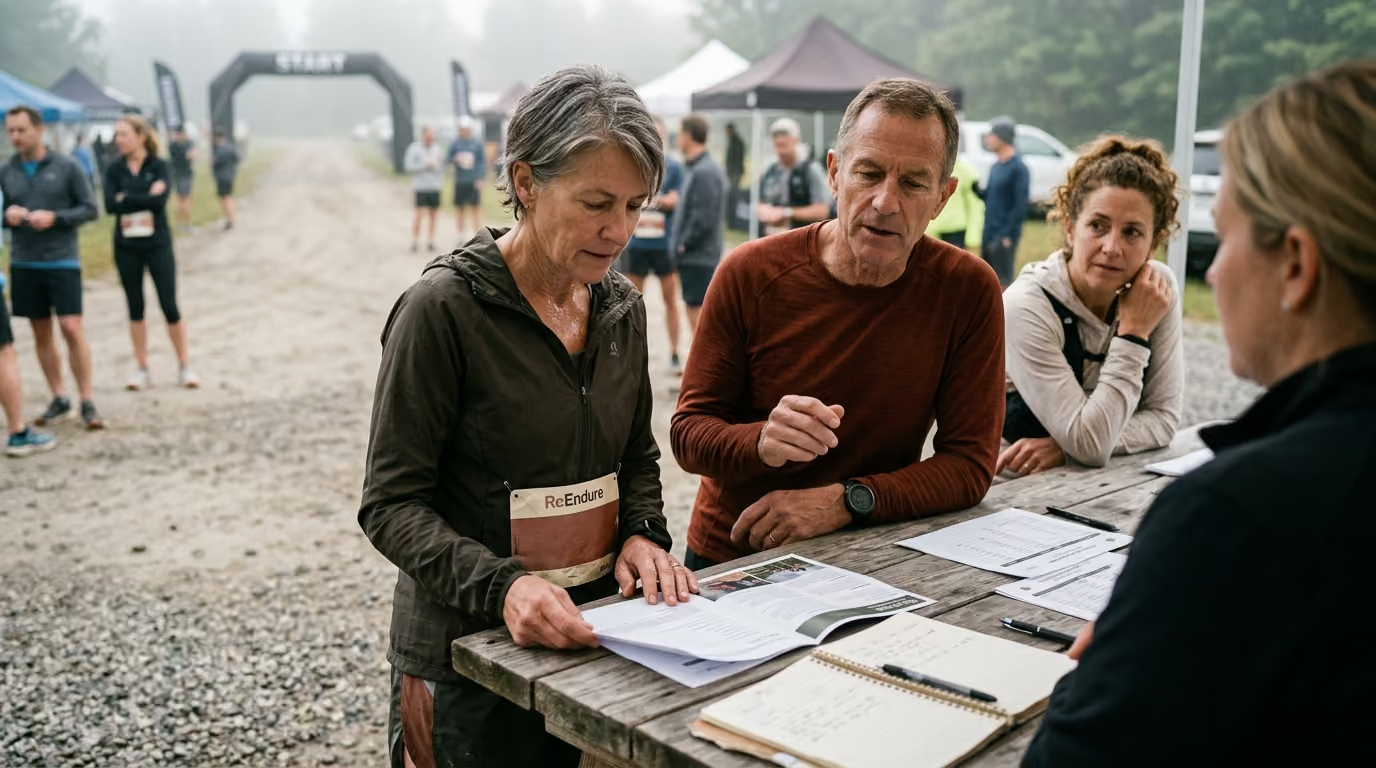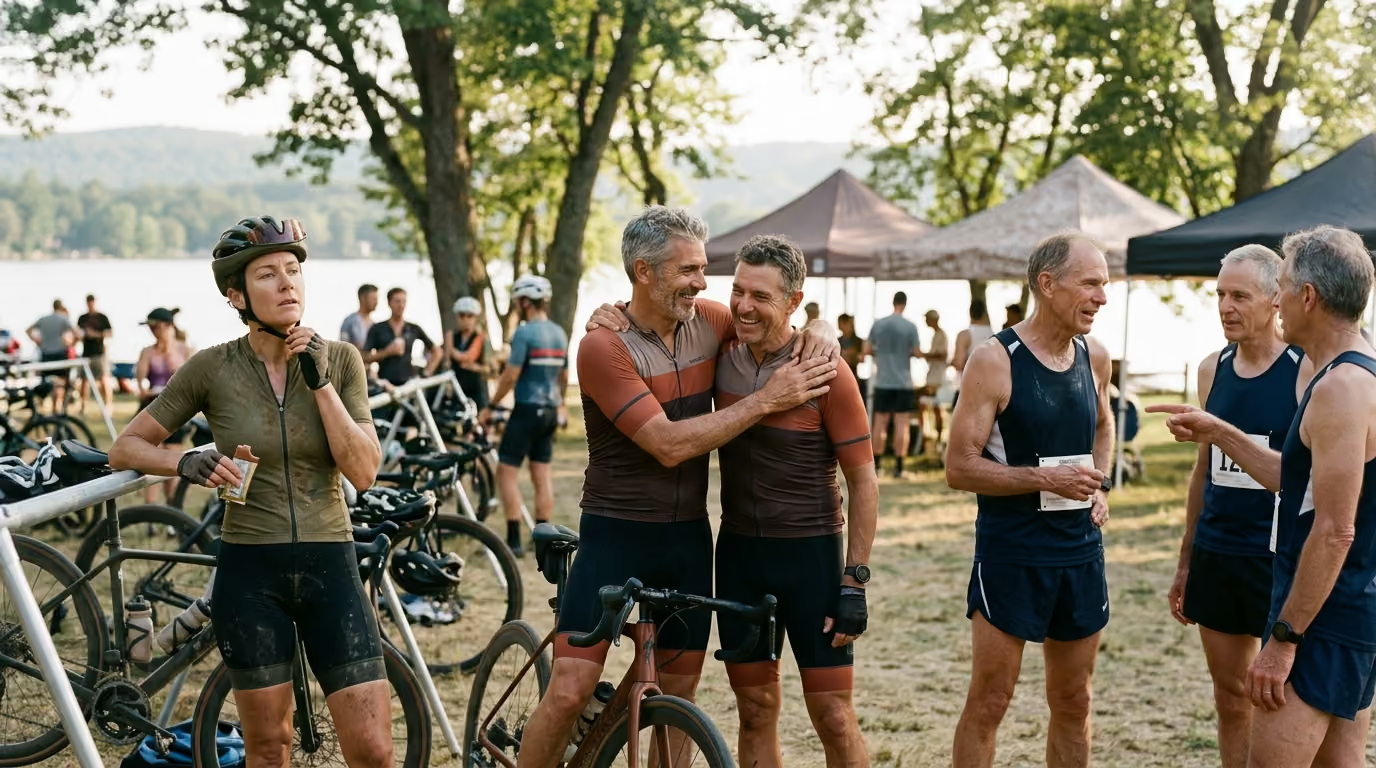

Optimal athletic consistency and peak performance arrive when you match your training structure to science-backed solo, team, or club racing environments.





Competitive racing is not a single motivational experience. It is not merely a choice between running alone or joining a crowd. Rather, competitive format refers to the social and operational architecture that surrounds an athlete during preparation, pacing, and performance.
This structure dictates who sets the schedule, who observes the effort, how intensity is regulated, and how success is defined. Whether you line up for an individual marathon, a club cross-country league, a multi-stage gravel relay, or a coached triathlon, the surrounding structure directly shapes your adherence and physical longevity.
Choosing a format is not about declaring one approach superior to another. It is about matching your psychological needs, daily schedule, and physiological capacity to an environment that sustains consistency across multiple decades.
The following analysis compares solo efforts, training partnerships, athletic clubs, relay teams, and coached programs. It outlines the sports science behind social facilitation, evaluates the operational trade-offs of each system, and provides a framework to help you select the ideal format for your upcoming season.
Consider an athlete who registers for a challenging autumn road marathon.
In one scenario, the athlete trains completely alone in the early morning hours. Every pacing decision, alarm clock, and missed workout is an internal negotiation. Over time, without objective feedback or external camaraderie, training fatigue can turn into mental stagnation. A single bad workout can feel like an indictment of the entire training block because there is no peer group to provide context.
In a contrasting scenario, that same athlete joins a competitive local running club targeting the same autumn event. Attendance suddenly feels effortless because peers are waiting at the track on Tuesday evenings. However, the Tuesday group workout frequently turns into an aggressive race. The athlete pushes past planned aerobic thresholds to keep up with faster runners, accumulating excessive physiological fatigue. By race week, the athlete arrives at the starting line overtrained and nursing an inflamed Achilles tendon.
Both athletes had the exact same physiological goal and followed similar mileage targets. Yet, their outcomes were dictated entirely by their competitive environment.
The first athlete suffered from motivational friction and isolation. The second athlete suffered from social pressure and poor load management.
Many master athletes cycle through these exact extremes. They bounce between the isolated grind of solo preparation and the excessive physical toll of uncontrolled group training. Finding a sustainable competitive format solves this fundamental conflict. It aligns your motivation with appropriate physical strain, allowing you to train consistently without breaking down.
To understand how to balance these environments, you can look into our racing and lifestyle resources that cover long-term athletic management.
The interaction between social structure, athletic performance, and consistency is governed by well-established psychological and physiological principles.
Human motivation is not just about quantity; quality matters just as much. Self-Determination Theory, established by researchers Edward Deci and Richard Ryan, explains that human persistence relies on satisfying three basic psychological needs: autonomy, competence, and relatedness.
Autonomy represents the feeling of control over your own choices and actions. Competence represents the feeling of mastery and effective progression. Relatedness represents the sense of belonging and mutual connection to a community.
A systematic review published in the International Journal of Behavioral Nutrition and Physical Activity evaluated 66 empirical studies on motivation and physical activity. The researchers found consistent evidence that autonomous forms of motivation produce higher long-term exercise adherence.
External pressure or guilt can initiate short-term compliance. However, intrinsic motivation and personally identified values are the primary drivers of multi-year consistency.
When an athletic format supports your competence and gives you ownership over your decisions, training stops feeling like an obligation. When a format relies on guilt, social judgment, or rigid control, motivation degrades over time.
The physical presence of other people alters how humans regulate physical effort. This phenomenon is known as social facilitation.
A study published in Perceptual and Motor Skills demonstrated that external verbal encouragement produced substantial improvements in endurance and sprinting output. The presence of encouragement also elevated participants' motivation to return for subsequent exercise bouts.
Additionally, research published in sports science reviews shows that competitors, pacemakers, and crowds significantly alter pacing decisions. A review on endurance pacing indicates that the visible behavior of other competitors acts as an external anchor. This anchor changes how an athlete interprets internal sensations of fatigue, perceived exertion, and effort tolerance.
Similarly, an investigation into collective running behavior revealed that drafting behind a pacemaker improved 3,000-meter running times without demanding greater cardiovascular or energetic cost. The presence of another athlete reduced the cognitive burden of pacing. It allowed the trailing runner to maintain higher speeds with lower psychological strain.
However, social pacing carries physiological risks. If the pace of the group exceeds your current physiological threshold, the external target overrides internal pacing cues. This can lead to premature glycogen depletion and elevated muscular breakdown.
While social structures improve attendance, they can also disrupt load management.
A consensus statement from the International Olympic Committee (IOC) highlighted that inappropriate training load management is a major risk factor for non-contact soft tissue injuries. The IOC emphasized that sudden spikes in training volume, high competition density, and psychological stress elevate injury rates.
A related IOC consensus statement linked poor load management directly to acute illness and overtraining syndrome.
Furthermore, a joint consensus statement from the European College of Sport Science (ECSS) and the American College of Sports Medicine (ACSM) noted that productive training requires progressive overload followed by adequate biological recovery. When social commitments encourage an athlete to complete high-intensity sessions while under-recovered, the risk of chronic maladaptation increases.
Social structures must therefore be evaluated not just on how well they get you out the door, but on whether they respect your recovery requirements. For detailed methods on monitoring workload and health, see our guide on endurance training and performance concepts.
Every competitive structure offers distinct advantages and operational risks. Choosing the right format requires looking past surface preferences and evaluating how each option influences your psychology, daily schedule, and physical performance.
Solo racing means the athlete prepares independently and is solely responsible for training decisions, pacing, and race execution. The final performance reflects only the athlete's individual effort.
Solo formats rely heavily on identified regulation and personal mastery. The athlete is driven by internal standards, historical personal benchmarks, and the quiet satisfaction of self-directed execution.
The solo athlete has absolute freedom to align training intensity with their current physiological state. There is no external runner pulling you into a premature sprint on an easy recovery day.
However, solo pacing requires immense cognitive self-regulation. Without an external competitor or rabbit to follow, maintaining near-threshold intensities during demanding workouts requires substantial psychological effort.
Solo preparation offers unmatched scheduling flexibility. You can shift workouts around work commitments, family needs, and sleep quality without negotiating with a partner or group.
The primary hazard of solo racing is motivational friction and insular thinking. When energy is low, no one notices a missed session. Disappointing workouts can cause excessive self-criticism, as the athlete has no immediate peer data to put their performance in context.
A training partnership is an ongoing relationship between two athletes who coordinate their workouts, schedule, and tactical goals.
Partnerships thrive on reciprocal commitment. The primary motivator is mutual accountability combined with shared experience. The simple knowledge that a partner is waiting at a trailhead significantly lowers the friction of starting an early morning workout.
A well-matched partner provides a rhythmic physical target. When one athlete experiences a brief lull in energy, the other can take the lead and maintain the target output.
This dynamic provides the drafting and cognitive benefits identified in social facilitation research without the chaotic pacing of large group packs.
Partnerships create direct, immediate attendance accountability. They reduce the logistical friction of organizing long endurance sessions, remote point-to-point routes, and shared equipment.
The main vulnerability of a partnership is fragility. If your partner sustains an injury, relocates, or changes their target race, your primary motivational system can collapse.
Additionally, if there is a subtle fitness mismatch, the slower partner may continuously overexert themselves to keep up, leading to cumulative fatigue.
A racing club is an organized community built around a specific sport, geographic base, or competitive identity. Clubs typically provide scheduled group workouts, team race entries, shared uniforms, and social infrastructure.
Clubs operate through social relatedness and athletic identity. A study published in Psychology of Sport and Exercise found that exercise group membership was strongly associated with elevated social support and a firmer athletic identity in both women and men. Belonging to a recognized team validates the athlete's dedication.
Clubs offer access to structured pace groups and deep pack running. In distance events, running within an organized club pack provides mechanical drafting advantages and shields athletes from wind resistance.
However, club environments carry the highest risk of competitive overpacing. Athletes frequently turn routine aerobic base sessions into unsanctioned races due to ego and peer comparison.
A systematic review examining community-based group exercise reported a mean adherence rate of 69.1% across comparable studies.
Clubs supply a dependable, recurring weekly calendar. Even when an athlete has no specific race on the horizon, the club schedule provides a continuous framework for training.
Club cultures can drift toward dogmatic training patterns. If the club culture values toughness and relentless attendance over sensible load management, athletes may feel subtle social pressure to train while ill or carrying minor overuse injuries.
Relay formats involve multiple athletes contributing individual legs or segments toward a combined team time. Examples include Ekiden road relays, 24-hour mountain bike relays, open-water swim relays, and multi-sport adventure teams.
Relays shift motivation from self-serving metrics to collective responsibility. The athlete is driven by a desire to support teammates and contribute to a shared outcome.
This dynamic creates intense emotional investment and camaraderie that individual racing rarely matches.
Team formats generate unique physiological urgency. Research on sprint relays published in sports biomechanics literature emphasizes that performance depends on both individual speed and seamless baton handovers.
In endurance relays, athletes frequently exceed their expected solo outputs during their designated legs because the psychological boundary of self-preservation shifts outward when performing for a group.
Accountability in a relay team is exceptionally high. Athletes rarely skip workouts when they know their specific fitness level directly dictates the team's standing.
The intense sense of obligation can produce high cognitive anxiety. Athletes who fear making a mistake or slowing down the team can experience excessive stress.
Furthermore, if an injury occurs during preparation, the pressure to race anyway can lead athletes to make poor medical decisions.
Coached racing involves an athlete working under the guidance of an expert practitioner who provides customized programming, tactical race plans, objective feedback, and training load oversight.
Coached formats support competence and reduce cognitive fatigue. A systematic review published in the International Sport Coaching Journal analyzed over two hundred studies on coaching practices. The review emphasized that coach-athlete relationship quality directly shapes athlete satisfaction, motivation, and athletic progression.
When a coach acts with autonomy-supportive behaviors, explaining the purpose behind workouts and listening to feedback, the athlete develops high confidence in their preparation.
A coach provides objective, data-informed pacing strategies. This prevents the classic mistake of starting a race too fast due to excitement.
During training, the coach acts as an external governor, deliberately pulling back intensity when biometric data or subjective fatigue indicates the athlete is nearing overreaching limits.
Coached programs eliminate guesswork. The athlete does not waste mental energy wondering what workout to perform each morning. The presence of professional oversight ensures structured, progressive overload paired with scheduled recovery weeks.
The primary risk is athlete overdependence. If the coach uses an authoritarian or controlling style, the athlete may stop listening to their own internal physiological signals.
A high-performing coaching dynamic should build the athlete's self-regulation and problem-solving skills rather than replace them.
Athletes do not need to restrict themselves to a single format. A hybrid structure combines elements from multiple systems to maximize strengths while avoiding common pitfalls.
In a hybrid model, an athlete might use a personalized coaching plan for overall structure, complete mid-week interval sessions with a local club pace group, perform easy weekend recovery miles with a single training partner, and compete in target events as a solo entrant.
Hybrids provide structural redundancy. If your training partner is unavailable, you continue with your coached plan. If your club holds a workout that is too intense for your recovery week, you execute a solo aerobic session instead.
This model provides social connection and expert structure without compromising your personal autonomy.
Selecting the optimal competitive format requires an honest evaluation of your personal tendencies, weekly schedule, and current athletic goals.
Use the following assessment and practical archetypes to select the structure that best fits your upcoming season.
Score each of the following statements on a scale from 1 (Strongly Disagree) to 5 (Strongly Agree):
To build a balanced season, you can integrate multiple formats into a single cohesive schedule.
As athletes age, physiological recovery kinetics change. Connective tissues, including tendons and ligaments, require longer intervals to adapt to mechanical loads. Muscle protein synthesis rates slow down, and sleep quality can become more fragile.
These physiological shifts make competitive formats a critical factor in athletic longevity.
For athletes over forty or fifty, unmanaged group training is one of the most common causes of chronic tendon issues. When a 50-year-old athlete joins a mixed-age club workout, social facilitation often pushes them to match the paces of 25-year-old runners.
While the master athlete's cardiovascular system can often handle the strain, their connective tissues absorb microtrauma that cannot be repaired before the next group session.
Older athletes must adopt autonomy-supportive boundary setting. If you belong to a club, you must be willing to let faster runners drop you without feeling embarrassed. You must treat your recovery days as protected space.
Masters competitors also benefit from the objective oversight of a coach. A knowledgeable coach helps older athletes manage high-intensity volume and prioritize resistance training.
To review age-related training adjustments in detail, explore our healthy aging resources for master competitors.
Athletes frequently fall into predictable traps when navigating social training and racing formats.
Social accountability is excellent for overcoming normal morning lethargy. However, it becomes dangerous when athletes treat attendance as a moral duty.
Showing up to a group session with an emerging Achilles ache, an elevated resting heart rate, or systemic illness is not toughness. It is poor load management.
A healthy training group explicitly normalizes missing or modifying a workout when recovery demands it.
Many athletes believe that training with individuals faster than themselves is the fastest way to improve.
While this can occasionally provide a helpful high-intensity stimulus, doing it regularly forces the athlete to train in a chronic physiological grey zone.
Your easy workouts become tempo efforts, and your hard workouts lack quality because you are carrying continuous fatigue. The best training partner is someone whose current physiological zones match your own.
Hiring a coach should improve your self-knowledge, not eliminate your common sense.
If an athlete follows a written spreadsheet blindly while ignoring sharp joint pain or extreme exhaustion, the coaching relationship has become harmful.
The athlete must always retain final ownership over their daily physical readiness.
Athletes often agree to participate in team relays out of social enthusiasm, forgetting that a relay leg requires a near-maximal race effort.
Inserting an unexpected maximal effort into the middle of a marathon build can disrupt weeks of targeted preparation. Treat relay commitments with the same tactical respect as a primary individual race.
To safeguard your joints and soft tissue against these common training errors, consult our injury prevention strategies.
To confirm that your competitive format supports both performance and longevity, track a combination of objective and subjective metrics across every 8-week block.
For those preparing for upcoming competitive fixtures, our guides on target racing events provide structured advice on pacing and execution.
Introverted athletes can use a targeted attendance strategy. Instead of attending large, loud social gatherings or unstructured group runs, join specific workouts with a clear operational focus, such as a structured track session. In these environments, the focus is on the workout intervals rather than continuous conversation. This allows you to gain the mechanical and drafting benefits of group pacing while preserving your energy.
If you are faster than the group, treat club sessions strictly as easy recovery runs or active warm-ups, and complete your demanding quality intervals in solo sessions. If you are slower than the group, seek out clubs that enforce an explicit "no-drop" policy or organize workouts on looped courses. Looped circuits allow athletes of varying paces to train in the same physical space without anyone being left behind.
Clear communication is the best remedy for team anxiety. Discuss race day expectations, pacing targets, and backup plans with your teammates weeks in advance. Define success around deliberate tactical execution and shared effort rather than a single time metric. When roles and expectations are transparent, the pressure of letting others down diminishes significantly.
Yes. In fact, seasonal format shifting is a highly effective strategy. An athlete might spend the early base-building winter months in a social club or with a training partner to make high-volume base miles enjoyable. As the target race approaches, the athlete can transition to solo or coached workouts to refine race-specific pacing, threshold control, and mental focus.

Follow ReEndure for practical insights on endurance training, recovery, nutrition and healthy aging. Stay connected for new articles, research led guidance and ideas to help you perform better for longer.


Read practical ideas on endurance training, recovery, nutrition and healthy aging to keep progressing for years to come.
Read the Blog