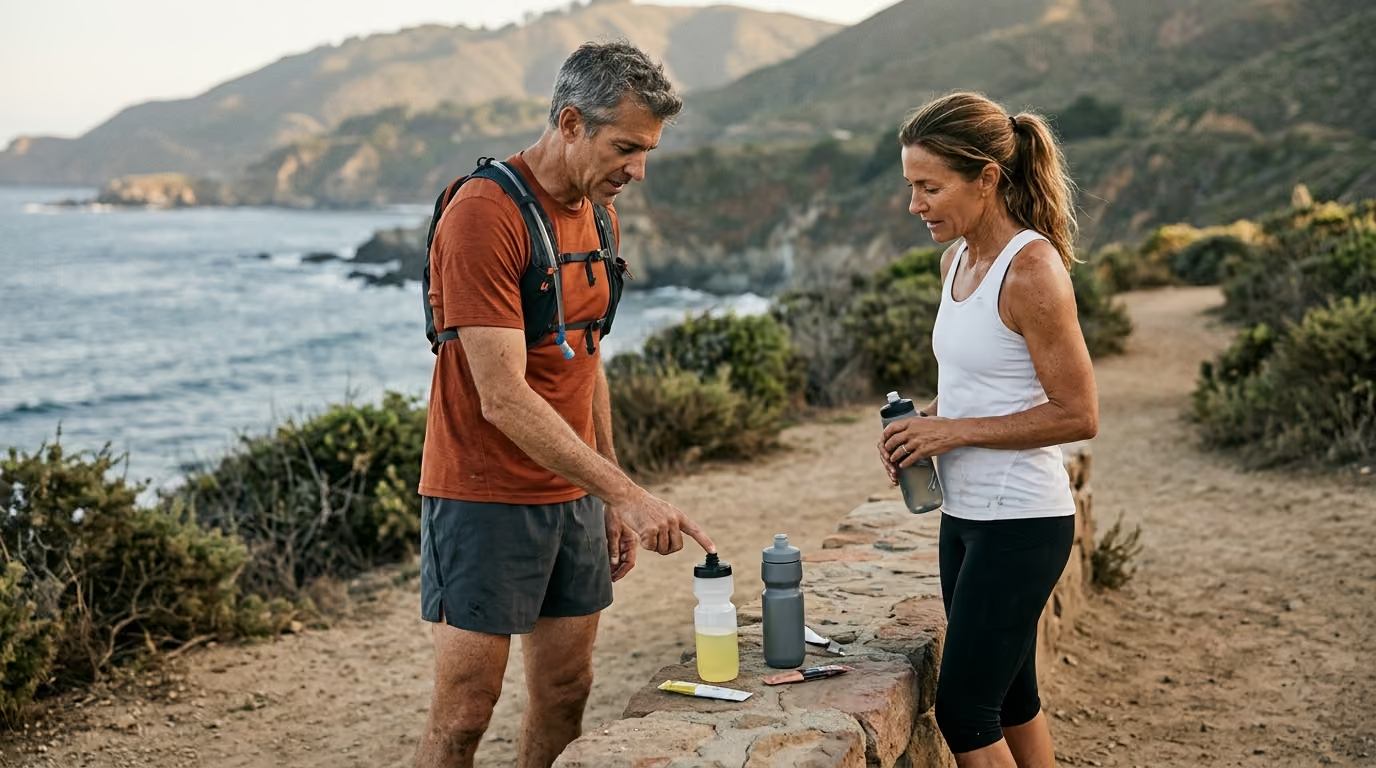

Sports drinks feature distinct osmolality levels and carbohydrate ratios that determine how effectively your body absorbs fluids and energy during training.





Many endurance athletes have searched online late at night trying to understand why their sports drink causes intense stomach cramps, or why they finished a long workout feeling bloated, dehydrated, and exhausted despite drinking constantly. The confusion is understandable because the sports nutrition market is crowded with brightly colored powders, concentrated syrups, effervescent tablets, and high-sodium mixes that all promise optimal performance. This field guide provides a definitive breakdown of sports drink formulation, gastrointestinal physiology, concentration mathematics, and practical fueling execution so you can build a system tailored to your physiology.
Building a dependable nutrition strategy requires treating these commercial products as specialized tools rather than general solutions. A formula designed to replace heavy mineral losses during a summer ultramarathon serves a completely different biological purpose than a high-carbohydrate beverage mixed for a two-hour cycling time trial. When you understand how water, carbohydrates, and minerals interact inside the human digestive tract, you can stop guessing and start fueling with absolute clarity.
The modern sports nutrition market often groups very different formulations under the single label of hydration. To select the right product for a specific workout, you must separate products by their primary functional objective. Some products exist purely to supply water and trace minerals, others deliver dense calories, and some attempt to balance both in a single bottle.
Hydration drinks and effervescent electrolyte tablets focus primarily on fluid replacement and mineral delivery. These products typically contain between zero and three percent carbohydrate, alongside moderate amounts of sodium, potassium, and magnesium. Because they contain minimal energy, they leave gastric emptying uninhibited, making them ideal when your priority is fluid absorption during low-intensity sessions or hot conditions where calorie demands are modest.
Conventional sports drinks are engineered to deliver a balanced combination of fluid, electrolytes, and energy. Formulated as ready-to-drink liquids or dissolvable powders, they usually contain between 4 percent and 8 percent carbohydrate by volume, alongside 10 to 35 millimoles per liter of sodium. According to guidance from the American College of Sports Medicine, these products provide an accessible way to consume both hydration and fuel during continuous endurance exercise lasting between one and two hours.
Carbohydrate powders and concentrated liquid fuels are designed to deliver substantial amounts of energy without forcing the athlete to rely on solid food. These products often contain minimal sodium and use specialized carbohydrate blends that can be mixed into dense solutions of 10 percent concentration or higher. They are frequently used as dedicated fuel reservoirs, carried in small handheld flasks or frame bottles, and consumed alongside separate bottles of plain water.
Post-exercise recovery drinks serve an entirely different purpose than during-exercise beverages. They combine moderate amounts of rapidly digesting carbohydrates with intact proteins or amino acids to accelerate muscle glycogen resynthesis and cellular repair. Consuming these dense mixtures during active training can cause severe gastrointestinal distress because the protein and higher osmolar load significantly delay stomach emptying.
To explore how these fueling tools fit into broader athletic programming, review our dedicated fueling and hydration strategies for structured endurance athletes.
The carbohydrate concentration of a sports drink dictates how your body processes both the liquid and the energy it contains. Carbohydrate percentage measures the mass of dissolved sugars relative to the volume of liquid, expressed as grams of carbohydrate per 100 milliliters of water. A standard 6 percent solution provides exactly 6 grams of carbohydrate for every 100 milliliters, which translates to 60 grams per full liter of fluid.
Understanding this mathematical relationship allows you to calculate your exact nutritional delivery:
A common pitfall among endurance athletes is confusing total bottle contents with hourly consumption rates. A standard 750-milliliter cycling bottle mixed at a 6 percent concentration contains 45 grams of carbohydrate. If you take two hours to sip that single bottle, your actual fueling rate is only 22.5 grams of carbohydrate per hour, which falls well below standard sports science recommendations for prolonged exercise.
Mixing errors represent another frequent cause of accidental under-fueling or severe gastrointestinal distress. Commercial drink powders settle during transport, meaning that a rounded scoop can vary in mass by up to 25 percent compared to a weighed serving. If you add a powder serving intended for 500 milliliters of water into a 750-milliliter bottle, you inadvertently dilute the sodium and energy density, lowering both fluid absorption efficiency and caloric delivery.
Conversely, cramming three scoops into a small 400-milliliter running flask creates an accidental hypertonic syrup. This thick solution pulls water out of your bloodstream and into your intestines, producing nausea, sloshing, and acute stomach cramps. You can prevent these errors by calculating your finished drink concentration using a simple formula: divide the total grams of carbohydrate by the final milliliters of mixed fluid, then multiply by 100.
To understand how sports drinks move from your water bottle into your working muscles, you must examine osmolality. Osmolality describes the total number of dissolved particles, including sugars, salts, and flavor molecules, per kilogram of water. Human blood plasma maintains a tightly regulated osmolality of approximately 280 to 295 milliosmoles per kilogram, and the difference between your beverage and your blood determines how rapidly your stomach empties its contents.
Beverages generally fall into three distinct physical categories:
Hypotonic and isotonic formulations between 4 percent and 8 percent carbohydrate concentration, combined with 400 to 1,100 milligrams of sodium per liter, promote the fastest gastric emptying and rapid fluid absorption through the intestinal wall. Research published in sports medicine journals indicates that solutions exceeding 6 to 8 percent carbohydrate concentration often delay gastric emptying. When a drink sits in your stomach for too long at high exercise intensities, it creates an uncomfortable sloshing sensation and limits the amount of usable fluid reaching your tissues.
However, low osmolality alone does not ensure peak athletic performance. In clinical exercise trials, hypotonic carbohydrate drinks have demonstrated similar overall plasma volume restoration when compared directly against isotonic solutions containing equal carbohydrate amounts. The practical takeaway is straightforward: lower osmolality supports rapid hydration in hot environments, while slightly higher concentrations allow you to carry more fuel per unit of fluid.
The challenge always comes down to balancing fluid requirements against caloric needs. If you require large amounts of water to manage heavy sweat loss, your drinks must remain dilute to avoid overwhelming your stomach. If the weather is cool and your sweat rate is low, you can safely utilize more concentrated drinks to meet your hourly energy targets without needing to consume excess fluid.
Carbohydrate is the primary fuel source for sustained high-intensity endurance performance, but your digestive system has finite processing limits. For decades, exercise scientists believed that human athletes could oxidize a maximum of 60 grams of ingested carbohydrate per hour during exercise. This ceiling occurs because the intestinal protein responsible for absorbing glucose, known as sodium-glucose cotransporter 1 (SGLT1), becomes completely saturated at roughly 1 gram per minute.
Sports nutrition research changed when scientists began testing multiple-transportable carbohydrate formulations. While glucose utilizes the SGLT1 transporter, fructose is absorbed through an entirely separate intestinal pathway governed by the GLUT5 transporter. By combining glucose and fructose in precise ratios, athletes can bypass the SGLT1 bottleneck and deliver significantly more fuel directly to active muscle tissues.
Systematic reviews confirm that consuming a 2:1 ratio of glucose or maltodextrin to fructose at rates exceeding 75 grams per hour enhances total carbohydrate oxidation, improves gut comfort, and enhances prolonged endurance capacity compared to single-sugar sources. More recent formulations have used 1:0.8 ratios to push hourly intake even higher during elite competition. However, these extremely high intake rates require deliberate training of your gastrointestinal system over several months.
Targeting maximum theoretical absorption is not necessary for every athlete or every workout. Research on endurance runners shows that attempting to ingest 90 grams of carbohydrate per hour frequently triggers severe nausea and upper gastrointestinal distress compared to more moderate rates around 60 to 75 grams per hour. Running involves continuous mechanical jostling of the stomach, which makes high-volume or highly concentrated fueling significantly harder to tolerate than cycling.
A sensible progression involves mastering fuel intake systematically:
For more information on matching your fueling to training demands, see our comprehensive sports nutrition guides.
Sodium is the primary electrolyte lost in human sweat, making it the most critical mineral to consider when formulating an endurance beverage. While marketing materials frequently highlight potassium, magnesium, and calcium, these elements are lost in negligible quantities compared to sodium. ACSM guidelines recommend that endurance drinks contain roughly 0.5 to 0.7 grams of sodium per liter of fluid (20 to 30 mmol/L) for sessions lasting longer than an hour.
Sodium performs three vital physiological functions during exercise:
A major source of confusion on nutritional labels is the difference between sodium per serving and sodium concentration per liter. If a powder packet lists 500 milligrams of sodium, that provides a concentration of 1,000 milligrams per liter when mixed into a 500-milliliter bottle, but only 500 milligrams per liter when mixed into a full one-liter reservoir. Always calculate the final milligram-per-liter concentration to ensure your mix matches your planned sweat replacement goals.
Individual sweat rates and sweat sodium concentrations vary dramatically across the athletic population. One runner may lose 400 milligrams of sodium per liter of sweat, while a teammate loses 1,500 milligrams per liter under identical environmental conditions. You can estimate your hourly sweat rate through simple weight tracking before and after exercise:
Conduct this calculation across several different temperatures and intensities to establish your baseline fluid requirements. While professional sweat testing can provide an estimate of your individual sodium losses, remember that sweat sodium concentration fluctuates based on heat acclimation, dietary sodium intake, and workout intensity. Furthermore, sports science literature clearly indicates that sodium supplementation does not universally prevent exercise-associated muscle cramps, which are primarily driven by neuromuscular fatigue rather than simple mineral deficits.
Hydration management requires navigating between two distinct physiological dangers: significant dehydration and exercise-associated hyponatremia. Historical sports advice urged athletes to replace every drop of lost sweat by drinking on a rigid schedule. Modern clinical sports medicine takes a more balanced approach, advising athletes to avoid losing more than 2 percent of their baseline body mass while strictly preventing any fluid-induced weight gain during training.
Exercise-associated hyponatremia occurs when blood sodium concentrations fall below 135 mmol/L, leading to cellular swelling, confusion, nausea, seizures, and in severe cases, fatal cerebral edema. The international consensus on hyponatremia emphasizes that this dangerous condition is caused by drinking fluid in excess of total sweat and urine losses. Overdrinking dilutes your body's total sodium pool faster than your kidneys can excrete the excess water.
Crucially, drinking a high-sodium sports beverage will not protect you from hyponatremia if your total fluid consumption remains excessive. Consuming two liters of a sports drink when your body only sweated out one liter will still cause a dangerous drop in blood sodium concentration. The volume of fluid you consume dictates your blood dilution far more than the milligram count of the electrolytes in your bottle.
To maintain safe fluid balance throughout demanding training blocks:
Understanding these fluid mechanisms supports your long-term endurance performance across multi-hour racing events.
Palatability is an essential performance variable because the best physiological formulation is useless if you cannot stomach it four hours into an event. Flavor fatigue describes the progressive sensory aversion that develops when an athlete repeatedly consumes the same sweet, highly acidic, or strongly flavored product over several hours. This aversion leads to voluntary fluid restriction, missed calorie targets, and sudden drops in energy output.
Athletes frequently conflate sensory palatability with gastrointestinal tolerability. A strongly flavored, sweetened beverage might taste invigorating during the first thirty minutes of a morning workout, but that same sweetness can trigger profound nausea when your core temperature rises during hour four of a hot race. Warm weather intensifies perceived sweetness, making concentrated sports drinks unappealing if they sit in bike bottles under direct sunlight.
You can maintain sensory compliance across ultra-endurance distances using practical formulation adjustments:
Matching the right product to your specific event demands requires analyzing duration, temperature, sweating rate, and logistics. No single bottle formulation suits every training scenario. By systematically auditing your session requirements, you can configure your hydration and fuel mix for maximum efficiency.
For standard training sessions lasting less than an hour, your endogenous muscle and liver glycogen stores supply more than enough energy to sustain performance. Plain water is entirely sufficient for fluid replacement under normal environmental conditions. If you are training in extreme heat, completing a second hard session on the same day, or practicing race-day digestion, a dilute electrolyte tablet provides adequate sodium without unnecessary calories.
Workouts lasting between one and two hours benefit from a reliable energy intake of 30 to 60 grams of carbohydrate per hour. A standard 6 percent sports drink consumed at a rate of 500 to 750 milliliters per hour satisfies both your fluid requirements and your carbohydrate targets in a single bottle. This setup provides simple execution, requiring no complex mixing or external gels to maintain stable blood glucose levels.
Events lasting beyond three hours in warm conditions require careful management of high sweat rates alongside large energy demands of 60 to 90 grams of carbohydrate per hour. Under these conditions, relying exclusively on a conventional sports drink for all your calories can force you to overconsume fluid, risking gastrointestinal sloshing or hyponatremia.
A dual-bottle fueling strategy offers the most reliable execution:
Whenever you select commercial sports powders or electrolyte tablets, you must verify the manufacturing quality and safety credentials of the brand. Dietary supplements do not face the same strict regulatory oversight as pharmaceutical drugs, and uncertified products can contain undeclared contaminants, incorrect ingredient concentrations, or banned stimulants. For competitive master athletes and collegiate competitors, using contaminated supplements creates a genuine risk of failing an anti-doping test.
Always look for products tested and certified by recognized independent third-party organizations, such as NSF Certified for Sport or Informed Sport. These testing bodies audit manufacturing facilities, verify that label claims match the actual contents of the tub, and screen raw ingredients for prohibited substances. Taking this simple precautionary step ensures that your sports drinks support your athletic longevity without compromising your health or your competitive standing.
Learn more about our evidence-based methodology at ReEndure for evaluating sports science protocols.
Aging introduces subtle but meaningful shifts in human fluid regulation, gastrointestinal blood flow, and metabolic substrate processing. Athletes over the age of forty often experience a gradual decline in natural thirst perception, meaning that relying purely on thirst cues during intense training can occasionally lead to excessive dehydration. Developing a structured fluid schedule based on measured sweat rates becomes increasingly valuable as you grow older.
Renal function also changes with age, resulting in a slightly reduced capacity for the kidneys to rapidly concentrate urine or conserve sodium under severe fluid deficits. Older endurance competitors must pay closer attention to baseline hydration before workouts begin. Monitoring resting morning body weight and checking that your waking urine is pale yellow provides a simple way to verify your fluid status before starting hard training sessions.
Gastrointestinal blood flow, known as splanchnic perfusion, tends to decrease more noticeably under thermal stress in older athletes. When blood is diverted away from the gut to cool the skin and power working muscles, the stomach becomes more sensitive to high-osmolality beverages. Masters athletes frequently find that switching from thick, hypertonic 8 percent carbohydrate mixes to lighter 4 to 6 percent solutions combined with semi-solid foods significantly reduces bloating and heartburn during warm-weather racing.
Recovery timelines for muscle glycogen replenishment can also lengthen as muscle protein synthesis and glucose uptake kinetics change over time. Promptly initiating post-workout fueling with a balanced carbohydrate-and-protein recovery beverage within forty-five minutes of finishing a hard effort supports recovery for older competitors facing multi-day training blocks.
For detailed recovery strategies tailored to aging physiology, explore our resources on physiological changes in master athletes.
Even experienced competitors frequently make fundamental errors when preparing and consuming sports drinks during important training blocks. Identifying these common errors helps you avoid unnecessary stomach distress and performance drops.
To determine whether your sports drink formulation and hydration plan are functioning effectively, you need objective data rather than vague impressions. Tracking specific physiological metrics across multiple workouts allows you to fine-tune your fluid volume, sodium concentration, and carbohydrate intake with confidence.
Establish a consistent testing log during your weekly long training sessions, recording the following core variables:
Consistently documenting these metrics over four to six weeks will clearly reveal your personal tolerances. If your GI comfort score rises above 2 whenever your carbohydrate intake crosses 70 grams per hour, you know that you must either train your gut gradually or shift toward a multiple-transportable carbohydrate ratio. If your post-workout weight consistently drops by more than 3 percent in warm weather, your hourly fluid volume or sodium concentration requires upward adjustment.
You can apply these physiological principles directly to your training this week using this structured checklist:

Follow ReEndure for practical insights on endurance training, recovery, nutrition and healthy aging. Stay connected for new articles, research led guidance and ideas to help you perform better for longer.


Read practical ideas on endurance training, recovery, nutrition and healthy aging to keep progressing for years to come.
Read the Blog