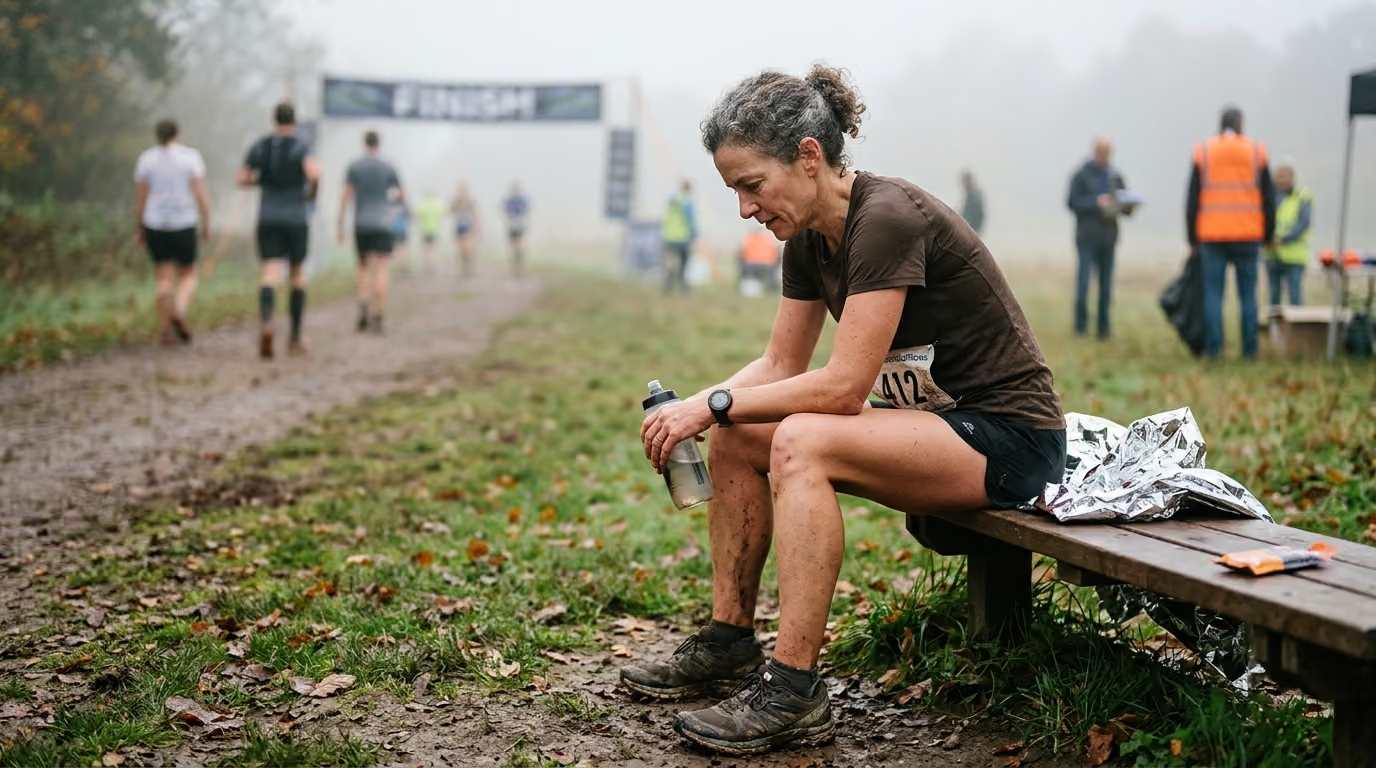

Peak athletic performance and memorable adventures are fully achievable by managing travel stress, protecting sleep quality, and pacing your daily tourist activities.





You wake up in a hotel room in Girona at six in the morning. Your marathon is forty-eight hours away. Over the last three days, you have walked twenty-two thousand steps each afternoon across cobblestones, shared rich dinners late into the night, and slept on an unfamiliar mattress. Your flight across six time zones left your legs heavy and your stomach unsettled. You lace up your running shoes for an easy shakeout run, but within two miles, your heart rate is ten beats higher than normal. Your planned race pace feels like an all-out effort.
This scenario is familiar to endurance athletes who combine their passion for sport with travel. Travel presents an exciting opportunity to test your fitness on iconic courses, hike scenic ridgelines, and immerse yourself in new cultures. However, the physiological toll of transit, novel environments, and irregular schedules frequently derails race ambitions. Athletes often find themselves caught between wanting a personal best and wanting to enjoy a memorable vacation with family or friends.
Traveling to an endurance event does not have to compromise your training or your race outcome. Instead of viewing travel as an unpredictable disruption, you should treat it as an environmental variable that you can manage. By structuring your trip around a clear recovery budget, adapting your training stimulus, and protecting your basic physiological needs, you can achieve both your athletic and experiential goals. Understanding the balance between physical performance and travel logistics is an essential part of endurance lifestyle planning.
The human body does not separate training stress from environmental and lifestyle stress. When you train at home, you operate within a predictable routine that supports autonomic recovery. You know the exact composition of your meals, the firmness of your bed, the local climate, and the timing of your daily schedule. Travel disrupts every single one of these baseline variables simultaneously.
Long-distance transit introduces multiple physiological stressors that accumulate before you even reach the starting line. Prolonged sitting in pressurized aircraft cabins causes dependent edema, where fluid pools in your lower extremities. This pooling increases venous pressure and leaves your legs feeling stiff and lethargic. Pressurized air cabins also have very low humidity, which increases respiratory water loss and accelerates mild dehydration.
Crossing multiple time zones disrupts your internal circadian timing system. The suprachiasmatic nucleus in your brain regulates core body temperature, hormone secretion, digestive enzyme production, and sleep architecture. When you travel rapidly across time zones, this internal clock falls out of alignment with the external solar cycle. Research shows that long-haul eastward travel causes more severe circadian disruption than westward travel. It significantly reduces total sleep duration, sleep efficiency, and deep restorative sleep stages.
Eastward travel forces you to advance your internal clock, which is biologically harder than delaying it. Elite athlete studies demonstrate that eastward travel across seven or more time zones can impair sleep quality for up to five days after arrival. During this adjustment window, waking cortisol rhythms are blunted, and heart rate variability declines. This indicates an increase in sympathetic nervous system dominance. While laboratory studies show mixed results regarding direct reductions in peak aerobic capacity, subjective fatigue and elevated perceived exertion are consistently reported.
Environmental mismatches create another layer of acute physiological strain. Arriving at a destination with higher temperatures, higher humidity, or higher altitude increases the metabolic cost of exercise. At high altitudes, the reduced partial pressure of oxygen decreases arterial oxygen saturation. This lowers your maximal oxygen uptake (VO2max) and elevates both heart rate and ventilation for any given pace. If you try to run at your sea-level target pace at high elevation, you will rely far more heavily on anaerobic metabolism, accumulating metabolic byproducts much faster.
Similarly, exposure to unaccustomed heat requires a reallocation of cardiac output. Your body must redirect a large volume of blood to the skin for evaporative cooling, which reduces blood flow to contracting skeletal muscles. If you are not acclimatized, your core temperature rises rapidly, glycogen depletion accelerates, and sweat rates increase. Recognizing these physiological demands allows you to adjust your expectations and calibrate your race strategy appropriately.
The most frequent source of frustration for traveling athletes is a mismatch between their goals and their itinerary. You cannot expect to set a personal record at an event if your pre-race itinerary consists of four days of intensive sightseeing, rich restaurant meals, and irregular sleep. Establishing a clear objective before booking your flights ensures your expectations align with your trip.
Athletes should categorize every destination event into one of four distinct tiers:
An A-priority race is an event where maximum physical performance is the primary objective of the entire trip. Every element of the itinerary is designed to optimize recovery, nutrition, and rest. You arrive several days in advance, choose quiet private accommodation, bring tested race nutrition, and strictly minimize standing or walking tours before the event. Sightseeing and social celebrations are postponed until after the finish line.
A B-priority race serves as a rehearsal or a competitive stimulus within a broader training cycle. You use the event to test equipment, refine pacing, practice fueling under pressure, or gain experience in a specific climate. You still prioritize sleep and sensible nutrition, but you do not schedule an extensive taper. A personal best is a welcome bonus, but the primary goal is athletic development and environmental experience.
A C-priority race places cultural immersion, adventure, and social connection ahead of finish times. You participate to experience a legendary route, run alongside friends, or explore a new country. Pacing is kept strictly conservative to ensure you enjoy the scenery and finish with minimal physiological trauma. You accept that pre-race walking tours, local culinary choices, and family commitments will lower your absolute performance ceiling.
A training adventure is an organized event used simply as a fully supported long workout. You run or ride entirely within your standard aerobic zone, pause at aid stations to take photos, and test gear for future goals. There is no taper beforehand and no expectation of a race result. This classification removes competitive pressure and prevents the psychological exhaustion of trying to peak while managing travel logistics.
To choose the correct category, you can evaluate your event through a five-filter decision model:
If an event scores poorly across travel, environmental, and lifestyle fit, you should classify it as a C-priority experience or training event. Downgrading the priority does not diminish the joy of the trip. Instead, it frees you to enjoy the adventure without the burden of unrealistic performance expectations.
Your travel strategy begins days before you step onto an airplane or load your car. The goal during transit is to minimize physiological depletion, maintain baseline hydration, and initiate your circadian adjustment as early as possible.
When preparing for long-haul flights across multiple time zones, you can shift your internal clock incrementally before departure. For eastward travel, shift your bedtime and wake time thirty to sixty minutes earlier each day for three days leading up to your trip. For westward travel, shift your schedule thirty to sixty minutes later. As soon as you board the aircraft, set your watch to the local time of your destination. Align your in-flight sleeping, resting, and eating patterns with that new time zone.
In-flight behavior directly influences your recovery state upon landing. Aircraft cabins accelerate dehydration through low ambient humidity, while long periods of immobility increase muscle stiffness. The Centers for Disease Control and Prevention recommend standing and walking every two to three hours during long travel. Selecting an aisle seat makes it easier to stand, perform calf raises, and stretch your hip flexors regularly without disturbing adjacent passengers.
Protecting your sleep during transit requires deliberate planning rather than relying on chance. Pack high-quality earplugs, an eye mask that blocks all ambient light, and comfortable neck support in your carry-on bag. Avoid consuming alcohol or high doses of caffeine while in transit. Alcohol severely disrupts rapid eye movement (REM) sleep and suppresses the release of natural growth hormone. Caffeine has a half-life of roughly five to seven hours, which can delay your ability to fall asleep upon arrival.
Once you arrive at your destination, synchronize your circadian system using environmental cues. Natural sunlight is the primary cue for setting your master circadian clock. If you arrive in the morning following an eastward flight, expose yourself to outdoor light and engage in light physical movement. If you arrive late in the afternoon, avoid taking a long nap that extends past thirty minutes. Long naps reduce homeostatic sleep pressure, making it difficult to fall asleep at a reasonable local hour.
If you are forced to choose between waking up early for a non-essential workout or getting an extra hour of sleep, choose sleep. Sleep deprivation impairs neuromuscular coordination, elevates injury risk, and suppresses immune function. Structuring your days around effective recovery and mobility strategies ensures your nervous system stabilizes quickly after international transit.
Many athletes worry that traveling will cause an immediate loss of hard-earned cardiovascular fitness. This fear often leads them to force high-intensity workouts into chaotic travel schedules, creating excessive fatigue. Sports science research shows that complete training cessation takes roughly ten to fourteen days to cause measurable declines in VO2max and blood plasma volume. Even then, basic muscular endurance is largely preserved.
You do not need to replicate your home training schedule perfectly while away. Instead, apply the concept of the minimum effective dose. Your goal is simply to maintain key physiological adaptations using short, focused sessions. A single controlled tempo session and one moderate aerobic workout each week are sufficient to preserve your aerobic threshold and neuromuscular sharpness.
To maintain structure without adding stress, organize your training into a three-tiered hierarchy:
These are the one or two critical sessions per week that directly maintain your primary physiological adaptation. For a marathon runner, this might be a thirty-minute tempo effort or a steady ninety-minute aerobic run. For a cyclist, it is a focused sweet-spot session on a stationary trainer. You schedule these sessions during low-friction windows, such as early morning before family activities or work meetings begin.
These are secondary aerobic or recovery runs that support weekly volume. If you have time and safe routes, you complete them as planned. If your schedule becomes compressed or you are fatigued from travel, you modify them. You can cut a sixty-minute run down to thirty minutes, or replace an outdoor ride with a brief hotel-gym circuit.
These include supplementary cross-training, non-critical recovery jogs, and extended gym sessions. When you are traveling, these workouts are the first elements to eliminate. Removing them protects your recovery budget, leaving you with sufficient energy for race day or family sightseeing.
When you cannot access your normal training infrastructure, use smart substitutions that maintain the intended physiological stimulus:
Remember that destination activities carry a real metabolic cost. Walking twenty thousand steps through museums, climbing cathedral towers, carrying heavy luggage, and walking across uneven terrain are not rest. If an activity leaves your legs tired, you must count it as physical training load and reduce your structured workout volume accordingly. You can study evidence-based methods for balancing these variables through our training and performance resources.
Gastrointestinal illness is one of the most common reasons traveling athletes fail to finish races. A sudden change in diet, exposure to foreign waterborne bacteria, and unfamiliar sports nutrition products can cause rapid dehydration and gastric distress. Managing your nutrition abroad requires a strict rule: rely on known, tested, and portable foods.
Do not plan to rely exclusively on foreign aid stations for your race nutrition. Race organizers in different countries frequently supply sports drinks and gels with carbohydrate ratios, electrolytes, and flavor profiles you have never used. Pack all of your race-day gels, chews, drink mixes, and salt capsules in your carry-on luggage. Bringing your own tested fuel guarantees you can follow a proven carbohydrate intake strategy without unexpected stomach distress.
For endurance events lasting longer than sixty minutes, the American College of Sports Medicine recommends consuming thirty to sixty grams of carbohydrates per hour. In longer events or ultra-marathons, trained athletes can absorb up to ninety grams per hour by consuming a mixture of glucose and fructose. Ensure you practice these intake rates in training using the exact products you will carry to your race destination.
Maintaining nutritional stability before the race means building a portable travel food kit. Pack familiar items for your pre-race breakfast, such as instant oatmeal packets, nut butter pouches, granola, and tested energy bars. If your hotel does not provide a reliable breakfast at five in the morning, having familiar shelf-stable food in your room prevents race-morning panic.
When traveling to regions with variable food and water standards, follow the health precautions established by the Centers for Disease Control and Prevention:
Hydration requires balance. Dehydration impairs endurance performance, but aggressive over-drinking without adequate sodium intake increases the risk of exercise-associated hyponatremia. Monitor your hydration by checking your urine color, which should remain a pale straw yellow. Drink according to your thirst mechanism, include electrolytes during warm weather travel, and avoid consuming excessive plain water during flights. You can find detailed hydration guidelines in our endurance fueling and hydration section.
Racing in novel environmental conditions requires a calculated adjustment in pacing and strategy. When you take your fitness into high heat, intense humidity, or thin mountain air, your cardiovascular system must work significantly harder to maintain any given speed.
Heat acclimation is a structured physiological process, not merely an unpleasant sensation. Proper heat acclimation expands blood plasma volume, lowers resting core temperature, increases sweat rate, and reduces sodium loss in sweat. Achieving comprehensive heat adaptation requires ten to fourteen days of repeated, controlled heat exposure. If you arrive in a hot destination only two days before your race, you cannot force rapid acclimation through hard workouts. Doing so will only induce severe fatigue and accelerate dehydration.
When you race in hot conditions without prior acclimation, you must adjust your pacing immediately from the start:
High-altitude racing demands even greater pacing discipline. As elevation increases, barometric pressure drops, reducing the amount of oxygen driven into your bloodstream with each breath. The Centers for Disease Control and Prevention recommend ascending gradually, advising travelers to avoid ascending directly from sea level to sleeping altitudes above 2,750 meters in a single day. When sleeping above 3,000 meters, limit your daily altitude gain to 500 meters per day, and include an extra acclimatization day for every 1,000 meters gained.
At high elevations, your maximal aerobic capacity declines predictably. Even after partial acclimatization, your peak aerobic output remains lower than at sea level. If you attempt to run or cycle at your sea-level target watts or pace, you will rapidly exceed your lactate threshold. Pacing must be governed entirely by perceived effort. Take steep climbs at a steady, conversational cadence, drink additional fluids to offset increased respiratory water loss, and avoid alcohol for the first forty-eight hours at altitude.
For multisport athletes racing in foreign open water, safety must take precedence over exploration. Check local water quality advisories before swimming in lakes, rivers, or coastal areas. The Centers for Disease Control and Prevention advise avoiding freshwater swimming after heavy rainfall, which frequently washes agricultural runoff and sewage into waterways. Never swim alone in unfamiliar open water, inspect exit points carefully, and confirm water temperatures to choose between a wetsuit and a swimskin.
Endurance sports should enrich your life rather than alienate the people around you. Combining races with family vacations or business trips requires clear communication, scheduling discipline, and an honest respect for your companions' time.
When traveling with family, avoid expecting your partner or children to organize their entire holiday around your athletic goals. A successful family trip requires proactive planning:
Business travel introduces a different set of challenges, including back-to-back meetings, client dinners, and irregular schedules. When business demands make normal training difficult, rely on a flexible workout strategy. A focused twenty-minute treadmill progression or a hotel-room strength circuit maintains your neuromuscular drive without disrupting your professional obligations.
Cultural exploration is often the most rewarding element of destination racing, but its timing matters. Schedule intensive walking tours, museum visits, and adventurous local dining for the days following your race rather than the days before it. If you want to explore a historic city before race day, take an open-top bus tour or a boat tour to see the sights while resting your legs. Postponing celebratory meals and physical exploration until after you cross the finish line ensures you perform well and fully enjoy the cultural experience.
Athletes between the ages of 40 and 65 experience travel stress differently than younger competitors. The biological aging process affects circadian adjustment, soft tissue elasticity, fluid balance, and post-exercise recovery rates. Understanding these physiological shifts allows master athletes to design smarter travel itineraries.
As we age, our sleep architecture naturally changes. Deep slow-wave sleep decreases, and sleep becomes more fragmented. Crossing multiple time zones exacerbates this fragmentation, making it harder for older athletes to achieve restorative sleep abroad. Master athletes should build longer transition buffers into their itineraries. If a younger athlete can adjust to a five-hour time change in two days, an athlete over fifty will benefit substantially from arriving four to five days before an A-priority race.
Soft tissue stiffness is another common issue during travel. Prolonged sitting on airplanes or trains reduces tissue perfusion and increases stiffness in the lower back, hips, hamstrings, and Achilles tendons. Master athletes should incorporate regular movement breaks during transit. Pack a compact massage ball or resistance band in your carry-on luggage. Performing ten minutes of gentle mobility work upon arriving at your hotel restores blood flow and reduces injury risk during your first run.
Protein intake and muscle preservation require extra attention when traveling over forty. Muscle protein synthesis rates become less sensitive to dietary amino acids with age, a phenomenon known as anabolic resistance. When dining out or relying on travel snacks, master athletes often consume excess refined carbohydrates and fats while under-consuming high-quality protein. Aim to consume twenty-five to thirty-five grams of quality protein every three to four hours. Carrying single-serving packets of whey or plant-based protein isolate ensures you hit your daily targets regardless of local restaurant menus.
Adjusting your training expectations as an older competitor protects your long-term athletic longevity. You can review age-specific training principles within our healthy aging resources to balance hard racing with long-term joint health and vitality.
Athletes traveling to destination events often fall into predictable traps. Recognizing these common errors helps you protect your preparation and avoid unnecessary race-day stress.
Many athletes panic about missing workouts during travel and try to overload their training in the final days before leaving. Combining an aggressive training spike with the physical fatigue of packing, travel logistics, and flights creates acute systemic exhaustion. Follow a normal taper pattern by reducing volume while maintaining intensity, and arrive at your flight rested.
Walking through historic neighborhoods, navigating subway stairs, standing in museum lines, and browsing markets burns significant glycogen and fatigues your stabilizing muscles. Ten miles of casual walking across city pavement is just as taxing on your legs as a hard training run. Restrict your pre-race walking and save extensive walking tours for after the race.
Eating unpasteurized cheeses, heavily spiced local specialties, or high-fiber restaurant dishes the night before an event is a recipe for gastrointestinal distress. Stick to simple, familiar, low-fiber carbohydrate sources that you know your stomach tolerates well. You have plenty of time to enjoy adventurous local cuisine after you cross the finish line.
Attempting to hold your sea-level marathon or half-marathon pace at 2,000 meters elevation leads to early metabolic acidosis and severe late-race slowing. Disregard your traditional pace targets when competing at altitude. Run strictly by heart rate, respiratory rate, and perceived exertion to maintain a sustainable aerobic state.
Airlines lose bags every day. Packing your running shoes, custom orthotics, race kit, heart rate monitor, prescription medication, and race nutrition in checked baggage creates an avoidable risk. Always carry your race-critical gear with you in your cabin luggage so that delayed luggage remains an inconvenience rather than a race-canceling catastrophe.
Tracking your physiological markers while traveling provides objective feedback on how your body is handling travel stress. Rather than guessing whether you have adapted to a new climate or recovered from jet lag, use a daily monitoring routine.
Track these metrics each morning immediately upon waking:
Use this data to adjust your daily schedule rather than letting it cause anxiety. If your resting heart rate is elevated and your HRV is depressed for two consecutive mornings after an international flight, adjust your plans. Convert a planned interval session into an easy aerobic recovery run, or take a complete rest day. Listening to objective recovery markers ensures you arrive at the starting line healthy, adapted, and ready to perform.
Revisit this guide whenever you begin planning an international race, a training camp, or a family vacation centered around an athletic event. Reviewing the priority tiers and the five-filter decision model during your initial planning phase will ensure you choose realistic race objectives, pack effectively, and protect your recovery budget from the moment you leave home.
Treating travel as a deliberate training environment allows you to race fast, explore the world, and sustain your athletic ambition for decades to come.

Follow ReEndure for practical insights on endurance training, recovery, nutrition and healthy aging. Stay connected for new articles, research led guidance and ideas to help you perform better for longer.


Read practical ideas on endurance training, recovery, nutrition and healthy aging to keep progressing for years to come.
Read the Blog