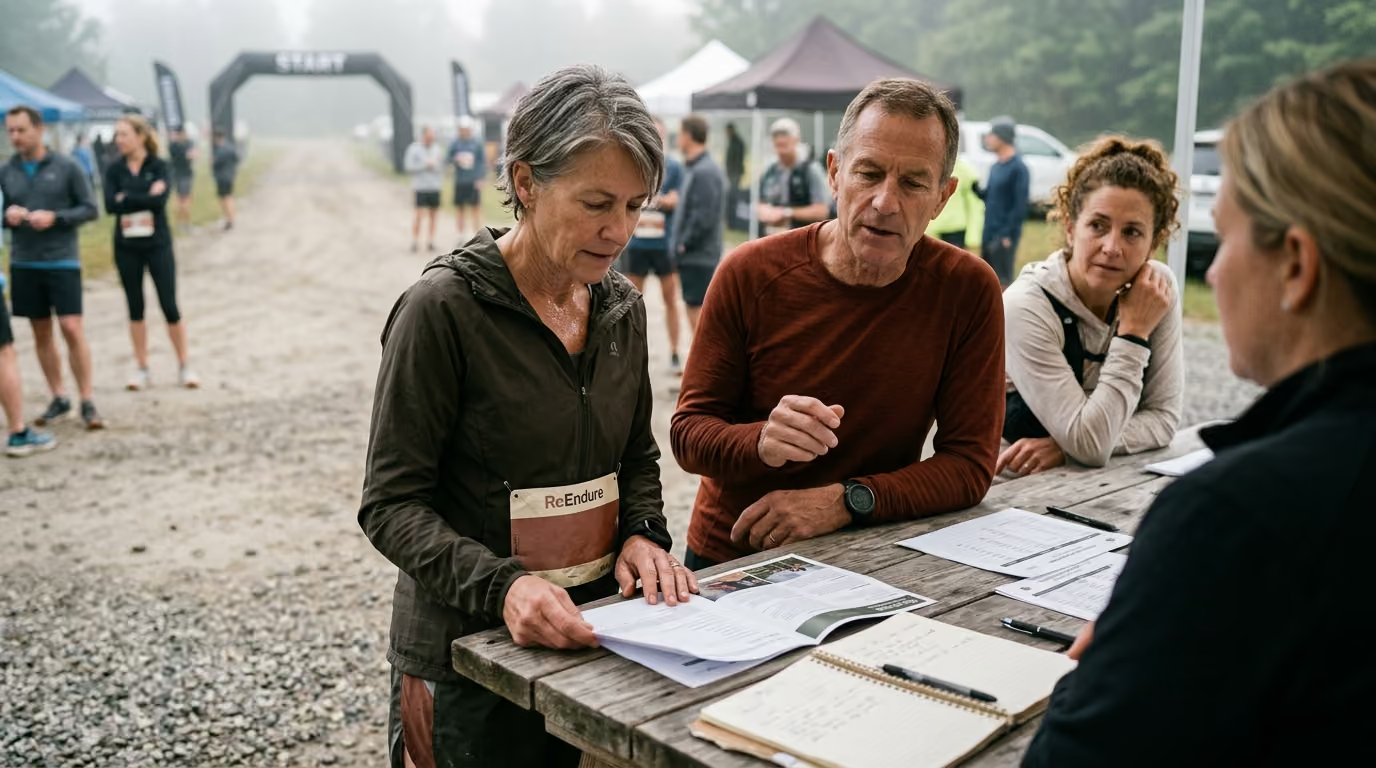

Endurance sports etiquette governs on-course behavior so athletes can safely manage pack dynamics, navigate busy aid stations, and execute clean passes.





You have likely searched online for how to pass cleanly in a crowded marathon, how to navigate a chaotic triathlon aid station, or what to do when a pack swarms your line on the bike. Endurance races are shared spaces where hundreds or thousands of athletes push their physical limits simultaneously. When fatigue sets in, basic spatial awareness often deteriorates. This guide provides a definitive reference on endurance race etiquette, giving you the tools to compete assertively while protecting the safety, fairness, and flow of the event.
Race etiquette sits directly between formal competition rulebooks and unwritten community norms. A maneuver can be technically legal under governing body rules yet remain hazardous or inconsiderate to those around you. Conversely, an act of courtesy, such as accepting an unvetted bottle from a spectator, might violate strict anti-assistance regulations. Mastering race etiquette requires balancing three primary standards: safety, fairness, and mutual courtesy.
To navigate any competitive environment, veteran competitors rely on a simple four-part behavioral framework: look, communicate, commit, and clear. First, you look to assess course width, obstacles, and closing speeds. Next, you communicate your intention with a brief, audible warning. Then, you commit decisively to your line rather than drifting across the path. Finally, you clear the maneuver completely before settling back into the primary racing line.
Etiquette is never about being passive or surrendering hard-earned race position. High-performance racing requires assertive positioning, calculated lines, and decisive movements. True etiquette ensures your actions are predictable, giving every competitor the space and time needed to respond safely.
Shared-course awareness is the practice of continuously monitoring the moving environment around you. This includes competitors, volunteers, course marshals, medical staff, barriers, surface changes, and turns. When you race on open roads or singletrack, you share limited physical space with people moving at varied speeds and facing varied levels of fatigue. Failing to account for these variables creates bottlenecks and causes avoidable collisions.
A foundational element of course awareness is holding a predictable line. Predictability allows surrounding athletes to calculate their own pacing and line choices without sudden defensive reactions. Weaving across a road to find tangents is standard practice, but doing so without checking your blind spots endangers everyone. You must always check over your shoulder before making lateral shifts across the field.
Course awareness also means recognizing the changing geometry of the course. Narrow bridges, sharp turns, surface transitions, and aid stations naturally compress the field. An experienced athlete anticipates these choke points and adjusts their positioning before the pack converges. Anticipating compression prevents sudden braking, heel-clipping, and wheel overlap.
Finally, athletes must distinguish between an active racing line and a recovery or stopping line. If you need to slow down, stretch a cramped muscle, or manage a mechanical issue, you must move out of the high-speed corridor. Drifting to a stop in the center of the path forces trailing athletes to take emergency evasive action. Always migrate safely to the outer boundary of the course before altering your pace.
Drafting sits at the intersection of physics, sportsmanship, and regulatory compliance. Moving directly behind another athlete reduces the energetic cost of overcoming air resistance. In cycling, wind tunnel testing and computational fluid dynamics show that drafting behind a single rider reduces energy expenditure by approximately 18% at 32 km/h and 27% at 40 km/h. When riding inside a group of eight cyclists, energy savings can reach up to 39%.
In a large peloton, aerodynamic drag in the middle and rear positions can drop to 5% to 10% of the drag experienced by an isolated rider at equal speed. Even on uphill sections, aerodynamic shelter offers measurable benefits. Research examining uphill drafting demonstrated energy savings exceeding 7% on a 7.5% gradient at speeds of 6 meters per second. These data points demonstrate that drafting provides a substantial physiological advantage, which is why governing bodies regulate it strictly.
In draft-legal cycling and triathlon, drafting is an integral tactical skill that demands sharp pack awareness. In non-drafting multisport events, however, entering the draft zone without completing a pass constitutes an illegal advantage. World Triathlon rules define a standard 12-meter bicycle draft zone measured from the leading edge of the front wheel. Athletes are allowed 25 seconds to complete an overtake once they enter this zone. USA Triathlon enforces a matching 12-meter zone and a 25-second passing window.
In running events, tucking behind another competitor for wind shelter is entirely legal and strategically common. Etiquette in running drafting centers on avoiding physical contact with the lead runner. Clipping heels, running directly on someone's heels, or breathing down their neck causes unnecessary anxiety and collision risk. Maintain a steady buffer of several inches, match the leader's cadence, and take your turn pushing into the wind if you are working cooperatively. For those refining their race-day tactics, studying our endurance performance training guides can help balance physiological output with tactical drafting efficiency.
Executing a pass safely requires anticipation, speed control, and clear communication. The athlete attempting the pass carries primary responsibility for completing the maneuver cleanly. The faster competitor does not possess an automatic right-of-way that permits forcing others off the safe racing surface. A structured passing sequence prevents confusion and keeps all participants moving forward safely.
When passing on foot in a road race, identify a wide opening and approach with sufficient closing speed. Issue a short, direct verbal signal such as "passing left" or "on your right" before you reach the runner's shoulder. Complete the pass with steady momentum rather than accelerating hard and slowing immediately in front of them. Allow at least two full strides of forward clearance before returning to your preferred line.
Cycling passes require larger margins of error due to higher speeds and the risk of mechanical contact. Approach the rider ahead with a clear speed differential to avoid stalling alongside them. Announce your pass early, maintain a lateral clearance of at least one meter, and complete the movement within the regulated 25-second window. Once the pass is complete, the overtaken rider is obligated by multisport rules to drop out of the 12-meter draft zone before attempting a re-pass.
Trail running and ultramarathons introduce technical terrain, steep drop-offs, and narrow singletrack that alter passing etiquette. On exposed ridges, rocky descents, or switchbacks, the trailing runner must wait patiently for a stable section of trail. Call out your presence from several yards back, stating your intention without demanding immediate compliance. The lead runner should identify a wide, stable spot, step slightly aside while maintaining forward motion, and invite the faster runner through.
When you are the athlete being passed, your primary job is to remain predictable. Maintain your current line and pace rather than veering suddenly across the trail or road in an attempt to be polite. If you hear a pass announced on your left, stay firmly to your right. You are never obligated to jump into dangerous drainage ditches, loose gravel, or deep mud to accommodate another athlete.
Aid stations represent the highest-risk zones for collisions, confusion, and rule violations during an endurance race. Athletes converge rapidly while fatigued, reaching for supplies and altering their running or riding lines. Establishing sound habits around hydration tables ensures you collect necessary fluids without disrupting the athletes around you.
The approach phase requires early positioning and decisive intent. Decide whether you require water, sports drink, solid food, or ice well before you enter the station footprint. Move toward the designated side of the course gradually rather than cutting diagonally across traffic at the last second. Avoid crowding the very first volunteer or table, as this is where recreational packs consistently bottleneck. Bypass the initial tables and collect your supplies from open volunteers located further down the line.
When collecting cups or bottles, use clear eye contact and point toward the volunteer you intend to use. The Road Runners Club of America advises athletes to keep moving forward through the station rather than coming to a dead stop at the table. Take your cup cleanly, compress the top rim into a small spout for easy drinking while moving, and proceed smoothly through the zone. If you miss a cup, continue moving forward to the next volunteer rather than stopping or stepping backward into incoming traffic.
Proper disposal of waste is both an etiquette standard and an environmental obligation. Throwing cups, gel wrappers, or banana peels blindly over your shoulder creates a slipping hazard for trailing competitors. The Road Runners Club of America recommends dropping used cups near waist height close to designated trash receptacles or aid station boundaries. If bins are unavailable, drop your trash close to the edge of the road where event sweepers can collect it efficiently.
Personal nutrition stations and outside assistance involve strict regulatory boundaries that every athlete must understand. World Athletics technical rules state that elite competitors may accept water and refreshments only at official organizer-provided stations. Accepting fuel, hydration, or pacing from an uncredentialed spectator on the course can result in formal time penalties or immediate disqualification. World Triathlon similarly limits nutrition hand-ups to official aid, personal-needs, or designated coaches' zones. Review our detailed fueling and hydration strategies to organize your race nutrition plan within official regulatory constraints.
Joining a pacing group or riding in a cooperative pack is an effective strategy for achieving target finish times. However, packs are dynamic groups of independent athletes, not private trains with exclusive rights to the road. A 2024 systematic review on marathon pacing strategies highlighted that pacing profiles are dynamic, varying by gender, terrain, and race distance. Even the most experienced pace leaders will experience slight fluctuations in split times across varying gradients and wind conditions.
When entering an established running pace group, integrate yourself from the rear or the outer flank. Do not force your way abruptly into the physical center of a dense cluster of runners. Match the cadence and speed of the group before adjusting your spacing. If you need to leave the group to use a restroom or alter your pace, drift outward gradually rather than applying the brakes in the middle of the pack.
Group communication is essential for protecting the safety of everyone in the pack. Lead runners must call out upcoming hazards, such as potholes, speed bumps, road narrowing, or discarded bottles. Use concise verbal cues paired with simple hand signals, such as pointing downward toward an obstacle in the road. In cycling pelotons, hand signals pointing out road debris or signaling an upcoming stop are mandatory safety duties.
Pacemakers volunteer their time and energy to help competitors hit specific performance targets. Treat these pace leaders as navigational reference points rather than personal coaches or protective barriers. Do not crowd the pace leader, step on their heels, or surge ahead of them every time the pace dips slightly. If the pace group slows temporarily to navigate an aid station, maintain your composure and resume your target rhythm smoothly once the road opens up.
Riding in a cycling pack requires absolute discipline regarding line holding and braking behavior. Never cross wheels with the rider in front of you, as a minor lateral shift from the leader can cause an instant crash. Feather your brakes gently to modulate speed instead of grabbing the levers abruptly. If you take a pull at the front of a cooperative pace line, pull off smoothly when your turn finishes, drift to the back, and reattach cleanly.
Volunteers, course marshals, race officials, and medical personnel form the operational backbone of any organized event. These individuals dedicate long hours in varied weather conditions to keep the course safe and functional. Treating event staff with patience and respect is non-negotiable, regardless of how exhausted or frustrated you feel during the competition.
Understand the distinct roles among the personnel working on the course:
Volunteers distribute hydration, manage gear check-in, and hand out finisher medals. They follow operational directives from race directors and are not responsible for course design decisions.
Marshals manage road intersections, direct runner traffic, and signal approaching hazards. Their navigational instructions must be obeyed immediately, even if their directed line seems temporarily slower.
Officials enforce technical rulebooks, monitor draft zones, evaluate outside assistance, and issue time penalties. They maintain fairness across all age groups and competitive categories.
Medical professionals have absolute authority to evaluate an athlete's physical condition. If a medical official orders an athlete to stop for evaluation, the athlete must comply immediately.
Clear communication with volunteers keeps high-density areas operating smoothly. State your needs with simple, clear requests such as "water" or "sports drink" rather than vague hand gestures. A brief nod, hand raise, or quiet word of thanks requires minimal energy and reinforces a positive sporting culture. If you encounter a logistical failure, such as an unstaffed aid station, report it calmly to timing officials after the finish rather than arguing with volunteers on the course.
Medical emergencies supersede all competitive considerations. If you witness another athlete collapse, exhibit severe disorientation, or sustain an acute traumatic injury, notify the nearest course marshal or aid station immediately. Note the approximate mile marker or landmark, the athlete's race number, and their apparent condition. Stopping briefly to assist or report a compromised competitor is an essential duty of every endurance athlete. To stay engaged with wider competitive norms, explore our racing events and community articles.
As athletes age, tactical race etiquette shifts from a purely courteous practice into an essential tool for longevity and injury prevention. Master competitors aged 35 to 65 often carry decades of aerobic fitness, allowing them to race with high intensity. However, physiological changes in reaction times, peripheral depth perception, and tissue resilience require refined on-course management.
Changes in peripheral vision and vestibular processing make sudden, unexpected movements by surrounding athletes more disruptive. Older competitors should establish a wider safety buffer around themselves in dense starting corrals and aid stations. Positioning yourself on the outer third of a running pack or cycling paceline provides a clear escape route if an athlete ahead falls or swerves.
Audible communication becomes more critical when racing across mixed age divisions. Younger athletes wearing headphones or experiencing deep fatigue may suffer from severe tunnel vision. Using sharp, assertive vocal cues early gives surrounding competitors adequate time to process your presence. State your passing intentions with authority, leaving no ambiguity about your intended line.
Recovery from high-impact collisions, road rash, or soft-tissue sprains takes significantly longer as joint cartilage and connective tissues age. Taking reckless risks to save two seconds at a congested bottleneck or cutting inside a tight cycling turn is a poor trade-off for long-term athletic continuity. Prioritizing clear lines, wide turns, and safe spacing ensures you can cross the finish line healthy and return to consistent training the following week. For more insights on sustaining competitive performance across decades, visit our healthy athletic longevity resources.
Even well-intentioned competitors frequently make errors in course etiquette when physiological fatigue compromises cognitive clarity. Recognizing these common pitfalls allows you to correct your behavior before causing an accident or receiving a penalty:
Grabbing a water cup and immediately dropping to a dead walk in front of the table creates a dangerous chain-reaction collision for trailing runners. Always take your fluid and run or jog through the station exit before transitioning to a walking stride at the far edge of the road.
Entering another athlete's line or draft zone without sufficient speed differential leads to prolonged side-by-side riding or running. In non-drafting triathlons, this hesitation risks a drafting or blocking penalty. If you decide to pass, execute the move decisively.
Wearing dual-ear, noise-canceling headphones isolates you from crucial safety information on the course. You cannot hear verbal passing warnings, bicycle bells, approaching emergency vehicles, or marshal instructions. If you race with audio, keep one ear completely uncovered or utilize bone-conduction devices at low volume.
Discarding gel wrappers, empty bottles, or outer clothing across pristine natural trails or outside designated road-race collection zones damages community relations and risks disqualification. Carry your trash to the next official station or tuck it securely into your shorts pockets.
Seeding yourself in a starting corral substantially faster than your realistic target pace creates immediate chaos. Faster runners behind you are forced to weave aggressively, dramatically increasing tripping hazards in the opening mile. Seed yourself honestly based on current fitness rather than aspirational goals.
Holding up a faster competitor on technical singletrack because you feel entitled to your position is poor trail etiquette. When safe terrain appears, step aside and let the faster runner through smoothly.
Evaluating your race etiquette and situational awareness requires objective post-race assessment. You can track specific metrics and qualitative markers over a competitive season to ensure you are racing cleanly and efficiently:
Analyze your power files, GPS pace plots, or cadence graphs after a race. Frequent, sharp spikes in deceleration followed by hard accelerations often indicate poor anticipation of course choke points, packs, and aid stations. Smooth, steady velocity curves reflect high spatial awareness and clean line choices.
Review your heart rate data specifically across aid station intervals. A sharp spike in heart rate combined with a drop in speed indicates panic, chaotic maneuvering, or physical bottlenecks. Maintaining a stable heart rate through these zones shows calm execution and effective resource collection.
Keep a log of near-misses, verbal warnings received, wheel touches, or physical contact across your season. A high frequency of near-misses is an objective indicator that you are changing lines too abruptly, following too closely, or misjudging passing gaps. Aim for clean seasons with zero structural conflicts or near-misses.
In multisport and competitive cycling, a clean penalty sheet confirms that your understanding of draft zones, blocking rules, and passing windows matches regulatory standards. Consistently racing without formal warnings demonstrates that your tactical execution is sound. To study broader competition frameworks, browse our racing and lifestyle resources.
Applying proper race etiquette begins during your daily training cycles, not five minutes before the starting gun fires. Use this practical checklist to sharpen your course awareness this week:
Mastering race etiquette elevates your confidence on the racecourse. By combining assertive competitive drive with spatial awareness and mutual respect, you protect your own safety and enhance the racing experience for the entire endurance community.

Follow ReEndure for practical insights on endurance training, recovery, nutrition and healthy aging. Stay connected for new articles, research led guidance and ideas to help you perform better for longer.


Read practical ideas on endurance training, recovery, nutrition and healthy aging to keep progressing for years to come.
Read the Blog