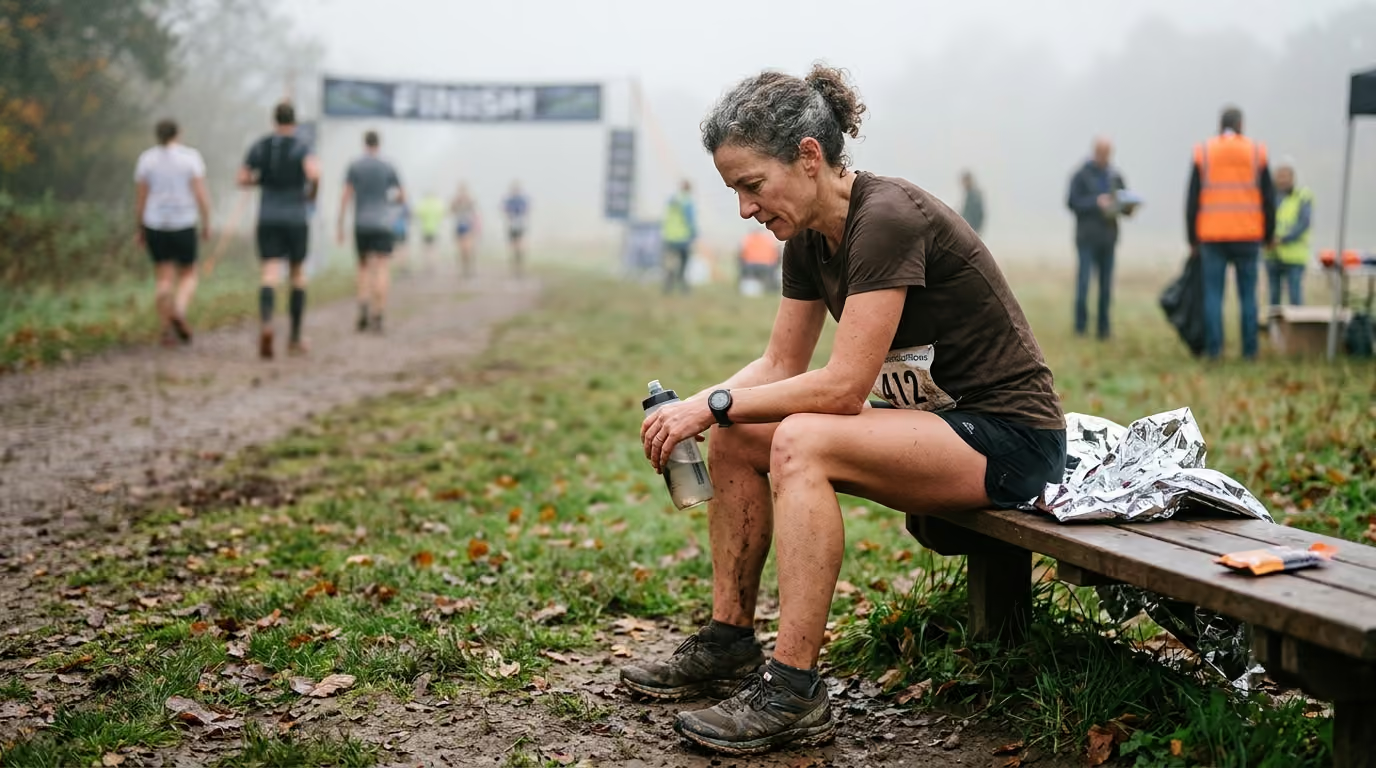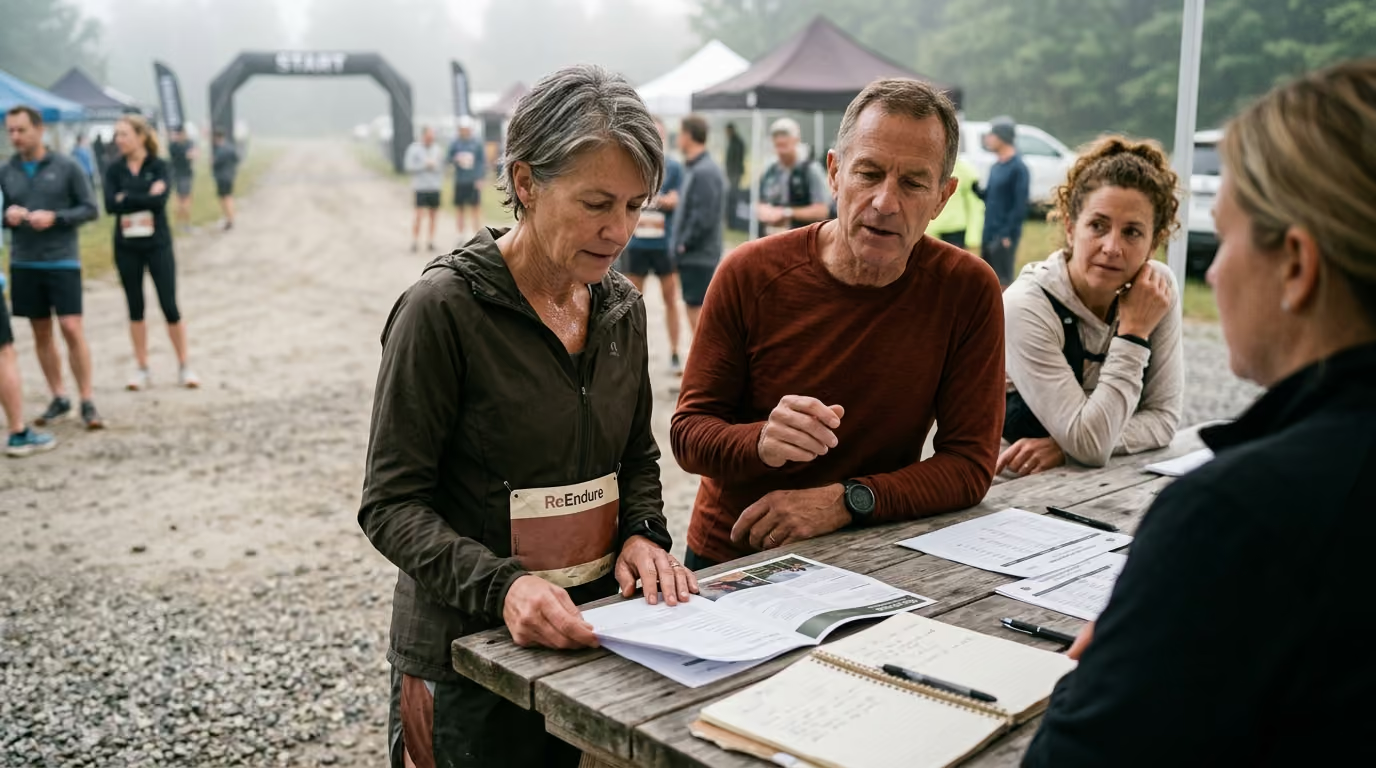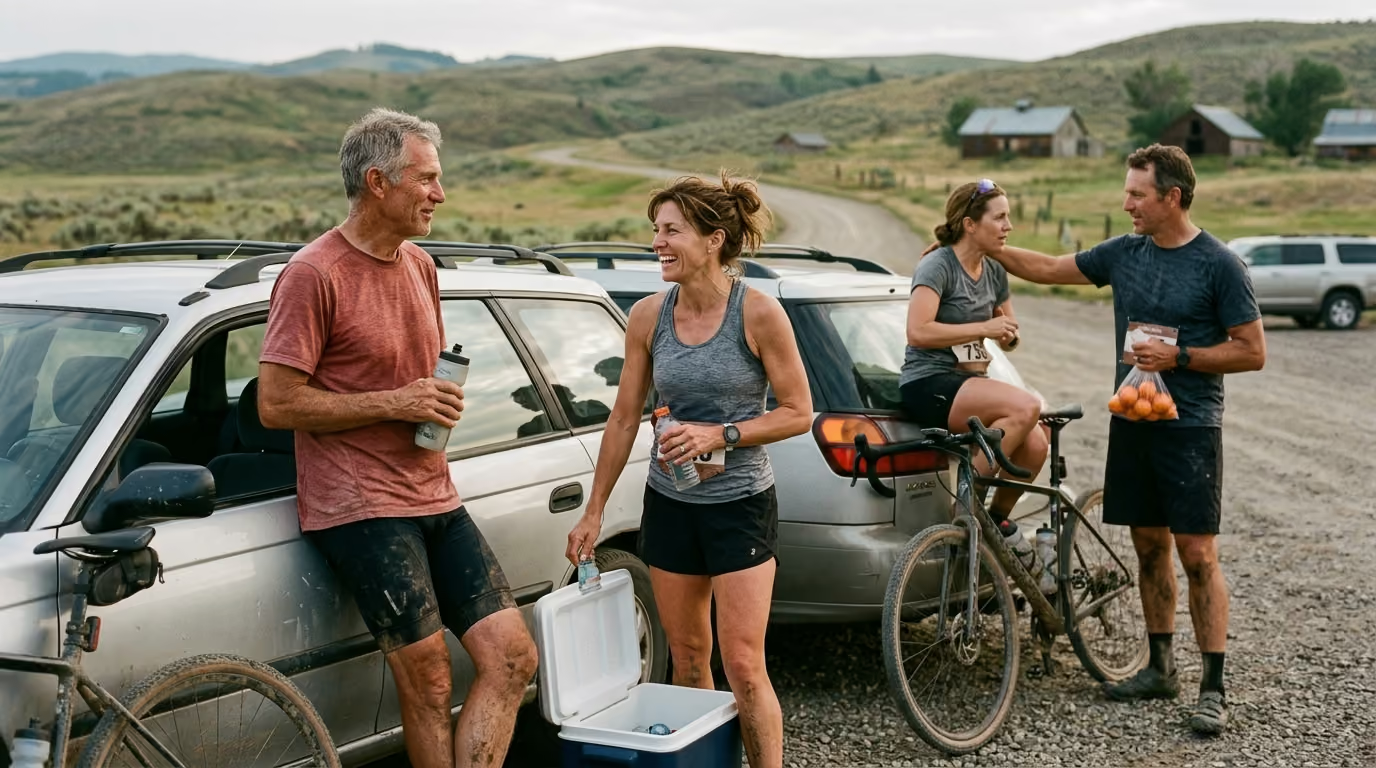

Standing at the start line with friends demands clear coaching boundaries, aligned psychological expectations, and detailed logistics for everyone involved.





Endurance athletes often search for how to train with a spouse without fighting, or how to involve friends in a marathon without creating friction. The transition from solo training to a shared race weekend frequently creates unexpected relational strain. When training volumes increase, household schedules tighten and emotional stakes rise.
This guide provides a comprehensive framework for navigating group and family participation in endurance events. By understanding the sports science of motivation, setting practical logistical boundaries, and separating individual athletic goals from shared social experiences, you can protect both your race performance and your relationships.
Many endurance athletes remember the exact moment an exciting shared goal turned into a source of relational tension. It usually begins with good intentions during a holiday dinner, a post-race celebration, or an inspiring television broadcast. A partner expresses casual interest in running a half marathon, or a group of close friends decides to enter the same autumn trail race. In the initial excitement, registration fees are paid, group chats are formed, and training calendars are populated with ambitious weekend sessions.
Within eight weeks, the reality of asymmetric training demands begins to surface. One runner develops minor shin pain and needs to reduce weekly mileage, while another insists on hitting every scheduled interval. A non-running partner who agreed to spectate finds their entire weekend scheduled around timing mats, bag checks, and early morning transit shuttles. During weekend long runs, well-meaning advice about cadence, hydration, or running shoes is perceived as patronizing criticism rather than helpful encouragement.
By race morning, the social atmosphere has deteriorated. The faster or more experienced athlete feels weighed down by logistical management, while the beginner feels monitored and judged. Family members serving as unpaid support crews often feel exhausted, cold, and stranded on closed municipal roads without access to restrooms or warm food. What was conceived as a bonding milestone becomes an exercise in frustration.
These conflicts rarely stem from a lack of affection or mutual respect. Instead, they occur when participants fail to differentiate between a shared event, a shared goal, and shared execution. When you assume that entering the same race requires identical pacing, matching preparation, and joint emotional processing, conflict is almost inevitable. Navigating these dynamics requires an evidence-based approach to motivation, clear communication protocols, and rigorous logistical planning.
To understand why group endurance projects succeed or fail, we must look at self-determination theory, a robust psychological framework developed by researchers Edward Deci and Richard Ryan. Self-determination theory posits that human motivation and psychological well-being depend on the satisfaction of three basic psychological needs: autonomy, competence, and relatedness. When endurance training satisfies these three needs, participants experience intrinsic motivation and long-term adherence. When any of these needs are compromised, motivation becomes external, pressured, and fragile.
Autonomy refers to the perception of choice and self-endorsement of one's actions. In endurance sports, an athlete feels autonomous when they choose their own training volume, event distance, and pacing targets. When an experienced runner dictates a partner's workout schedule or insists on registering for a specific distance, the partner's autonomy is undermined. Even if the beginner complies, their participation becomes driven by obligation or guilt rather than personal value.
Competence is the feeling of mastery and effectiveness in interacting with one's environment. Beginners build competence through progressive, achievable challenges that match their current capacity. When an experienced athlete constantly corrects a newcomer's form, analyzes their heart rate data, or compares their progress to standard training curves, feelings of competence decline. Research demonstrates that a motivational climate focused on personal progress rather than interpersonal comparison significantly improves intrinsic motivation and sports persistence.
Relatedness is the feeling of being connected to, valued by, and caring for others. Endurance sports offer powerful opportunities for relatedness when people share difficult experiences. However, relatedness breaks down when athletic performance is made a condition of acceptance or respect. If a slower finish time or a dropped workout creates tension between partners, relatedness is replaced by conditional approval.
Motivation exists along a continuum ranging from external regulation to pure intrinsic enjoyment. Research examining marathon participants highlights varied motivators across athletes. In a notable study on marathon motivation, researchers identified distinct categories of participation drivers: personal achievement was reported by 75.9 percent of respondents, health benefits by 71.3 percent, psychological well-being by 67.8 percent, social influence by 56.3 percent, and escape from routine by 48.3 percent. These findings confirm that individuals enter the exact same race for entirely different reasons.
Sociological research on marathon runners and family life demonstrates that long-term endurance training requires continuous negotiation of household commitments. Studies show that runners manage work, family, and leisure obligations using strategies categorized as taking time, buying time, and sharing time. Conflict arises when training demands are treated as unilateral imperatives rather than negotiated agreements within the household. Viewing endurance racing through racing and lifestyle guidance helps maintain this essential balance between ambition and domestic harmony.
Before anyone enters payment details on a race registration portal, the group must hold an alignment conversation. This discussion prevents misaligned expectations from surfacing midway through a twelve-week training cycle. Athletes should use a structured four-part decision model addressing why, what, who, and how.
The first step is establishing why each person wants to participate. Each participant should independently articulate their primary motivation without influence from the group leader. One person may want a competitive time, another may seek personal health improvements, and a third may simply want an excuse to visit a new city. Acknowledging divergent motivations early eliminates the false expectation that everyone must approach the race with the same level of intensity.
The second step is defining what the group is agreeing to do. The group must clarify whether they are committing to shared travel, shared accommodation, joint training sessions, or merely meeting at a restaurant after the finish. A healthy group agreement explicitly states that signing up for the same event does not obligate participants to run together, maintain identical paces, or cross the finish line holding hands.
The third step is assigning decision ownership. Every participant must retain total authority over their own training schedule, daily workout execution, nutrition, gear choices, and medical decisions. When each athlete owns their preparation, the dynamic shifts away from surveillance and toward mutual support.
The fourth step is establishing contingency protocols for how unexpected changes will be handled. The group should decide in advance how to respond to missed training sessions, illness, travel disruptions, and race-day withdrawals. Establishing permission to defer, drop down in distance, or withdraw removes the fear of letting others down.
To structure individual aspirations, athletes should adopt a layered goal architecture consisting of outcome, performance, and experience goals.
Outcome goals focus on specific competitive results, such as finishing under four hours, setting a personal record, or earning an age-group award. These goals are inherently vulnerable to weather, course topography, gastrointestinal distress, and unexpected mechanical issues. Outcome goals should remain strictly individual rather than shared across the group.
Performance goals focus on personal execution metrics that remain largely within the athlete's direct control. Examples include executing an agreed fueling plan, maintaining a specific heart rate ceiling on climbs, or walking through every fluid station. Performance goals build self-efficacy and competence without requiring comparison to another runner's splits.
Experience goals focus on relational connection, enjoyment, and shared memories regardless of race-day performance metrics. Examples include enjoying a pre-race dinner, taking a commemorative photo, or celebrating over a post-race meal. Experience goals are where the group unifies; while individual race times may vary, everyone can share the satisfaction of completing the journey.
A critical rule in group racing is the absolute elimination of rescue goals. A rescue goal occurs when an experienced athlete assumes personal responsibility for another runner's finishing time or completion. Pledging to drag a friend across the line regardless of physical distress compromises safety and breeds resentment. Every participant must be encouraged to listen to their own physiology and make independent decisions on the course.
Training together requires a deliberate operational structure that prevents overtraining in less experienced runners and undertraining in advanced participants. A three-layer training model accommodates divergent fitness levels while preserving social connection.
Individual workouts form the foundation of each athlete's training plan. High-intensity interval workouts, tempo runs, and race-pace simulations should almost always be performed independently. Attempting to execute quality sessions together forces one runner into an excessively high physiological zone while leaving the other under-stimulated.
Low-stakes workouts provide the primary opportunity for shared training. These sessions include recovery runs, easy conversational jogs, indoor spin sessions, and mobility routines. The rule for these sessions is simple: the pace is dictated entirely by the slower athlete, and the effort must remain strictly aerobic. If the faster athlete requires additional volume, they should add extra mileage before or after the shared run rather than increasing the pace during it. Exploring structured training performance principles ensures these sessions fit logically into broader periodization.
Athletes can share the camaraderie of long weekend training without compromising pacing by utilizing shared venues. For example, athletes can train on looped multi-use trails, athletic tracks, or out-and-back paths where runners can pass each other periodically or meet at a designated turnaround point. Both runners travel to the location together, execute their respective training plans at their required paces, and reconvene afterward for post-run nutrition.
A foundational principle for maintaining relationship health during training is the rule of no uninvited coaching. Family members and friends should never offer technical advice, pacing corrections, or gear critiques unless explicitly asked. If an athlete desires coaching, they should seek guidance from a certified professional or explicitly define what feedback they want from their peer. Unsolicited advice from a romantic partner or close friend is frequently received as parental control or implicit criticism.
Health screening and safety should be approached systematically without alarmism. The American College of Sports Medicine (ACSM) preparticipation screening guidelines emphasize three factors: an individual's current physical activity level, the presence of known cardiovascular, metabolic, or renal disease, and the presence of signs or symptoms suggestive of disease. Inactive individuals without known disease or symptoms may begin light to moderate exercise safely without medical clearance. However, anyone experiencing chest pain, unusual shortness of breath, dizziness, or joint pain that alters their normal movement pattern should consult a qualified clinician.
Epidemiological research on running injuries illustrates the necessity of individualized progression. A systematic review published in Sports Medicine found that running-related injury incidence varied widely across populations: 14.9 percent in novices, 26.1 percent in recreational runners, and 62.6 percent in competitive runners. The review emphasized that evidence does not support attributing running injuries to a single universal training mistake, such as exceeding an arbitrary weekly mileage increase percentage. Training progression must be customized to individual recovery capacity, movement history, and soft tissue tolerance. To keep training sustainable over decades, integrating injury prevention strategies is essential.
Spectating an endurance event is an active logistical project that requires meticulous planning. When non-racing family members have a chaotic, exhausting race day, it diminishes the overall experience for everyone. A successful spectator strategy treats the support crew with the same consideration as the competing athletes.
Endurance race organizers impose strict spatial boundaries to manage safety and crowd control. Official spectator regulations from major events like the Boston Marathon, the Tokyo Marathon, and Ironman competitions emphasize that spectators must never enter the active course, run alongside athletes, or cross barriers. The Boston Athletic Association strictly prohibits spectators from stepping onto the course or entering the athlete finish chute. Tokyo Marathon organizers prohibit crossing the course outside designated underground passages and ban the use of step stools or ladders for viewing. Ironman rules strictly exclude spectators from the finish chute and warn families against following athletes by vehicle.
Attempting to view an athlete at multiple points along a point-to-point marathon or triathlon creates severe logistical stress. Road closures, crowded public transit, and restricted parking often result in missed sightings and frantic running through congested city streets. Instead of attempting a multi-point chase, spectator groups should select a single, easily accessible viewing location situated near public transit, food options, and restroom facilities.
The viewing location should be chosen based on the physical needs of the least mobile member of the spectator party. If elderly grandparents or young children are attending, the location must provide seating, shade or shelter from adverse weather, and easy exit routes. Point-to-point courses frequently cut off transit lines, as seen during events like the Big Sur International Marathon, where spectator vehicles are completely prohibited on Highway 1. Selecting an accessible spot prevents family fatigue and resentment.
Every group must establish a comprehensive meeting protocol before race morning. Cell phone networks in finish areas often become overloaded, leading to delayed text messages and failed phone calls. The group should agree upon a primary and secondary meeting location outside the secure athlete recovery zone.
The meeting plan must include the following components:
Spectators should never attempt vehicle-based pursuit of athletes. Driving along a marathon or cycling course creates safety hazards, violates race rules, and contributes to municipal traffic congestion. Spectating from a stable, comfortable position allows supporters to provide enthusiastic, calm encouragement when the athlete passes.
Communication dynamics change under the physiological stress of race weekend. Athletes experience elevated sympathetic nervous system activation, cognitive fatigue, and heightened emotional sensitivity. Establishing clear communication rules helps prevent misunderstandings during these high-stress windows.
Live tracking technology through GPS apps or official timing mats is a valuable tool, but its use should be mutually agreed upon. Some athletes find live tracking reassuring, knowing their family can monitor their progress safely. Other athletes experience live tracking as performance surveillance, creating anxiety that every bathroom break or slowed split will trigger panic or post-race questioning. Before enabling tracking, discuss whether live updates are helpful or stressful for the athlete.
The language used by supporters along the course and at the finish line significantly influences the athlete's psychological state. Supporters should utilize autonomy-supportive, process-focused language that reinforces the athlete's internal agency.
Phrases that demand completion at all costs undermine athlete safety and trigger external pressure. When an athlete feels that their worth or family standing depends on finishing, they are more likely to ignore dangerous symptoms of heat illness, cardiac distress, or musculoskeletal injury. Supportive language acknowledges effort while preserving the athlete's freedom to adjust their effort or stop if necessary.
Post-race recovery requires immediate physical care and emotional space. Upon finishing an endurance event, an athlete experiences glycogen depletion, mild dehydration, and neuroendocrine fatigue. They may feel overwhelmed, tearful, or disoriented. Immediate physical contact, such as tight embraces, may be uncomfortable for an athlete experiencing nausea, skin chafing, or hyperthermia.
Supporters should allow the athlete fifteen to thirty minutes to collect their dry clothing, consume fluids, and normalize their physiological state before initiating in-depth conversations. Asking detailed questions about specific mile splits or tactical errors should wait until the post-race meal. The primary message at the finish line should always be unconditional affirmation of the person, regardless of the numerical result on the clock. Reviewing mastering endurance recovery helps athletes and their families navigate post-event physical restoration smoothly.
When adult children race with aging parents, or when masters athletes introduce younger family members to endurance sports, biological differences must be factored into the training and racing plan. Age-related changes in muscle mass, tendon elasticity, and autonomic recovery capacity require tailored expectations.
Masters athletes over forty and fifty generally require longer recovery windows between high-intensity sessions. While aerobic capacity can remain remarkably stable with consistent training, myofibrillar protein synthesis rates decline with age, and connective tissues take longer to remodel. An adult child in their twenties can often recover from a hard long run within forty-eight hours, whereas a parent in their late fifties may require four to five days of active recovery before their musculoskeletal system is ready for another loading cycle.
These physiological realities mean that multi-generational groups should rarely follow the exact same training schedule. The older athlete may thrive on an eight-day or nine-day training cycle rather than a traditional seven-day weekly schedule, alternating running days with low-impact cross-training. Attempting to match training frequency across generations frequently leads to overuse injuries in older participants or undertraining in younger ones. Learning more about healthy aging resources can provide valuable guidance for structuring longevity-focused training.
Power dynamics also require careful navigation in family racing. A parent who has spent decades providing guidance and financial support may find it difficult to step back into a peer role. Conversely, an adult child may feel intense pressure to perform well to validate their parent's investment of time or money. Establishing clear generational boundaries where each adult operates as an independent peer preserves autonomy and prevents old childhood dynamics from resurfacing during training.
When minor children participate in race weekend, their involvement must remain entirely voluntary and developmentally appropriate. Children should never be pushed to complete adult distances, and their participation should focus exclusively on fun, motor skill acquisition, and play. Entering a family 5K or kids fun run should be celebrated as an active adventure rather than a competitive performance trial.
Even experienced athletes can fall into predictable traps when racing with family and friends. Recognizing these common errors allows you to take preventive action before relational friction develops.
The most frequent source of post-race resentment is the failure to acknowledge the labor performed by non-racing supporters. A spouse or partner who spends months managing household responsibilities, preparing meals, and driving to events is contributing significant time and energy to the athletic project. If their efforts are treated as invisible or expected, resentment builds. Athletes should explicitly acknowledge this contribution, distribute logistical tasks fairly, and plan post-race activities that cater to the supporter's preferences.
Promising to run together regardless of race-day conditions is a common mistake that often harms both participants. If one runner is having a strong day while the other struggles with cramping or stomach distress, staying together forces one into physical agony and the other into acute frustration. A far healthier approach is the agreed split protocol: start together if desired, but give explicit permission to separate after a specific mile marker if paces naturally diverge.
Assuming that entering the same distance means following identical training programs leads to suboptimal preparation. Two individuals running the same half marathon may require vastly different weekly volumes, fueling strategies, and footwear. Training plans must be customized to individual athletic backgrounds, biomechanics, and injury histories rather than shared as a one-size-fits-all document.
When an athlete sustains an injury during training, they often experience intense guilt about letting down their running partner or family group. This guilt can pressure the injured runner to continue training through tissue damage, turning a minor strain into a chronic injury. The group must reinforce that an injury or illness is a biological event, not a failure of character or commitment. If an athlete cannot race, they should be offered low-pressure alternatives, such as volunteering at an aid station, spectating, or simply enjoying the post-race meal.
Spectator itineraries that attempt to view an athlete at four or five different course points almost always collapse under real-world conditions. City traffic, subway delays, and road closures cause missed connections, leaving supporters stressed and athletes disappointed when they scan the crowd and see an empty sidewalk. Simplifying the spectator plan to one excellent location ensures a reliable, stress-free experience for everyone.
Examining how different groups navigate the complexities of endurance events highlights practical strategies for success.
Mark, a veteran marathoner with a 3:15 personal best, invited his partner, Sarah, to complete her first half marathon. Rather than imposing his training methods on Sarah, they established distinct operational boundaries before registering. Sarah selected her own beginner-friendly half marathon training plan and utilized a certified local running group for structured coaching.
Mark maintained his higher-volume training schedule independently on weekday mornings. On Sunday recovery days, they completed a thirty-minute easy recovery jog together at Sarah's conversational pace, followed by a shared breakfast. During the race weekend, Mark entered the full marathon while Sarah ran the half marathon. Because the events had staggered starts, Mark was able to watch Sarah cross her finish line before he lined up for his race. Both partners achieved meaningful personal goals while strengthening their relationship.
A family of five decided to attend a major regional running festival featuring a marathon, a 10K, and a 5K. The father and adult daughter registered for the marathon, the mother and son entered the 10K, and the teenage daughter opted to volunteer at an official aid station.
The family selected a central hotel located within walking distance of the finish precinct, eliminating the need for race-day car travel. They established a single meeting point near a prominent municipal fountain outside the secure finisher area. Because each family member participated at a distance matching their current fitness and interest, nobody felt pressured or overburdened. The family concluded the weekend with a shared dinner where the volunteer daughter was celebrated alongside the race finishers for her contribution to the event.
Three training partners entered the same target marathon with differing time goals ranging from 3:30 to 4:00. In previous cycles, attempts to run together had led to mid-race dropouts and interpersonal conflict when one runner felt held back while another struggled to survive the pace.
For this event, they instituted the twenty-mile rule. They agreed to travel to the race together, share pre-race logistics, and line up in their respective starting corrals independently. Each athlete committed to executing their individual pacing strategy through mile twenty without regard to the others. If they happened to cross paths on the course, they offered a brief word of encouragement but felt no obligation to adjust their speed. After the finish, they reunited at their prearranged meeting spot to share their experiences without ranking or comparing their performances.
Just as athletes monitor training volume, heart rate variability, and split times, groups should assess the relational health of their shared projects. Evaluating how the training cycle and race weekend affected family dynamics ensures continuous improvement for future athletic endeavors.
A simple post-race debrief held three to five days after the event allows participants to process the experience constructively. Waiting several days ensures that immediate physical exhaustion and emotional swings have stabilized before reflecting on what worked and what needs adjustment.
The post-race review should address four straightforward questions:
Monitoring relational metrics is just as valuable as tracking physiological data. If a training cycle consistently generates household arguments, missed family milestones, or spectator exhaustion, the athletic framework must be adjusted. An endurance lifestyle is only sustainable across decades if it enriches the athlete's social environment rather than depleting it. Engaging with endurance life resources helps you refine these lifestyle strategies continuously.
If you are planning to race with family or friends in the coming months, implement these actionable steps this week to set a solid foundation.
Sit down with everyone involved before registering for any event. Review the why, what, who, and how questions outlined in this guide. Ensure that every participant is choosing to enter voluntarily without external pressure.
Select training plans tailored specifically to each athlete's current fitness, background, and availability. Schedule one optional, low-stakes shared session per week where the pace is strictly set by the slower participant.
Review the official spectator guidelines and course maps for your target event. Select a single accessible viewing location with nearby transit, restrooms, and food options. Designate primary and backup meeting spots outside the secure athlete area.
Establish clear boundaries regarding live tracking, mid-race communication, and finish-line interactions. Confirm that every runner has full permission to run their own pace, adjust goals, or withdraw safely without letting the group down.
Book a post-race meal or gathering that centers on connection, recovery, and gratitude for the support crew. Celebrate the shared project and the effort of everyone involved, regardless of the numbers on the clock.
If you have specific questions about structuring your upcoming season or want to connect with our team of coaches and sports science researchers, please visit our contact page to get in touch.

Follow ReEndure for practical insights on endurance training, recovery, nutrition and healthy aging. Stay connected for new articles, research led guidance and ideas to help you perform better for longer.


Read practical ideas on endurance training, recovery, nutrition and healthy aging to keep progressing for years to come.
Read the Blog