
Ninety-one studies confirm that endurance sports build social capital through four distinct layers of belonging across major life transitions.





Many athletes type a familiar phrase into search engines late at night: "how to find a running community after moving" or "feeling lonely in triathlon training." You might have relocated to a new city, changed careers, stepped back from elite competition, or found yourself training solo after your previous training partners drifted away. You sign up for a local race hoping it will instantly plug you into a supportive network, only to find that crossing a crowded finish line can feel just as isolating as logging miles alone on a dark Tuesday morning.
Finding meaningful connection through endurance sports is entirely possible, but it does not happen by accident. Racing is an infrastructure for human connection, rather than a simple test of physical fitness.
When you treat competition as a framework for recurring contact, shared purpose, and mutual support, the sport transforms. It becomes an enduring anchor in your life that outlasts any single training block or personal record. This guide provides a systematic, evidence-based approach to building durable athletic relationships without compromising your time, energy, or recovery.
Endurance training is often celebrated as a solitary pursuit. We praise the discipline required to wake up before dawn, execute solitary long runs, or spend hours on an indoor bike trainer. Yet when major life transitions occur, this solitude can quietly shift from peaceful focus into chronic isolation.
A relocation removes your familiar training routes and trusted training partners in a single afternoon. A career change disrupts the predictable weekly schedule you relied on to meet group workouts. Retiring from high-level competition can leave a vacuum where team camaraderie, shared travel, and common goals once existed. Recovering from a persistent injury can suddenly sever your contact with athletes who are still active.
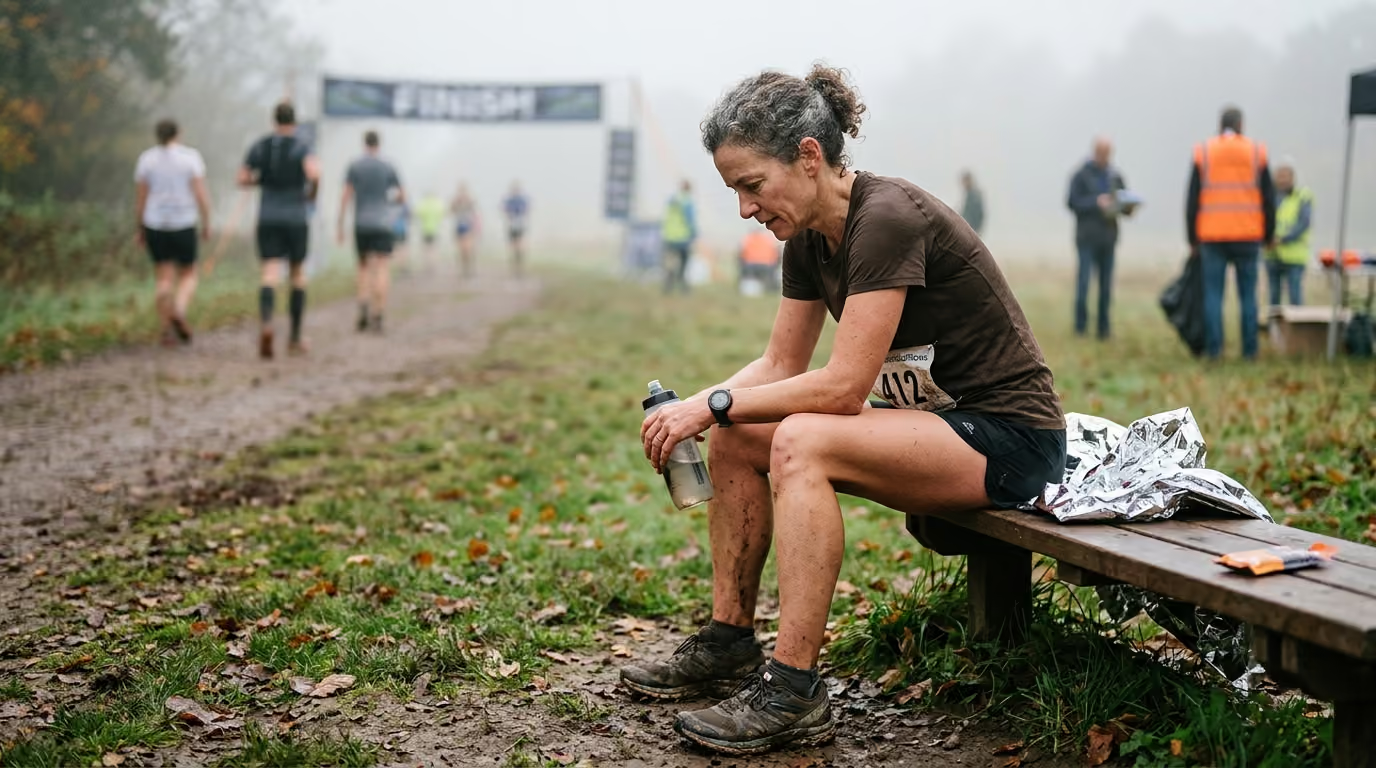
In these moments, athletes often expect a race registration to solve the problem. You enter a popular road race, gran fondo, or gravel event, assuming the collective energy of thousands of participants will naturally create lasting friendships. When the race ends, participants pack their cars, collect their medals, and head home to their established social circles. You are left standing in an empty festival area with a finisher medal and the same feeling of disconnection you had before the start gun fired.
True connection requires more than mass participation. It requires a predictable environment where people recognize your face, notice your absence, and share meaningful responsibilities over time. Navigating these transitions requires understanding how social connections form in athletic environments. If you want to explore broader lifestyle adaptations alongside your athletic goals, our racing and lifestyle resources offer practical perspectives on balancing training with personal milestones.
Sports scientists and sociologists study athletic communities through the lens of social capital. Social capital refers to the networks, shared norms, trust, and practical assistance that people access through group membership.
A systematic review published in Sport Management Review analyzed 91 studies on sport and social capital. The researchers found that participating in sporting programs as either an athlete or a volunteer consistently strengthens identity and social networks. Sporting institutions and events act as arenas where interpersonal trust and mutual support are developed over time.
The research makes important distinctions between three specific types of social capital:
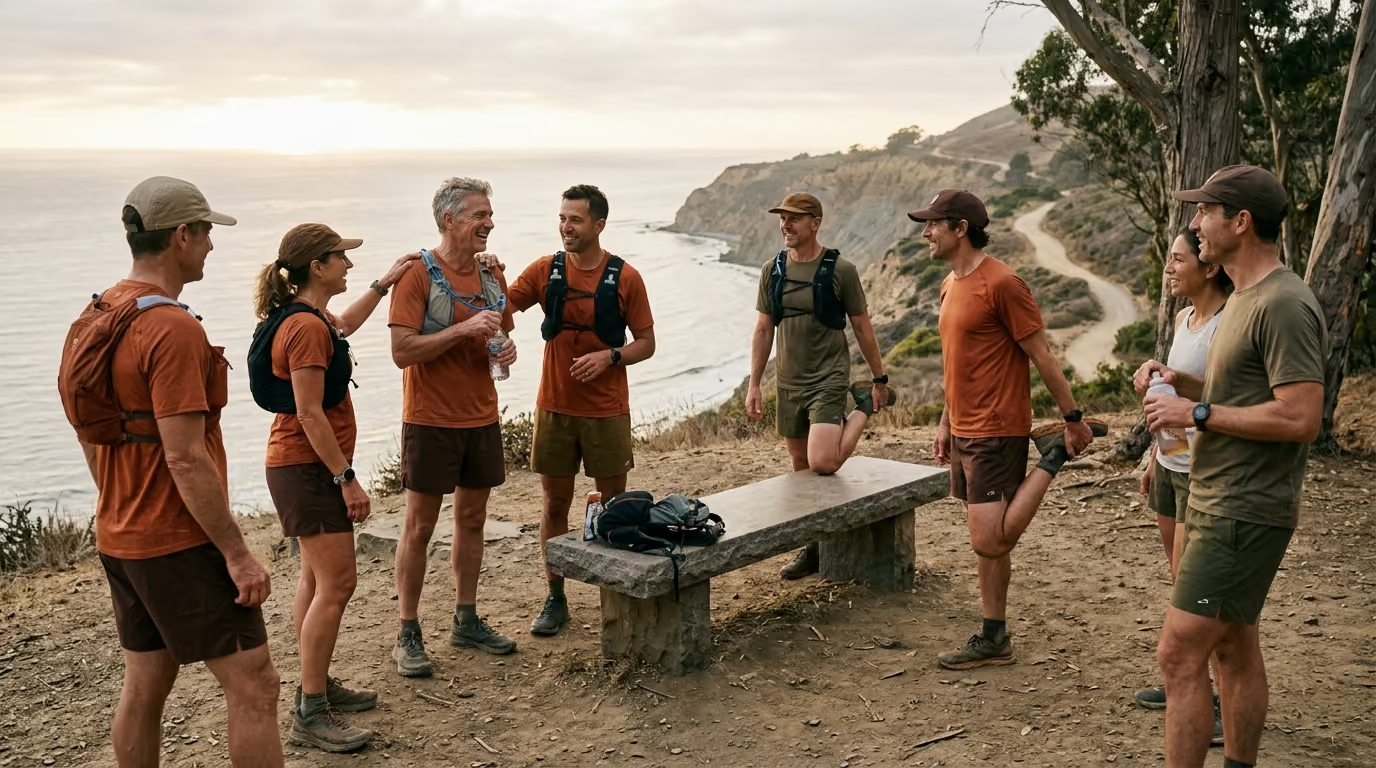
Bonding capital forms connections between people who share similar demographic backgrounds, athletic goals, or experience levels. In endurance sports, this looks like a masters marathon group, an all-women cycling collective, or an ultra-distance trail crew. Bonding capital creates immediate empathy. You train with people who understand your exact physical challenges, recovery needs, and pacing strategies.
Bridging capital connects people across social divides, including age, professional background, athletic capability, and socioeconomic status. A systematic review on sport and social integration examined 69 articles and found that diverse clubs and public events create powerful bridging opportunities. When a twenty-two-year-old beginner and a sixty-year-old veteran run side by side, they exchange life perspectives that rarely intersect outside the sport.
Linking capital connects individual athletes to people or institutions holding organizational authority. This includes relationships with race directors, club committee members, governing bodies, physical therapists, and local coaches. Linking capital helps you move from being a passive consumer of events to an active contributor who shapes the local sporting landscape.
Belonging does not require an immediate circle of best friends. Sociological research emphasizes the value of weak ties, which are casual relationships with people you recognize, greet, and exchange brief encouragement with.
A qualitative study published in PLOS ONE investigated middle-aged men participating in weekly parkrun events in Ireland. The researchers found that participants developed both weak and strong ties at their own pace. The open, recurring structure allowed men to experience social support without feeling forced into deep emotional disclosure. Repeated weekly attendance turned unfamiliar faces into recognized peers, which formed the foundation for deeper belonging.
At the same time, we must acknowledge the limitations of sport. A review published in Psychology of Sport and Exercise evaluated the link between sport participation and mental health. While sport was associated with higher psychological well-being and lower distress, the researchers found no automatic, direct guarantee that sport participation creates social capital for every individual.
Community can also have a negative side if a group tolerates elitism, body shaming, or reckless training norms. Athletic belonging must be approached with realistic expectations, healthy boundaries, and clear self-awareness.
To build community through racing without burning out, consider the four-layer model of athletic belonging. Each layer represents a deeper stage of involvement, allowing you to choose the depth that matches your current life capacity.
This is the baseline entry point. You attend a public group run, register for a regional 10K, join an open group ride, or visit a race expo. The objective here is simple exposure.
You do not need to make lifelong friends during your first workout. You are placing yourself in a physical space where physical activity provides a natural conversational topic. If you feel socially awkward, the shared task of moving forward relieves the pressure of constant eye contact and formal small talk.
Belonging takes root when participation becomes predictable. Instead of dropping into random events across the region, you commit to a specific recurring schedule.
This might mean attending the same Tuesday night track session, the same Saturday morning social run, or a monthly local race series. The PLOS ONE parkrun study identified predictable weekly recurrence as the single most critical factor in transforming strangers into supportive acquaintances. Predictable schedules allow familiarity to accumulate naturally without forced social effort.
You transition from a consumer of the sport to an active stakeholder when you take on shared responsibility. This involves practical contribution rather than athletic performance.
You might volunteer to manage an aid station, join a timing crew, mark a trail course, or pace a specific time group. When you solve operational problems alongside other volunteers, you form bonds rooted in mutual reliability. People learn who you are because you helped make the event happen, not because of your finishing time.
The deepest layer of community involves working toward a collective purpose that transcends individual finishing times. This includes mentoring novice athletes, directing charity training initiatives, advocating for safe cycling infrastructure, or maintaining local trail systems.
Not every athlete needs or wants to reach this layer during every season of life. If you are experiencing high career stress or family demands, staying at Layer 2 or Layer 3 provides meaningful connection without overwhelming your schedule.
Different life changes require distinct strategies for finding and maintaining community. Applying the wrong strategy to your specific life stage can lead to frustration and isolation.
Moving to a new town or city forces you to rebuild your athletic network from zero. The most common mistake is immediately seeking out the fastest, most prestigious racing team in the area. These groups are often insular, highly competitive, and focused on rigid training blocks that leave little room for informal onboarding.
Instead, prioritize low-friction, geographically convenient groups with mixed-pace options. Look for clubs that host open social runs from local specialty running shops or community centers.
Apply the three-visit rule: attend an open session at least three times before deciding whether the group suits your personality. The first visit often feels awkward because routes and names are unfamiliar. By the third visit, the route becomes clear, your face is recognized, and initial conversations flow naturally.
A demanding new job, a promotion, or a shift to remote work alters your available daylight, energy reserves, and weekly rhythm. When professional demands increase, do not join a club that requires five mandatory workouts per week.
Select a community that offers flexible participation. A weekend-only trail running group or a single midweek evening workout allows you to maintain social continuity without guilt.
The goal during a career change is finding an athletic space where your professional status is irrelevant. Sweating through an interval session alongside people from diverse occupations provides valuable mental relief from workplace stress. For more ideas on how endurance habits support life balance, review our collection of endurance life discussions.
Stepping back from collegiate, elite, or highly competitive masters racing can trigger identity disruption. A scoping review in International Review of Sport and Exercise Psychology highlighted that athletes with an exclusive athletic identity face substantial psychological distress during retirement transitions. When competitive performance declines or stops, your entire social circle can vanish if it was built solely on shared race results.
Research on athletic retirement emphasizes the importance of identity continuity through role transitions. Instead of walking away from the sport, redirect your deep technical knowledge into new roles.
Become a volunteer coach for youth or adult beginners. Offer your services as a race pacer to help others achieve milestone times. Join local race committees to advise on course design, safety protocols, and athlete experience. These roles preserve your connection to the racing environment while allowing you to develop a healthier, multifaceted identity.
Few experiences isolate an endurance athlete faster than a long-term injury. When you cannot run, ride, or swim, you may avoid your training partners out of sadness or jealousy. Over time, your absence from regular workouts breaks the weak ties that supported your mental health.
Do not wait until you are completely healed to return to your athletic community. Reach out to local race directors and volunteer for roles that fit your physical limitations.
Manage the finish-line timing chute, hand out hydration at an aid station, or take photographs along the course. Staying visible maintains your social capital and keeps your athletic identity intact during rehabilitation. To ensure your return to training remains sound, explore our evidence-based injury prevention strategies.
Not all athletic organizations foster healthy environments. Choosing the right organization requires looking past marketing slogans and assessing concrete operational practices.
Formal clubs provide structured training calendars, coaching support, and broad social networks. Before paying membership dues, evaluate the organization using these specific questions:
A club that values longevity will openly celebrate masters athletes, back-of-the-pack runners, and returning injured members. If an organization only highlights podium finishers on its social channels, its culture is built on performance status rather than durable community.
Training groups are often more informal than registered clubs. They tend to form around specific events, such as a spring marathon or an autumn gravel race.
A study published in BMC Public Health evaluated running groups and confirmed that group running creates stronger social support and higher exercise adherence than running solo. However, training groups can become hyper-competitive if ground rules are not established.
Choose an instructional or social group when your primary goal is community integration. Choose a performance group only when your physical fitness, injury history, and psychological bandwidth are prepared for rigorous pacing. For those looking to optimize their performance without risking burnout, our guides on structured training and performance outline how to balance intensity with longevity.
Recurring public events, such as parkrun or local community 5K series, offer an accessible pathway to community. They remove the financial barrier of club dues and eliminate the intimidation factor of formal team tryouts.
Volunteering at these events accelerates social integration. According to official Sport England Active Lives data, nearly 10.5 million adults in England volunteered to support sport and physical activity between late 2023 and late 2024. Sport England defines active volunteering as providing support at least twice within a twelve-month period.
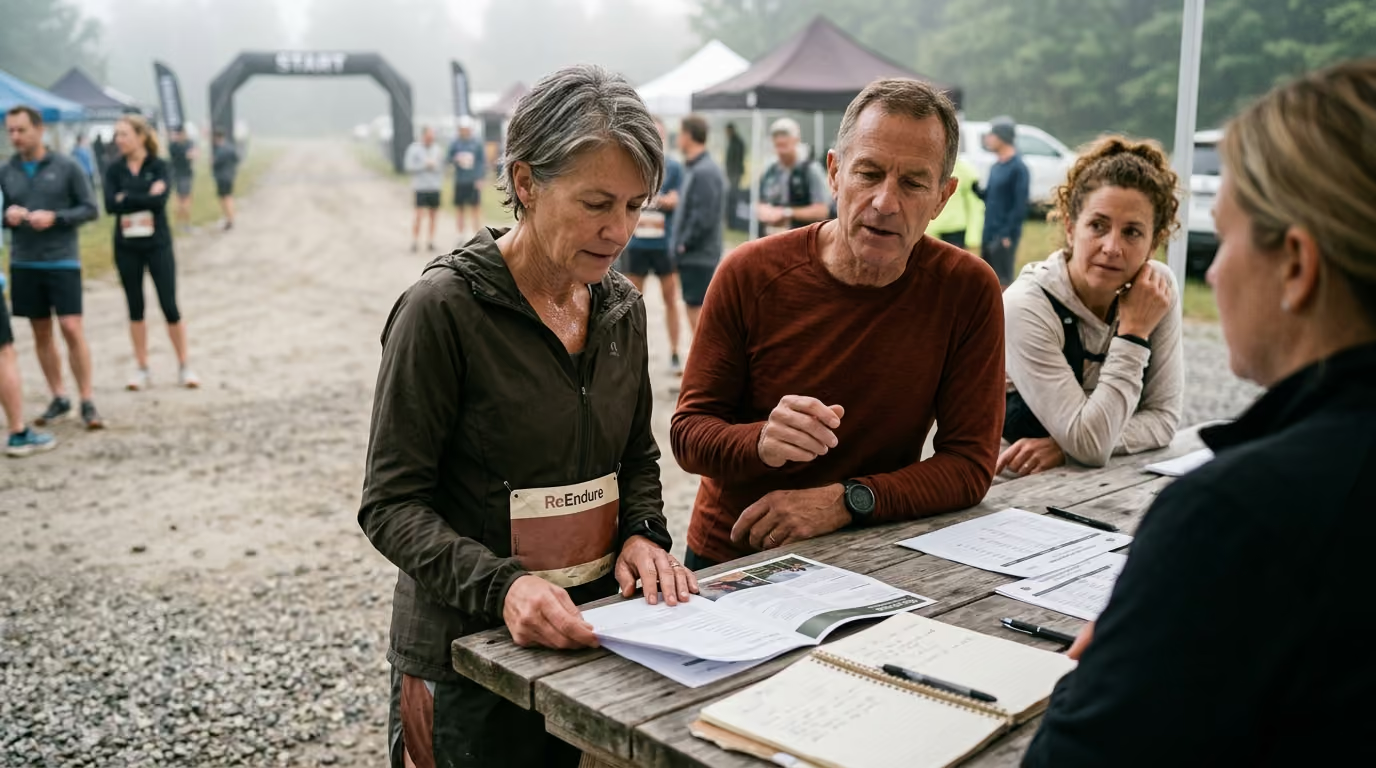
Start with bounded volunteer roles that have defined beginning and end times. Handing out bib numbers at packet pickup lets you interact with hundreds of nervous, excited athletes. You learn the local race landscape quickly while establishing yourself as a helpful, familiar face.
Athletic burnout often stems from social overcommitment rather than physical overtraining. When you join multiple clubs, volunteer for every committee, and attend every post-race breakfast, your training community becomes an exhausting second job.
Sustainable community involvement requires deliberate boundary management. You need simple operating rules that protect your recovery, sleep, and family commitments.
Avoid committing to annual memberships, leadership positions, or rigid training plans during your first week with a new group. Follow this graduated participation ladder instead:
This phased approach prevents the common cycle of initial enthusiasm followed by rapid social exhaustion and total withdrawal.
To keep your schedule balanced, organize your athletic social life around two operational slots:
The anchor provides routine stability, while the experiment allows you to explore new circles without cluttering your weekly calendar.
Athletes often calculate the time cost of a group run as pure workout duration. If the group runs for sixty minutes, they budget sixty minutes. This math is inaccurate and leads to chronic time debt.
A realistic group training budget must include travel time, pre-workout briefings, route regrouping delays, post-workout coffee, and digital messaging coordination. A sixty-minute group workout often consumes two and a half hours of total time.
Calculate this full cost in advance. If your lifestyle only allows ninety minutes on a Saturday morning, a solo workout from your front door may be wiser than an extended group gathering.
When group leaders recognize your reliability, they will naturally ask you to take on additional administrative duties. Protect your capacity by keeping practical, polite scripts ready:
Clear boundaries prevent resentment and ensure that your community participation remains energizing rather than draining.
As athletes cross forty, fifty, and sixty years of age, the physical and social dynamics of endurance sport evolve. Recovery timelines lengthen, absolute top-end speed gradually decreases, and career or caregiving responsibilities peak.
Navigating community as a masters competitor requires shifting your mindset from absolute performance toward athletic longevity. For a deeper examination of how training adaptations shift across decades, read our dedicated healthy aging frameworks.
Many conventional clubs structure their training groups strictly around raw speed. If a club's slowest group runs at an eight-minute-per-mile pace, an older athlete recovering from an Achilles issue or running a ten-minute pace is effectively excluded.
Masters athletes should seek out clubs that use ability-based pace bands, run-walk intervals, or time-based turnaround routes. In a time-based turnaround workout, everyone runs out for twenty minutes and returns to the start point at the same time, regardless of distance covered. This format preserves social unity while allowing every athlete to execute their appropriate physiological training zone.
Masters competitors hold decades of accumulated knowledge regarding fueling, pacing, injury management, and mental resilience. Sharing this wisdom provides deep psychological fulfillment and builds robust bridging capital across generations.
Mentorship can take structured forms:
Mentorship allows you to remain deeply invested in competitive race environments without tying your self-worth to your personal finishing time.
Building community through racing requires avoiding common misconceptions that lead to disappointment, conflict, or athletic injury.
A common error among ambitious athletes is assuming that the fastest group in town offers the best community. High athletic performance does not automatically equal social warmth, emotional maturity, or inclusive behavior.
A group capable of elite split times may simultaneously cultivate a toxic, exclusionary environment that discards athletes the moment they suffer an injury or drop off the pace. Evaluate a group by how its members treat the slowest runner on an easy recovery day, not by the number of podium trophies on its shelf.
Mass-participation races generate high emotional energy. The finish chute, loud music, and cheering spectators create a temporary high that can feel like deep belonging.
However, this temporary excitement fades within twenty-four hours. Durable belonging is built through the quiet, unglamorous consistency of regular Tuesday morning workouts, rain-soaked trail maintenance days, and recurring volunteer duties. Do not rely on race day to provide the social connection that only weekly consistency can build.
Running and endurance sports have well-documented mental health benefits. However, an athletic training group is not a psychiatric clinic, and your training partners are not licensed mental health professionals.
A 2025 qualitative study published in Qualitative Research in Sport, Exercise and Health examined fifteen participants across three groups within Run Talk Run, a global peer-support running initiative. The researchers identified valuable psychosocial benefits, but they also highlighted significant tensions regarding personal boundaries and the vital distinction between informal peer support and formal therapy.
When athletic groups attempt to manage acute mental health crises without professional guidance, both the struggling athlete and the volunteer leaders face emotional distress. Maintain healthy boundaries: offer genuine empathy, share the miles, but recognize when an issue requires professional medical or psychological care.
When your entire social identity is built around being a marathoner, cyclist, or ironman athlete, any disruption to your physical training becomes an existential crisis. A scoping review in International Review of Sport and Exercise Psychology confirmed that athletes with high, exclusive athletic identities struggle significantly when physical decline or forced retirement occurs.
Cultivate a multidimensional identity. Participate in community events as an organizer, volunteer, mentor, or casual participant. Ensure that your social circles include people who do not know your race splits and care about you entirely apart from your athletic performance.
How do you know if your community-building efforts are actually working over time? Unlike tracking VO2 max, threshold power, or heart rate variability, tracking social health requires monitoring experiential and behavioral indicators.
Review these markers every three months to evaluate whether your current athletic groups are serving your long-term health and performance:
Pay attention to how you feel two hours before a scheduled group gathering. If you consistently feel dread, anxiety, or performance pressure, the group culture does not align with your needs. A healthy athletic community creates a sense of welcoming ease, even when the scheduled physical workout is challenging.
Assess your level of visibility within the group. When you arrive at a workout or local event, do at least three people greet you by name? If you miss two consecutive weeks due to work or illness, does someone reach out via message to check on your well-being?
A positive answer indicates that you have successfully transitioned from an anonymous participant to a recognized member of a community network.
Track your balance between consuming and contributing. Over the past six months, have you provided encouragement, pacing, logistical help, or volunteer support to someone else in the group? A durable community operates on mutual reciprocity, where every member has regular opportunities to give as well as receive.
Evaluate your physical and mental state after post-workout social gatherings. Do you return home feeling supported, relaxed, and motivated to continue your training routine? Or do you feel depleted by competitive posturing, gossip, or social pressure?
A healthy group preserves your energy for the rest of your life. An unhealthy group drains the emotional resources you need for your career, family, and physical recovery.
Building a genuine community through racing does not require an immediate overhaul of your entire training program. It requires small, intentional, and consistent actions. Apply this practical checklist over the next seven days to begin establishing durable roots in your local sporting environment:
Community is not a prize awarded at the finish line of a major race. It is the steady, cumulative result of showing up at the same starting point week after week, sharing the physical effort, helping others succeed, and allowing yourself to be seen as a fellow traveler on the long road of lifelong athletic endurance.

Follow ReEndure for practical insights on endurance training, recovery, nutrition and healthy aging. Stay connected for new articles, research led guidance and ideas to help you perform better for longer.


Read practical ideas on endurance training, recovery, nutrition and healthy aging to keep progressing for years to come.
Read the Blog