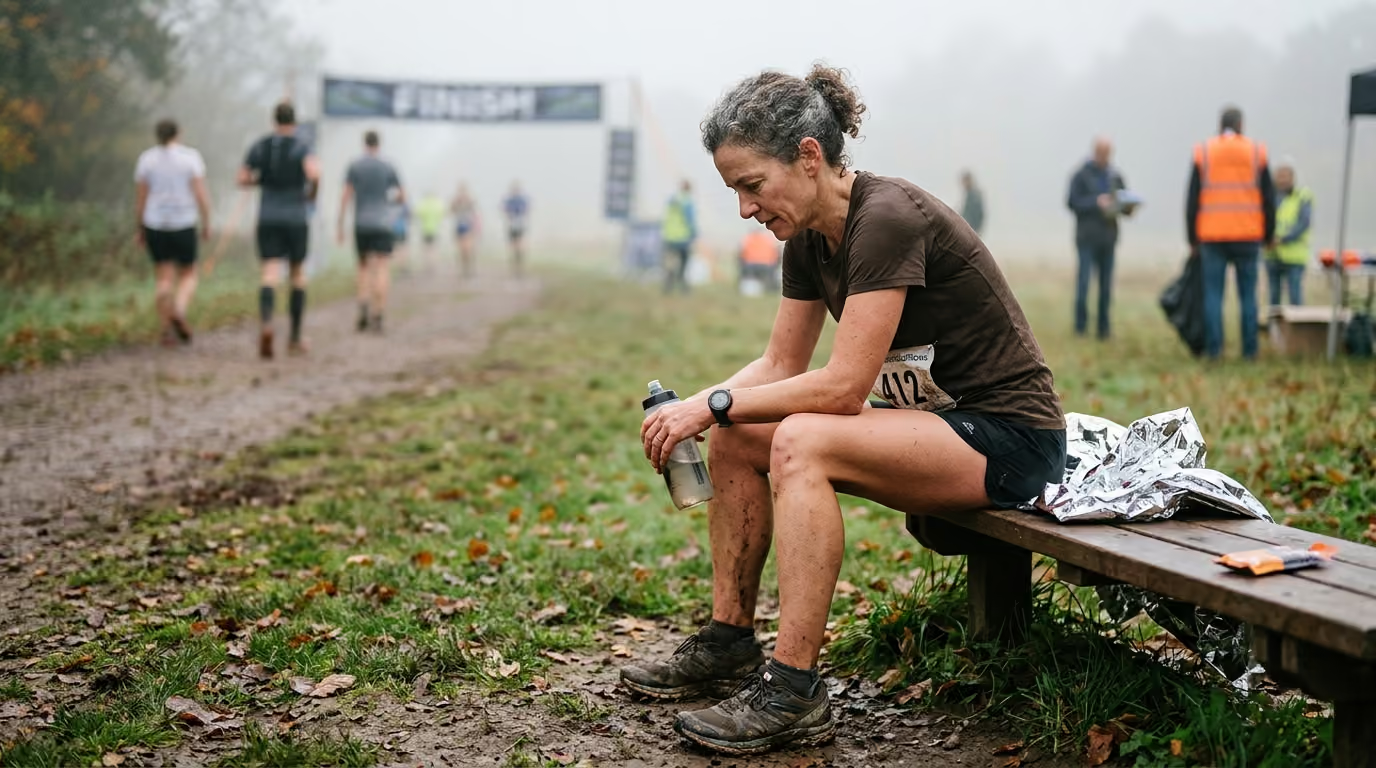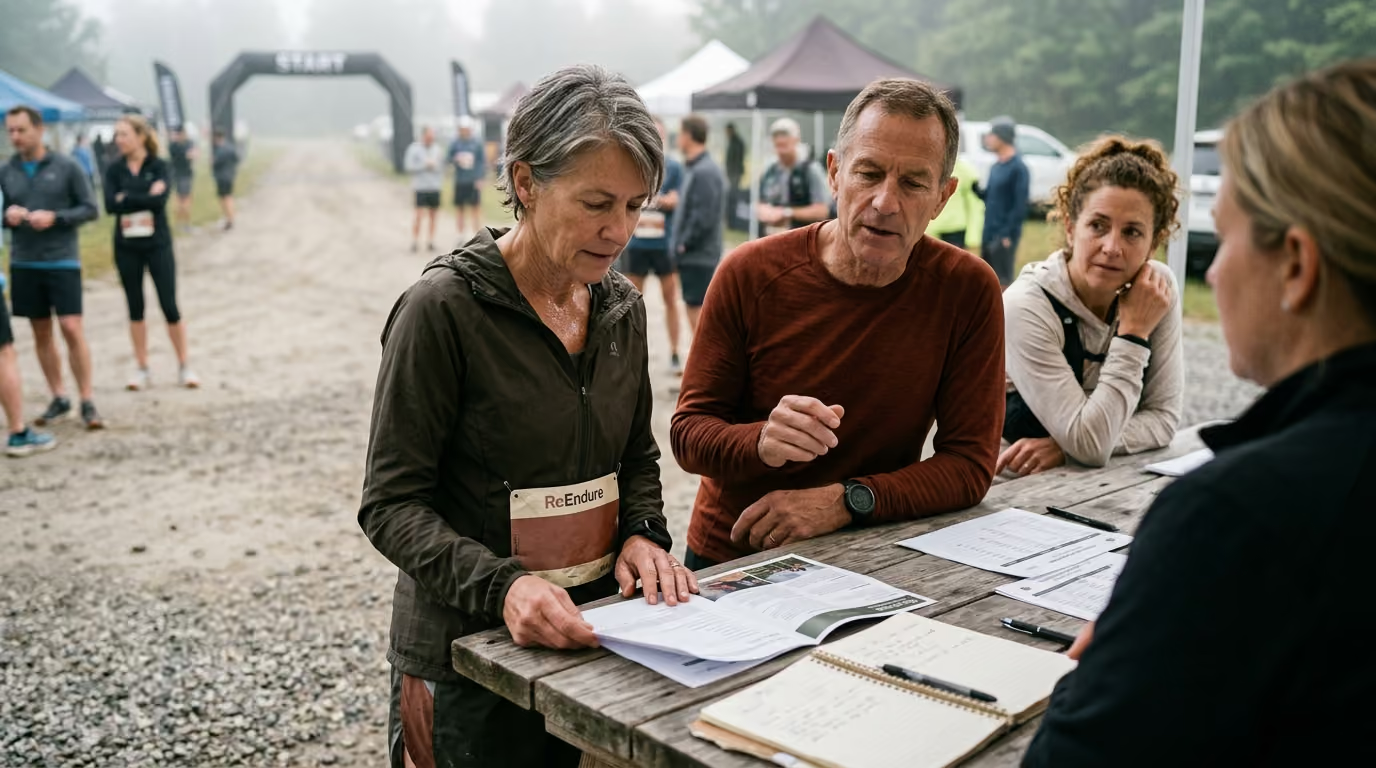

Endurance athletes can sustain peak race performance without sacrificing their social lives by managing sleep quality, alcohol intake, and overall training fatigue.





Abstinence-only rules often fail endurance athletes who live full personal and professional lives. Many runners, cyclists, and triathletes assume they must choose between total social isolation and sabotaging their athletic goals. This binary choice creates unnecessary stress, guilt, and social friction.
A more sustainable approach treats social events and alcohol as variables in a risk management model. Different phases of a training calendar carry different physiological tolerances. A late dinner during an early base-building phase does not carry the same risk as an evening out 48 hours before an target marathon.
Navigating social commitments while maintaining competitive ambitions requires an understanding of human physiology. When you understand how alcohol, late bedtimes, and disrupted nutrition alter your body, you can make clear choices. You can enjoy your social life while keeping your performance trajectory intact.
Consider a common Friday evening scenario. You have trained consistently for twelve weeks, logging high mileage and hitting your key split times. A close friend hosts a birthday dinner at 8:00 p.m. on Friday, featuring a multi-course meal, wine, and lively conversation. Meanwhile, your training plan calls for a demanding 20-mile long run early Sunday morning, with a light aerobic recovery run scheduled for Saturday.
You face an immediate conflict. If you decline the invitation, you risk feeling isolated from friends who do not participate in endurance sports. If you attend without a plan, you might stay out past midnight, consume three glasses of wine, and under-fuel your glycogen stores. Saturday morning then begins with elevated resting heart rate, fragmented sleep, and mild dehydration.
This dynamic often triggers an unhelpful cycle of guilt and overcompensation. Athletes who slip up often attempt a punishing workout to make up for their choices. They double their morning caffeine, skip breakfast to offset calories, and push through intense dehydration. This reaction compounds the initial physiological stress and significantly increases injury risk.
Integrating endurance sport into a rich lifestyle requires moving past all-or-nothing thinking. You do not need to live like a monk to race at your personal best. Instead, you need clear protocols that protect key workouts, support biological recovery, and establish boundaries during critical training blocks. For more perspectives on balancing sport with everyday commitments, review our resources on integrating endurance sport into lifestyle.
Alcohol affects the body across multiple physiological pathways that directly influence endurance capacity. The primary concern is not simply caloric intake or morning grogginess. Alcohol fundamentally alters sleep architecture, autonomic balance, and cellular repair mechanisms.
Alcohol is a central nervous system depressant that may induce subjective drowsiness, but it severely disrupts sleep quality. As the liver metabolizes ethanol, blood alcohol levels drop, causing a rebound effect in the sympathetic nervous system. This rebound leads to frequent micro-arousals, reduced rapid eye movement (REM) sleep, and fragmented slow-wave sleep during the second half of the night.
Sleep loss directly impairs aerobic performance. A systematic review and meta-analysis published in PLOS ONE demonstrated that sleep deprivation produces a moderate negative effect on endurance performance, with a pooled standardized mean difference of −0.52. This impairment affects longer endurance tasks lasting over 30 minutes more severely than short sprints. A broader review covering 45 studies found an even larger negative effect on aerobic endurance, reporting a standardized mean difference of −0.66.
When an evening out delays your bedtime and introduces alcohol, you face a double deficit. You lose total sleep time and degrade the restorative quality of the hours you do get. An observational study of elite athletes found that nights with reported alcohol intake resulted in later bedtimes (23:16 versus 22:52) and elevated overnight heart rates (56.1 versus 52.9 beats per minute). These athletes subsequently completed fewer training sessions the following day.
Endurance training induces micro-trauma in skeletal muscle fibers and stimulates mitochondrial biogenesis. Repairing this damage requires muscle protein synthesis, a process regulated by the mTOR signaling pathway. Research demonstrates that acute alcohol ingestion suppresses muscle protein synthesis in a dose-dependent manner.
In a laboratory study where athletes consumed 1.5 grams of alcohol per kilogram of body mass (roughly equivalent to 12 standard drinks) after concurrent exercise, muscle protein synthesis was reduced by 24% to 37%. Crucially, co-ingesting whey protein alongside alcohol did not fully rescue this synthetic deficit. While this high dose represents extreme intake, reviews confirm that alcohol blunts anabolic signaling even during normal rest periods.
For athletes focusing on tissue repair and neuromuscular recovery, heavy drinking after hard workouts blunts the training stimulus. You perform the work, endure the fatigue, but fail to absorb the full physiological adaptation. To understand more about systemic recovery pathways, examine our guide on effective recovery modalities.
Beyond sleep and protein synthesis, social drinking interacts with carbohydrate availability and fluid regulation. These two factors dictate your pacing, core temperature control, and muscular endurance.
Post-workout recovery requires rapid replenishment of depleted muscle and liver glycogen stores. Research indicates that alcohol itself does not directly block glycogen storage if carbohydrate intake remains optimal. However, alcohol frequently displaces essential nutrients when athletes choose drinks over nutrient-dense meals.
A classic review on alcohol and athletic performance highlighted this distinction. When athletes followed an alcohol-displacement diet with suboptimal carbohydrates after exhaustive cycling, muscle glycogen storage plummeted by nearly 50% at eight hours and 16% at 24 hours. Conversely, when athletes consumed adequate carbohydrates alongside moderate alcohol, glycogen resynthesis showed no statistically significant reduction at 24 hours.
The primary risk is behavioral. Athletes who drink in social settings often skip high-carbohydrate meals, consume high-fat bar foods, or neglect post-workout fueling entirely. This habit leaves muscle fibers depleted of substrate for the next day's training session.
Ethanol inhibits the release of arginine vasopressin, an antidiuretic hormone produced by the pituitary gland. Without vasopressin, the kidneys fail to reabsorb water, increasing urine output and accelerating fluid loss. The magnitude of this diuretic response depends heavily on the concentration of alcohol and your baseline hydration status.
Controlled studies show that beverages containing 4% alcohol or higher delay rehydration following exercise-induced dehydration. However, low-alcohol beverages containing up to 2% alcohol do not impair rehydration compared to water. Similarly, a study evaluating active men who consumed up to 660 mL of regular beer following exercise in the heat found no detrimental effect on standard hydration markers, provided water was also consumed.
These findings show that moderate beer intake does not instantly cause severe dehydration. However, beer is not an optimal recovery drink. Standard exercise guidance from the American College of Sports Medicine recommends consuming approximately 1.5 liters of fluid for every kilogram of body mass lost during heavy sweating. Standard alcoholic drinks cannot safely replace targeted electrolyte solutions. For structured hydration planning, consult our resource on sound hydration and fueling strategies.
Performance metrics must always be viewed within a broader health context. Even when a single drink does not ruin tomorrow's easy run, alcohol carries baseline physiological costs. The World Health Organization maintains that no level of alcohol consumption is entirely free of health risks, particularly regarding cardiovascular strain and long-term cancer risk. Athletes should balance short-term social enjoyment with an honest understanding of overall systemic health.
To manage social events without undermining your training, use a structured decision framework. Rather than relying on willpower or emotional reactions, evaluate each event using clear physiological criteria.
Use this system to categorize social gatherings based on your current training phase, proximity to key sessions, and overall fatigue.
A Green Light applies during active recovery weeks, early base phases, or when you have no high-intensity workouts scheduled for 48 hours. Your hydration status is normal, and you are not managing an acute soft-tissue injury.
An Amber Light occurs when you have a hard interval session or long endurance run scheduled the following morning. It also applies when you are already carrying accumulated sleep debt from a demanding work week.
A Red Light is non-negotiable within 48 hours of an important race or key fitness test. It also applies if you are recovering from heat illness, severe dehydration, or a musculoskeletal injury.
Before heading out to any social gathering, run through this mental checklist to safeguard your training consistency:
Applying these rules keeps you proactive rather than reactive. For systematic training advice that incorporates structured life balance, explore our structured training performance guidelines.
Different social situations demand specific tactical adjustments. Below are six common real-world scenarios and the exact strategies required to handle them effectively.
You are serving as a guest at a wedding on Friday evening, and your target marathon or triathlon takes place on Sunday morning. The reception offers open bars, rich catering, and dancing late into the night.
You complete a demanding four-hour summer road ride, losing two kilograms of body weight through sweat. Your riding group immediately heads into a taproom to celebrate with craft beers.
You attend a mandatory work gala where you consume zero alcohol, but intense networking and late schedules keep you awake until 2:00 a.m. Your schedule demands high-intensity track intervals at 7:00 a.m.
You have crossed the finish line of your target Ironman or ultramarathon, concluding a rigorous six-month training cycle. Your team gathers for an extensive post-race celebration.
You are competing in a multi-day stage race or running two half-marathons on consecutive weekends. Between events, fellow competitors gather in the race village for social hours.
You complete a heavy lower-body strength session designed to build tendon stiffness and bone mineral density, followed immediately by an evening social event.
Athletes over 40 face a different physiological landscape than younger competitors. Aging alters drug clearance kinetics, sleep stability, and muscle recovery rates, making alcohol and late nights more disruptive to performance.
As the human body ages, total body water percentage decreases, while liver volume and hepatic blood flow decline. The activity of alcohol dehydrogenase (ADH) and aldehyde dehydrogenase (ALDH) enzymes often slows. Consequently, the same dose of alcohol produces a higher peak blood alcohol concentration in a 50-year-old athlete than in a 25-year-old of identical body weight.
The toxic intermediate metabolite acetaldehyde remains in the bloodstream longer, causing prolonged oxidative stress and systemic inflammation. For masters athletes, a moderate social evening can impair morning readiness for 36 to 48 hours rather than resolving within a single morning.
Natural sleep architecture shifts with age. Adults over 40 experience a natural reduction in slow-wave sleep and lower nighttime melatonin secretion. When you introduce alcohol or late-night blue light exposure, this underlying vulnerability is amplified.
Masters endurance athletes who drink in the evening frequently report waking up at 3:00 a.m. with an elevated resting heart rate and an inability to return to deep sleep. This sleep fragmentation impairs the release of human growth hormone, which occurs primarily during deep slow-wave stages. This disruption compromises muscular repair and immune health.
Preserving lean muscle mass is a primary objective for aging athletes who want to maintain power output and avoid injury. Sarcopenia, the age-related loss of skeletal muscle mass and function, requires consistent resistance training and optimal protein utilization.
Because alcohol reduces muscle protein synthesis, older athletes pay a steeper physiological price for heavy drinking. Blunting the anabolic response after a hard hill workout or tempo session accelerates muscle loss over a season. Masters competitors must prioritize protein distribution and minimize alcohol after key workouts. For deeper insight into athletic longevity, review our healthy aging endurance resources.
Well-intentioned athletes often rely on popular myths to justify poor habits. Recognizing these fallacies prevents self-sabotage and keeps your training on track.
Many athletes believe that drinking a glass of water between alcoholic beverages neutralizes the physiological impact of an evening out. While maintaining hydration is beneficial, water does not accelerate the enzymatic clearance of ethanol by the liver.
Water cannot prevent alcohol from altering sleep architecture, suppressing slow-wave recovery, or depressing heart rate variability. Relying on water as a total shield often leads to poor decisions regarding total intake and bedtime.
Attempting to sweat out alcohol through a punishing morning interval session is physiologically counterproductive. Ethanol is metabolized by the liver at a steady rate of roughly 10 to 15 milligrams per deciliter per hour; minimal alcohol is excreted through sweat.
Forcing a high-intensity session when your cardiovascular system is already compromised elevates core temperature, strains the heart, and increases the risk of heat illness and muscle strains. If you wake up with elevated resting heart rate and poor coordination, swap high-intensity workouts for low-intensity aerobic recovery or rest entirely.
Consuming large doses of caffeine to push through a post-party workout masks central fatigue without restoring neuromuscular function. Caffeine blocks adenosine receptors in the brain, making you feel alert while your muscle fibers and motor units remain fatigued.
This sensory mismatch often leads to pacing errors. Athletes push into high heart rate zones that their cardiovascular systems cannot comfortably sustain, resulting in premature exhaustion and prolonged training fatigue.
Some athletes skip lunch or dinner before a party to balance their total caloric intake for the day. This practice is disastrous for endurance performance.
Drinking on an empty stomach dramatically accelerates alcohol absorption, causing a rapid spike in blood alcohol concentration and overwhelming hepatic enzymes. Furthermore, skipping meals starves your muscles of carbohydrates, ensuring you enter the next day's workout in a glycogen-depleted state. Always eat a balanced, carbohydrate-dense meal before attending social gatherings.
To take the guesswork out of social decisions, monitor objective physiological markers. Tracking your data reveals how specific social events affect your body, helping you make informed choices over time.
Modern wearables offer clear insights into autonomic nervous system status. Alcohol intake and sleep disruption consistently depress Heart Rate Variability (HRV) and elevate resting heart rate throughout the night.
Tracking acute shifts in morning body mass helps identify fluid deficits before you begin exercising.
Objective metrics should always be paired with subjective self-assessment. Score yourself on a simple 1 to 5 scale across three dimensions every morning:
If your subjective score is low and your resting heart rate is elevated, reduce your planned workout intensity. Listen to your physiology rather than forcing an arbitrary workout plan.
Longevity in endurance sport requires building habits that accommodate family, friendships, and celebrations without sacrificing your physical potential. Total abstinence is a valid personal choice, but it is not the only path to athletic excellence.
Align your social flexibility with the periodization of your training year. Just as your mileage and intensity change across phases, your social boundaries should adapt accordingly.
Athletes often struggle in social settings because they avoid communicating their goals to friends and family. Clear, proactive communication eliminates social awkwardness.
Managing your racing goals alongside your social life is a skill that improves with practice. By viewing social events through a lens of biological cost and strategic risk management, you can make clear, confident choices. You can pursue your athletic potential while remaining fully engaged in your life outside of sport.
Sustainable athletic longevity comes from balancing structured training with a rewarding life outside of sport.

Follow ReEndure for practical insights on endurance training, recovery, nutrition and healthy aging. Stay connected for new articles, research led guidance and ideas to help you perform better for longer.


Read practical ideas on endurance training, recovery, nutrition and healthy aging to keep progressing for years to come.
Read the Blog