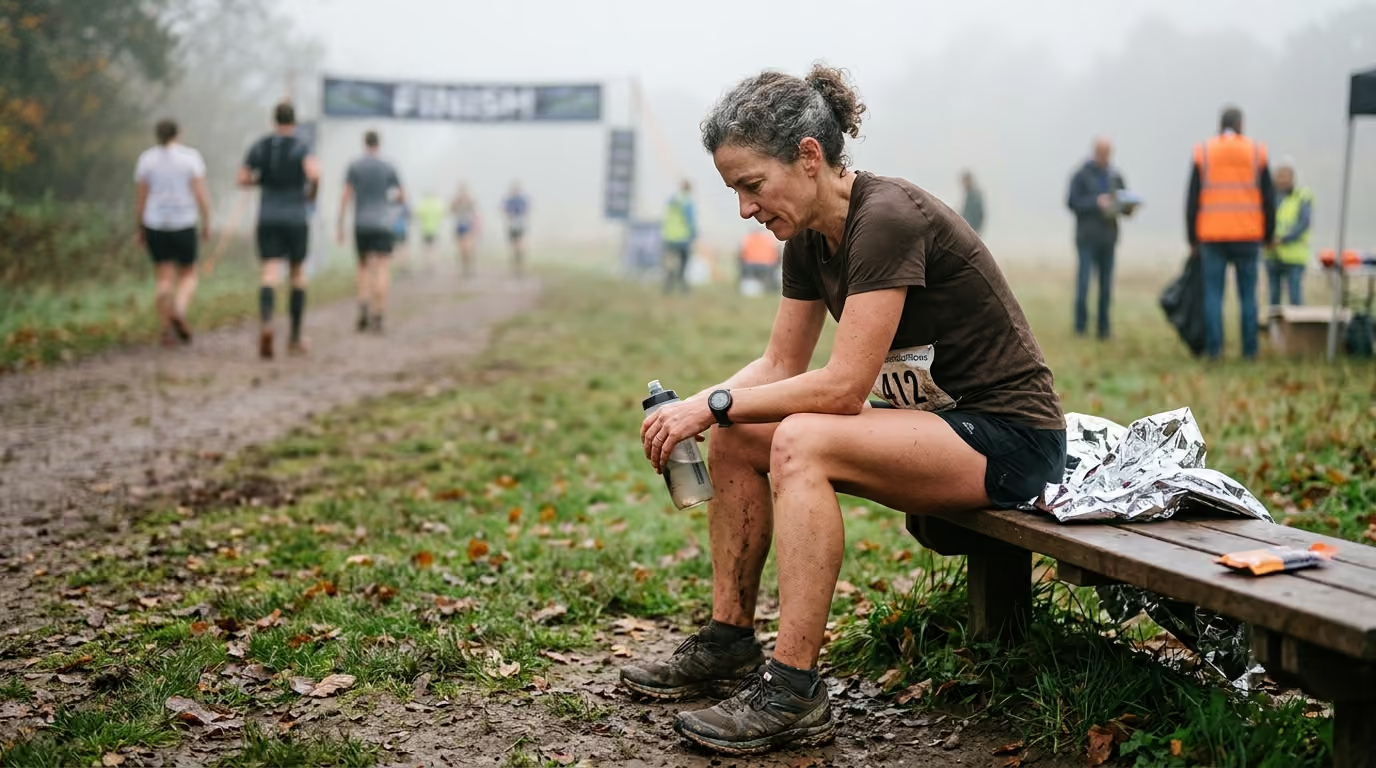

Crossing the finish line to slower split times signals an opportunity to evolve your racing portfolio, balance life accounts, and stay competitive.





You hit a point in your athletic life where you search online for answers to a specific problem. You type in variations of a simple question: how to stay competitive as an older athlete without breaking down.
Perhaps you noticed that your recovery takes forty-eight hours instead of twenty-four. Maybe your finishing times have drifted downward despite following the same training plan that produced personal records a decade ago. You might also be juggling career demands, family commitments, and rising race entry fees.
The standard advice online rarely helps. General fitness articles tell you to slow down and accept biological decline. Hardcore training programs tell you to ignore your age and push through pain.
Neither approach works over a multi-decade athletic career. Staying competitive across your lifespan requires an intentional framework that adapts to your changing physiology, finances, relationships, and psychology. Here is the definitive guide to building a racing practice that lasts for life.
To build a sustainable athletic life, you must separate biological aging from simple deconditioning. Many runners, cyclists, and triathletes assume that every drop in performance is an unavoidable consequence of getting older.
Peer-reviewed exercise physiology shows a more nuanced picture. Research on masters athletes demonstrates that endurance performance follows a gradual curvilinear decline from approximately age 35 through age 65 or 70. After the seventh or eighth decade, the rate of decline tends to accelerate.
Studies analyzing masters world records confirm that performance decreases in a predictable, relatively linear fashion across middle age before steepening in later decades. However, the rate of this drop varies widely based on training volume, intensity, and event selection.
A longitudinal study tracking masters endurance athletes revealed that maximal oxygen uptake, or VO2max, declines between 5% and 46% per decade. The primary driver of this broad variation was not chronological age alone. The deciding factor was the degree to which athletes maintained their training volume and high-intensity work over time.
When athletes reduce their weekly mileage or drop hard intervals, their aerobic capacity falls rapidly. When training volume and intensity remain consistent, the rate of decline slows substantially. A 2024 narrative review confirmed that age-related declines in performance and recovery kinetics are often smaller than athletes assume. A significant portion of physical decline in middle-aged adults stems from creeping sedentary behavior and reduced training stimulus rather than biological limits.
Event selection also shapes your performance trajectory. Research comparing running events found that performance declines occur earlier in long-distance endurance events like the 10,000 meters than in sprint events like the 100 meters and 400 meters. Reviews of ultra-endurance data indicate that performance drops by roughly 8% per decade in male 100-kilometer ultramarathoners, compared to roughly 15% per decade in female Ironman triathletes.
These physiological differences highlight a central rule of long-term competition. When an event no longer matches your current physiological strengths, you do not need to quit racing. You can simply change the event, the distance, or the discipline to match your current profile.
Physical activity remains essential for baseline health across all age brackets. The World Health Organization reports that nearly 31% of adults worldwide, or roughly 1.8 billion people, failed to meet recommended physical activity levels in 2022. The World Health Organization recommends at least 150 to 300 minutes of moderate-intensity aerobic physical activity, or 75 to 150 minutes of vigorous-intensity aerobic physical activity per week for substantial health benefits.
Lifelong racing provides the structured motivation to meet and exceed these guidelines. The key is organizing your training so that it enhances systemic health rather than eroding it through chronic overuse.
Lifelong competition requires balancing five distinct resources. If you focus solely on physical conditioning while neglecting your finances or family, your athletic practice will eventually collapse. You can evaluate your athletic balance using five specific accounts.
The body account tracks your physical capacity, structural durability, and recovery rate. It includes your training load tolerance, joint health, sleep duration, systemic inflammation, and cardiovascular function.
To keep this account solvent, you must align your race choices with your current physical baseline. An athlete managing Achilles tendinopathy should not register for a mountain ultramarathon with extreme descents. An athlete returning from illness needs a gradual ramp in volume rather than an immediate return to peak mileage.
Protecting this account requires proactive medical oversight. While regular endurance exercise lowers the risk of all-cause mortality, cardiovascular disease, and metabolic disorders, heavy endurance training is not an absolute shield against health issues.
Cardiovascular research has identified higher rates of atrial fibrillation, coronary artery calcification, and aortic dilation in some long-term male masters endurance athletes. You must separate general fitness from medical clearance. Schedule periodic health screenings, check your blood lipids and blood pressure, and investigate warning signs like chest pressure or unexpected fatigue immediately.
The ambition account represents your psychological drive, competitive motivation, and athletic focus. Burnout occurs when an athlete attempts to maintain the same intense competitive drive for decades without cognitive breaks.
You must periodically change what competitive success means. In your twenties, success might mean qualifying for an elite field or setting a personal record. In your forties, success might mean winning your age division or mastering a technical course.
In your sixties, success might involve tactical race execution or completing an international event. Redefining your ambitions prevents the frustration that occurs when older athletes measure themselves against their youthful personal bests.
Endurance sports require substantial time commitments that inevitably affect spouses, children, friends, and colleagues. When training schedules constantly conflict with household responsibilities, social friction builds.
A durable athletic plan protects personal relationships rather than treating them as obstacles. You can negotiate your seasonal race schedule with your partner in advance, identifying protected family weekends and shared vacations.
You can also incorporate family members into your events through shared travel, volunteer roles, or spectating traditions. Research on athletic transitions shows that robust social support networks protect mental health and emotional well-being across an athlete's lifespan.
Racing is an expensive pursuit when factoring in entry fees, equipment, coaching, travel, lodging, physical therapy, and nutrition. High financial stress can quickly make racing unsustainable.
You should organize your yearly calendar into a tiered financial portfolio:
This tiered system ensures that unexpected financial changes do not force you out of competitive athletics.
The meaning account represents your underlying reason for lining up at a start line. It answers why you choose to endure physical discomfort and rigorous preparation year after year.
If your athletic self-worth depends entirely on standing on an overall podium, your racing life will become fragile as you age. When you ground your participation in skill acquisition, personal resilience, outdoor engagement, and community connection, your motivation remains stable regardless of the clock.
Athletic identity is a powerful asset that builds discipline, consistency, and resilience. However, psychological research demonstrates that holding an exclusive athletic identity creates severe emotional distress when performance declines or injury forces a transition.
A scoping review of life after sport confirmed that athletes with narrow, rigid athletic identities experience the greatest difficulty adjusting to changing physical capabilities. The solution is not to abandon your athletic identity, but to broaden it through goal migration.
Goal migration is the deliberate, planned shift in your competitive targets as your life circumstances evolve. It is not an admission of defeat; it is a strategic adjustment that preserves athletic engagement.
To build psychological durability, every competitive season should include four distinct types of goals:
When unpredictable conditions or physical limitations derail an outcome goal, your performance, process, and meaning goals keep the race valuable and informative.
Instead of dedicating an entire year to a single high-stakes competition, build a diversified racing portfolio. A well-constructed portfolio distributes your physical and psychological investments across multiple event types:
A diversified portfolio prevents a single bad workout, injury, or race cancellation from destabilizing your entire athletic focus. You can learn more about structuring your competitive calendar by reviewing our racing lifestyle principles for long-term consistency.
Many masters athletes make the mistake of remaining in permanent race-preparation mode. They maintain high intensity and heavy mileage twelve months a year, which accelerates joint wear and mental burnout.
A sustainable athletic career requires dividing each calendar year into four distinct phases, each with specific objectives and physiological targets.
The build season focuses on developing movement quality, baseline aerobic capacity, and structural strength. During this 8 to 12-week block, competitive pressure is low.
Athletes prioritize foundational resistance training, mobility routines, and low-intensity aerobic volume. High-intensity intervals are kept to a minimum, allowing connective tissues to adapt without excessive strain.
This phase replenishes physiological reserves and corrects biomechanical imbalances developed during prior racing blocks. Incorporating proven injury prevention strategies during the build season establishes the durability required for harder training later in the year.
The compete season is a focused 8 to 16-week window centered on event-specific preparation and target races. Training volume is adjusted to make room for race-pace intervals and tactical simulations.
During this block, race execution is prioritized over general fitness accumulation. Athletes carefully monitor fatigue, optimize carbohydrate intake around key sessions, and ensure full recovery between hard efforts.
The number of target competitions should be strictly limited to prevent systemic overreaching.
The expansion season is an 8-week block dedicated to novel movement patterns and cross-training disciplines. Athletes step away from their primary sport to participate in alternative challenges.
A road marathoner might spend this phase trail running or mountain biking. A triathlete might focus entirely on master's swimming or rowing.
This phase maintains aerobic conditioning while unloading the repetitive joint impacts associated with a single sport. It also provides mental refreshment by removing pacing pressure and time benchmarks.
The restore season is a 4 to 6-week period of active recovery, health maintenance, and life recalibration. Weekly structured training volume drops significantly.
Athletes address lingering soft-tissue tightness, complete routine medical check-ups, catch up on family projects, and catch up on rest. Physical activity remains daily but unstructured, consisting of easy walks, light recreational swimming, and restorative mobility work.
This deliberate downtime restores hormonal balance, rebuilds psychological hunger for competition, and ensures full musculoskeletal repair before the next build season starts.
Physical capabilities and recovery rates change across different life stages. Adapting your training model across the decades allows you to maintain high performance while mitigating age-related risks.
During your late thirties and forties, absolute aerobic capacity remains high, but life complexity often peaks. Career demands, young children, and domestic responsibilities compress available training time.
Reviewing evidence-based endurance training performance guidelines helps optimize these time-crunched training blocks.
In your fifties, reductions in soft tissue elasticity and changes in recovery kinetics require structural adjustments to your weekly schedule.
You can integrate these adjustments by studying practical healthy aging resources tailored for masters athletes.
Athletes competing in their sixties and seventies can achieve remarkable endurance feats, but training must prioritize neuromuscular recruitment, balance, and fall prevention.
Integrating structured recovery and mobility protocols ensures your joints and soft tissues can absorb these training stimuli week after week.
Strength training is not optional cross-training for the older endurance athlete. It is the fundamental physical infrastructure that makes continuous racing possible.
The American College of Sports Medicine recommends that adults perform resistance exercises for all major muscle groups at least two days per week. For older athletes, resistance training should involve eight to ten exercises targeting major muscle groups, using moderate to high effort with loads corresponding to 8 to 15 repetitions per set.
A comprehensive resistance program for lifelong athletes must address four key physical pillars.
Endurance athletes often suffer from weak posterior chains and poor core bracing. Multi-joint exercises recruit large muscle masses and stimulate bone mineral density.
Key movements include:
Perform these movements twice weekly, keeping two repetitions in reserve on each working set to prevent excessive neuromuscular fatigue.
Endurance sports occur in dynamic, rotational environments. Preserving fast-twitch muscle fibers requires regular exposure to controlled power development.
Effective exercises include:
Perform these power exercises at the start of your strength sessions when your nervous system is fully recovered.
Joint position awareness declines with age, increasing the risk of acute sprains and trail falls. Incorporating progressive balance challenges preserves foot and ankle stability.
Key balance exercises include:
Spend five to ten minutes on balance exercises before your primary strength training or running sessions.
Passive stretching does little to enhance movement mechanics under load. Lifelong athletes need active mobility drills that improve controlled articular range of motion.
Prioritize:
Consistent application of these four pillars creates a body that resists overuse injuries and handles technical racecourses with confidence.
Sustaining a lifelong racing practice requires knowing how to shift roles without leaving the sport. When physical limitations, major injuries, or changing priorities arise, choose one of these proven transition pathways.
When your body struggles with the repetitive impact of running, shift your focus to non-impact or mixed-discipline sports. A road runner experiencing knee osteoarthritis can transition to gravel cycling, open-water swimming, rowing, or cross-country skiing.
This change preserves cardiovascular fitness, training structure, and competitive engagement while drastically reducing joint stress.
If solo competition starts to feel isolating or overly stressful, move toward team formats, relays, and multi-day stage events.
Relay events allow you to share the competitive experience with friends or family members. Team formats distribute pressure and emphasize camaraderie, collective strategy, and shared memories over individual finishing splits.
If your absolute linear speed declines, shift toward sports that reward technical skill, tactical intelligence, and environmental reading.
Trail running, orienteering, sailing, and technical mountain biking require problem-solving, pacing, and terrain management. In these disciplines, experience and tactical wisdom often triumph over raw aerobic horsepower.
Transitioning into coaching, pacing, or club leadership offers deep psychological fulfillment. Mentoring should never be treated as a consolation prize.
Experienced athletes possess institutional memory, race-day composure, and pacing skills that take decades to acquire. Pacing a friend to their first marathon finish, organizing a local youth trail race, or serving as a club ride leader allows you to stay embedded in the racing community while supporting the growth of others.
A systematic review examining sports participation among adults aged 50 and older found that athletic engagement consistently improved life satisfaction, mood, socialization, empowerment, and self-esteem.
Furthermore, a systematic review investigating why older adults continue playing sports revealed that 83% of the analyzed studies identified friendship and community as primary motivators. Shifting into leadership and mentorship directly strengthens these social bonds.
Athletes who drop out of racing prematurely often make avoidable strategic errors. Recognizing these pitfalls helps you steer clear of common traps.
Many athletes blame every ache, slow split, or bad workout entirely on their chronological age. This mindset leads to premature resignation and missed opportunities for improvement.
Chronological age does not dictate your current training status, joint health, or movement efficiency. Always analyze your training load, recovery habits, nutrition, stress levels, and sleep quality before concluding that a physical limitation is purely age-related.
Attempting to repeat the exact training workouts that yielded peak performances fifteen years ago is a recipe for chronic injury.
Preserve core training principles, such as progressive overload, aerobic base building, and movement specificity, while updating the execution. Adjust your interval durations, increase your recovery intervals, and reduce overall weekly volume to match your current physiology.
Experienced endurance athletes often pride themselves on their ability to ignore severe physical discomfort. While high pain tolerance helps during the final mile of a race, it is dangerous during everyday training.
You must learn to distinguish productive training fatigue from warning signals of musculoskeletal damage or systemic breakdown. Sharp joint pain, asymmetrical tightness, persistent tendon soreness, and unusual cardiovascular symptoms are directives to stop and modify your plan immediately.
Solitary training and immediate post-race departures strip racing of its greatest long-term benefit: social connection.
Join local training groups, participate in club social events, volunteer at aid stations, and travel to races with peers. Shared athletic experiences build the social support network that keeps you motivated across decades of participation.
Evaluating the success of a racing season entirely by the finishing clock guarantees eventual disappointment as you age.
Track technical execution, pacing accuracy, fueling efficiency, mental composure, and subjective enjoyment. When you measure success through a comprehensive dashboard of athletic metrics, every race provides meaningful feedback.
To ensure your lifelong racing framework is functioning properly, track a broader set of health and performance metrics over time. Moving beyond the stopwatch provides a clearer picture of your long-term athletic sustainability.
Rate each of the following categories on a scale of 1 to 5 at the beginning and end of each training season:
If any category scores a 1 or 2, adjust your training plan or event selection immediately to resolve the imbalance.
Perform simple physical capability tests every twelve weeks to confirm that your structural foundation remains solid:
Maintaining these baseline physical standards ensures that your body retains the structural integrity needed to support endurance training.
Track subjective measures in your training log to monitor your overall relationship with the sport:
A high consistency streak combined with strong enjoyment scores indicates a durable, well-managed racing framework.
Building a sustainable, lifelong racing practice begins with clear, practical adjustments to your current routine. Complete this checklist over the next seven days to audit and realign your athletic plan:
Approaching your athletic journey as an evolving practice allows you to maintain the thrill of competition while building the physical health, structural durability, and community connections that sustain your racing life for decades to come.

Follow ReEndure for practical insights on endurance training, recovery, nutrition and healthy aging. Stay connected for new articles, research led guidance and ideas to help you perform better for longer.


Read practical ideas on endurance training, recovery, nutrition and healthy aging to keep progressing for years to come.
Read the Blog