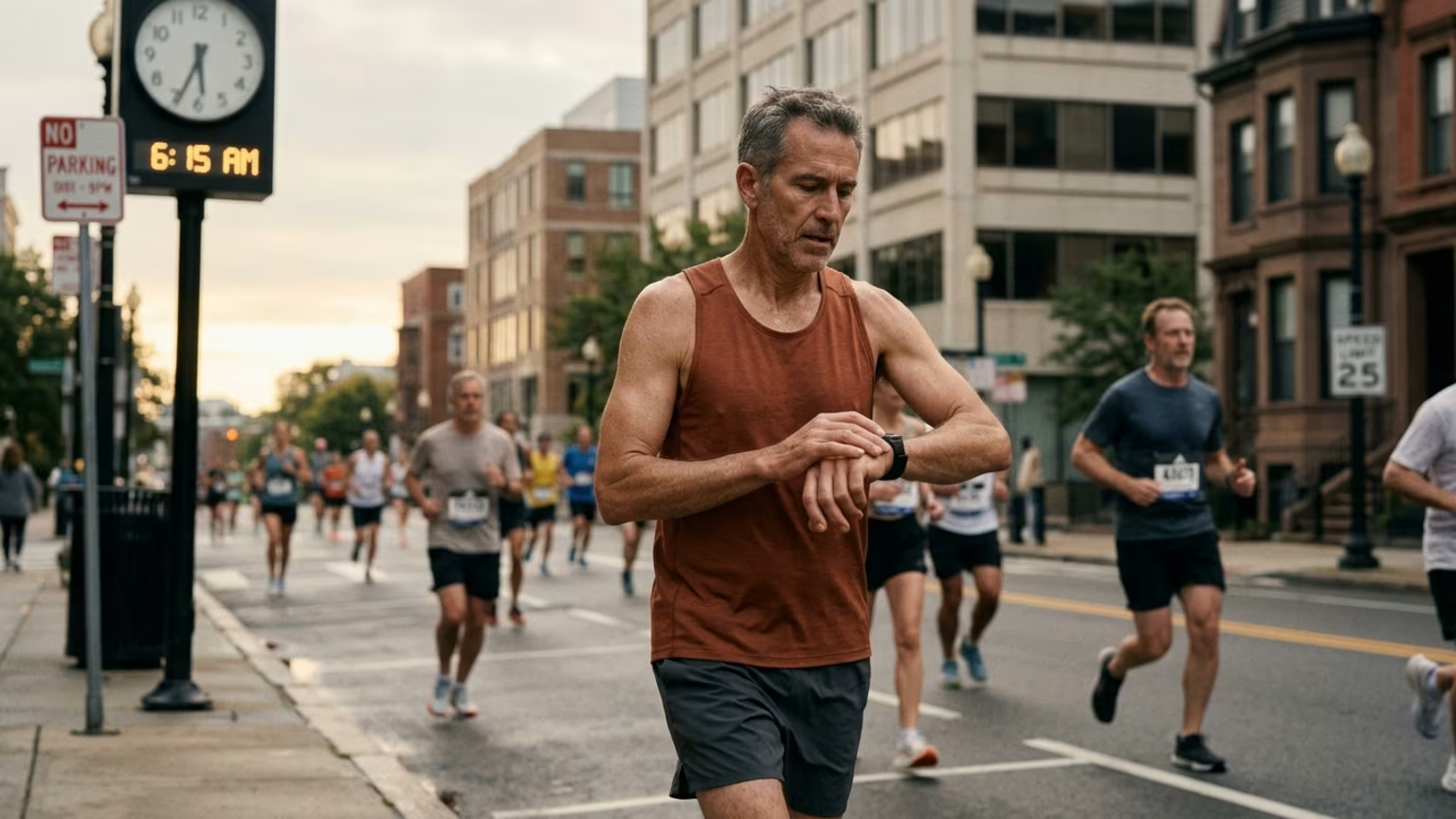

The 2026 BMW Berlin Marathon moved its start time 30 minutes earlier to combat heat. Learn how masters athletes must adapt pacing and hydration for race day.





In September 2026, the official preview for the BMW BERLIN-MARATHON confirmed a major operational adjustment for the upcoming race. Organisers have moved the main race start 30 minutes earlier to 8:45 a.m. local time following the high temperatures experienced the previous year. This schedule shift arrives alongside the announcement of an exceptionally deep elite women's field targeting multiple historic barriers on the notoriously fast course.
The event organizers are treating thermal stress as a central management issue rather than a minor weather variable. The official forecast anticipates temperatures of approximately 13 degrees Celsius at the start. Conditions are expected to reach around 17.5 degrees Celsius when the elite athletes finish their races. Crucially, the temperature could rise to 22 degrees Celsius later in the day when the majority of the field is still running.
To combat this rising heat, the event is deploying new cooling infrastructure along the route. Runners will have access to cooling stations equipped with large water troughs. These stations will allow athletes to use sponges and cooling towels to manage their core temperatures throughout the later miles. However, race director Jürgen Lock explicitly urged participants to take personal responsibility for their own heat management. He advised runners to utilize suitable headwear, apply sunscreen, and ensure adequate hydration in the days leading up to the race.
This focus on mass safety runs parallel to unprecedented competitive ambitions at the front of the pack. The marathon covers the standard 42.195 kilometres. Over its long history, Berlin has produced 13 world records. The 2026 start list features the largest number of sub-2:20 women ever assembled for this specific event.
Seven female entrants currently hold personal bests below the 2:20:00 mark. A total of 13 women have run below 2:22:00 in previous competitions. Tigst Assefa enters as the primary contender with a Berlin course record of 2:11:53. The official preview states she is targeting a new personal best and aims to break the elusive 2:10:00 barrier.
Defending champion Rosemary Wanjiru brings a personal best of 2:16:14 to the starting line. She is actively looking to improve her time toward 2:15:00. Further back in the elite pack, Alisa Vainio holds a personal best of 2:20:39 and intends to break 2:20. Esther Pfeiffer is targeting the long standing German record of 2:19:19, which Irina Mikitenko set at Berlin in 2008.
The juxtaposition of elite record attempts and mass-participation heat management creates a complex tactical environment for the ambitious amateur. More than 84,000 people from 162 nations are expected to participate across the entire weekend. This massive gathering includes more than 56,000 marathon runners taking to the streets on Sunday. For the masters athlete, the practical lessons here extend far beyond simply watching the elites race.
Elite runners benefit from professional support, extensive cooling protocols, and the distinct advantage of finishing before the day reaches its peak heat. Age-group runners starting in later waves face an entirely different thermal reality. As ambient temperatures climb toward 22 degrees Celsius, forcing a predetermined pace becomes a significant physiological risk. Ambitious adults must decouple their pacing strategy from the morning conditions and plan for the warmer afternoon reality.
We often trap ourselves in rigid expectations based solely on our successful training cycles. Hitting my forties brought a harsh reality check. The track workouts were not getting slower, but the days after them felt significantly heavier. Instead of forcing my old Tuesday and Thursday intensity schedule, I looked at the data on Masters athletes and muscle protein synthesis.
I pushed my second hard session to Friday, allowing an extra forty eight hours of low intensity recovery. My total weekly volume stayed the same, but the quality of my intervals skyrocketed. That same fundamental principle of adaptation applies directly to race day execution. When external conditions change, your internal expectations must shift accordingly to preserve overall performance.
The 30 minute earlier start time is a risk reduction measure for the entire field. The very first runners will cross the start line at exactly 8:45 a.m. However, large marathon fields utilize staggered starting waves that can delay a runner's departure significantly. Reviewing practical race preparations for Berlin can help clarify the timeline. An athlete starting in a later wave will spend a larger percentage of their race in the forecasted 22 degree Celsius heat.
This means your pacing chart from training might be obsolete by the time you reach the half marathon mark. Trying to bank time in the cooler early miles often leads to disastrous cardiac drift later. A mature racing strategy requires acknowledging the actual temperature during your specific time on the course.
The official guidance to stay well hydrated should not be misinterpreted as a mandate to force fluids blindly. Individual fluid needs vary wildly among participants. They depend strictly on body size, personal sweat rate, current pace, and the specific weather conditions. Generic targets recommending specific fluid volumes per hour are outdated and potentially dangerous for endurance athletes.
Athletes must practice their personalized hydration plans long before standing on the start line. This includes testing hourly carbohydrate targets to ensure gastrointestinal comfort under stress. Runners with cardiovascular, kidney, or other chronic health conditions must seek medical advice before altering their electrolyte or fluid intake. Understanding the limits for endurance carbohydrate uptake is just as vital as managing the thermal stress of a long race.
The addition of water troughs and cooling towels is a major tactical advantage for the age-group runner. Ambitious athletes should integrate these physical stations into their race plan rather than running past them to save a few seconds. Lowering perceived heat strain can effectively delay fatigue and maintain muscular efficiency during the final 10 kilometres. Proper heat acclimation in training makes these external tools even more effective on race day.
Using a sponge to cool the head and neck can lower the perceived exertion rate. This simple act allows the body to redirect blood flow back to working muscles rather than exclusively to the skin for cooling. Veterans know that managing core temperature is just as important as managing glycogen stores.
Watching professional runners target the 2:10:00 barrier provides incredible motivation for the entire endurance community. However, their aggressive strategies do not translate cleanly to the 40-year-old runner managing a full time job and an aging recovery curve. Elite pacing is precise, supported by pacers, and highly reactive to real time data. Masters pacing requires flexibility, deep humility, and the willingness to slow down when the environment demands it.
A personal best attempt should always be viewed as an optional objective. Recognizing excessive heat stress and adjusting your physical effort is a necessary performance preservation skill. If conditions deteriorate significantly, the smartest athletes on the course are the ones who revise their goals. They focus purely on healthy execution rather than chasing arbitrary finishing times.
Ambitious veteran athletes must treat race day environmental changes as absolute boundaries for their physical output rather than relying on sheer willpower to overcome physiological limits.

Follow ReEndure for practical insights on endurance training, recovery, nutrition and healthy aging. Stay connected for new articles, research led guidance and ideas to help you perform better for longer.





Read practical ideas on endurance training, recovery, nutrition and healthy aging to keep progressing for years to come.
Read the Blog