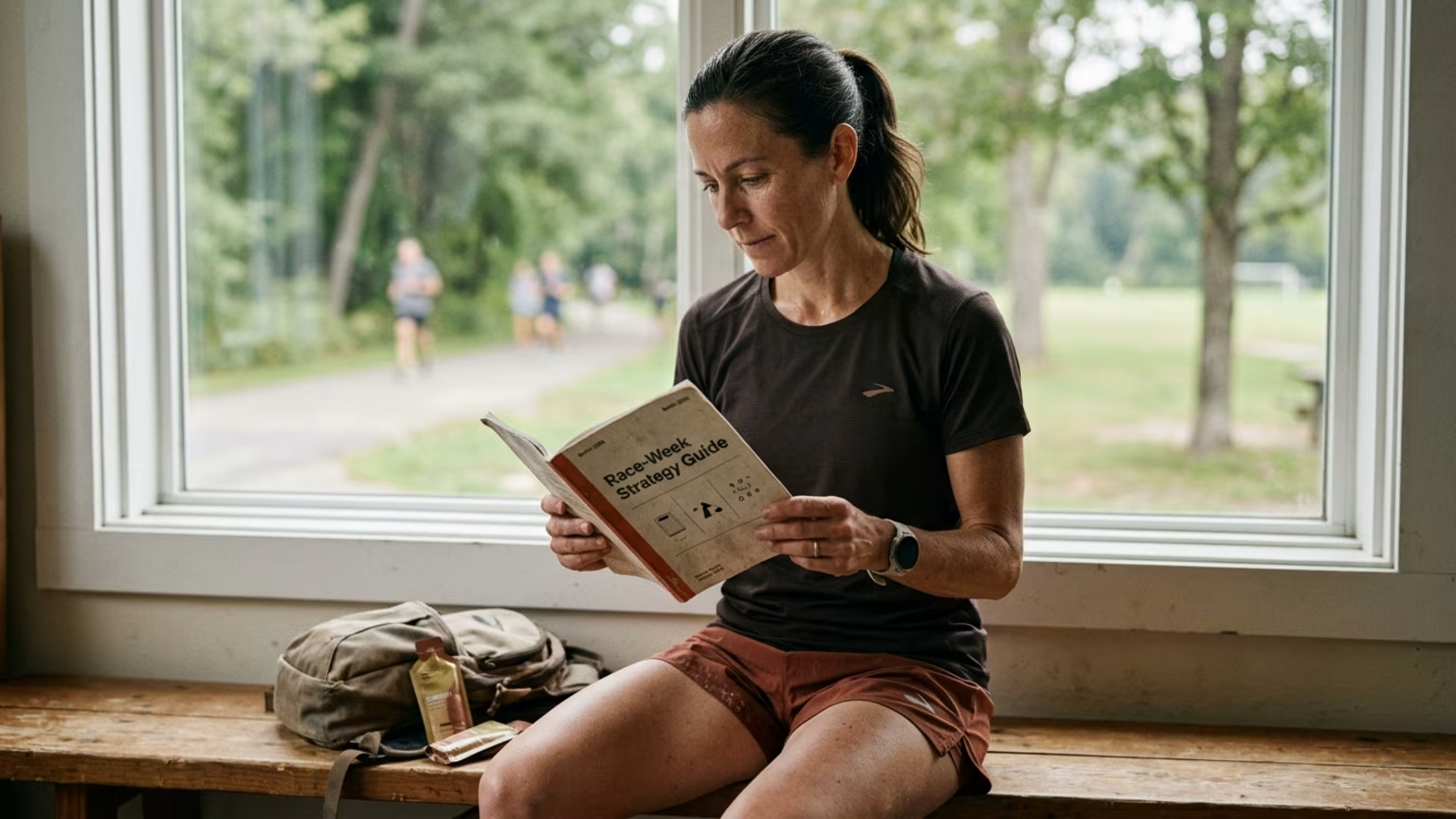

Brooks Running published its 2026 Berlin Marathon guide, detailing personal bottle logistics, early pacing limits, and how older athletes can manage fatigue.





On September 1, 2026, Brooks Running published a detailed race-week advice article for the 2026 Berlin Marathon. The brand listed Brooks Staff as the author and featured insights from Fino, a running influencer representing @runningshoeworld. Fino is described as a three-time Berlin Marathon participant who plans to return for the September 2026 race. The publication offers a structured logistical approach to managing the massive scale and unique features of this major international event.
Brooks presents the BMW Berlin Marathon as one of the World Marathon Majors and describes its course as among the fastest in the world. The guide notes that the marathon distance covers approximately 42 kilometers through the German capital. According to Brooks, the world marathon record has been broken 13 times in Berlin. This reputation for speed heavily influences how runners approach their pacing and preparation.
The physical scale of the event demands careful planning from every participant. Brooks expects approximately 60,000 runners to compete across the event’s associated races. The brand also notes that the course can attract more than one million spectators. To support the runners, approximately 80 bands, groups and choirs perform along the route. Navigating an event of this magnitude requires athletes to manage their energy long before they cross the starting line.
The guide explicitly advises runners not to treat the pre-race expo as a standalone sightseeing event. The venue hosts thousands of runners and hundreds of exhibitors. This environment creates a high risk for prolonged walking, shopping, and standing in the days leading up to the race. Brooks recommends attending the expo early in the week if your travel schedule permits.
For athletes managing complex travel itineraries, treating the expo as a minor errand is often difficult. The excitement of a major international race naturally encourages runners to spend hours looking at new gear and interacting with vendors. However, this unnecessary time on your feet directly detracts from your race-day performance. The core advice is to collect the race bib, visit only the most essential stands, and quickly return to your hotel.
Brooks recommends using Saturday to physically locate the start area and identify the correct starting pen before race morning. The expected crowd size and incredibly busy public transport networks can easily disorient visiting athletes. Runners who simply follow the crowd from the U-Bahn risk ending up in the completely wrong location. Fino notes that checking the start area in advance helps him understand his route and reduces morning stress.
The official Berlin Marathon registration information provides critical context for these arrival logistics. The documentation confirms that the course enforces a 6-hour-15-minute time limit. This limit is measured directly from an individual runner’s crossing of the starting line. The official rules also state that pacemakers are available for each start wave to guide runners toward individual finish times. Reaching the correct pen on time is therefore essential for athletes who wish to utilize these official pacers.
Brooks highlights a logistical feature that is highly unusual among major marathons. The guide says Berlin allows non-elite runners to have personal bottles waiting for them at selected aid stations. According to the article, runners must label each bottle carefully with their name, bib number, and the specific aid station where they want it delivered. Brooks provides a morning drop-off window of approximately 6:30 to 7:30 a.m. for these bottles.
The primary performance benefit of this service is maintaining nutritional consistency. Athletes can use specific carbohydrate or electrolyte drinks that they have already tested thoroughly during their training blocks. However, utilizing the service creates new logistical responsibilities for the runner. Developing effective gut training for endurance athletes is only useful if you can access your preferred nutrition on the course. Bottles must be prepared carefully, and athletes must meet the strict morning drop-off window to ensure delivery.
Brooks does not state how many bottles each runner may submit or prescribe specific carbohydrate quantities. The guide also omits details regarding the exact required bottle format or potential late changes to the 2026 regulations. Runners must confirm these final instructions in the organizer’s official race materials before race day. A runner who arrives late or labels a bottle incorrectly could lose access to their primary fuel source.
Brooks warns that Berlin’s notably flat course and minimal elevation changes can encourage runners to move faster than planned early in the race. The guide specifically recommends targeting a light negative split. This strategy involves holding back enough energy during the first half to allow for a stronger finish. A very conservative opening helps athletes avoid early overexertion in a highly stimulating environment.
Fino provides a detailed breakdown of his personal pacing application. He describes his approach as using the first 5 kilometers simply to warm up and settle into his planned rhythm. He then aims to maintain his exact marathon pace between approximately kilometers 20 and 30. Finally, he adjusts his effort over the final 7 kilometers according to how his body feels. While these specific kilometer markers describe his personal strategy rather than an official protocol, the underlying principle of pacing discipline remains universal.
Technology failures can easily derail an athlete who relies entirely on wrist-based pacing. The guide notes that GPS reception can become highly unreliable in certain areas of the city. These signal interruptions are particularly common around Berlin’s Fernsehturm television tower. When the watch fails, athletes who have started too quickly often struggle to find a sustainable rhythm.
Brooks recommends joining an official pace group that matches the runner’s target pace to mitigate this risk. Fino says that running with an established group significantly reduces his dependence on his watch. He finds it easier to sense whether the group is moving smoothly and consistently. Understanding how to pace by multiple signals when race data disagrees becomes a critical skill when navigating the dense urban architecture of Berlin.
The official race organizer confirms that pacemakers are provided for individual finish times within each start wave. However, the Brooks article does not list the specific target times or exact meeting locations for these groups. Runners should actively verify the available pace groups during the event registration process or at the expo. Making these pacing decisions early prevents frantic searching on race morning.
For ambitious athletes aged 35 to 65, balancing international travel fatigue, work commitments, and accumulated training load requires careful management. The veteran runner must view the expo through a strict logistical lens. Protecting the legs during the final 48 hours is non-negotiable. His logistical advice is clear: prepare most of the race kit by Friday night, keep Saturday relaxed, and go to bed early. Aligning your sleep schedule correctly supports your circadian rhythm and endurance recovery before an early race morning.
Brooks explicitly recommends reaching the start area with substantial time to spare. This buffer allows runners to prepare calmly, navigate the massive crowds, and locate their designated pen without rushing. Fino says he wakes early specifically to build in enough time to arrive feeling calm. Older athletes benefit greatly from removing minor stressors that can spike heart rates before the gun even fires. Maintaining this composure is essential for managing race-day nerves effectively.
Fino’s central message focuses on preparing for variability rather than assuming ideal conditions will occur. He recalls experiencing rain, heat, and favorable weather across his previous Berlin Marathon appearances. The veteran runner must bring versatile clothing options and remain flexible. While Brooks offers excellent logistical guidance, athletes must remember not to confuse this advice with medical instruction. Evaluating age-group racing conditions requires older runners to prioritize their individual health first, and anyone with recent injuries should consult professionals rather than relying solely on a marketing guide.
Executing a successful race in Berlin requires ambitious older athletes to treat their pre-race logistics, early pacing discipline, and hydration plans with the exact same rigor applied to their physical training.

Follow ReEndure for practical insights on endurance training, recovery, nutrition and healthy aging. Stay connected for new articles, research led guidance and ideas to help you perform better for longer.






Read practical ideas on endurance training, recovery, nutrition and healthy aging to keep progressing for years to come.
Read the Blog