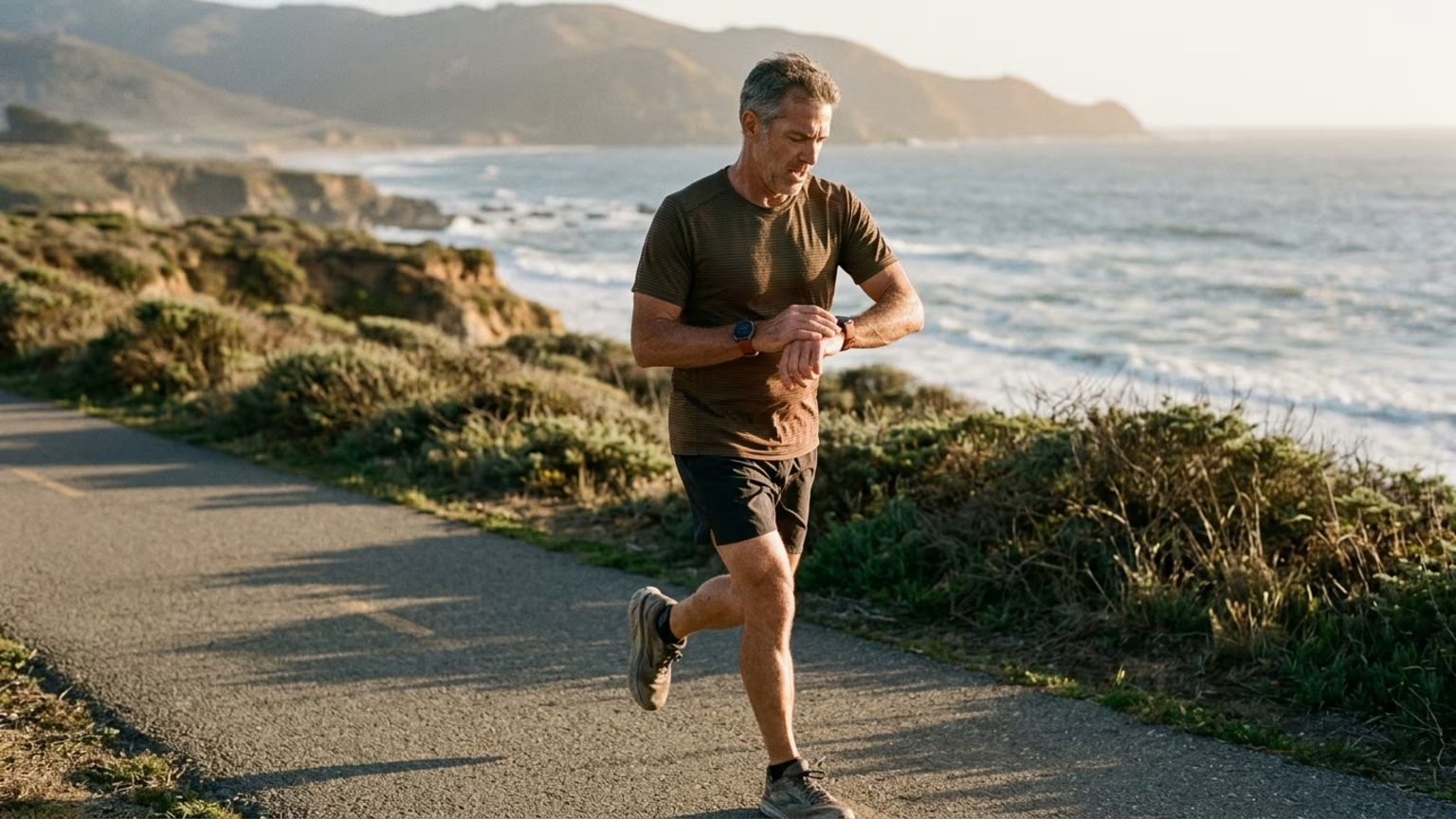

A field test of the Apple Watch Series 12 shows reliable steady-state tracking, but chest straps remain essential for high-intensity intervals and lifting.





On October 3, 2026, Tom’s Guide published a hands-on comparison of the Apple Watch Series 12 heart-rate sensor. Reviewer Nick Harris-Fry tested the new wearable against a chest strap across running, cycling, high-intensity interval training, and strength workouts. The article evaluated whether the latest wrist-based optical sensor is sufficient for daily training or if athletes still need dedicated chest straps for precise zones.
The primary conclusion from this field test is that the Apple Watch Series 12 handles steady endurance efforts reliably but struggles to track rapid heart-rate spikes as accurately as a chest strap. During consistent running and cycling, the watch tracked closely with the reference strap. When the workouts shifted to sudden bursts of effort like strength circuits or jumping intervals, the wrist sensor lagged the strap and occasionally produced erroneous spikes. The review suggests that while the watch is capable, it does not represent a massive leap in optical sensor technology over other modern devices like the Garmin Forerunner 970.
This assessment comes from a single reviewer's extensive field test rather than a clinical trial. Harris-Fry evaluated the devices over more than 100 miles of running. He included easy aerobic efforts, challenging interval workouts, a treadmill run, and a half-marathon race. He also tested the watch during one 40-minute indoor bike ride, two separate weight-training sessions, and a bodyweight interval circuit. The interval circuit included five distinct exercises, with three of them being dynamic jumping movements. The watch was tested using both silicone and nylon bands.
An important detail for data accuracy involves the specific reference devices used. The Tom's Guide author paired a Garmin HRM 600 chest strap with a Coros Pace 4 Pro for his personal comparisons. He wore the Apple Watch on his opposite wrist. The article notes that Apple referenced a Polar H10 chest strap in an in-house study regarding their accuracy claims. However, Tom's Guide did not provide the sample size, numerical results, or detailed protocols for that internal Apple study. A separate Italian review mentioned that Apple's internal test involved more than 1,000 participants, but the underlying data remains unpublished in these reports. Therefore, the practical takeaways come entirely from the reviewer's direct experience using the Garmin HRM 600.
Understanding how a device captures data is crucial for older athletes who monitor their physiological limits. Wrist watches rely on optical sensors that shine light into the skin to measure blood flow. Chest straps read the electrical signals directly from the heart. This fundamental difference explains why the Tom's Guide review found varying levels of accuracy across different types of exercise.
The review found that the watch tracked closely with the Garmin chest strap once it locked onto a reading during outdoor runs. The author noted that the watch occasionally grayed out readings briefly at the start of a run. He also observed occasional erroneous dips or spikes, along with slower responses to rapid heart-rate changes compared to the chest strap.
During a treadmill run, the watch produced a few more minor errors and finished with a slightly higher average reading than the strap. For athletes prioritizing long aerobic volume, these minor discrepancies are usually acceptable. Consistent pacing relies more on broader trends than second-to-second precision. Older runners who rely on heart rate variability-guided endurance training depend on accurate resting data, and the steady-state exercise data from the Series 12 appears sufficient to inform those longer-term fatigue models.
The cycling test consisted of a single indoor ride lasting just over 40 minutes. The reviewer inserted 30-second sprints every five minutes to test rapid cardiovascular responses. The final data showed an impressive alignment in total averages across the session. The Apple Watch recorded an average heart rate of 109.97 beats per minute. The Garmin strap recorded an average of 109.89 beats per minute.
While the averages matched with tight precision, the watch lagged slightly at the start of the sprint intervals. It successfully captured the sprints eventually, but the delay is a known limitation of optical sensors. Blood volume takes longer to change at the extremities than the electrical signals take to reach a chest strap.
The largest discrepancies occurred during workouts requiring rapid exertion changes or heavy wrist flexion. Across two weight-training sessions, the watch followed the broad rise-and-fall pattern of the heart rate. However, the reviewer found that it was rarely in line with the chest strap. It missed one small increase entirely, though the final average was only off by a couple of beats.
The single bodyweight circuit session produced similar tracking challenges. The watch detected the intervals and reached the general heart rate level, but it lagged behind the chest strap and added a couple of erroneous spikes. Older athletes are increasingly balancing heavy resistance sessions with intense aerobic workouts. Using inaccurate heart rate data during strength work can artificially inflate perceived training stress. The reviewer explicitly suggested that athletes who depend on precise readings during these sessions should wear a chest strap or an armband.
The author ultimately concluded that the Series 12 performed well for running and cycling, but it was not a marked improvement over other watches he has tested. He noted that recent Garmin models, such as the Forerunner 970, were at least as reliable in his personal experience.
This aligns with a broader trend in endurance technology where lifestyle smartwatches are adopting serious athletic capabilities. Apple has recently made significant pushes into athlete health monitoring, including updates that provide robust recovery and readiness tracking. Even with better software, the hardware physics of wrist-based optical sensors remain a limiting factor for tracking high-intensity intervals.
Older athletes often rely on strict heart rate zones to ensure proper recovery and progressive overload. As maximum heart rate naturally declines with age, the margins between an easy aerobic zone and a moderate threshold zone shrink. A discrepancy of just five beats per minute can shift an athlete from a restorative run into a fatiguing effort.
The Tom's Guide test showed that the watch tracked closely during steady runs once it secured a stable reading. This is excellent news for marathoners and triathletes logging long aerobic miles. The primary risk occurs at the start of the workout when the sensor is still adjusting to the movement. The reviewer noted that the watch occasionally grayed out readings briefly during those initial minutes. Athletes should ease into their warmups, giving the sensor time to establish a solid baseline before pushing the pace.
When selecting the optimal race distance, accurate pacing data becomes a critical tool for success. The reviewer wore both devices during a half-marathon and found the watch capable of tracking the broader effort. However, if you are attempting to sit right on the razor edge of your lactate threshold, the minor lag noted by the reviewer could prove frustrating. It is always safer to trust your perceived exertion if the watch data suddenly drops or spikes unexpectedly.
When an athlete is in their twenties, training zones are often broad and highly forgiving of small pacing errors. An extra ten beats per minute during a tempo run might only result in minor fatigue the following day. For athletes managing their performance past age 35, those same ten beats represent a much higher percentage of their declining maximum heart rate. Crossing that threshold accidentally means accumulating central nervous system fatigue that takes days to clear.
This biological reality makes wearable accuracy a vital component of long-term athletic success. Devices like the Apple Watch Series 12 offer incredible convenience for daily wear and baseline health tracking. This constant wearability helps establish excellent metrics for resting heart rate and sleep patterns. However, that everyday utility does not automatically translate into high-performance training accuracy during complex, varied movements.
By understanding the specific limitations of optical sensors, veteran athletes can make smarter decisions about their gear. You do not need to abandon smartwatches entirely when building physical durability for the next several decades. You simply need to recognize when the tool matches the task, and when a traditional chest strap is the wiser choice for data fidelity.
For the ambitious athlete over 35, training is an exercise in managing cumulative stress and avoiding burnout. Bad data is often worse than no data at all when calibrating a rigorous training block. If a wrist sensor tells you that your heart rate is spiking during a heavy squat set when it is actually stable, your training software might incorrectly flag you as overtrained. This false data can derail a carefully planned tapering week or prompt unnecessary rest days. The Tom's Guide review confirms that while optical sensors are convenient for long, steady efforts, they cannot beat the electrical precision of a chest strap for rapid intervals. Veteran athletes should confidently use the wrist sensor for their long weekend volume, but they should strap up across the chest for track workouts and heavy lifting sessions.
Wrist-based heart rate sensors offer exceptional convenience for logging steady aerobic volume, but serious athletes must still rely on a chest strap to accurately capture the rapid physiological demands of interval and strength training.

Follow ReEndure for practical insights on endurance training, recovery, nutrition and healthy aging. Stay connected for new articles, research led guidance and ideas to help you perform better for longer.





Read practical ideas on endurance training, recovery, nutrition and healthy aging to keep progressing for years to come.
Read the Blog