

How interior designer Kristen Tonsager successfully balances self-supported ultracycling with a demanding career through strict logistical and recovery habits.





On October 4, 2026, The Denver Post published a detailed profile documenting how Kristen Tonsager, a 44-year-old architectural interior designer from Colorado, successfully manages an intensely rigorous endurance calendar. The extensive report highlighted her ongoing progress through extreme self-supported bikepacking events while simultaneously maintaining her demanding corporate career. The newspaper carefully documented her 2026 Mountain Races circuit, illustrating the extreme scheduling, financial and recovery demands required to compete safely at this elite level. Tonsager had already finished three massive international events this year and was actively preparing for a fourth, the newly added Taurus race in Turkey, scheduled for an October 14 start.
This factual account provides a clear, unvarnished look at how an ambitious adult athlete structures extreme physical output without abandoning a primary profession. The story serves as a practical study in managing competing high-level priorities.
The profile confirms that competing at the top tier of self-supported ultracycling requires immense logistical capability alongside elite physical fitness. Bikepacking essentially combines traditional remote backpacking and rigorous all-terrain cycling into a single grueling format. These events are completely self-supported. Riders must independently handle their own food, water, repairs and sleep schedules.
They do all of this while racing against a continuously running clock over remote, unpredictable terrain. Ultracyclist Dave Nice pointed out to the newspaper that this requirement distinguishes self-supported bikepacking heavily from team-supported road racing formats. Athletes receive absolutely no outside assistance, making meticulous preparation and continuous problem-solving critical components of the race itself.
The physical scope of Tonsager's 2026 racing calendar is exceptionally large. She successfully completed the Atlas race in Morocco, the Hellenic race in Greece and the Silk Road race in Kyrgyzstan. According to the report, she demonstrated remarkable consistency by finishing fourth at both the Hellenic and Silk Road events. Through these efforts, she officially became the first American woman to finish the original three Mountain Races in one calendar year.
She was then preparing to attempt the newly added Taurus race, aiming to become the first woman to complete all four grueling events within a single season. This massive athletic ambition operates entirely alongside a demanding full-time job in architectural interior design. Tonsager stated clearly that she is not trying to transition into a full-time professional bikepacking racer. She explained to the publication that she deliberately wants to maintain both pursuits, noting that her career and racing actually provide mutual sanity.
She relies entirely on her own professional income and her husband's cycling frame bag company, JPaks, operating completely without external corporate sponsorship. Sponsored ultracyclist Meaghan Hackinen emphasized the massive financial burdens and time investments required for this dense event schedule. Hackinen explicitly called the effort an incredible feat for an athlete earning their income entirely outside of the sport.
Tonsager manages the immense physical and mental challenge by breaking long races into small tasks, focusing heavily on immediate goals like eating, sleeping or filtering water. This highly segmented psychological approach helps her maintain steady forward progress across days of continuous effort without becoming overwhelmed by the massive total distance.
The Mountain Races circuit demands extreme aerobic capacity over extended periods of intense geographical isolation. These specific international events cover massive distances ranging from 560 to 1,200 miles across highly challenging terrain. Participants must physically navigate more than 100,000 feet of steep climbing during a single continuous race. A typical event takes well-prepared athletes anywhere from one to two full weeks to finally complete.
The continuous race clock means that every single hour spent resting, eating or repairing broken gear directly impacts the final official finishing time. The severe physical and mental toll of this demanding format forces a significant number of riders to withdraw early. Circuit director Nelson Trees estimated that roughly 45 percent of participants drop out of these punishing races. Trees also noted that female athletes currently make up about 10 percent of the total starting field.
While the report lists these broad participation figures, it deliberately avoids detailing Tonsager's specific weekly training hours, mileage totals or formal recovery protocols. Readers are left to understand the results without a strict daily training template. Tonsager successfully completed the Tour Divide, the Colorado Trail Race and the Arizona Trail Race in 2023. This massive sequential physical effort made her one of the first women to finish all three major events in the same summer.
Her documented ability to tolerate repeated physical trauma highlights the distinct importance of muscular durability for older endurance athletes. The report illustrates the outcome of her fitness without claiming her specific schedule is universally sustainable.
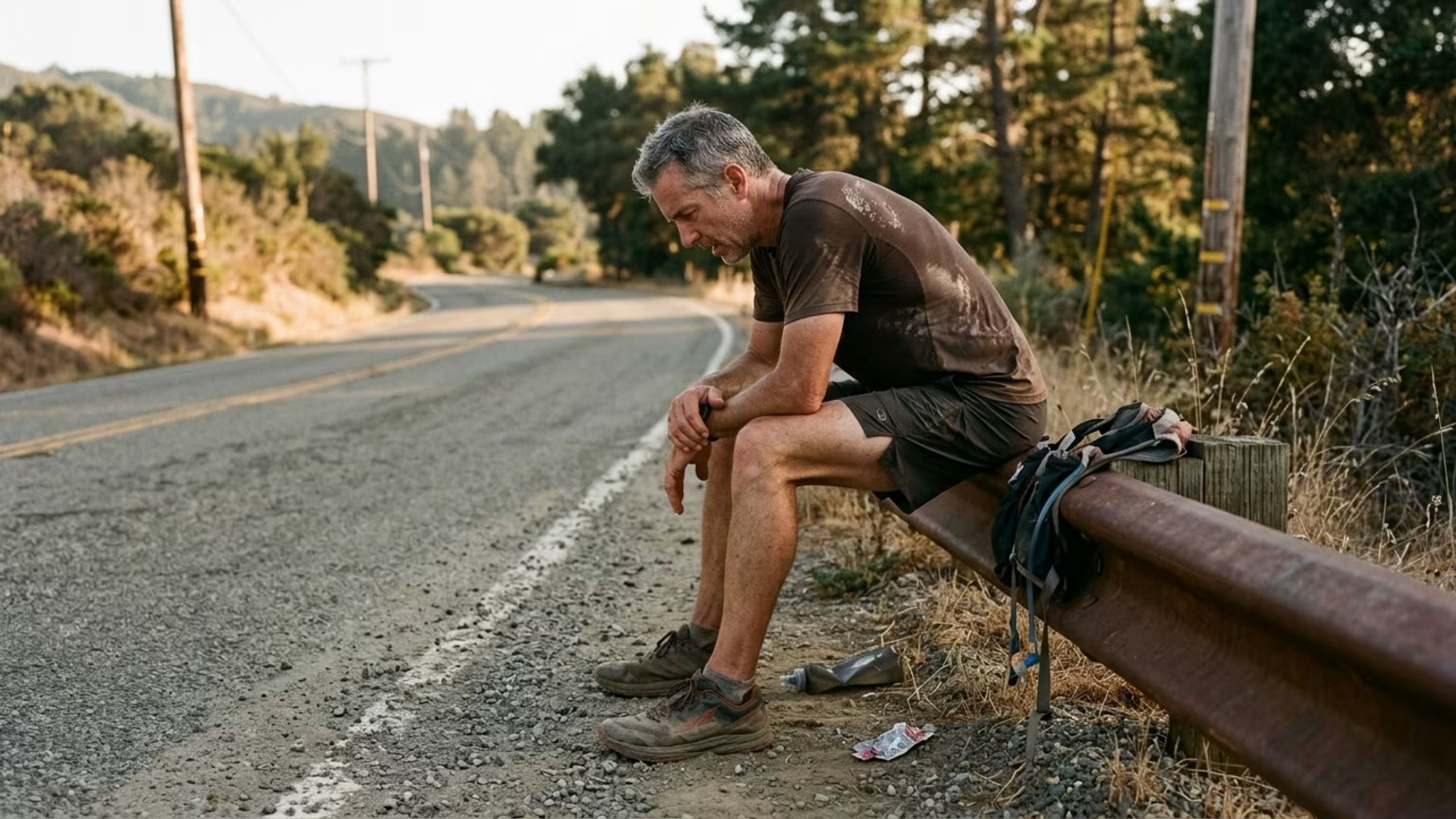
For the ambitious endurance athlete over 35, this profile highlights the critical, unavoidable reality of cumulative fatigue. Circuit director Nelson Trees noted that racing every few months puts the human body through severe physiological stress that requires extremely long recovery periods. Athletes must somehow find time to train between these massive efforts, which means they end up dragging heavy fatigue along all year.
This aligns directly with our guidance on how proper periodization and injury prevention helps older athletes survive long seasons. You must respect the massive physiological cost of your primary events and plan your downtime accordingly. Tonsager’s unique approach shows that demanding professional ambition and high-level athletic goals do not necessarily have to cancel each other out. However, success in both arenas requires extreme discipline in managing daily logistics and time outside of actual physical training.
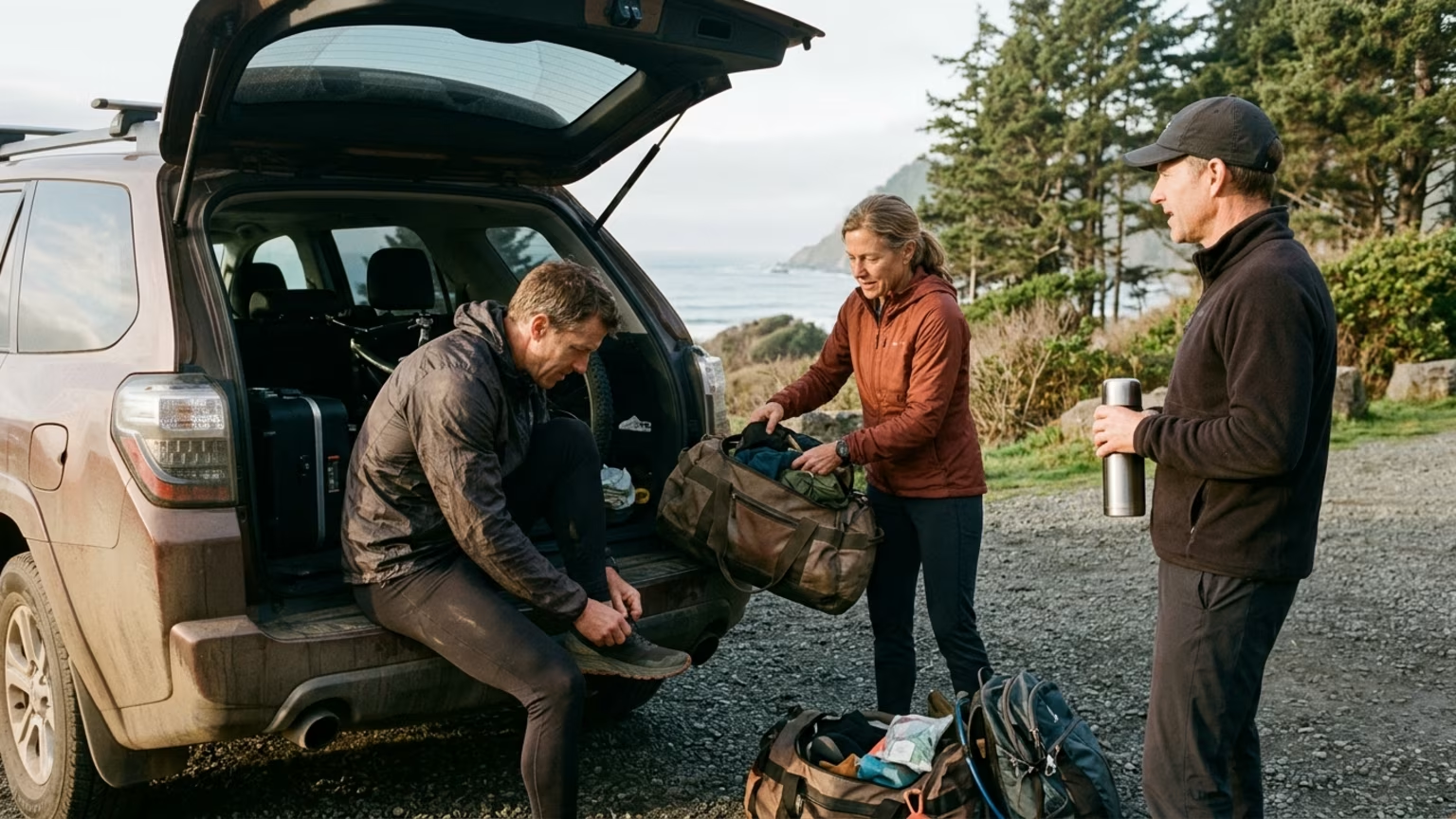
Riders in self-supported endurance events must carefully manage resupply points, field mechanical repairs, severe sleep deprivation and strict checkpoint deadlines. Working professionals must apply that exact same level of ruthless task management to their daily corporate work routines. Taking the necessary time to carefully design your athletic life appropriately ensures your career and training support each other rather than constantly competing for limited energy.
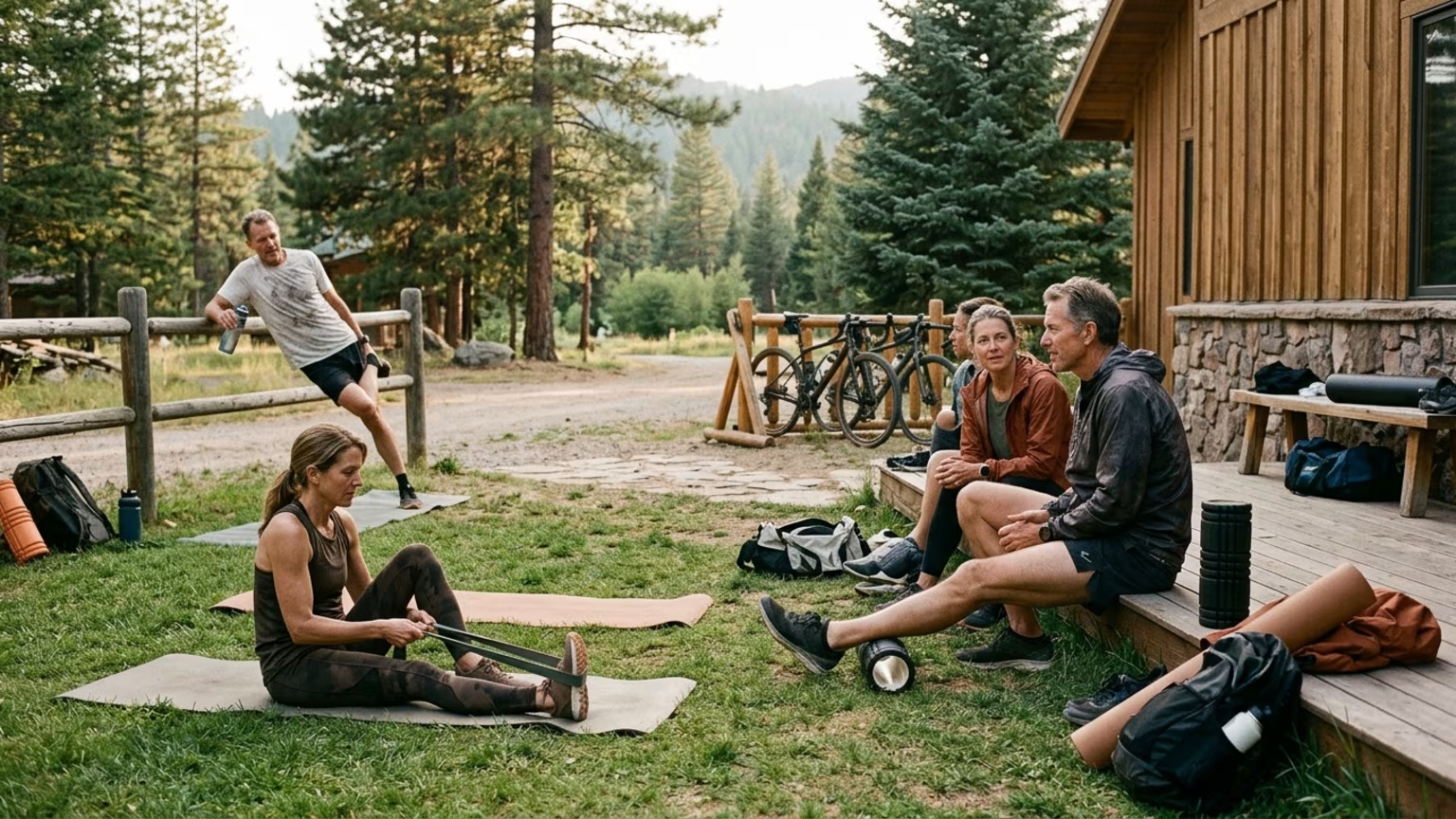
This specific case also reinforces that physiological recovery is a mandatory active requirement, not merely an optional luxury. Trees explicitly described deep recovery and inter-race training as primary physical challenges across the grueling mountain circuit. Aging athletes simply cannot rush the biological healing process after extreme distance events, regardless of their mental toughness. If you schedule multiple major endurance races in one calendar year, you must build mandatory rest periods into your calendar to clear accumulated physiological stress.
A well-planned, realistic recovery calendar helps you train less and perform more efficiently as your body inevitably ages. Finally, everyday athletes should strictly avoid comparing their personal training volume to visible elite race results without knowing the full contextual background. The Denver Post report notably does not disclose Tonsager's specific corporate workload adjustments, annual travel budget or professional leave arrangements.
Your personal training schedule must fit the specific, unyielding reality of your unique professional and family obligations. You should always focus on controlling your immediate daily habits, much like Tonsager actively manages her immediate race tasks, to safely sustain long-term performance across decades.
Ambitious veteran athletes can successfully balance demanding professional careers with extreme endurance goals only when they ruthlessly prioritize extended recovery periods and practice meticulous logistical discipline.

Follow ReEndure for practical insights on endurance training, recovery, nutrition and healthy aging. Stay connected for new articles, research led guidance and ideas to help you perform better for longer.



Read practical ideas on endurance training, recovery, nutrition and healthy aging to keep progressing for years to come.
Read the Blog