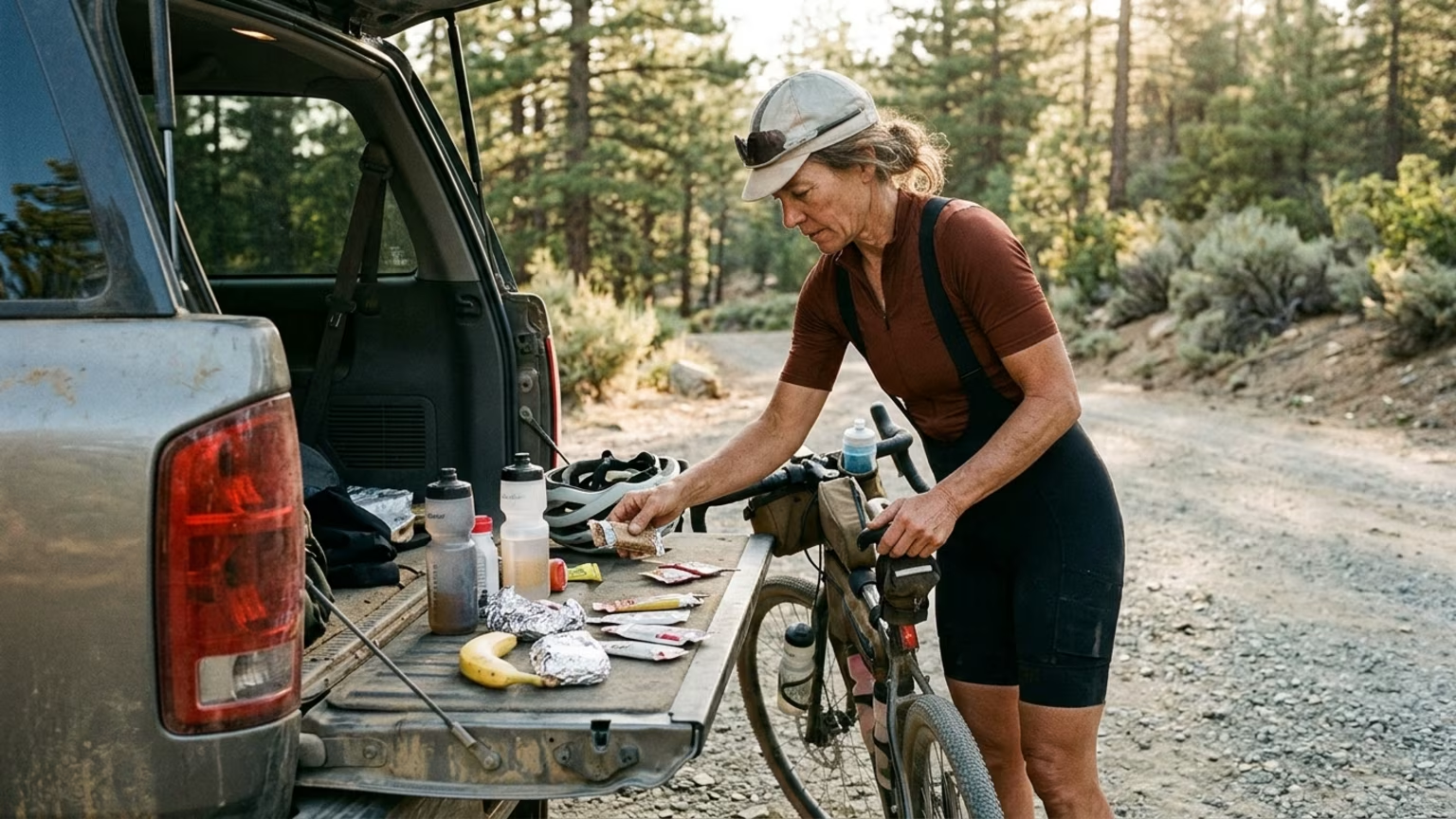

Build a repeatable long-session fueling plan with food and hydration rehearsal, gut-comfort notes, and adjustments grounded in your training experience.





A fueling plan has to be tolerable to be usable. The Gatorade Sports Science Institute’s discussion of gut training describes repeated practice of an individualized fueling and hydration strategy. It says some athletes may improve exercise tolerance through that practice.
The physiological outcome of interest is gastrointestinal tolerance during exercise. Rehearsal gives the athlete a chance to practice taking in food and drink rather than treating fueling as something separate from training. The performance value is practical: an ambitious plan on paper is not useful if you cannot carry it out comfortably.
These observations concern athletes generally. They do not establish separate carbohydrate targets by age, a universal fluid or sodium schedule, or a longevity benefit. Personal intake amounts require an individualized plan rather than a number borrowed from another athlete.
For Reendure, the long-term aim is strong performance alongside continued participation. The framework below turns the rehearsal principle into a planning exercise without presenting it as a laboratory-tested checklist or a personal nutrition prescription.
Start with the workout rather than the food cupboard. Write down the planned duration and intensity. Add any practical constraints that affect when food and drink will be available.
Then choose the question you want the session to answer. It might concern a particular food or product. It might concern when you take it or how the drinking plan fits alongside it.
Keep that question visible. “Practice fueling” is a useful intention, but “assess this planned food and drink combination” gives the review a clearer purpose. This is an organizational tool for the rehearsal, not a claim that every session needs a nutrition experiment.
For related planning context, see our guide to connecting food choices with workout demands.
Put the intended sequence in writing before the workout. Include what happens before departure rather than recording only the food carried during exercise. If a meal or snack is part of your preparation, note what you intend to have and when.
For the session itself, list the foods or sports products you intend to test. Put drinking alongside them instead of keeping hydration on a separate mental checklist. The research supports rehearsing an individualized fueling and hydration strategy together.
Include the end of the day too. Write down the food you plan to have available afterward and when your next demanding session is scheduled. If recovery intake needs individual guidance, those details give a qualified sports dietitian useful context for the discussion.
The result should be a plan you can follow and review. It does not need to resemble another athlete’s menu or use a particular product format.
Use training to practice the intended strategy. Pay attention to what you can actually eat and drink as well as what you planned to consume. Gut comfort belongs in the review alongside the written sequence.
The same GSSI article advises progressive testing of very high carbohydrate intakes. It emphasizes that their tolerability and effectiveness depend on context. Higher intake is therefore something to assess within a suitable individual plan, not an achievement every athlete needs to pursue.
That distinction keeps rehearsal focused. The question is whether the strategy fits the training task and the athlete, not whether it matches the largest intake reported elsewhere.
Our guide to rehearsing nutrition before competition offers another way to organize that practice within training.
After the session, compare intention with execution. Keep the notes descriptive before interpreting them. “I did not eat the planned food” is different from “I ate it and experienced discomfort.”
Useful prompts include:
These prompts are a planning aid rather than a diagnostic tool. If symptoms are persistent or decisions involve a medical condition, take the record to a qualified clinician or sports dietitian. Do not use a training log to diagnose the cause yourself.
Carry useful information into the next appropriate rehearsal. Keep the food and drink choices that fit the session and were comfortable. Identify which part of the plan needs further assessment rather than replacing everything without reviewing it.
Repeated practice is the principle supported by GSSI. The record gives that practice continuity: each session starts with a clearer question instead of a fresh guess.
A compact working note can contain the following:
This is enough structure to keep the process deliberate without turning a busy training day into an administrative project.
For an older athlete, the useful adjustment is to work from current experience rather than an old routine. If a food or timing pattern no longer feels comfortable, make that the subject of the next review. Do not assume that a strategy from an earlier training block must remain the right choice indefinitely.
Keep the rehearsal compatible with your actual schedule. Put work commitments and access to food beside the training plan. If those constraints change what you can carry out, record the difference rather than judging the session against an imaginary day with unlimited preparation time.
Where personal amounts are needed, bring the session demands and your rehearsal notes to a sports dietitian. That discussion can focus on the workout you are doing and the response you are observing. It need not begin with an assumption that an older body automatically requires a different fueling formula.
The ambition stays intact. You are building a strategy that fits your present training life while keeping long-term participation in view. Our guide to setting sustainable athletic priorities places that approach within a broader training plan.
Choose an upcoming long session and give its fueling plan the same attention as the workout itself. Write the sequence beforehand and review what happened afterward.
Which fueling question will you rehearse in your next training block, and what will you record to decide whether the plan deserves repeating?

Follow ReEndure for practical insights on endurance training, recovery, nutrition and healthy aging. Stay connected for new articles, research led guidance and ideas to help you perform better for longer.


Read practical ideas on endurance training, recovery, nutrition and healthy aging to keep progressing for years to come.
Read the Blog